Table of Contents >> Show >> Hide
- How I Build a Monster That Doesn’t Look Like a Lumpy Potato
- 1) Start with silhouette (because vibes are real)
- 2) Armature first: the skeleton is the secret
- 3) Choose the right sculpting material for the job
- 4) Texture in layers: big forms, medium forms, micro forms
- 5) Mold and cast (when one monster becomes many)
- 6) Paint and finish: where the creature gets a soul
- 30 Of My Best Fantasy And Monster Sculptures
- 1) The Mossback Troll
- 2) The Lantern-Jawed Bog Wraith
- 3) The Ember Drake Hatchling
- 4) The Cathedral Gargoyle, Off-Duty
- 5) The Bone Crown Basilisk
- 6) The Salt-Spray Kraken Fragment
- 7) The Clockwork Minotaur
- 8) The Winter Stag with Ice Antlers
- 9) The Library Mimic (Hardcover Edition)
- 10) The Chimera of Three Bad Decisions
- 11) The Swamp Knight (Armor with Regrets)
- 12) The Moon-Eyed Owlbear
- 13) The Desert Djinn, Sand-Formed
- 14) The Coral Siren Bust
- 15) The Iron-Toothed Goblin Merchant
- 16) The Skywhale Calf
- 17) The Witch’s Hut on Chicken Legs (Mini Diorama)
- 18) The Sphinx That Judges You Silently
- 19) The Fungal Ogre
- 20) The Glass-Scaled Sea Serpent
- 21) The Candlewax Demon
- 22) The Storm Roc
- 23) The Underroot Golem
- 24) The Night Market Mask Spirit
- 25) The Honeycomb Behemoth
- 26) The Mire Hydra (Three Heads, One Attitude)
- 27) The Astral Jelly Knight
- 28) The Sewer Dragon (Urban Legend Edition)
- 29) The Thornfield Unicorn (Not Here to Be Pet)
- 30) The Mountain-Eater Colossus Bust
- What These Pieces Have in Common (Besides Being Bad Roommates)
- Extra: of Hard-Won Experience (So You Can Skip Some Pain)
- Conclusion
If you’ve ever looked at a dragon in a movie and thought, “I could totally make that,” welcome to the club. I did exactly thatexcept I also thought, “I should probably pay rent,” so now I sculpt fantasy creatures and monsters like it’s my job (because it is).
This isn’t a sterile “art showcase” with dramatic whispers and suspiciously perfect lighting. This is a behind-the-scenes tour of my creature sculpture process, the materials I swear by, the mistakes I’ve made (so you don’t have to), and the thirty fantasy monster sculptures that made me say, “Okay… that one’s staying on the shelf forever.”
Along the way, you’ll see how fantasy monster sculptures go from sketch to armature to “please don’t fall off the table,” plus a bunch of practical notes on creature sculpting, resin casting, texture, paint, and display. If you’re here for inspiration, techniques, or just to admire tiny claws, you’re in the right dungeon.
How I Build a Monster That Doesn’t Look Like a Lumpy Potato
1) Start with silhouette (because vibes are real)
Before I obsess over scales, pores, or whether a demon needs three nostrils, I chase a strong silhouette. If the creature reads well as a shadow, you’re already winning. I’ll exaggerate shoulders, horns, spines, or wings until the outline feels iconiclike you could recognize it from across a convention hall… or from the corner of your eye at 2 a.m. (the classic monster test).
2) Armature first: the skeleton is the secret
A sculpture is basically a physics problem wearing cool armor. I build a sturdy armature (often wire, foil bulking, and a rigid support) to handle weight, pose, and balance. If the center of gravity is wrong, your beautiful creature becomes a tragic leanerlike a gargoyle that gave up on life. I also plan attachment points early: wings, tails, and giant weapons are all tiny stress machines.
3) Choose the right sculpting material for the job
I bounce between materials depending on the goal. For quick concept maquettes, I like a reusable oil-based clay that stays workable. For durable final detailsespecially thin horns, teeth, or fingersI’ll use a two-part epoxy clay/putty so it cures hard and survives handling. For small fantasy sculpture ideas (like tabletop-sized beasts), polymer clay can be great when properly supported by an armature.
4) Texture in layers: big forms, medium forms, micro forms
Texture is where monster sculpture art gets delicious. But I don’t carve every wrinkle from the start. I block in large anatomy first (ribcage, hips, shoulder blades), then add medium detail (plates, folds, muscle striations), then micro textures (pores, scratches, scar tissue, scale edges). It’s the same way nature worksonly with more spikes and fewer health benefits.
5) Mold and cast (when one monster becomes many)
If a piece is headed for sale, a display run, or I just can’t bear the idea of “one accidental elbow bump” ending it, I’ll mold it. Silicone molds capture detail beautifully, and a rigid support shell helps keep everything in shape. Then I cast copies in resin for strength and repeatability. Sometimes I do a “cold cast” lookmixing metal powder into the surface so the finished piece can be polished for a faux bronze or iron vibe. Suddenly your swamp demon looks like it belongs in a museum, which is hilarious.
6) Paint and finish: where the creature gets a soul
Paint is storytelling. A clean, bright palette makes something feel magical; desaturated tones and layered grime make it feel ancient. I use highlights to pull attention to focal points (face, hands, eyes) and push recesses darker to add depth. Then I add “life damage”: chipped horns, healed scars, stained claws. Monsters should look like they’ve done paperwork in the apocalypse.
30 Of My Best Fantasy And Monster Sculptures
Each piece below includes the core idea, the sculpting focus, and the “why it works” note I wish I’d had years ago. If you’re hunting for fantasy monster sculpture inspiration, steal these concepts responsibly (like a polite goblin).
-
1) The Mossback Troll
A bridge troll built like a boulder wearing a sweater of moss. The trick was blending rock texture into skin so it feels grown, not glued. I added tiny “river-polished” highlights to make the surface read wet and heavy.
-
2) The Lantern-Jawed Bog Wraith
A floating marsh spirit with a jaw that opens like a lantern doorglow optional, nightmares included. This one taught me that negative space (open ribs, hollow mouth) can be scarier than extra teeth.
-
3) The Ember Drake Hatchling
A baby dragon with cracked, lava-like plates and soft belly scales. The win was contrast: sharp armor up top, tender anatomy underneath. “Cute but capable of arson” is a powerful design lane.
-
4) The Cathedral Gargoyle, Off-Duty
A gargoyle slumped like it’s waiting for the bus, wings folded, expression unimpressed. I leaned into realistic stone wearrounded edges, chipped claws, soot in crevicesto sell the age.
-
5) The Bone Crown Basilisk
A serpent monster with a crown-like ridge of horn and bone. The key was eye placement: slightly forward gives predatory focus. I used layered scale patterns so the head feels “armored” without looking like a pinecone.
-
6) The Salt-Spray Kraken Fragment
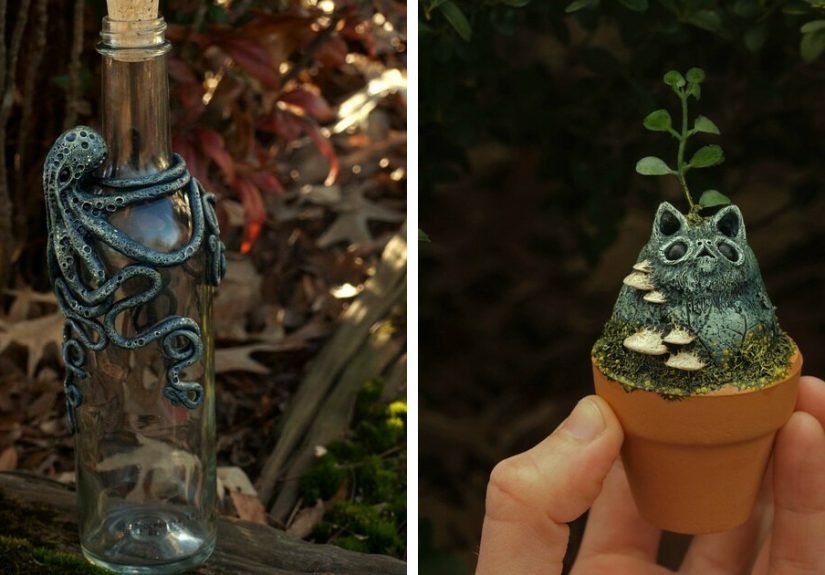
Not the whole krakenjust a tentacle section erupting from a wave base, like a museum specimen that escaped. The suction cups were sculpted in irregular rings to avoid the “identical coin stamp” look.
-
7) The Clockwork Minotaur
A minotaur rebuilt with gears and brass ribs, because mythology plus engineering equals instant drama. I kept the anatomy believable first, then “mechanized” only what enhanced movement: joints, spine, and the chest cavity.
-
8) The Winter Stag with Ice Antlers
A spirit deer whose antlers form jagged icicles. The whole sculpture is calm, but the antlers are violent geometry. That tensionserene face, dangerous crownmakes it feel mythic.
-
9) The Library Mimic (Hardcover Edition)
A monster disguised as an old book, with a spine that becomes a mouth and bookmarks that become tongues. The detail payoff is in the “believable book” texture: worn corners, cracked leather, tiny embossing.
-
10) The Chimera of Three Bad Decisions
Lion forequarters, goat midsection, serpent tailclassic chimera energy, upgraded with scar tissue and mismatched horn growth. I made the joins look surgically “real” so it feels born, not assembled.
-
11) The Swamp Knight (Armor with Regrets)
A drowned warrior whose armor is fused with algae and barnacles. Painting did most of the storytelling here: rust blooms, waterline stains, and a helmet interior that reads like a damp cave.
-
12) The Moon-Eyed Owlbear
An owlbear with huge reflective eyes and layered feather-fur transitions. The challenge was the seam: feathers must “flow” into fur naturally, so I sculpted directional patterns like wind maps.
-
13) The Desert Djinn, Sand-Formed
A swirling torso that looks like it’s made from windblown dunes, with a face forming and dissolving. I focused on rhythm: repeating wave shapes that lead your eye upward, like a storm you can’t ignore.
-
14) The Coral Siren Bust
A sea-siren portrait with coral growth replacing hair. The sculpt is elegant until you notice the coral is “eating” jewelry and skin. Beauty + discomfort is a reliable horror fantasy combo.
-
15) The Iron-Toothed Goblin Merchant
A goblin holding tiny trinkets, with a grin full of mismatched metal teeth. The face sells it: asymmetry, crow’s feet, and a nose that looks like it’s been negotiated with, not grown.
-
16) The Skywhale Calf
A floating whale creature with cloud-like fins and barnacle-like star clusters. I used soft transitions and subtle texture so it feels airylike it belongs to weather, not water.
-
17) The Witch’s Hut on Chicken Legs (Mini Diorama)
A walking cottage with gnarled wood, crooked windows, and claws gripping the ground. The fun here was scale detail: tiny shingles, warped nails, and a door that looks like it lies.
-
18) The Sphinx That Judges You Silently
Lion body, human face, and the emotional weight of a disappointed professor. I kept the pose compact and symmetrical, then added micro-cracks and sand-worn edges to imply centuries of patience.
-
19) The Fungal Ogre
A hulking creature with mushroom shelves growing from its shoulders and back. The sculpting trick: vary the mushroom thickness and curl so nothing looks copy-pastednature is chaotic, so your textures should be too.
-
20) The Glass-Scaled Sea Serpent
A serpent with translucent-looking plates and a wave base. I carved scale edges crisp, then finished with a glossy “wet” look. It reads dangerous, fast, and allergic to being touched.
-
21) The Candlewax Demon
A demon whose horns drip like melting wax, with a chest cavity that resembles pooled candle stubs. I used gravity cuesdrips, sag, and tear shapesto make the material feel real, not merely “weird.”
-
22) The Storm Roc
A giant mythical bird mid-landing, talons spread, feathers raked by wind. The pose is everything: I pushed the wing angles until the silhouette screamed motion, then reinforced the base like it owed me money.
-
23) The Underroot Golem
A golem built from clay and roots, with “living” vines tightening around cracked stone. I love this one because the textures fight each other: smooth stone planes versus fibrous roots. Conflict reads as life.
-
24) The Night Market Mask Spirit
A floating mask with trailing ribbons that become smoke. The drama comes from restraint: I kept the face simple and eerie, then made the trailing shapes complexlike the spirit is more presence than person.
-
25) The Honeycomb Behemoth
A bulky creature with hive cavities in its shoulders and a gentle-but-terrifying posture. The honeycomb pattern is intentionally imperfect; perfect hexagons look manufactured. Slight irregularity makes it feel organic.
-
26) The Mire Hydra (Three Heads, One Attitude)
A hydra rising from mud, heads arguing like coworkers in a group project. I varied neck thickness, head size, and expression to make each head its own characterotherwise it reads like a copy machine.
-
27) The Astral Jelly Knight
A knight silhouette made of star-speckled “gel,” with armor edges floating slightly off the body. It’s a fantasy sculpture built on a simple idea: recognizable human shape, impossible material. Instant intrigue.
-
28) The Sewer Dragon (Urban Legend Edition)
A small dragon perched on a manhole rim, with scales that look like corroded metal and grime embedded in the creases. The base sells the story: cracked concrete, rusty bolts, and a hint of steam.
-
29) The Thornfield Unicorn (Not Here to Be Pet)
A unicorn with a spiral horn like a spear and thorny growth along the spinemore guardian than glitter. I kept the face noble, then made the body dangerous. It’s a reminder: “pure” doesn’t mean harmless.
-
30) The Mountain-Eater Colossus Bust
A giant head-and-shoulders piece where the skin looks like stratified rock layers. This was a masterclass in patience: big clean planes, then carefully placed fractures and mineral streaks to imply scale.
What These Pieces Have in Common (Besides Being Bad Roommates)
Across all thirty, the strongest results came from three things: clear intent (what emotion should this creature trigger?), hierarchy (what details matter most?), and believable wear (how has this monster lived?). A fantasy creature sculpture feels real when it looks like it has historyscratches where armor rubs, stains where water collects, and edges that show time.
The other big secret is editing. If everything is detailed, nothing is detailed. I choose a few “hero zones” (face, hands, focal textures) and let other areas breathe. Think of it like seasoning: you want flavor, not a salt mine.
Extra: of Hard-Won Experience (So You Can Skip Some Pain)
Let me tell you about the first time I tried to sculpt a monster with wings larger than my confidence. I built the body, I sculpted the face, I added tiny teeth (because I’m incapable of leaving well enough alone), and then I attached the wings as an afterthought. The wings sagged. The creature leaned. The whole sculpture slowly evolved into a new species: Regretasaurus Wobblus.
Since then, my number-one rule in creature sculpting is: plan the engineering while you’re still in the “cool idea” phase. Wings, tails, weapons, and dramatic reaching arms are basically leverage machines. If you don’t build support into the armature early, you’ll spend your finishing stage doing structural rescue like a tiny construction worker screaming into the void.
I also learned that monster texture is less about “more” and more about direction. Scales should flow with anatomy. Wrinkles should point toward movement. Armor plates should look like they protect joints rather than randomly existing. When textures follow the physics of a body, your viewer’s brain accepts the creature fasterand once that happens, you can get away with the weird stuff. (Add an extra eye. Make the jaw hinge sideways. Give it ceremonial earrings. The brain is already on board.)
Paint taught me humility. Early on, I tried to “save” weak sculpting with loud paint schemes. It didn’t work. Paint highlights what’s there; it doesn’t invent good forms. Now I treat finishing like lighting in a movie: it directs attention and mood. I build depth with layered shadows, keep highlights purposeful, and add subtle color variation so skin doesn’t look like it was dipped in a single bucket labeled “Monster Green.”
If you want to make your fantasy monster sculptures look expensive (without selling your kidneys), focus on edges and transitions. Sharp edges read as crisp craftsmanshipteeth, claws, armor rims, eyelids. Clean transitions read as realismwhere horn meets skin, where scales thin into softer belly texture, where fur compresses under straps. These are small things, but they’re the difference between “toy-ish” and “cinematic maquette.”
Finally: keep a “failure shelf.” I’m serious. I keep a few flawed pieces where I can see them, because they remind me what to fix next time: over-texturing, symmetry addiction, underbuilt armatures, or that one era when I gave everything angry eyebrows. Your failures aren’t garbage; they’re receipts. And the best part? Every now and then, you’ll revisit an old “mistake” and realize it was actually a great ideajust executed too early in your skill timeline.
Conclusion
Sculpting monsters is my favorite kind of problem-solving: part anatomy, part storytelling, part engineering, part “why is there clay in my hair?” Whether you’re collecting inspiration, exploring monster sculpture art, or building your first creature maquette, the goal is the same: make something that feels like it could breathe, bite, or at minimum demand snacks.