Table of Contents >> Show >> Hide
- The Triangle: Mulch + Moisture + “Inspectability”
- Do Termites Come From Mulch?
- Termites 101 (The Version You’ll Actually Use)
- How Mulch Increases Risk Near Foundations
- The Foundation: Where Termites Turn Landscaping Into a Structural Problem
- Practical Mulch Rules That Actually Work
- Does Mulch Type Matter? Yes… but Not as Much as People Think
- How to Inspect: The 10-Minute Foundation Walk
- When Prevention Needs Backup: Barriers, Baits, and Pro Treatments
- A Simple “Do This, Not That” Checklist
- Conclusion: Mulch Can StayJust Don’t Let It Touch the House
- Real-World Experiences (Common Scenarios Homeowners Run Into)
Mulch is one of the greatest inventions in modern landscaping. It makes flower beds look finished, helps soil hold onto moisture,
and keeps weeds from throwing a house party in your petunias. Unfortunately, mulch is also very good at creating the kind of
cozy, humid, “tiny creature spa” environment that subterranean termites appreciate.
Here’s the good news: mulch doesn’t automatically “cause” termites, and using it responsibly doesn’t mean you have to pave your
yard in concrete like a mall parking lot. The real goal is simple: keep your foundation and lower wall areas dry, visible,
and easy to inspect, while still letting your landscape do its job. That balance is where termite prevention lives.
The Triangle: Mulch + Moisture + “Inspectability”
When homeowners worry about “mulch and termites,” they’re usually imagining termites living inside the mulch like it’s a
baguette-sized apartment complex. The reality is more nuanced:
- Mulch holds moisture. Termites need moisture and avoid drying out. Damp soil near your foundation is like a welcome mat.
- Mulch can hide activity. Thick layers can cover the foundation line and make it harder to spot mud tubes or damage.
- Mulch can bridge protective zones. Landscaping that piles up against walls can let termites travel where you can’t see them.
That’s why termite-smart landscaping isn’t “never use mulch.” It’s “use mulch with rules.” The rules are mostly about
spacing, depth, drainage, and keeping a clear view of the foundation.
Do Termites Come From Mulch?
If you’ve ever heard “Don’t buy bagged mulchtermites will move in,” take a breath. Extension guidance points out that the bigger
risk to a structure is typically termites already established on the property, not a few unlucky hitchhikers in a bag.
Termites can be found in mulch, but survival through chipping and separation from the colony is poor, and mulch-fed termites
show lower survivorship in research settings. In other words: mulch isn’t a great “starter home” for termitesit’s more like
a sheltered hallway they may use while foraging.
The more realistic concern is that mulch can create the conditions that help termites thrive near your foundation:
steady humidity, moderated temperature, and cover from sunlight. Moisture is repeatedly flagged as a major driver of termite
problems, which is why so much prevention advice sounds like a broken record about leaks, drainage, and wet soil.
Termites 101 (The Version You’ll Actually Use)
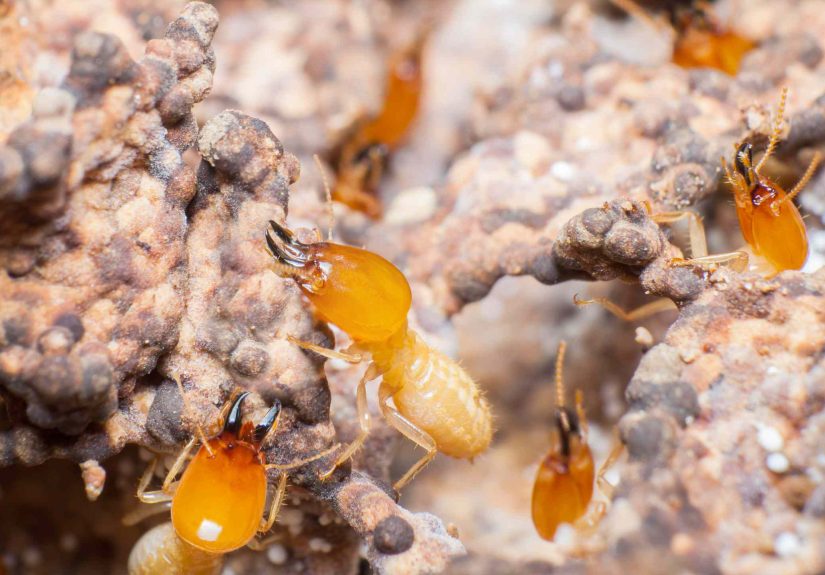
Most foundation-and-mulch conversations are really about subterranean termites. They live in the soil, travel
through it, and often build mud “shelter tubes” so they can move between soil moisture and wood without drying out. These tubes
are one of the easiest clues to spotif you can actually see your foundation line.
Subterranean termites aren’t roaming your yard like hungry raccoons. They forage in a network, looking for wood, moisture,
and hidden entry routes. That’s why the smartest approach is to reduce easy access:
- avoid wood-to-soil contact,
- manage moisture and drainage,
- and keep the foundation area inspectable.
How Mulch Increases Risk Near Foundations
1) Mulch creates a humid microclimate
Mulch slows evaporation. That’s great for plant rootsand also great for termites, which prefer moist environments. If you pile
mulch thickly along the foundation, you can keep the soil damp longer, especially in shady areas or where sprinklers hit the wall.
Some guidance specifically warns that thick mulch can keep soil moist and temperatures moderate, improving termite survival in places
they’re already established.
2) Mulch can hide mud tubes and entry points
Termite damage is famous for being stealthy. Subterranean termites often travel behind siding, trim, and wall finishes. When mulch,
leaves, or soil accumulate high enough to reduce clearance, termites may enter behind the siding without being detected.
That’s why multiple extension sources emphasize that the lower edge of siding and structural wood needs visible clearance above grade.
If you’ve got a slab foundation, look at the slab edge and the bottom of the siding. If landscaping slowly creeps upward over the years,
that “safe clearance” can disappear without you noticinguntil termites (or rot) do.
3) Mulch and landscaping can “bridge” treated zones
Many homes in termite-prone regions have had a soil treatment or rely on a protective zone around the foundation. When you dig, pile soil,
or stack mulch right against the wall, you can disrupt or cover that zone and make future treatments harder. Some guidance cautions against
digging close to the house and warns that adding new soil or thick landscaping can allow termites to bypass (bridge) treated soil areas.
Translation: even if you love your flower beds, don’t build them like a ski slope that climbs up your siding.
The Foundation: Where Termites Turn Landscaping Into a Structural Problem
Your foundation is not just “the concrete part.” It’s the whole transition zone where soil, moisture, wood, siding, insulation, and
tiny cracks all meet. Termites don’t need a giant hole. They need a hidden route and consistent moisture.
Slab-on-grade homes
Slab homes often have exterior siding or finishes close to the ground. If mulch or soil touches that lower edge, it can create a concealed
tunnel behind the siding. Guidance for slab foundations often emphasizes maintaining at least about 6 inches of clearance
and remembering that leaves and mulch can build up over time.
Crawl space homes
Crawl spaces can be termite-friendly if ventilation is poor or the ground stays damp. The prevention checklist looks familiar:
keep drainage moving away from the home, keep vents clear, and keep wooden supports from contacting soil. Dense vegetation close
to the foundation can trap moisture and make inspection harderso landscaping choices matter as much as chemical ones.
Basements
Basements can still have termite issues, especially along exterior walls and around utility penetrations. Exterior grading and drainage
matter a lot here. Water against foundation walls is a recurring theme in termite prevention guidancebecause wet soil is basically
a termite “yes, please.”
Practical Mulch Rules That Actually Work
Rule #1: Keep mulch from touching siding, trim, and wood
This is the non-negotiable. Multiple extension sources warn that mulch should never be in contact with wood siding or the framing around
doors and windows. If your mulch touches wood, you’ve created a hidden, moist pathway right where you don’t want one.
Rule #2: Maintain an inspection gap (and protect your clearance)
Think of your foundation like a shoreline: you want a visible band where you can easily spot mud tubes, cracks, or damage.
Guidance commonly emphasizes keeping siding well above grade and maintaining visible clearance rather than burying the wall under landscaping.
One extension recommendation suggests keeping mulch thin near the foundation and maintaining an inspection space so termite tubes are visible.
A homeowner-friendly way to check yourself:
- Walk the perimeter with a flashlight.
- Make sure you can see the foundation line (or slab edge) continuously.
- Make sure mulch isn’t hiding that line or touching siding.
Rule #3: Don’t overdo mulch depthespecially near the house
Mulch “fluff” is not a flex. Thick mulch can obscure inspection space and hold moisture longer. Many landscaping guides recommend
a moderate layer (often in the 2–4 inch range for general garden beds), but termite-focused guidance tends to be stricter right
next to the structure: keep it thinner near the foundation and avoid the dramatic 6-inch “mulch mattress.”
If you want your beds to look full, build depth away from the houselike a gentle slope that gets deeper as it moves outward,
not a cliff pressed against your wall.
Rule #4: Water management beats mulch debates
You can argue about hardwood vs. pine bark all day, but termites will happily show up for moisture. Prevention guidance repeatedly
emphasizes fixing leaks, keeping gutters and downspouts working, and grading soil so water flows away from the foundation.
One simple landscaping mistakesprinklers “watering the walls”can keep foundation soil damp enough to invite trouble.
Quick water fixes with big payoff:
- Extend downspouts so they discharge away from the foundation.
- Avoid irrigation right at the wall; adjust heads so they water plants, not siding.
- Check low spots where water puddles near the home after rain.
- Don’t block vents in crawl spaces with shrubs or piled mulch.
Rule #5: Remove “termite snacks” near the foundation
Termites don’t need mulch to find food. They’ll happily use stumps, buried roots, scrap wood, landscape timbers, and wood piles.
Several sources recommend removing stumps and wood debris near structures and not storing firewood or other cellulose materials
immediately adjacent to the house.
If you want a visual: firewood stacked against your wall is basically a buffet sign that says, “Parking available in the back.”
Does Mulch Type Matter? Yes… but Not as Much as People Think
The internet loves a simple villain, so wood mulch often gets blamed like it personally texted the termites your address.
In reality, termites are mainly attracted by moisture and cover. Research and extension guidance suggest that even
inorganic ground covers can create moist soil conditions that are favorable for termite foraging. In other words, rock isn’t a magic
shield if it still traps moisture and hides the foundation line.
Organic mulches (wood chips, bark, pine straw)
Pros: soil health, plant benefits, temperature moderation. Cons: cellulose, moisture retention, can hide inspection areas if piled high.
Used responsiblywith spacing, controlled depth, and good drainageorganic mulches can still be part of a termite-smart landscape.
Inorganic mulches (pea gravel, stone, rubber)
Pros: don’t rot and may reduce direct cellulose contact. Cons: can still maintain moist soil conditions, may hide foundation edges,
and can create a comfortable microhabitat if installed thickly against the wall. If you go inorganic, the same rules apply: keep it
off the siding and keep the foundation visible.
Bottom line: choose mulch for your plants and climate, then manage it like a responsible adultspacing, depth, and moisture control
matter more than the label.
How to Inspect: The 10-Minute Foundation Walk
You don’t need to be an entomologist. You just need a flashlight and curiosity. Purdue Extension notes that earthen “shelter tubes”
on foundation walls or wood are evidence of infestation, and that termites build these tubes from bits of soil. NC State Extension
also emphasizes keeping the foundation visible so those tubes don’t go unnoticed under mulch or vegetation.
What to look for
- Mud tubes running up foundation walls, piers, or behind siding.
- Swarmers (winged termites) or piles of shed wings near windowsills.
- Soft or damaged wood around trim, porches, and door framesespecially where moisture is present.
- Conducive conditions: mulch touching siding, wet soil, blocked vents, wood debris near the home.
If you find something suspicious, don’t panictermite work is slow. But do take action: improve moisture control and call a licensed
pest professional for a real inspection if you see tubes, swarmers, or structural damage.
When Prevention Needs Backup: Barriers, Baits, and Pro Treatments
Landscaping reduces risk, but it doesn’t create an invisible force field. Many extension sources recommend combining prevention with
regular inspections, and they note that professional treatments can be an important layer of protectionespecially in high-risk areas.
Treatment approaches commonly include:
- Liquid soil treatments designed to create a barrier around/under the structure.
- Bait/monitoring stations placed around the home and checked on a schedule.
- Physical barriers in new construction (like metal mesh or graded sand/basalt barriers) and design details that keep
foundations inspectable and seal penetrations.
The Building America Solution Center (PNNL/DOE) goes deep on termite-resistant foundation strategies for new construction and renovations:
sealing utility penetrations, reducing joints and cracks, installing physical barriers, and designing assemblies that maintain
inspectability. If you’re building or doing a major remodel, that’s the moment to bake termite resistance into the structure rather
than relying on landscaping alone.
A Simple “Do This, Not That” Checklist
Do this
- Keep a visible foundation band (inspection gap) around the house.
- Keep mulch off siding, trim, door frames, and window frames.
- Use mulch at a sensible depth and keep it thinner near the foundation.
- Direct water away: clean gutters, extend downspouts, adjust sprinklers.
- Remove stumps, buried wood, scrap lumber, and wood piles near the home.
- Schedule periodic professional inspections if you live in a termite-prone area.
Not that
- Don’t pile mulch like a levee against your wall.
- Don’t let landscaping creep up and erase your clearance over time.
- Don’t ignore damp soil, standing water, or plumbing leaks.
- Don’t plant dense shrubs so close they block airflow and visibility.
- Don’t assume gravel means “termite-proof.”
Conclusion: Mulch Can StayJust Don’t Let It Touch the House
The relationship between mulch, termites, and your house foundation isn’t a horror storyit’s a maintenance story.
Termites are moisture-driven opportunists, and mulch is a moisture manager. If mulch hides your foundation, holds water against the wall,
or touches wood, it can raise risk. If mulch is kept at a sensible depth, pulled back from the structure, and paired with good drainage
and regular inspection, it can coexist with a termite prevention plan just fine.
So go ahead: keep your garden beds looking sharp. Just give your foundation the breathing room and visibility it deserves.
Your plants will still thriveand your house won’t become a surprise renovation project for insects with excellent teamwork.
Real-World Experiences (Common Scenarios Homeowners Run Into)
The “mulch vs. termites” debate usually becomes real when someone has a problem and tries to reverse-engineer the cause. Below are
a few common experiences homeowners and inspectors describeshared here as practical lessons, not as scare tactics.
The Mulch Mattress
One of the most frequent stories starts with curb appeal: a homeowner refreshes beds with fresh mulch, then adds more later in the season,
then tops it off again next spring. After a couple of years, what began as a neat 2–3 inch layer becomes a deep, spongy “mulch mattress”
pressed right up to the foundation. It looks tidybut it also keeps the soil damp and makes the foundation line harder to see.
The surprise comes during a routine walk-around (or a pest inspection) when someone finally rakes the mulch back and discovers mud tubes
on the exposed wall that had been hidden in plain sight. The fix usually isn’t dramatic: reduce mulch depth near the house, re-establish
a visible inspection band, and correct any water issues that kept the soil wet.
The Sprinkler That Watered the Wall
Another classic: the irrigation system is set up when plants are small. Later, the garden fills in, sprinkler heads get slightly tilted,
and suddenly the spray pattern hits the siding instead of the flowers. The area along the foundation stays damp for hours after each cycle.
Homeowners often notice peeling paint, algae staining, or a musty smell before they ever think about termites. When a professional points it out,
it’s a lightbulb moment: termites don’t need “better mulch” as much as they need the homeowner to stop creating an always-wet strip of soil.
Adjusting heads, shortening cycles, and making sure water drains away can change the entire risk profile of that side of the house.
The “I Chose Gravel, So I’m Safe” Surprise
Many homeowners switch to pea gravel or decorative rock near the foundation to avoid wood mulch. It can be a perfectly good choiceuntil it’s
installed thickly, traps debris, and still keeps soil underneath humid. The frustration usually sounds like: “But it’s rockhow could termites
like it?” The answer is almost always moisture and cover. If the rock bed hides the foundation edge or collects leaves and organic matter, you’ve
recreated the same conditions you were trying to avoid. The best outcome is when homeowners treat rock like mulch: keep it pulled back from siding,
keep the foundation visible, and clean out organic debris seasonally.
The Raised Flower Bed That Kept Rising
Raised beds are popular, but they can drift into risky territory when soil and mulch end up higher than the foundation line. Homeowners often don’t
realize how quickly “grade” changes with repeated top-dressing. In some cases, the bottom edge of siding is now effectively in contact with soil or
mulch, removing the clearance needed for inspection. The fix is often more annoying than expensive: regrade the bed lower near the house, move the
bed outward, or install edging that forces a step-down away from the wall. Once the clearance is restored, inspections become easier, splash-back
decreases, and the whole perimeter dries faster after rain.
The Best Experience: Catching It Early
The happiest termite stories are the boring ones. A homeowner does a quick perimeter check, notices a thin mud line near a corner, and calls a pro.
Because the foundation is visible and not buried under mulch, the evidence is easy to spot early. The treatment plan is simpler, repairs are minimal,
and the homeowner learns a lasting rule: “Landscaping should never hide the place where my house meets the ground.” That one habitkeeping the
foundation inspectableoften makes the difference between a manageable problem and a painful, expensive surprise.