Table of Contents >> Show >> Hide
- What Wet Sanding Actually Does (And Why It Works)
- When Wet Sanding Makes Sense
- When You Should Not Wet Sand
- Tools & Supplies Checklist
- Grit Cheat Sheet (Quick Decisions Without Overthinking)
- 14 Steps to Wet Sand a Clear Coat (Safely)
- Step 1: Confirm the clear coat is ready (and worth sanding)
- Step 2: Wash like you mean it
- Step 3: Decontaminate and “map” the defects
- Step 4: Mask edges, trim, and body lines
- Step 5: Mix proper lubricant (and skip kitchen chemistry)
- Step 6: Choose your starting grit with a test spot
- Step 7: Prep your abrasive
- Step 8: Wet sand using light pressure and a crosshatch pattern
- Step 9: Check your work constantly (squeegee is your best friend)
- Step 10: Refine through your grit progression (don’t leapfrog like a maniac)
- Step 11: Rinse, clean, and reset before polishing
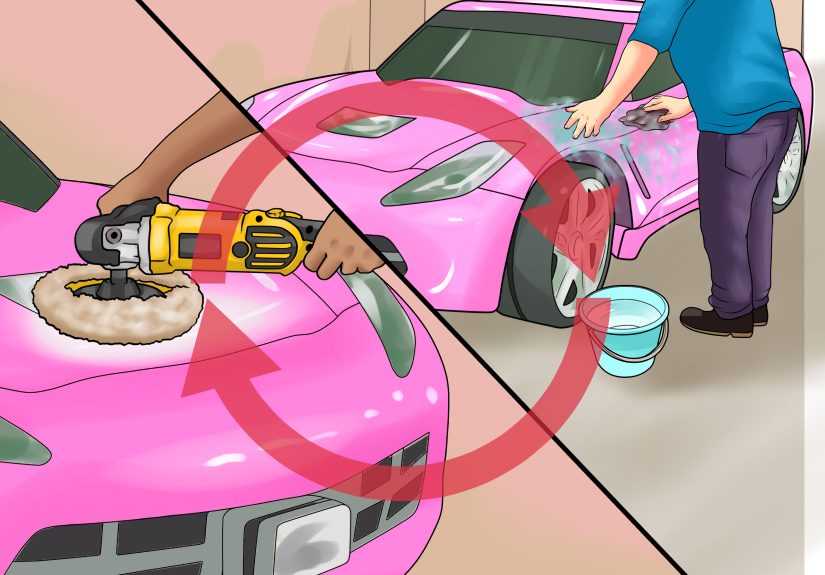
- Step 12: Compound to remove sanding marks (controlled heat wins)
- Step 13: Polish to restore depth and clarity
- Step 14: Protect the finish (but respect fresh paint rules)
- Troubleshooting: Common “Wait, Is This Normal?” Moments
- Pro Tips for a Cleaner, Safer Finish
- Bonus: Real-World Experiences & Lessons People Learn the Hard Way (About 500+ Words)
- Conclusion
- SEO Tags
Wet sanding a clear coat is the automotive version of trimming your bangs: done carefully, it looks amazing.
Done impulsively, you’ll be wearing a hat (or repainting a panel) for a while.
This guide walks you through a safe, realistic process for leveling orange peel, removing dust nibs, and refining
clear coat defectsthen bringing the shine back with compounding and polishing. You’ll get a true 14-step workflow,
grit selection tips, and the “don’t do this” warnings that save clear coat (and friendships).
What Wet Sanding Actually Does (And Why It Works)
Clear coat defects like orange peel, dust nibs, and small runs are mostly topography problemsnot
“dirt on top” problems. Polishing alone can improve gloss, but it struggles to flatten texture because a pad tends
to kiss the high spots while still “floating” over the lows. Wet sanding is different: it can level the surface
by uniformly cutting down the high points until the panel becomes flatter and more reflective.
The catch: clear coat is thin and valuable. Every sanding pass removes material. So the goal isn’t “sand until you’re bored.”
The goal is “remove only what you must, then stop immediately and refine.”
When Wet Sanding Makes Sense
- Orange peel that bothers you in direct light (especially on dark colors)
- Dust nibs or tiny specks trapped in the clear
- Minor texture mismatch after a spot repair or blended panel
- Light clear coat runs/sags (advancedonly if you’re confident and have enough film build)
When You Should Not Wet Sand
- Peeling/failed clear coat (that needs refinishing, not sanding)
- Unknown paint history (especially thin OEM clear on edges or older repaints)
- Cracks/checking in clear (sanding can worsen the look)
- If you can’t finish the job (sanding without polishing leaves a permanent matte haze)
Tools & Supplies Checklist
- Quality car wash soap, wash mitt, microfiber towels
- Clay bar or synthetic clay + lubricant (optional but helpful)
- Masking tape (automotive), plastic sheeting (optional)
- Spray bottle (clean water + a couple drops of car wash soap)
- Wet/dry sandpaper or sanding discs: 1500, 2000, 2500, 3000 (plus 1000–1200 only if truly needed)
- Sanding block (soft interface block for curves; firmer block for flatter areas)
- Rubber squeegee or clean microfiber for frequent inspection
- Compound + polishing system (compound, polish, pads)
- Machine polisher (dual-action recommended; rotary is faster but less forgiving)
- Panel wipe/IPA mix (optional) and bright inspection light
- Safety gear: nitrile gloves, eye protection, and a respirator/dust mask appropriate for sanding
Grit Cheat Sheet (Quick Decisions Without Overthinking)
| Defect Type | Typical Starting Grit | Common Finish Grit | Notes |
|---|---|---|---|
| Dust nibs / tiny specks | 2000–3000 | 3000 | Often localized; don’t sand the whole panel if you don’t need to. |
| Moderate orange peel | 1500–2000 | 3000 | Do a small test spot first; texture can be deeper than it looks. |
| Heavier texture / mild run | 1000–1500 (advanced) | 3000 | Higher risk. Stay away from edges and body lines. |
14 Steps to Wet Sand a Clear Coat (Safely)
-
Step 1: Confirm the clear coat is ready (and worth sanding)
If the clear coat is fresh from a refinish, follow the paint maker’s curing window before sanding. If it’s OEM paint,
you’re usually dealing with fully cured clearbut also potentially thinner film on edges. Either way:
wet sanding is optional, not mandatory. If your defects are minor, a polish might be enough.Pro move: if you have a paint thickness gauge, use it. Even without one, assume the edges and sharp body lines are
the danger zone and treat them like they’re made of tissue paper. -
Step 2: Wash like you mean it
Wash thoroughly to remove grit that can cause deeper scratches while sanding. Work in the shade, rinse well, and dry completely.
If the paint feels rough afterward, consider claying the panel so you’re not sanding over bonded contaminants.Think of it this way: you’re about to rub an abrasive across the surface on purpose. Don’t invite extra chaos.
-
Step 3: Decontaminate and “map” the defects
Under bright light, identify what you’re actually trying to remove: nibs, peel, a small run, or sanding scratches.
You can even circle problem areas with a wax pencil or small pieces of tape near (not on) the defect so you don’t
keep sanding “just because you’re already here.”Example: If only the top third of the hood has orange peel that shows under garage LEDs, don’t sand the entire hood
out of habit. Sand what needs leveling, then blend your refinement steps wider. -
Step 4: Mask edges, trim, and body lines
Tape off sharp panel edges, creases, and adjacent plastic trim. Those spots burn through first because pressure
concentrates there. If you want a clean, glossy finish, you must first avoid exposing base coat like a magician
accidentally revealing the trap door. -
Step 5: Mix proper lubricant (and skip kitchen chemistry)
Fill a spray bottle with clean water and add a couple drops of pH-balanced car wash soap. The soap adds glide and helps
keep sanding residue from clumping. Avoid harsh detergentsyour clear coat doesn’t need to be “degreased into submission.” -
Step 6: Choose your starting grit with a test spot
Always start with the least aggressive grit that will do the job. Try a small area first (think 12″ x 12″).
If the defect doesn’t change after a controlled set of passes, step down slightlydon’t jump from “nothing’s happening”
straight to “I guess we’re sanding the Earth’s crust now.”A practical approach:
2000–3000 for tiny nibs and light texture;
1500–2000 for more obvious orange peel;
1000–1500 only for advanced correction where you’re confident there’s enough clear to work with. -
Step 7: Prep your abrasive
If you’re using wet/dry paper, soak it briefly (many pros do) and keep it clean. If you’re using foam micro-abrasives
or specialized discs, follow the product guidancemany “modern systems” are designed for controlled wet or damp sanding
and can be easier to polish afterward.Attach paper to a sanding block. Finger-sanding is how you create surprise “low spots” that show up later like
a regretful tattoo. -
Step 8: Wet sand using light pressure and a crosshatch pattern
Mist the panel (and/or the sanding media) so it stays lubricated. Sand in straight lines, then change direction
(crosshatch) to keep removal even. Overlap your passes by about half.Keep pressure light. Let the abrasive do the work. If you’re bearing down, you’re not “saving time”you’re just
accelerating the moment you say, “Wait… why is it turning a different color?” -
Step 9: Check your work constantly (squeegee is your best friend)
Stop often, wipe or squeegee the area dry, and inspect. Wet sanding can hide defects because everything looks shinier
when it’s wet. You want to see a uniform, dull, evenly leveled surface where the high spots have been cut down.If you see a patch that’s still glossy while the rest is uniformly matte, that glossy area is likely a low spot
(texture remaining). Don’t chase it foreverespecially near edges. -
Step 10: Refine through your grit progression (don’t leapfrog like a maniac)
Once the defect is leveled with your starting grit, move up gradually: for example,
1500 → 2000 → 2500 → 3000 or 2000 → 3000.
Each step removes the previous grit’s scratches and makes polishing dramatically easier.Tip: The final grit isn’t about “removing defects” anymoreit’s about making your polishing stage faster, cooler,
and less likely to haze. -
Step 11: Rinse, clean, and reset before polishing
Thoroughly wash or wipe sanding residue away. Sanding slurry loves to hide in panel gaps and then fling itself onto
your polishing pad like it paid rent. Use clean microfiber towels and inspect under good lighting.If you have compressed air, carefully blow out cracks and trim areas (eyes protected). Clean pad = cleaner finish.
-
Step 12: Compound to remove sanding marks (controlled heat wins)
Start with a cutting compound and an appropriate pad. Work in small sections and keep the machine moving.
The goal is to remove sanding haze without overheating the clear coatespecially on edges and crowns.If you still see straight-line sanding marks after compounding, either:
(1) your sanding steps skipped too aggressively, or
(2) your compounding step needs a stronger pad/compound combo.
Fix the process, not your blood pressure. -
Step 13: Polish to restore depth and clarity
Follow with a finishing polish and a softer pad to remove micro-marring and bring the gloss up.
Inspect from multiple angles and different light sources (sunlight, LEDs, handheld light).A good polish stage is where the paint stops looking “shiny” and starts looking “deep.”
Yes, it’s a real difference. No, you can’t unsee it once you notice it. -
Step 14: Protect the finish (but respect fresh paint rules)
For fully cured OEM paint, you can protect immediately with a quality wax, sealant, or coating.
For fresh refinish work, follow the manufacturer’s guidance. A conservative approach many pros recommend:
avoid silicone waxes and polishing for the first 30 days while paint fully cures.Either way: gentle washing habits and good drying technique keep your hard-earned gloss from becoming “hard-learned swirls.”
Troubleshooting: Common “Wait, Is This Normal?” Moments
The surface looks worse after sanding
Normal. Wet sanding intentionally turns clear coat matte by creating uniform micro-scratches.
The shine comes back during compounding and polishing. Don’t panicyet.
I’m seeing a different color (or primer) on an edge
Stop immediately. That can indicate burn-through. If this happens, polishing won’t “fix” it; refinishing may be required.
This is why edges are taped and treated like fragile glass.
My polishing step isn’t removing sanding marks
Usually one of three issues:
(1) you finished sanding with too coarse a grit,
(2) you skipped too far between grits, or
(3) your compound/pad combo is too mild.
In many cases, re-sanding with a finer grit (like 3000) and then compounding again is faster than endless polishing.
I’m getting haze on dark paint
Dark colors show everything. Reduce pad pressure, refine your final sanding grit, and use a true finishing polish.
Also make sure your pads are cleandirty pads haze paint like it’s their hobby.
Pro Tips for a Cleaner, Safer Finish
- Stay off edges and body lines as much as possible; blend up to them instead of camping on them.
- Use blocks to prevent finger marks and uneven leveling.
- Work small (especially on your first attempt). Big panels reward patience, not bravado.
- Keep everything clean: bucket water, towels, pads, and your hands.
- Don’t chase perfection into disaster. Removing 70–80% of orange peel can look incredible without risking burn-through.
Bonus: Real-World Experiences & Lessons People Learn the Hard Way (About 500+ Words)
If you ask ten people about wet sanding clear coat, you’ll get at least twelve opinionsand three of them will include
the phrase “I learned this the hard way.” That’s because wet sanding sits right at the intersection of
simple concept and high consequence. You’re basically flattening a microscopic landscape, and the prize is a mirror finish.
The cost of a mistake is also… a mirror finish. Just on your bank account.
One common first-timer experience is discovering how much lighting changes everything. Under soft shade,
a panel can look “pretty good.” Under harsh LEDs or direct sun, orange peel pops like it’s auditioning for a starring role.
People often start sanding the whole panel, then realize only a specific zone actually needed leveling. The more efficient
approach (and the one most folks eventually adopt) is to map defects first, then correct only what you can clearly justify.
It feels slower at the beginning, but it’s faster than sanding an entire hood just to fix a few textured patches near the center.
Another big “aha” moment is how often you need to check your work. Beginners sometimes sand for several minutes
before wiping drythen they’re surprised when the panel looks uneven. The reality is that wet clear coat hides the truth.
Once people switch to a rhythmspray, a few passes, squeegee, inspectthey gain control and stop over-sanding. Many also notice
the slurry turning light/opaque as clear coat is abraded, which can be a useful cue that the abrasive is actually cutting.
Grit selection is also where real-world experience kicks in. A lot of DIYers want a single magic grit that does everything.
In practice, the starting grit depends on the defect depth and how much you’re willing to risk. People who start too aggressive
often spend the rest of the day trying to remove deep sanding marksor worse, discovering they’ve thinned an edge. People who start
too fine sometimes get frustrated because “nothing is happening,” then they push harder (which is its own problem). The happy medium
is doing a test spot and letting resultsnot feelingschoose the grit. If 2000 isn’t touching the texture after controlled passes,
stepping down to 1500 for leveling and then refining back up can be safer than pressing harder with 2000 and creating uneven removal.
Polishing after sanding is another “experience-based” skill. Many people expect compound to work like an eraser: one pass, done.
Real life is more like “controlled repetition.” Smaller sections, clean pads, and managing heat make the biggest difference.
People also learn that edges and crowns are not the place to “finish strong.” The smarter move is to blend toward edges and let the
least aggressive polishing step handle them, because sharp features are where clear coat is easiest to burn through.
Finally, there’s the emotional experience: the mid-job panic. Wet sanding makes paint look terrible before it looks amazing.
That momentstanding there with a dull, hazy panelconvinces many beginners they ruined it. The people who end up with great results
are the ones who trust the process, keep everything clean, and follow through with proper compounding and polishing. The “secret” is
not superhuman technique; it’s discipline: slow down, check often, refine grits, and stop sanding the moment the defect is leveled.
Once someone completes their first successful panel, the fear drops and the method becomes repeatable. They also tend to become the
annoying friend who says, “Yeah, I could probably fix that,” which is both a gift and a curse.
Conclusion
Wet sanding clear coat is all about controlled leveling: remove the least material needed, refine your scratches through
sensible grit steps, then restore gloss with compounding and polishing. If you work clean, inspect constantly, and stay cautious on edges,
you can dramatically improve clarity and reduce orange peel without turning your project into a repaint.