Table of Contents >> Show >> Hide
- What Exactly Was Found?
- Unknown Script or Unknown Language? There Is a Difference.
- What Might the Tablet Say?
- Why the Caucasus Matters More Than You Might Think
- Other Ancient Writing Mysteries Put This Find in Context
- Why Finds Like This Grab the Imagination
- Experiences Related to the Mystery of an Unknown Ancient Script
- Conclusion
Every so often, archaeology delivers a discovery that feels less like history and more like a cliffhanger. A shard here, a tomb there, maybe a fancy pot if the universe is feeling generous. But an ancient tablet covered in signs that do not clearly belong to any known writing system? That is the kind of find that makes scholars sit up straighter, clean their glasses, and whisper the academic version of “Well, that’s weird.”
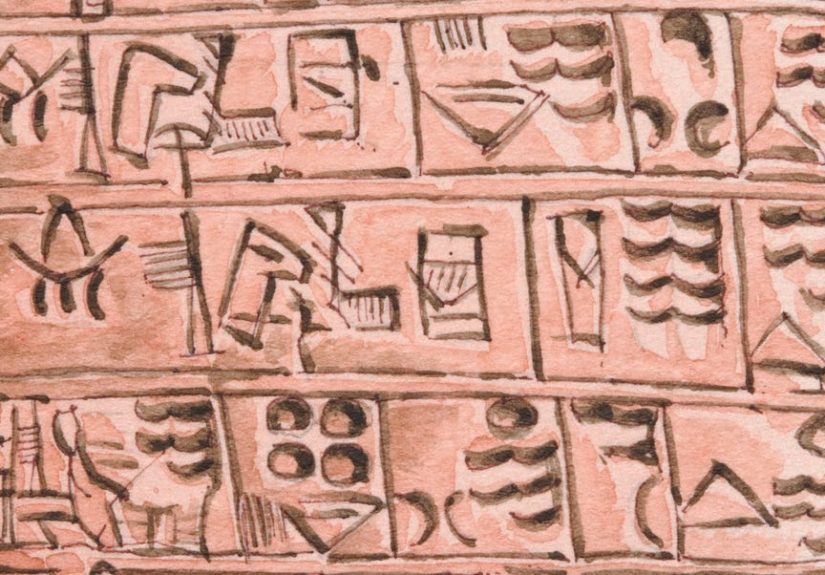
That is exactly why the Bashplemi Lake tablet has created such a stir. Found in Georgia’s Dmanisi region, the stone slab carries rows of carved symbols that researchers say do not neatly match any script already known to science. The headline version is irresistible: archaeologists found a tablet with letters from an unknown language. The careful version is even more interesting. These may not be “letters” in the modern alphabet sense at all. They are better described as signs or characters, and nobody can yet say with confidence what language they represent, how the text should be read, or what message the tablet was meant to preserve.
Still, that uncertainty is what makes the discovery so compelling. It opens the door to one of archaeology’s favorite possibilities: not just a new artifact, but a new chapter in the story of writing. If the inscription truly belongs to an unknown script, the stone could preserve evidence of a local tradition of literacy in the Caucasus that historians have only glimpsed in fragments. In other words, this is not just a mysterious rock. It may be a stubborn little witness to a lost intellectual world.
What Exactly Was Found?
The tablet was discovered near Bashplemi Lake in southern Georgia, in the Dmanisi area, a region already famous in archaeology for very different reasons. Dmanisi has produced some of the most important early human fossils ever found outside Africa, so the area already had a reputation for rewriting old assumptions. Apparently, it was not done yet.
The newly studied artifact is a book-sized basalt tablet. Researchers described it as being made from local vesicular basalt, which matters because it helps support the case that the object belongs to the region rather than being some later import or oddball intrusion. The inscription consists of 60 total signs, 39 of them unique, arranged across seven lines or registers. Part of the slab appears broken, which means the original text may have been longer. Naturally, ancient inscriptions have a habit of losing exactly the part scholars would most love to read.
Researchers also found that the carving was not casual scratching. The marks appear deliberate and technically controlled. According to the study and subsequent reporting, the maker likely used pointed drilling and smoothing tools to outline and connect the forms. That level of workmanship suggests the inscription was intentional, formal, and meaningful to the people who created it. This was not someone doodling while waiting for the Bronze Age equivalent of a bus.
Why Archaeologists Are Taking It Seriously
When a previously unknown inscription appears, scholars have to be careful. Strange symbols alone do not prove the existence of a lost script. A surface could contain decorative marks, ownership signs, ritual symbols, a game board, or even something modern and misleading. So the first order of business is always to ask whether the object is authentic and whether the marks behave like writing.
In this case, several details make the Bashplemi tablet hard to dismiss. The signs are arranged in orderly rows. Some characters repeat while others remain rare, which is exactly the kind of distribution that can hint at structured communication. The inscription also seems visually systematic rather than random. Some symbols resemble forms known from scripts in the Near East, the Mediterranean, and the Caucasus, yet the full set does not line up cleanly with any one tradition. That mix of familiarity and mismatch is what makes epigraphers both excited and deeply sleep-deprived.
The archaeological context matters too. The Bashplemi Lake area has yielded ceramics, lithics, and other material linked to ancient settlement and activity. Based on associated evidence and stylistic comparison, researchers think the tablet may date to the Late Bronze Age or Early Iron Age, though the precise date remains uncertain. That puts it in a period when writing systems across wider Eurasia were developing, adapting, and spreading in uneven ways.
Unknown Script or Unknown Language? There Is a Difference.
This is where the story gets richer than the headline. A script is the visual system of signs used for writing. A language is the spoken or signed system of communication behind it. Those two things are related, but they are not the same.
English can be written in the Roman alphabet. Ancient Egyptian could be written in hieroglyphs. Multiple languages have been written in cuneiform. That means the Bashplemi inscription could represent a language scholars already know exists but have never seen written this way. Or it could reflect a language that has vanished without leaving enough other evidence to identify it. Or, just to keep everyone humble, it could be a local script used for a very narrow purpose such as ritual notation, administrative record keeping, or property marking.
That distinction explains why the phrase “unknown language” is catchy but slightly too neat. What scholars can say more safely is that the tablet appears to preserve an unknown or at least unclassified writing system. The language behind it remains hypothetical until the signs are deciphered.
Why Decipherment Is So Hard
People often imagine that deciphering ancient writing is like solving a crossword with better accessories. In reality, it is closer to solving a crossword when half the clues are missing, the grid is broken, the language is extinct, and the editor has been dead for 3,000 years.
Successful decipherment usually depends on a few lucky breaks. One is volume: the more inscriptions scholars can compare, the better their chances of spotting recurring patterns. Another is context: if a text appears in a temple, archive, grave, or storeroom, that setting may narrow what kind of message it contains. The gold standard, though, is a bilingual or trilingual inscription, like the Rosetta Stone, where the same message appears in a known script and an unknown one.
That approach has helped crack difficult systems before. The Rosetta Stone helped scholars unlock Egyptian writing. More recently, researchers working on the so-called Kushan script used bilingual and trilingual evidence to identify values for many signs and connect the system to a previously unknown Middle Iranian language. Work on Linear Elamite also advanced because scholars could compare repeated names and formulas across inscriptions. Without that sort of parallel evidence, progress slows to a crawl.
What Might the Tablet Say?
This is the most tempting question, and the honest answer is: nobody knows yet. Still, archaeology is rarely silent even when translation is impossible. Form, material, repetition, and setting all offer clues.
Because the Bashplemi tablet is made of durable stone rather than clay, leather, or wood, some researchers have suggested it may have held information worth preserving publicly or ceremonially. Reporting on the study mentions possibilities such as a record of military spoils, a construction inscription, or an offering to a deity. Those suggestions are not wild guesses. Across the ancient world, durable inscriptions often commemorated building projects, dedicated objects to gods, marked ownership, or recorded political acts.
The repeated symbols may also matter. Repetition can indicate titles, names, numbers, or formulaic phrases. In many ancient inscriptions, the most common repeating units are exactly the things modern readers would expect: rulers, gods, dates, quantities, and verbs like “gave,” “built,” or “dedicated.” If the Bashplemi tablet follows that pattern, then the future key to understanding it may lie in the repeated signs rather than the rare ones.
There is also uncertainty about direction. Some reports suggest the inscription could run horizontally in either direction. Until scholars determine where the text begins and ends, every attempt at internal analysis remains provisional. Reading a text backward is not ideal unless the civilization in question had a strong avant-garde streak.
Why the Caucasus Matters More Than You Might Think
For readers who do not spend weekends thinking about Bronze Age literacy, the Caucasus may seem far from the standard story of ancient writing. We usually hear about Mesopotamia, Egypt, the Levant, Greece, and maybe the Indus Valley. But that familiar map can hide how connected the ancient world really was.
The South Caucasus sat at a crossroads between major cultural zones. Trade, migration, metallurgy, pastoral mobility, and political contact tied the region to neighboring worlds. If the Bashplemi tablet represents a local script tradition, it could challenge older assumptions that writing in this zone only arrived late or only through outside influence. It could also suggest that communities in the region experimented with adapting signs, sounds, and symbolic systems in ways we have not yet documented well.
That possibility matters because the history of writing is not a straight line with one inventor and a neat family tree. It is a messy human story of borrowing, adapting, abandoning, and reinventing. Scripts can spread through empire, religion, trade, or prestige. They can also disappear when political systems collapse or writing materials decay. A stone tablet survives because stone is rude enough to ignore time.
Other Ancient Writing Mysteries Put This Find in Context
The Bashplemi tablet joins a club of famously difficult texts. The Phaistos disk from Crete remains an enigma more than a century after its discovery. The rongorongo inscriptions of Rapa Nui still resist full decipherment, even as new dating research strengthens the case that the script predates European arrival. The Indus script remains one of the world’s greatest linguistic puzzles, in part because scholars lack long texts and universally accepted bilingual comparisons.
At the same time, some once-mysterious systems have yielded ground. Maya writing, once thought hopelessly obscure, is now substantially deciphered, showing just how much can change when enough inscriptions, careful comparisons, and patient scholars come together. The lesson is not that every mystery will be solved tomorrow. It is that seemingly impossible scripts can move, little by little, from silence to speech.
How Technology Could Help
Modern decipherment is no longer just about notebooks and heroic eyebrows. Today’s researchers can combine microscopy, digital imaging, pattern analysis, 3D modeling, and AI-assisted comparison. Artificial intelligence has already helped scholars read damaged scroll material once considered inaccessible, and computational work continues to shape research on undeciphered systems like the Indus script and Proto-Elamite.
For the Bashplemi tablet, technology could help in several ways. High-resolution imaging may reveal carving order, stroke depth, or subtle corrections invisible to the naked eye. Statistical modeling could compare sign frequencies and combinations against known writing systems. Regional survey work might uncover related inscriptions. And if a second or third text turns up using the same symbols, this lonely stone could suddenly become the first page of a much larger archive.
Why Finds Like This Grab the Imagination
Most archaeological discoveries tell us more about what people made, ate, buried, traded, or built. Writing does something more intimate. It hints at voice. An unread inscription is powerful because it sits on the edge of speech. You know someone was trying to say something specific, but history has left you standing outside the door.
That is why the Bashplemi tablet feels so haunting. It is not just old. It is communicative. Someone carved these signs because they expected them to mean something to another human being. Maybe it was a local elite, a ritual specialist, an administrator, or a craftsperson. Maybe the message was practical and boring, which would be funny and wonderfully human. Imagine if the great mystery turned out to be a warehouse list. Archaeology would survive the disappointment. Historians, honestly, might love it more.
Until the inscription is understood, the tablet remains suspended between object and message. That is a frustrating place for scholarship and a glorious place for curiosity.
Experiences Related to the Mystery of an Unknown Ancient Script
Part of the reason stories like this travel so fast is that they create a very specific emotional experience for readers, museum visitors, and researchers alike. Standing in front of an artifact covered in unread signs is unlike looking at a statue, a pot, or even a burial object. You are not just seeing the past. You are encountering an attempt at communication that has been delayed for centuries, sometimes millennia. It feels strangely personal. Somebody wrote this for somebody else, and now all of us are awkwardly eavesdropping from the future.
For archaeologists, the experience is likely a mix of exhilaration and caution. The first thrill comes from recognizing pattern: the marks are repeated, aligned, intentional. Then comes the quieter professional instinct to slow down and avoid saying too much too soon. That tension is part of the job. You want to announce a breakthrough, but you also know history is littered with premature “decipherments” that turned out to be elaborate wishful thinking. So the experience becomes one of disciplined excitement, which is not a phrase that sells movie tickets but does describe real scholarship.
For the public, the appeal is easier to understand. Unknown writing taps into the same part of the brain that loves treasure maps, locked rooms, and puzzle boxes. We are wired to believe symbols can be cracked. We want there to be a hidden key. We want one lucky inscription to function like a Rosetta Stone and suddenly make the whole ancient world talkative. That hope is why mysteries like the Bashplemi tablet feel so cinematic, even when the real work involves databases, microscopes, and several people having intense opinions about line direction.
There is also a more reflective experience tied to discoveries like this: humility. Modern people are used to searchable text, instant translation, and the general assumption that information can be unlocked if you just click hard enough. An undeciphered inscription reminds us that human knowledge still has edges. There are messages in the archaeological record that remain closed, not because they are unimportant, but because time was selective about what it preserved. Sometimes we have the text but not the code. Sometimes we have the code family but not enough text. Sometimes we have both, but not the cultural context that made the message obvious to its original readers.
And then there is the museum experience, or the imagined museum experience, which may be the most powerful of all. You look at a tablet behind glass. The label says the script is unknown. In that moment, the artifact does something rare: it turns everyone into a beginner. Experts, tourists, students, skeptics, all equalized by a few stubborn signs. Nobody in the room can read the object. That shared not-knowing is oddly thrilling. It makes the past feel alive, unfinished, and still capable of surprising us.
The Bashplemi tablet may eventually be deciphered, partially understood, or remain mysterious for decades. Any of those outcomes would still matter. Because the real experience of such a discovery is not only about solving it. It is about being reminded that the ancient world is not done speaking, and we are not done learning how to listen.
Conclusion
The discovery behind the headline “Archaeologists Find Tablet With Letters From Unknown Language” is real, but the best part is more nuanced than the clicky version. What scholars have uncovered is a carved basalt tablet whose 60 signs, including 39 unique ones, do not clearly match any known script. That alone makes it important. Add its likely Bronze or Iron Age context, its location in the culturally rich Caucasus, and the possibility that it preserves a lost local tradition of writing, and the tablet becomes one of the most intriguing recent finds in ancient epigraphy.
Will it be deciphered soon? Maybe. Maybe not. History has a sense of humor, and undeciphered texts tend to be patient. But whether the Bashplemi inscription yields next year or keeps its secrets longer, it already tells us something valuable: the ancient world still contains messages we have not yet learned to hear. And when one of those messages surfaces, even in fragments, it reminds us that the story of writing is still being written.