Table of Contents >> Show >> Hide
- Why Deborah Ehrlich’s Shot Glass Gets So Much Attention
- The Designer Behind the Glass
- What the Shot Glass Actually Looks Like
- Materials and Craftsmanship: The Real Selling Point
- Introduced in 1999And Still Relevant
- How It Fits Into the Simple Crystal Collection
- Who Should Buy a Deborah Ehrlich Shot Glass?
- Why the Experience Matters More Than the Size
- Styling and Care Tips
- The Experience of Living With a Deborah Ehrlich Shot Glass
- Final Thoughts
Some objects are loud. They arrive at the table doing jazz hands, begging to be admired, photographed, and complimented before anyone has even poured a drink. Deborah Ehrlich’s shot glass goes in the opposite direction. It is quiet, lean, clear, and almost suspiciously restrained. And yet that is exactly why design people, collectors, and anyone with a weakness for beautiful everyday objects keep coming back to it. This is not your average party shot glassthe kind that usually lives a hard life next to neon margarita mix and regrettable karaoke choices. This is a crystal object built for people who think even a tiny pour deserves dignity.
Deborah Ehrlich has spent decades refining glassware that looks delicate but performs with surprising confidence. Her shot glass belongs to that larger design story: simple forms, exacting proportions, Swedish craftsmanship, and a belief that beauty does not have to be noisy to be memorable. The result is a small vessel with a big personalityif your idea of personality is “architectural calm” rather than “spring break energy.”
Why Deborah Ehrlich’s Shot Glass Gets So Much Attention
The short answer is proportion. Ehrlich’s work is often described in terms of balance, quiet beauty, delicacy, and clarity, and the shot glass distills those ideas into one of the smallest formats in her collection. It is hand-blown, cut, and polished in Sweden from lead-free crystal, and that matters because the whole point of the glass is precision. Nothing is bulky, nothing is accidental, and nothing feels overdesigned.
There is also the tactile side of the equation. Retailers and editorial profiles consistently describe Ehrlich glassware as lightweight yet strong, with a thin lip and an unusually refined feel in the hand. That combination is part of the appeal. A Deborah Ehrlich shot glass does not just hold a pour; it changes the rhythm of drinking. You pick it up more carefully. You notice the rim. You notice the clarity. You suddenly look like a person who might own linen napkins on purpose.
The Designer Behind the Glass
Deborah Ehrlich is an American designer based in New York’s Hudson Valley, and she has been producing her now-signature crystal glassware since the late 1990s. Her work is associated with a patient, almost old-world design process: drawings on plain tracing paper, close attention to proportion, and long relationships with master craftspeople in Sweden. That combinationan artist’s eye with disciplined European glassmakinghelps explain why her pieces feel contemporary without looking trendy.
Her background in sculpture also shows up in the way the shot glass is discussed. Even when it is sold as barware, it is often framed more like a designed object than a basic utility item. That is not marketing fluff. It reflects the fact that Ehrlich’s forms are pared down until almost nothing is left except line, light, and function. Many designers talk about simplicity. Ehrlich’s work suggests the harder truth: simplicity is expensive, difficult, and usually the product of obsessive editing.
What the Shot Glass Actually Looks Like
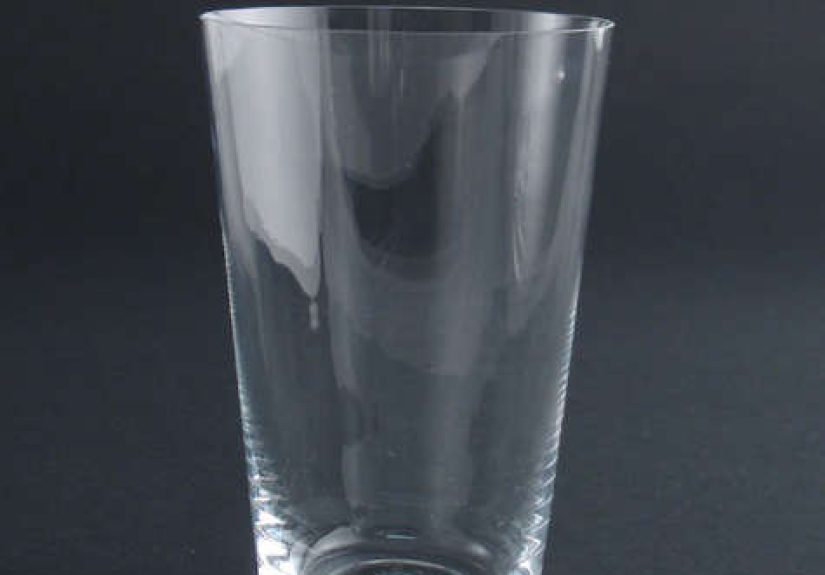
At first glance, the Deborah Ehrlich shot glass seems almost too simple to write 1, about. But that is the trap of minimalist design. The glass has a tall, slender silhouette compared with chunkier bar shot glasses, and the dimensions commonly listed by retailers put it at roughly 3.3 to 3.4 inches high with a capacity around 2.5 ounces. In other words, it is not a toy-sized novelty glass. It has presence.
The profile is restrained, upright, and elegant, with very little visual fuss. The lip is thin. The walls appear nearly weightless. The crystal is remarkably clear, which gives the glass a kind of visual vanishing act on the table. Fill it with aquavit, mezcal, limoncello, or even chilled water, and the liquid seems to hover more than sit. Minimalist objects often promise “timelessness,” but this one comes by it honestly because there is almost nothing in the design to date it.
Materials and Craftsmanship: The Real Selling Point
If you are shopping for a Deborah Ehrlich shot glass, the phrase you will keep seeing is some variation of hand-blown Swedish crystal. That is not just a romantic line for people who enjoy words like artisanal and heirloom. It speaks to the actual making of the object. The glasses are designed in the Hudson Valley and produced by Swedish glassmakers, then cut and polished to achieve the crisp finish that defines the collection.
Most descriptions also emphasize that the crystal is lead-free, which matters to modern buyers who want the brilliance of crystal without the baggage that older formulations can carry. Another detail that shows up repeatedly is the signature: some retailers note that each glass is individually signed on the base with a diamond-tipped pen. That tiny act says a lot about where the product sits in the market. This is not mass barware pretending to be special. It is special barware that just happens to be humble in scale.
Introduced in 1999And Still Relevant
One of the most interesting things about Deborah Ehrlich’s shot glass is that it does not feel tied to a fad. Sources tracing the collection’s history point to its introduction with Takashimaya in 1999, and that origin story helps explain why the glass still feels so composed today. The late 1990s produced plenty of glossy, overly declarative tabletop design. Ehrlich went the other way. Her shot glass was spare then, and it is spare now, which means it never had to “age into” relevance.
That longevity is also a clue to the audience. People do not buy this glass because they need a fast replacement for something broken after taco night. They buy it because they want objects that grow more persuasive over time. A Deborah Ehrlich shot glass works for collectors, hosts, architects, design obsessives, and anyone whose dream home bar is less sports pub and more monastic-but-fun.
How It Fits Into the Simple Crystal Collection
The shot glass is part of Ehrlich’s broader Simple Crystal line, a collection that includes water glasses, wine glasses, rocks glasses, champagne forms, decanters, and other tabletop pieces built around the same philosophy. That context matters because the shot glass is not a one-off gimmick. It is a compact expression of a larger language: exact proportions, thin lips, restrained silhouettes, and a near-spiritual devotion to clarity.
This is also why the shot glass works beautifully beyond tequila. Use it for a tiny pour of dessert wine, a measured digestif, a concentrated cold brew shot, or a tasting flight of something you actually want to pay attention to. In a full Deborah Ehrlich table setting, the shot glass looks like it belongs. In a mixed setting, it becomes the quiet overachiever that makes everything next to it look a little less resolved.
Who Should Buy a Deborah Ehrlich Shot Glass?
Not everyone needs one, and that is part of the charm. If your main design requirement for a shot glass is “survives being dropped by my cousin at 1:00 a.m.,” this is probably not your soulmate. But if you enjoy thoughtful barware, understated luxury, and objects that reward close attention, the Deborah Ehrlich shot glass makes a strong case for itself.
It is especially appealing for a few kinds of buyers:
For the minimalist host
You want your table to feel calm, clean, and intentional. This glass brings elegance without trying too hard.
For the design collector
You care who made the object, where it was made, and whether it has a coherent design philosophy behind it. Ehrlich checks all of those boxes.
For the gift giver with taste
This is the kind of gift that feels personal, elevated, and useful. It says, “I know you enjoy beautiful things,” not “I panic-bought this at the airport.”
For the person building a grown-up bar
The Deborah Ehrlich shot glass is less frat house, more fine ritual. Which is another way of saying: your mezcal deserves better.
Why the Experience Matters More Than the Size
Talking about a shot glass can sound slightly ridiculous until you hold one that has actually been designed well. Then the whole category starts to make more sense. Ehrlich’s version turns a quick sip into something slower and more observant. The thin lip changes the contact point. The balance changes the way you lift it. The clarity changes the way the liquid looks. Suddenly, what could have been a throwaway object becomes part of the ceremony.
That is the larger Deborah Ehrlich appeal. Her work lives in the space between utility and atmosphere. These are objects you use, but they also tune the room. They alter how a table feels. They make simple acts seem more deliberate. For some people that sounds indulgent. For others, it sounds like exactly the point of living with well-made things.
Styling and Care Tips
Because the glass is so refined, styling it is easy. Pair it with linen, wood, stoneware, brushed metal, or plain white plates and let the crystal do its disappearing act. It looks particularly good in settings that lean natural rather than flashy: walnut trays, candles, slate coasters, and unfussy serving pieces. In other words, do not bury it in novelty cocktail chaos.
As for care, this is hand-wash territory. Delicate crystal asks for basic respect, not a dishwasher rodeo. Wash gently, dry carefully, and store where the rim will not knock against thicker everyday glassware. Treat it like a small design object, because that is what it is.
The Experience of Living With a Deborah Ehrlich Shot Glass
Here is where the Deborah Ehrlich shot glass becomes more than a product description. Living with it changes your relationship to tiny rituals in a slightly sneaky way. It begins innocently enough: you pour a little limoncello after dinner because the bottle was already cold and the evening felt like it deserved a tidy ending. Then you notice how the glass catches the light from the kitchen pendant. Then you notice that your hand automatically slows down when you pick it up. Then you realize you have become the sort of person who uses the phrase “after-dinner limoncello” without irony. Interior design has many side effects.
The first real pleasure is visual. Because the glass is so clear and spare, the liquid becomes the event. A pale spirit looks almost silvery. Something amber seems deeper, warmer, more dramatic. Even water looks oddly glamorous, which is probably the greatest magic trick a shot glass can perform. The form never competes with the pour. It just frames it with unusual discipline.
The second pleasure is physical. Chunky shot glasses often feel like tiny bricks with self-esteem issues. Ehrlich’s design feels entirely different. The glass is light in the hand, but not flimsy, and that tension between delicacy and strength is a big part of the appeal. It invites attentiveness without making you nervous. You do not feel like you are handling museum glass. You feel like you are handling a beautifully resolved tool.
Then there is the social side. Put a Deborah Ehrlich shot glass on the table during a dinner party and people noticeeven if they cannot immediately say why. Someone will pick it up and say, “Oh wow, this is nice.” Another person will ask where it came from. A third guest, usually the one who knows the difference between table salt and flaky sea salt, will quietly inspect the rim and nod with serious approval. It becomes a conversation starter, but a low-key one. It does not scream for attention; it earns it.
It also changes the tone of what you serve. Tequila becomes a tasting pour. Mezcal becomes a discussion. A tiny splash of amaro feels less like a hurried afterthought and more like the final sentence of a good meal. Even an espresso shot seems upgraded. The glass nudges you away from speed and toward awareness, which is honestly a respectable thing for any object to do.
There is a domestic pleasure to it, too. On a shelf, the shot glass looks clean and sculptural. In a cabinet, it feels like a secret luxury. In use, it adds a little ceremony to ordinary life without demanding a full lifestyle rebrand. You do not need to move into a minimalist stone house in the Hudson Valley or start arranging pears in handmade bowls. You can simply pour something small and excellent and enjoy the fact that the vessel was designed by someone who clearly cares about proportion at a near-spiritual level.
That is ultimately the experience of Deborah Ehrlich’s shot glass: not extravagance, but refinement. Not clutter, but clarity. Not a party prop, but a small architectural pleasure. It is the sort of object that proves great design does not have to be large to have presence. Sometimes the most memorable thing on the table is the quiet little glass minding its business and making everything around it look better.
Final Thoughts
Deborah Ehrlich’s shot glass is a rare object that feels both modest and luxurious. It is rooted in real craftsmanship, shaped by a disciplined design philosophy, and refined enough to make even a tiny pour feel intentional. For buyers interested in minimalist barware, Swedish crystal, or simply the pleasure of using something exceptionally well made, it remains one of the most compelling small-format glasses around.
In a market crowded with loud accessories and disposable “statement” pieces, this shot glass makes a different argument. It says restraint can be memorable. It says a thin rim can matter. It says even the smallest object on the table can carry an entire philosophy of design. And honestly, that is a pretty impressive résumé for something that holds just a couple of ounces.