Table of Contents >> Show >> Hide
- Why Pokémon Is a Sneaky Science Teacher
- What Is a “Pokémon Anatomy GIF,” Exactly?
- Why Motion Helps Brains Hold On to Biology
- My Process: From Pocket Monster to Plausible Organism
- Five Pokémon, Five Biology Lessons
- How Teachers and Parents Can Use Anatomy GIFs (Without Turning Class Into Recess)
- Keeping It Honest: Accuracy, Misconceptions, and Safety Rails
- DIY: Help Your Kid Make Their Own Anatomy Creature (Pokémon-Inspired, Biology-Accurate)
- Behind the Scenes: What I’ve Learned Making Pokémon Anatomy GIFs (Experience Section)
- Conclusion: Catch Curiosity, Not Just Pokémon
The quickest way to get a kid interested in biology is to not start with a 400-word paragraph about mitochondria.
(Yes, yes, the powerhouse of the cellwe love her. But she’s not exactly a first-date topic.)
The better move is to start with something kids already adore, something they can name faster than most adults can name U.S. presidents:
Pokémon.
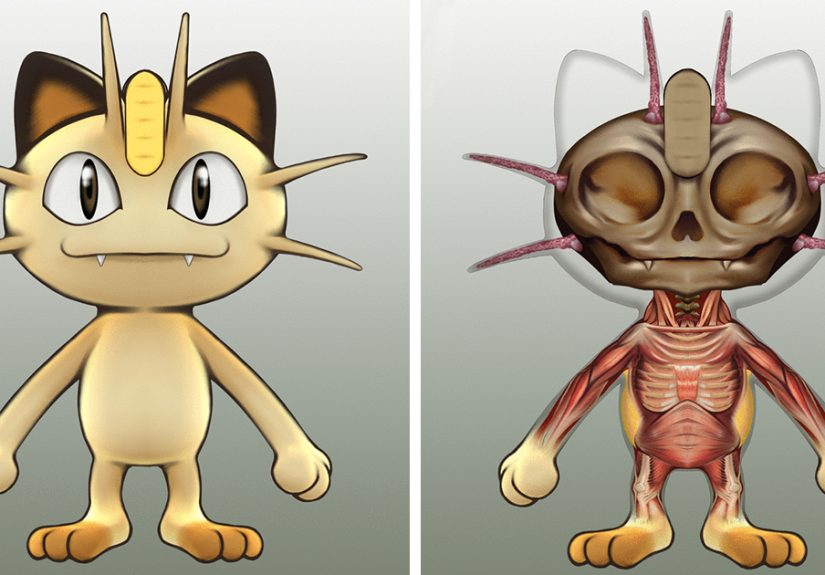
That’s why I make Pokémon anatomy GIFslittle looping animations that peel back the “cute battle buddy” layer and reveal
an imagined set of bones, muscles, organs, and adaptations underneath. Not to be creepy. Not to start a black-market
“Professor Oak’s Dissection Lab.” But to spark the question every science teacher dreams of hearing:
“Wait… how would that actually work?”
When a kid goes from “Pikachu is adorable” to “Where would an electric organ live?” you can practically hear curiosity
evolve in real time. And unlike a lot of educational content, curiosity doesn’t need extra credit to show upit shows up
because it wants to.
Why Pokémon Is a Sneaky Science Teacher
Pokémon is basically a storytelling engine for scientific thinking: classification (“What type is it?”), ecology (“Where does it live?”),
physiology (“How does it survive?”), and evolution (“Why does it look like that now?”).
Even kids who claim they “hate science” will happily debate whether a creature is more amphibian or reptile, nocturnal or diurnal,
predator or preywithout realizing they’re doing biology with the intensity of a championship match.
Educators have been pointing out for years that connecting instruction to what students already care about makes learning feel relevant,
not forced. Pop culture can be a bridge into STEM concepts when it’s used with a clear learning goal instead of being a random “fun day.”
The goal isn’t to replace biology with fandomit’s to use fandom as the door that gets kids into the biology room.
What Is a “Pokémon Anatomy GIF,” Exactly?
Picture a short animation that cycles through layerslike a digital flipbook:
skin to skeleton, skeleton to muscle, muscle to organs, organs to “special feature” (like a flame sac, venom gland,
photosynthetic tissue, or an electrocyte-like organ). Each GIF is built around a simple promise:
the creature should feel internally consistent, even if the creature itself is fictional.
A good anatomy GIF does three things at once:
- It visualizes systems (skeletal, muscular, circulatory, respiratory, digestive, nervous).
- It explains adaptations (why a body part exists and what problem it solves).
- It invites comparison to real animals and real anatomy.
In other words: it turns a character into a “case study,” and kids love case studies when the patient is a fire-breathing lizard
instead of a worksheet titled Vertebrate Respiratory Structures, Part II.
Why Motion Helps Brains Hold On to Biology
Words + pictures beat words alone (most of the time)
Biology is full of invisible processesblood flow, gas exchange, nerve signaling, muscle contraction. When learners can
see what the words are talking about, they build stronger mental models. A short animation (even a looping GIF) can give the brain
a scaffold: “Oh, that’s where it is, that’s what it connects to, that’s how it changes.”
Animations can boost retentionwhen they’re designed like teaching tools
The key phrase is designed like teaching tools. Not every moving thing is educational. If the animation is busy, noisy, or trying
to be a fireworks show, it can overload attention and turn learning into “wow” without “why.”
The sweet spot is simple motion that clarifies structure or sequencelike revealing layers, highlighting pathways, or showing how parts fit.
That’s exactly why anatomy GIFs work well: they’re short, repetitive, and focused. The loop gives kids permission to rewatch without
feeling behind. The repetition turns “Wait, what am I looking at?” into “Ohhh, I see it now.”
My Process: From Pocket Monster to Plausible Organism
I treat every Pokémon like a design challenge with rules. The rules aren’t “make it real,” becausehithere are ghosts and magnets.
The rules are:
make it coherent, make it learnable, and make it spark questions.
Step 1: Pick a real-world anchor
Most Pokémon borrow from real animals, plants, or myths. I start there. A turtle-like creature gets turtle rules:
shells, protective anatomy, slow-but-sturdy design. A bat-like creature gets bat rules: wing membranes, lightweight bones, powered flight constraints.
Anchors keep the anatomy from turning into pure fantasy soup.
Step 2: Decide what the “special ability” costs
Biology is a world of trade-offs. If something produces heat, it needs fuel. If something stores electricity, it needs specialized tissue
and insulation so it doesn’t zap itself into an early retirement. If something is armored, it sacrifices speed or flexibility.
Kids learn a core scientific idea here: cool features have biological price tags.
Step 3: Build systems that agree with each other
Skeleton informs muscle. Muscle informs movement. Movement informs energy needs. Energy needs inform digestion and circulation.
Once you start thinking in systems, you’re doing biologyeven if you’re drawing it.
Step 4: Animate like a teacher, not a magician
I keep the loop short and the changes obvious: reveal, highlight, label (sparingly), repeat. The goal is clarity, not cinematic drama.
If a kid can understand it in three loops, we’re winning.
Five Pokémon, Five Biology Lessons
1) Pikachu: Electricity, nerves, and “where would the volts live?”
Pikachu is the gateway question machine. The biology hook is simple: some real animals can generate electricity
(like electric eels and rays). In a Pokémon anatomy GIF, that idea becomes an “electric organ” conceptspecialized tissue cells that
stack like tiny batteries, plus insulation so the current goes outward instead of into vital organs.
Classroom angle: talk about bioelectricity, how nerves transmit signals, and why an animal would use electricity
(defense, hunting, communication). Bonus: kids immediately ask how Pikachu avoids shocking its own heart, which is a perfect opening
for discussing organ protection and anatomical placement.
2) Bulbasaur: Plant-animal partnerships
Bulbasaur is basically a biology lesson wearing a leaf hat. That plant bulb isn’t just a decoration; it suggests symbiosis:
could the plant contribute energy via photosynthesis, or serve as storage, or produce defensive chemicals?
Now you’ve got kids asking about mutualism, plant anatomy, and how organisms share resources.
Classroom angle: compare Bulbasaur’s “plant buddy” to real partnershipslike corals and algae, or plants and mycorrhizal fungi.
The big lesson: organisms rarely live alone, and survival often looks like collaboration.
3) Squirtle: Shell structure and protection
With turtle-like Pokémon, the shell is the star. Real turtle shells are fused to the skeleton (they’re not just “armor you can take off”),
which leads to a fantastic discussion: if a shell is part of the body, what does that mean for ribs, breathing, and movement?
Classroom angle: introduce skeletal modification, protection vs mobility trade-offs, and how structure shapes behavior.
Kids learn that “defense” is an engineering problem nature solved in multiple ways.
4) Charizard: Wings, bones, and the reality check of powered flight
Big wings are a biology trap (in a good way). Flight requires strong but lightweight bones, huge energy demands, and efficient respiration.
If you add “breathes fire,” you’ve got an even better discussion: heat production needs fuel, safe storage, and controlled release.
Classroom angle: use Charizard to talk about comparative anatomy (birds vs bats), respiratory efficiency,
and why evolution often favors “good enough” over “perfect.” Also: kids love asking whether a fire-breather would need heat-resistant tissues,
which is basically an invitation to talk about proteins and heat tolerance.
5) Gastly/Gengar: When biology meets “this is a great time to discuss limits”
Not every Pokémon fits neatly into anatomy, and that’s actually useful. Ghost-like creatures are a chance to teach the difference between
biological organisms and supernatural concepts. Instead of forcing fake organs into a fog cloud, I treat it as a discussion prompt:
“What defines life? Cells? Metabolism? Reproduction? Homeostasis?”
Classroom angle: this becomes a gentle intro to what biologists mean by “living,” and why definitions matter in science.
How Teachers and Parents Can Use Anatomy GIFs (Without Turning Class Into Recess)
Use a “Notice / Wonder” warm-up
Show the GIF for 30 seconds. Then ask two questions:
What do you notice? and What do you wonder?
Students generate their own inquiry, which is the most efficient fuel source known to education.
Compare to real organisms
Pair the Pokémon with a real animal that shares traits: electric fish, turtles, bats, lizards, amphibians, carnivores vs herbivores.
Have students list similarities and differences, then explain which differences would matter most for survival.
Turn fandom vocabulary into science vocabulary
Pokémon names and “moves” are sticky in memory. Use that advantage to practice biological terms:
“adaptation,” “organ system,” “predator,” “habitat,” “mutation,” “classification,” “symbiosis,” “camouflage.”
Kids already like collecting thingshelp them collect concepts.
Make it a student project: Design a creature, defend its anatomy
This is where the magic happens. Students create their own “pocket monster” based on a real organism (or an endangered species),
then justify the anatomy: What does it eat? How does it breathe? How does it move? What’s the trade-off?
If they can defend their design choices, they understand the biology.
Real-world proof that this approach can work: universities and educators have built Pokémon-themed biology experiences that combine
creativity and sciencelike projects where students design Pokémon inspired by real species and explain the biological connections.
The format is playful, but the thinking is serious.
Keeping It Honest: Accuracy, Misconceptions, and Safety Rails
Let’s be clear: these are speculative anatomy GIFs. They’re not official biology, and they’re not endorsed by any game company.
They’re a teaching tool and a conversation starter.
To keep the science strong (and avoid accidental misinformation), I follow three guardrails:
- Label it as a hypothesis: “Here’s one plausible way it could work.”
- Focus on real principles: systems, trade-offs, adaptation, ecology, biomechanics.
- Invite correction: “What would you change to make it more realistic?”
This approach teaches a hidden lesson: science isn’t just memorizing factsit’s building models, testing ideas, and revising when new evidence appears.
A kid who argues that my “muscle placement” wouldn’t allow a tail swing is doing biomechanics. A kid who questions whether an animal can support that
body size on those legs is doing physics. A kid who asks what it eats is doing ecology.
DIY: Help Your Kid Make Their Own Anatomy Creature (Pokémon-Inspired, Biology-Accurate)
If your child is the type who draws on every available surface (including, mysteriously, the back of your grocery list), here’s how to channel that
energy into biology learning:
Start with one real organism
Pick an animal your kid lovesfrog, owl, shark, turtle, gecko. Look up a simple diagram of its skeleton and organs.
The goal is not medical-school precision. It’s basic structure: “Where do the lungs go? Where does the stomach sit? What’s the backbone doing?”
Add one “fantasy feature,” then pay the biological cost
Want wings? Greatnow you need big chest muscles and lighter bones. Want armor plates? Greatnow movement is slower.
Want electricity? Greatnow we need specialized tissue and insulation. The “cost” step is where learning lives.
Make it a loop (even a simple one)
You don’t need fancy software. A “GIF” can be as simple as two or three frames:
frame 1: outside; frame 2: skeleton; frame 3: organs. Flip through them like a tiny animation.
Kids love the feeling that their science is alive.
Finish with three questions
- What habitat does it live in?
- What does it eat?
- What adaptation helps it survive there?
Those questions turn a drawing into an organism. And an organism into a biology lesson.
Behind the Scenes: What I’ve Learned Making Pokémon Anatomy GIFs (Experience Section)
The first time I tried making a Pokémon anatomy GIF, I thought the hard part would be drawing the organs.
Spoiler: the hard part was deciding what story the organs were telling. In biology, nothing is “just there.”
Every feature is a solution to a problemsometimes a brilliant solution, sometimes a messy compromise that still works.
And once I started thinking that way, I realized I wasn’t really “drawing Pokémon.” I was practicing how biologists think.
One of my earliest drafts looked cool but taught nothing. It had glowing parts, dramatic shadows, and the kind of “science-y”
vibe that makes adults nod politely. Kids, however, are elite detectors of nonsense. The reaction was basically:
“Okay… but what is that?” That question forced me to simplify. I started stripping away decoration and building the loop around
one clear idea per GIF: “This is how the skeleton supports the body,” or “This is where the air goes,” or “This is how energy moves.”
The GIFs got less flashy and more effectivelike trading a confetti cannon for a flashlight in a dark room.
The biggest surprise has been how fast kids move from fandom to real science when you give them permission.
Show them a layered anatomy loop and they’ll start inventing hypotheses on the spot:
“If it lives in water, shouldn’t it have gills?” “If it’s a predator, where are the big muscles?”
“If it’s electric, why doesn’t it shock itself?” Those aren’t random comments. Those are the beginnings of systems thinking.
And systems thinking is basically biology’s love language.
I’ve also learned that “accuracy” and “engagement” don’t have to fight each other, but they do need boundaries.
Sometimes a kid wants an explanation for a move that’s basically magic. Instead of forcing a fake scientific answer,
I’ll say, “Let’s split this into two parts: the biology we can model, and the fantasy we can treat as a storytelling rule.”
That tiny distinction helps kids understand that science is powerful because it has limits. It explains a lot,
but it doesn’t need to pretend it explains everything.
The most rewarding moments are when kids start bringing their own interests into the biology conversation.
A dinosaur kid will ask about bones and posture. A robotics kid will ask about joints and leverage. A budding artist will obsess over
muscle groups and movement. A gamer will ask about balance: “If it had that armor, would it be slower?”
Suddenly, biology stops being a subject and becomes a toolkit for understanding the worldincluding imaginary worlds.
And yes, I’ve made mistakes. I once placed an organ where it would have been crushed by a ribcage movement.
A student pointed it out with the ruthless kindness only a future scientist can deliver: “That… would not fit.”
I laughed, fixed it, and used it as a teachable moment: models improve through critique.
That’s science. That’s also art. That’s also a pretty good life skill.
If there’s one lesson I’d put on a trading card, it’s this:
curiosity is a biological superpower. Pokémon just happens to be an excellent way to catch it.
Once a kid realizes anatomy isn’t a list to memorize but a puzzle to solve, they start looking at everything differently
animals, plants, even themselves. And when that shift happens, you don’t need to “make” them interested in biology anymore.
They’re already in the tall grass, and they’re already looking.
Conclusion: Catch Curiosity, Not Just Pokémon
Pokémon anatomy GIFs are a playful gateway into serious science: organ systems, adaptations, ecology, biomechanics, and critical thinking.
The GIFs don’t replace textbooks or labsthey prime kids to care about what those textbooks and labs are trying to teach.
When students move from “This is my favorite Pokémon” to “Here’s how it would survive,” biology stops being abstract.
It becomes personal, visual, and delightfully debatable.
And if a kid walks away asking better questionsabout animals, about ecosystems, about bodies, about how life worksthen the GIF did its job.
Mission accomplished. Badge earned. Curiosity evolved.