Table of Contents >> Show >> Hide
- Why “Food Filching” Is More Than a Funny Cat Meme
- The 2025 Pet Hacks Challenge: When Cat Problems Meet Builder Brains
- Case Study: The “Cat Bowl Monitor” That Started Denying Snacks
- Feline Facial Recognition, Explained Like You’re Holding a Bag of Treats
- Health Angle: Personalized Feeding Is a Vet-Friendly Superpower
- DIY vs. Buy: You’ve Got Options (Even If You Don’t Want to Train a Model)
- If You’re Building a Face-ID Feeder, Here’s What Actually Improves Accuracy
- The Unsexy (But Important) Part: Privacy & Security for Pet Cameras
- Where Pet Tech Is Headed: From “Automatic” to “Personalized”
- FAQ: Feline Facial Recognition Feeders
- Experiences: What It’s Like Living With a “Face-ID” Cat Feeder (500+ Words)
- Conclusion
Cats have many talents: parkour, judgmental staring, andif we’re being honestpetty larceny. In multi-cat homes,
the “crime” is usually food theft: one cat has a prescription diet, another has the tastier kibble, and suddenly
your kitchen turns into a tiny, furry Ocean’s Eleven.
In 2025, the Pet Hacks scene delivered a wonderfully extra solution: a DIY feeder that uses feline facial
recognition to let the right cat eat the right foodand politely deny entry to the neighborhood snack bandit.
It’s part practical pet care, part machine-vision adventure, and 100% proof that love makes people do
wonderfully nerdy things.
Why “Food Filching” Is More Than a Funny Cat Meme
Sure, watching a cat “innocently” wander over to a sibling’s bowl is comedy. But food stealing quickly becomes a
real health issue when diets differ. Prescription foods can be medically important (think urinary diets, kidney
support, weight management), and a cat who keeps eating the wrong bowl can undermine treatmentwhile the intended
cat may not get enough calories or nutrients.
And then there’s weight. U.S. surveys and veterinary guidance routinely flag overweight and obesity as common
problems for cats, with real downstream risks (joints, diabetes risk, quality of life). The boring-but-true
theme across veterinary organizations is consistent: measured portions, smart feeding routines, and fewer
“bonus calories” win over wishful thinking.
Translation: preventing food theft isn’t just about being a fun referee. It’s about making sure each cat gets
the nutrition plan your vet intendedwithout requiring you to stand guard like a bouncer outside Club Kibble.
The 2025 Pet Hacks Challenge: When Cat Problems Meet Builder Brains
The “Pet Hacks” ecosystem is exactly what it sounds like: creators building clever projects inspired by animal
lifeautomatic feeders, safety systems, “home alone” helpers, and assorted gadgets that make living with pets
easier (or at least more entertaining). In 2025, the Hackaday-hosted challenge ran spring into early summer,
inviting documented projects that improved pets’ lives or made human–pet logistics less chaotic.
Among the winners was a project that tackled a very relatable situation: two cats, two foods, one determined
thief. The solution? A feeder that literally checks the cat’s face before granting access. Yes, your cat now has
a “Face ID” momentjust with more whiskers and dramatically less consent.
Case Study: The “Cat Bowl Monitor” That Started Denying Snacks
The core story is wonderfully simple: one cat needs Rx food, the other cat has the regular dry food, and the Rx
cat keeps raiding the tastier bowl. The build, however, is gloriously not simplebecause the creator decided to
solve it with computer vision and an old Android phone, like any calm and normal person would.
What the build used (high-level)
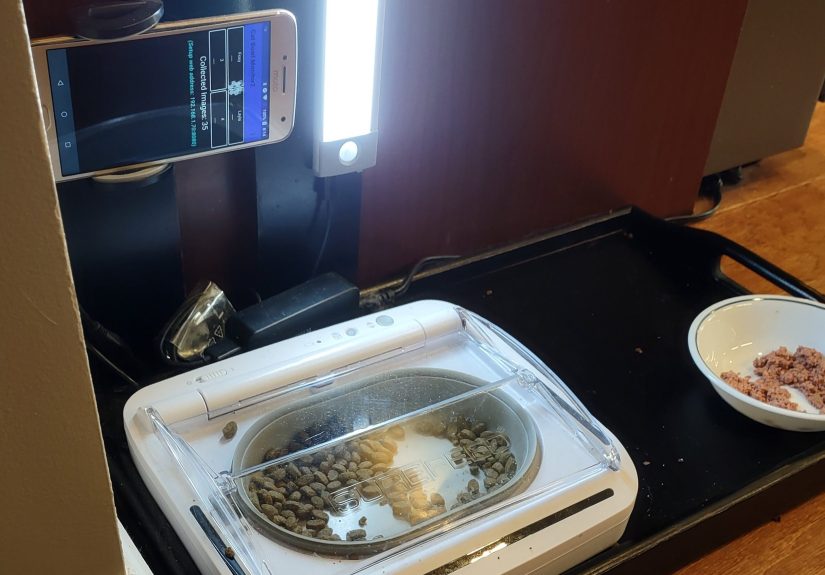
- A modified commercial feeder with a motorized lid (think “food vault,” not “open buffet”).
- An old Android smartphone running a custom app and a TensorFlow Lite model.
- An Arduino-based controller acting as a bridge between “phone brain” and “feeder muscles.”
- Bluetooth commands for open/close control.
How it identified cats
The app detects a cat’s face in the camera view, then runs recognition to decide: “Authorized eater?” If yes,
the feeder opens. If no, it stays closedprotecting the bowl from the snack burglar and protecting the
prescription plan from chaos.
Why it worked better than you’d expect
The project reports strong real-world performance (better than 95% accuracy in its home setup) and a practical
recovery behavior: even when it’s initially wrong, it can correct as the cat gets closer and the face becomes
clearer. That detail matters because it acknowledges an unromantic truth of pet AI: your cat doesn’t always walk
up like a cooperative model in a studio photoshoot.
Feline Facial Recognition, Explained Like You’re Holding a Bag of Treats
Step 1: Detect the face
Before you can recognize a cat, you have to find the cat’s face in the camera frame. Detection is the “there’s a
face-shaped thing right here” step. It’s separate from recognition, which is “whose face is that?”
Step 2: Recognize the individual
Recognition models don’t “know” your cat in the emotional sense (sorry). They learn a mathematical signature of
facial featuresspacing, shapes, patternsso that the model can distinguish Cat A from Cat B.
Step 3: Make the feeding decision
Once the app labels the cat, your system enforces a rule: open for Foxy, closed for Layla (or vice versa),
depending on who the food is for. That’s the entire “anti-theft” mechanism: you’re controlling access, not just
timing.
The most underrated part: training data
In the original Pet Hacks write-up, the creator adapted a human face-recognition approach and expanded training
with thousands of cat face imagesthen deployed the resulting model on-device via TensorFlow Lite. The key idea
is practical and powerful: pet recognition improves dramatically when you train on the actual individuals who
will be using the system.
Health Angle: Personalized Feeding Is a Vet-Friendly Superpower
Personalized feeding isn’t a trendy buzzword; it’s basically the backbone of responsible multi-pet care. When
veterinary guidance emphasizes portion control and consistent feeding routines, it’s partly because “free-for-all”
bowls make it hard to know who ate whatand how much.
This is where access control (microchip, RFID, or facial recognition) is a genuine quality-of-life upgrade:
it turns “I think the right cat ate the right food” into “I’m confident the correct cat got the correct
meal,” which makes weight management, prescription diets, and health monitoring far easier to execute.
The funny part is that the “fancy” technology often supports the simplest goal: measured intake.
No mystery calories. No silent second dinners. No one cat becoming the household vacuum cleaner while another
cat goes hungry and angry.
DIY vs. Buy: You’ve Got Options (Even If You Don’t Want to Train a Model)
The Pet Hacks build is peak DIYcustom code, custom training, creative hardware bridging. But the broader market
now includes commercial approaches to the same problem:
Option A: “Gatekeeper” feeders (microchip/RFID access)
These feeders open only for a pet with a registered microchip or tag, which is a very reliable way to prevent
bowl raids in multi-pet homes. They’re less glamorous than face recognition, but often more predictable because
they rely on a stable identifier rather than camera conditions.
Option B: AI camera systems (recognition + monitoring)
Newer products and platforms increasingly use cameras and on-device AI to identify pets and track behavior. The
same “recognize the individual” concept shows up across pet tech: not just feeding, but also litter box use and
routine monitoring. The trend line is clear: pet care is getting individualized, and the data layer is becoming
part of the pitch.
Option C: Low-tech fairness upgrades
If you’re not ready to hand your cat a digital identity, you can still reduce theft with basics: separate
feeding stations, scheduled meals, puzzle feeders, and environmental management (yes, this includes shutting a
doorrevolutionary, I know).
If You’re Building a Face-ID Feeder, Here’s What Actually Improves Accuracy
Facial recognition for pets isn’t magic. It’s engineering plus cat behavior, which is another way of saying:
it’s engineering plus chaos. Whether you’re DIY-ing or evaluating a camera-based product, these factors matter:
1) Camera placement beats fancy algorithms
You want a consistent “checkpoint” where the cat naturally presents their facethink a narrow approach lane or a
slight funnel, not a wide-open buffet zone. If the system sees the face clearly every time, recognition becomes
dramatically easier.
2) Lighting consistency is everything
Cats love eating at dawn, dusk, and “whenever you finally fall asleep.” If your camera struggles in low light,
accuracy drops. Even a simple night-vision friendly setup or a gentle, indirect light can make a big
difference.
3) Train on real life, not perfect life
If you’re labeling images for training, include variety: different angles, distances, and lighting. You’re
teaching the model to recognize your cat during real meals, not during a glamorous whisker headshot session.
4) Build in “polite failure” behavior
A smart feeder should fail safely: no pinching, no sudden lid drops, no “oops, you got locked out of food all
day.” Many builders use logic like: re-check identity at close range, time out gently, and keep manual override
available.
5) Prevent tailgating
Cats will try the classic move: wait for the authorized cat to open the feeder, then sneak in. Anti-tailgating
can be physical (a narrower opening, a hood, a longer “tunnel”) or behavioral (close after a short interval,
reopen only after a fresh ID check).
The Unsexy (But Important) Part: Privacy & Security for Pet Cameras
The moment you add a camera and Wi-Fi, you’ve basically built a tiny smart-home device. The good news is you can
reduce risk with a few habits that the FTC and cybersecurity agencies repeat for a reason:
- Change default usernames and passwords immediately.
- Use two-factor authentication when offered.
- Keep firmware/apps updated so known issues get patched.
- Limit unnecessary sharing (don’t make cameras publicly accessible “just because”).
Also consider the social side: do you want a camera pointed at a common living space 24/7? Some people love the
peace of mind; others prefer local storage, privacy shields, or placing cameras only where needed (like feeding
zones). There’s no single right answerjust be intentional.
Where Pet Tech Is Headed: From “Automatic” to “Personalized”
The 2025 Pet Hacks build feels like a hobbyist flex, but it’s also a preview of a broader shift: pet devices are
becoming less about automation (“dispense food at 6”) and more about personalization (“dispense food for THIS cat,
track THIS cat’s behavior, detect changes for THIS cat”).
That has upsideespecially for multi-cat households where health monitoring and diet enforcement are legitimately
difficult. But it also raises questions about data, subscriptions, and how much “smart home” you want wrapped
around your pet’s daily routine. The future is likely a spectrum: from simple, reliable access-controlled bowls
to full-on analytics ecosystems.
Either way, the headline remains true: once you can confidently identify the individual cat at the bowl, you can
stop food theftand make feeding healthier, calmer, and far less like a daily episode of Cat Crime TV.
FAQ: Feline Facial Recognition Feeders
Is facial recognition better than microchip/RFID for cats?
“Better” depends on your priorities. Facial recognition can work without tags and may enable richer monitoring,
but it’s more sensitive to lighting and camera angle. Microchip/RFID access control is often simpler and more
predictable for pure “keep the thief out” needs.
Will my cat learn to beat the system?
Cats will attempt everything from tailgating to strategic head turns. The best designs assume this and add
anti-tailgating measures, repeated ID checks, and safe, gentle failure modes.
Does this help with weight management?
Indirectly, yes: when each cat can only access their own measured portion, it becomes easier to follow a plan.
Weight loss still depends on nutrition and activity decisions, but access control reduces the “mystery calories”
problem that wrecks consistency.
Experiences: What It’s Like Living With a “Face-ID” Cat Feeder (500+ Words)
If you’ve never lived in a multi-cat home, here’s the first surprise: cats become amateur economists the moment
food enters the room. They know which bowl is “premium,” which one is “diet,” and which human is most likely to
cave when they perform the ancient ritual of Sad Eyes + Tiny Meow. So when a face-recognition feeder
shows up, the household doesn’t just “accept” ityour cats conduct a full audit.
The first week tends to be a mix of curiosity and mild outrage. Many cats will approach the device like it’s a
new coworker they didn’t interview: sniff, stare, circle, repeat. This is where thoughtful design pays off.
If the camera angle naturally catches their face as they lean in, the system feels “invisible” to themfood
appears when they arrive, and they quickly treat it as normal. If the angle is awkward, you’ll see the opposite:
the cat hovers at the edge of view, the system hesitates, and your pet responds with theatrical impatience.
(Cats do not respect buffering.)
The funniest “learning curve” is the moment the food thief realizes the rules changed. A bold thief tries the
direct route first: walk up like nothing happened. When the lid stays shut, the thief often escalates to
classic tacticsshoulder checks, paw fishing, and the sneaky “wait behind the authorized cat” maneuver. This is
where anti-tailgating becomes less of a feature and more of a lifestyle. A small hood or tunnel can stop the
second cat from squeezing in. A short close-delay can prevent the “two-for-one” entry. And repeated checks near
the bowl help if the first ID was fuzzy.
Then comes the strangely wholesome part: once the system stabilizes, the household feels calmer. There’s less
food guarding, fewer bowl standoffs, and fewer moments where you’re trying to guess if one cat ate two dinners
while the other ate vibes. For people managing prescription diets, the emotional relief can be real. Instead of
hovering over bowls or separating cats every meal, you can let the device enforce boundarieslike a tiny robot
nutritionist with a strict “members only” policy.
But the best experience isn’t just “the thief is stopped.” It’s the visibility you gain. When feeding becomes
individualized, patterns stand out: one cat grazes in tiny bites all day, another eats in intense bursts, a third
skips breakfast if there’s thunder. This kind of observation doesn’t require a subscription dashboard or a fancy
graph; it starts with a simple truth: when you know who’s eating, you can actually notice changes. And noticing
changes early is one of the most underrated parts of good pet care.
Finally, there’s a cultural shift that happens in the home: you stop treating “cat food chaos” as inevitable.
Once you’ve watched a feeder correctly grant access based on identitywhether by face, tag, or chipit becomes
hard to go back to the open-bowl free-for-all. It’s like discovering that your kitchen can be peaceful, and
your cats can be on the right diets, without you playing hall monitor twice a day.
In other words, the most realistic “pet hack” outcome is not that your house becomes futuristic. It’s that your
house becomes less dramatic. And for cat owners, less dramatic is basically a miracle.