Table of Contents >> Show >> Hide
- Why “I Don’t Read” Became the Ultimate Weird Flex
- The Psychology Behind Bragging About… Bad Decisions
- 45 Of The Stupidest Things People Decided To Brag About
- A) Knowledge & Curiosity (a.k.a. “Being Uninformed, But With Confidence”)
- B) Hygiene & Health (the “Please Don’t Touch My Appetizers” Category)
- C) Money (the “Consequences With Interest” Section)
- D) Work & “Adulting” (a.k.a. “Proudly Making Life Harder”)
- E) Relationships & Social Skills (the “Please Stop Saying That Out Loud” Zone)
- F) Driving & Public Behavior (where the “Main Character” Problem Goes Mobile)
- G) Food & Lifestyle Claims (the “Strange Hills to Die On” Collection)
- How to Respond to a Weird Flex Without Starting a Fight
- The Bigger Picture: Reading Isn’t a Personality Test
- Real-Life Moments: of “Yep, I’ve Seen That Energy”
- Conclusion
Every era gets the brag it deserves. Some decades gave us “I walked uphill both ways.” Ours gave us “I don’t read,” delivered with the confidence of a man
who thinks subtitles are a tax. And looknobody has to love novels. People are busy. Brains are tired. The group chat is loud. But there’s a special kind of
online (and occasionally in-real-life) flex where someone announces a personal shortcoming like it’s a merit badge. Not “I haven’t had time lately,” but
“I actively avoid learning things,” like ignorance is a lifestyle brand with a discount code.
This isn’t really about books. It’s about identity. It’s about status. It’s about the strange social alchemy where saying “I don’t do X” becomes a way to
signal toughness, purity, superiority, or “I’m too busy being a main character for boring details.” The result is a parade of questionable boasts:
unhygienic, ill-informed, financially reckless, socially inconsiderate… and somehow delivered like they just won an award.
So let’s unpack why people brag about the dumbest things, why “I don’t read” hits a nerve, andbecause the internet demands itserve up 45 of the weirdest,
stupidest brags people have proudly volunteered for no clear reason. Consider this a gentle roast of modern self-presentation… with a side of “please,
for the love of serotonin, stop flexing your avoidable problems.”
Why “I Don’t Read” Became the Ultimate Weird Flex
“I don’t read” lands like a mic drop because reading is one of the few habits that’s both ordinary and quietly powerful. It’s not exclusive. You don’t need
special gear. You don’t need a trainer. You don’t even need perfect lighting and a ring lamp (though some people will absolutely try). Reading is accessible
enough that opting out on purpose can sound like a choicenot a circumstance. And when someone frames it as a choice, it can morph into a status signal:
“I’m too practical,” “I’m too busy,” “I’m too cool,” or “I refuse to be influenced,” said while being influenced by a man yelling into a podcast microphone.
Add a culture that rewards fast takes, hot takes, and “I’m not like other people” takes, and suddenly people treat attention span like a moral stance. They’ll
brag about not finishing anything longer than a caption, as if the human brain was designed specifically for 12-second clips and conspiracy threads.
The Psychology Behind Bragging About… Bad Decisions
1) Bragging is a shortcut to a “persona”
Social media encourages us to package ourselves into a recognizable character: the hustle person, the “no drama” person, the brutally honest person, the “I eat
steak with my bare hands” person. Braggingeven about something objectively sillycreates a headline. It’s self-marketing with fewer steps.
2) It’s status signaling with a twist: “I’m above your norms”
Some brags are basically rule-breaking in a tuxedo. “I never read instructions.” “I don’t believe in sunscreen.” “I don’t use my turn signal.” The point isn’t
the behavior; it’s the performance of being unbothered by expectations. It’s a social flex that says, “I’m immune to consequences,” right before consequences
file a formal complaint.
3) Confidence can show up where competence didn’t RSVP
There’s a reason “loud and wrong” feels so common: people can be most confident precisely when they don’t know what they don’t know. If you’ve never read, you
might not realize how much you’re missing. If you’ve never learned the basics, you might not recognize the basics are… basic.
4) Humblebragging’s chaotic cousin: the “anti-brag”
We all know the humblebrag: “Ugh, my vacation is too luxurious.” But the anti-brag is its gremlin cousin: “I don’t need books,” “I don’t apologize,”
“I’ve never had a résumé,” “I never wash my water bottle.” It’s an attempt to look tough, superior, or effortlessly exceptional by admitting something that
should’ve stayed inside thoughts.
45 Of The Stupidest Things People Decided To Brag About
These are grouped like a museum exhibit titled “Humanity: Bold Choices, Minimal Reflection.” Not everyone who does these things is braggingbut if you’re
proud of them, congratulations: you’ve entered the Weird Flex Hall of Fame.
A) Knowledge & Curiosity (a.k.a. “Being Uninformed, But With Confidence”)
- 1. “I don’t read.” Said like it’s an achievement, not a missed opportunity.
- 2. “I’ve never read a whole book.” The audiobook community quietly weeps.
- 3. “I don’t do news.” Which is different from “I don’t do doomscrolling,” but somehow it’s always the first one.
- 4. “I don’t Google anything.” Bold, from someone who asks strangers for medical advice in comment sections.
- 5. “I don’t believe in experts.” Usually said right before quoting a guy named “TruthHammer87.”
- 6. “I never look up directions.” Getting lost isn’t a personality trait.
- 7. “I don’t need instructions.” Spoken while holding two leftover screws like they’re mystery prizes.
- 8. “I don’t use punctuation.” Your sentence shouldn’t feel like a hostage situation.
- 9. “I failed every class and turned out fine.” “Fine” is doing a lot of unpaid labor in that statement.
B) Hygiene & Health (the “Please Don’t Touch My Appetizers” Category)
- 10. “I never wash my hands unless they look dirty.” Germs love invisibility. It’s their whole brand.
- 11. “I don’t wash fruit. It’s natural.” So is poison ivy. Nature is not automatically your friend.
- 12. “I never use sunscreen.” UV rays don’t care about your vibe.
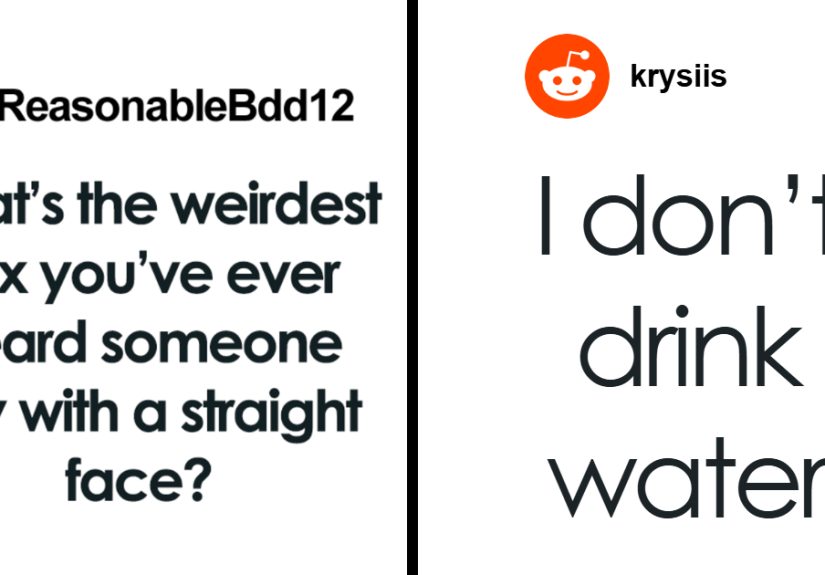
- 13. “I don’t drink water.” Your organs are filing paperwork.
- 14. “I only sleep four hours.” That’s not grindset; that’s a slow-motion system error.
- 15. “I never go to the doctor.” Preventive care called; it’s worried about you.
- 16. “I don’t brush my tongue.” Your breath is telling on you in every conversation.
- 17. “I never clean my reusable bottle.” You’ve invented a science experiment you drink from.
- 18. “I eat leftovers that smell ‘fine.’” Your stomach is not a courtroom; stop trusting “reasonable doubt.”
C) Money (the “Consequences With Interest” Section)
- 19. “I don’t budget.” That’s not spontaneity; that’s financial jump-scares.
- 20. “I never check my bank account.” Like it’s a haunted house and you’re afraid of the ghosts you made.
- 21. “I only pay the minimum.” Credit card companies just sent you flowers and a thank-you note.
- 22. “I buy things to motivate myself.” You’re funding a fantasy version of you who keeps receipts.
- 23. “I don’t read contracts.” You’re signing consent forms for surprise plot twists.
- 24. “I never negotiate.” You’re donating money to corporations out of politeness.
D) Work & “Adulting” (a.k.a. “Proudly Making Life Harder”)
- 25. “I don’t write anything down.” Memory isn’t a reliable storage plan; it’s a vibe.
- 26. “I’ve never used a calendar.” Chaos is not time management.
- 27. “I never ask questions at work.” Confusion isn’t professionalism; it’s expensive silence.
- 28. “I don’t do training.” Said by someone who keeps ‘accidentally’ breaking the same thing.
- 29. “I don’t need feedback.” Everyone else would like a word.
- 30. “I wing every presentation.” You’re not spontaneous; you’re gambling with other people’s time.
E) Relationships & Social Skills (the “Please Stop Saying That Out Loud” Zone)
- 31. “I never apologize.” That’s not confidence; it’s emotional debt collection.
- 32. “I’m brutally honest.” Translation: you enjoy being mean with plausible deniability.
- 33. “I don’t do empathy.” Then you don’t do friendship, either.
- 34. “I ghost peoplekeeps it clean.” It’s not clean; it’s cowardly with extra steps.
- 35. “I never compromise.” Congratulations on dating yourself exclusively.
- 36. “I don’t need friends.” Said while posting this announcement for an audience.
- 37. “I never tip.” Not a flexjust a way to tell the room you’ve chosen selfishness.
F) Driving & Public Behavior (where the “Main Character” Problem Goes Mobile)
- 38. “I don’t use my turn signal.” That’s not edgy; that’s you making everyone guess your next move.
- 39. “I drive better after a couple drinks.” No, you don’t. You drive more confidently, which is worse.
- 40. “I’m always lateit’s just me.” It’s not “you.” It’s you spending other people’s time like it’s free.
- 41. “I play videos on speaker in public.” Your audio is not a community project.
- 42. “I cut in lines; it’s efficient.” Efficiently becoming everyone’s villain, yes.
- 43. “I don’t return my shopping cart.” That’s not independence; it’s petty sabotage.
G) Food & Lifestyle Claims (the “Strange Hills to Die On” Collection)
- 44. “I’ve lived somewhere for years and never tried the local food.” That’s not adventurous; it’s actively missing the point.
- 45. “I never eat vegetables.” Your future self just sighed loudly and opened a fiber article.
How to Respond to a Weird Flex Without Starting a Fight
You can’t fact-check someone into maturity, but you can protect your peace. Try these approaches:
- Use curiosity: “Ohwhat do you do instead when you want to learn something?”
- Make it practical: “Not even audiobooks? They’re great for commuting.”
- Set boundaries: “I’m not debating hygiene at brunch.” (Say it with love. Or at least with a smile.)
- Change the frame: “You don’t have to love books. But bragging about avoiding them is… an interesting choice.”
The Bigger Picture: Reading Isn’t a Personality Test
Reading doesn’t make you morally superior. Not reading doesn’t make you ruggedly authentic. It’s just a habitlike stretching, cooking, or texting back.
The problem is when people treat avoidance as a badge of honor. In the U.S., multiple surveys suggest leisure reading has slipped over time, even as screens
have gotten louder, faster, and more addictive. That’s not an individual failure; it’s a cultural environment.
If reading feels impossible right now, you’re not broken. You’re human in a world optimized for distraction. The good news: the ladder back is short.
Start with tiny, low-pressure choices: short essays, audiobooks, graphic novels, or a few pages before bed. Pick something you actually like. Quit books
you hate. Make it easy and enjoyable, not a punishment disguised as “self-improvement.”
Real-Life Moments: of “Yep, I’ve Seen That Energy”
You’ve probably met the “I don’t read” person in the wild. Not in a dramatic wayno fog machine, no villain musicjust casually, like it’s a fun fact.
It happens at work when the team shares a document and someone says, “Can you just tell me what it says? I don’t do long reads,” while the document is
three pages and contains the exact answer to the question they’re asking. It happens at family gatherings when a cousin announces they never read the news,
then confidently explains a complicated world event using only vibes and a screenshot someone texted them.
It shows up in dating, too. Someone will say they “don’t believe in labels,” which can mean “I’m open-minded,” but can also mean “I want relationship
benefits without relationship responsibilities.” Or the person who brags that they never apologizelike the goal of love is winning, not understanding.
The flex is rarely the thing itself; it’s the message underneath: “I won’t be inconvenienced by self-reflection.”
Then there’s the hygiene flex, which is less a flex and more a jump scare. Someone will laugh and say they don’t wash their hands unless they “have to,”
or that they never clean their water bottle because “it’s just water.” You smile politely while your brain quietly inventories every surface they’ve touched
in the last ten minutes. You suddenly develop a passionate interest in hand sanitizer and personal space.
The funniest (and most frustrating) versions are the productivity brags. The person who claims they sleep four hours a night and “run fine” is usually running
on caffeine, adrenaline, and denial. The person who says they never use a calendar will also be the person texting “Where are you?” when they’re the one who
forgot the plan. These boasts aren’t harmlessthey often transfer stress to everyone nearby.
But sometimes, if you listen closely, the brag has a little crack in it. “I don’t read” can hide insecurity: school was hard, attention is scattered, reading
feels slow, or someone once made them feel stupid for asking questions. The bravado becomes armor. In those moments, the best response isn’t a dunkit’s an
off-ramp. “Totally fair. If you ever want something easy to try, I’ve got a couple short recs.” Or: “Audiobooks count. Stories are stories.”
Because here’s the secret: most people don’t actually want to be ignorant, unhealthy, disorganized, or rude. They want to feel competent and confident.
Unfortunately, the internet sometimes rewards the performance of confidence more than the practice of competence. So we get these bizarre “anti-brags” as
social currency. The antidote is boring but powerful: celebrate growth, reward curiosity, and treat learning like a normal human activitynot a personality
war. And if someone insists on flexing their bad habits? Smile, protect your peace, and keep your snacks far away from their hands.
Conclusion
Bragging about not readingor any avoidable self-sabotagedoesn’t make someone interesting. It makes them loud. Real confidence doesn’t need to announce itself
by rejecting basic skills, basic kindness, or basic hygiene. If you want a flex that actually holds up, try curiosity. Try learning. Try being the kind of
person who can change their mind when presented with new information. That’s a brag worth keeping.