Table of Contents >> Show >> Hide
- Why This Air India Story Hit Such a Nerve
- What Happened to Air India Flight 171
- The Big Question: Did the Passenger Video Predict the Crash?
- Why the Fuel Switch Detail Has Become So Important
- Air India’s Reputation Problem Did Not Start With This Crash
- Boeing Was Always Going to Be Part of the Story
- The Internet Wanted a Villain. Aviation Demanded Patience.
- What Travelers, Airlines, and Regulators Should Take From This
- Passenger Experiences Related to the Story: Why “Small” Tech Failures Feel So Big in the Cabin
- Conclusion
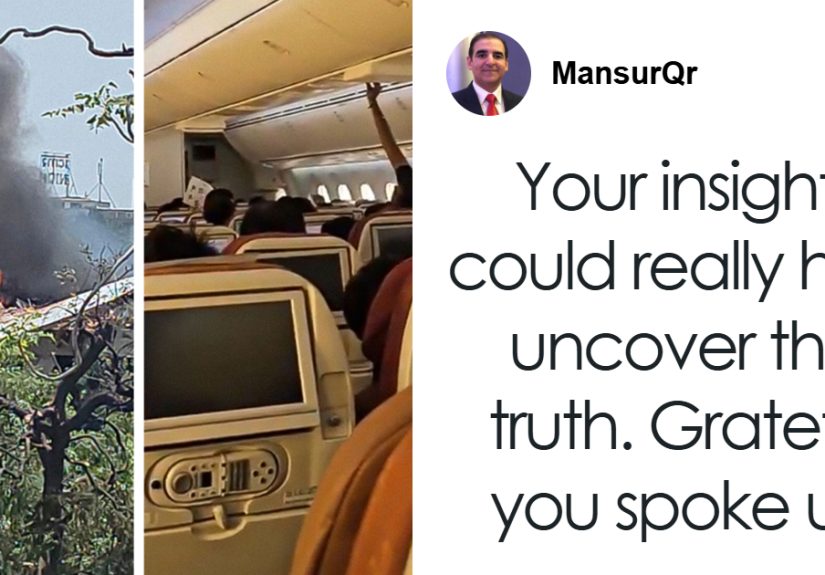
Few things rattle travelers faster than a sentence like this: “Nothing is working.” On most days, that line means an annoying flight, a sweaty cabin, or an in-flight screen that gives up on life before the safety demo ends. But when a passenger’s video showing apparent tech and cabin-system problems surfaced just hours before an Air India Boeing 787 later crashed, public frustration turned into something bigger: outrage, suspicion, and a fresh wave of questions about airline maintenance, Boeing scrutiny, and how trust in aviation gets lost one broken button at a time.
The story exploded online because it combined three things the internet never handles quietly: a viral passenger warning, a major airline, and a Boeing jet. Suddenly, everyone had a theory. Social media turned into an instant air-crash war room. Armchair investigators circled seatback screens, cabin lights, air vents, and flap rumors like they were solving a season finale. But while the emotional reaction made sense, the facts required more discipline than the timeline on most platforms could manage.
Here is the harder, more useful version of the story: the passenger video mattered because it showed a real perception problem and a possible maintenance-confidence problem, but it did not prove the cause of the crash by itself. The official preliminary investigation later focused on something much more serious and much more specific: the movement of the aircraft’s engine fuel cutoff switches shortly after liftoff. That distinction matters. A broken entertainment screen is bad. A plane crash is catastrophic. They are not automatically the same story, even when they share the same aircraft and the same terrible day.
Why This Air India Story Hit Such a Nerve
The passenger video spread because it captured what frequent flyers instantly recognize as a red-flag mood. Reports said the traveler, who claimed to have flown on the aircraft’s earlier leg before the doomed London departure, showed cabin systems that appeared not to be functioning properly, including seatback screens, air conditioning, and call buttons. The clip was the kind of footage people instinctively trust because it feels unfiltered, immediate, and annoyingly relatable. No corporate statement. No press conference. Just one traveler basically saying, “Folks, this thing feels off.”
That kind of footage lands differently in 2025 than it would have a decade earlier. Passengers are already primed to notice every wobble in airline operations. They have lived through delays blamed on “operational reasons,” missed bags, aircraft swaps, heat-soaked cabins, and airline apps that act like they were designed during the dial-up era. So when a video appears to show obvious onboard failures on a long-haul jet, the public does not calmly place the issue in a neat “non-critical cabin defect” folder. It reads it as a warning sign. Fairly or unfairly, the reaction is emotional first and technical later.
And that is exactly why this story sparked such a fierce response. It was not just about one aircraft. It was about confidence. Travelers were not merely asking, “What broke?” They were asking, “Who knew, who ignored it, and how many other small failures are being normalized until one day they are not small anymore?”
What Happened to Air India Flight 171
Air India Flight 171, a Boeing 787-8 Dreamliner bound for London Gatwick, crashed shortly after takeoff from Ahmedabad on June 12, 2025. It was one of the deadliest aviation disasters in a decade and the first fatal crash involving a Boeing 787 Dreamliner. Investigators recovered the flight data recorder and cockpit voice recorder, and the early public focus quickly shifted from online speculation to the aircraft’s final seconds.
The preliminary investigation painted a chillingly precise timeline. After liftoff, the aircraft reached maximum recorded airspeed. Immediately afterward, the engine fuel cutoff switches transitioned from RUN to CUTOFF one after another with about a one-second gap. That starved both engines of fuel. The Ram Air Turbine, an emergency backup power device, deployed during the initial climb, indicating a major loss of engine power. The pilots then moved the switches back to RUN, and the engines began relight efforts, but there was too little altitude and too little time. A mayday call followed. Seconds later, the recording stopped.
That sequence is why responsible analysis has to be careful. Public anger over the passenger video is understandable. But the investigation’s central issue, at least in the preliminary report, is not “the TV screens were dead.” It is the unexplained movement of two critical fuel control switches during the climb. That is a vastly more serious matter, and one that investigators will continue to examine through data, cockpit audio, maintenance records, and system design review.
The Big Question: Did the Passenger Video Predict the Crash?
Not in any proven, direct way. That is the key takeaway many headlines blur because “mystery solved” gets more clicks than “aviation investigations are painstaking and complicated.” The passenger’s footage may indicate that the aircraft had serviceability issues on an earlier leg. It may also deepen public concern about maintenance culture, dispatch standards, and whether problems that feel “minor” to the system feel anything but minor to customers. But as of the preliminary findings, it does not establish that the cabin issues captured in the video caused the crash.
This is where aviation reporting needs a seatbelt and a little humility. Cabin air conditioning problems, inoperative entertainment systems, and broken call buttons can point to poor upkeep, weak turnaround standards, or deferred cabin maintenance. They can absolutely damage trust. They can absolutely suggest an airline has quality-control issues. But they are not the same as evidence that the aircraft’s flight-critical systems failed for the same reason. Linking them without proof may satisfy the internet’s craving for a tidy villain, but it is not good analysis.
At the same time, dismissing the video as meaningless would also miss the point. In aviation, perception is not trivial. If a passenger can walk onto a plane and instantly notice multiple things that appear not to work, the airline has already lost something precious before the aircraft even pushes back: confidence. And once confidence is gone, every later revelation lands harder.
Why the Fuel Switch Detail Has Become So Important
The preliminary report’s focus on the fuel cutoff switches changed the conversation from general outrage to very specific engineering and human-factors questions. These are not casual dashboard toggles. They are critical controls designed to manage fuel flow to the engines. Investigators noted that the switches moved to cutoff shortly after takeoff, and cockpit audio captured one pilot asking the other why he cut off the fuel, with the other responding that he did not do so.
That exchange is the kind of line that sends a chill through aviation circles, because it raises questions without yet answering them. Was the movement mechanical, human, procedural, or something investigators have not fully disclosed? The preliminary report did not say how the switches moved. It did not assign final blame. It did not tell the public to conclude the case and go home.
What it did do was place an intense spotlight on switch design, locking mechanisms, cockpit ergonomics, training, and historical guidance. A 2018 FAA bulletin had warned operators about fuel control switch locking awareness on several Boeing models, including the 787, noting that if a locking feature were disengaged, inadvertent movement could become possible. That bulletin was informational rather than a mandatory airworthiness directive, but after the Air India crash, it naturally returned to the center of the discussion. In aviation, old bulletins have a habit of becoming very new news when tragedy strikes.
Air India’s Reputation Problem Did Not Start With This Crash
The outrage around this story also reflects the airline’s broader credibility gap. Air India has been in the middle of a massive turnaround effort under Tata Group ownership, trying to transform itself into a more modern global carrier after years of reputation damage. That kind of makeover sounds glamorous in a corporate presentation. In real life, it means messy fleet integration, maintenance pressure, staffing strain, customer frustration, and high expectations arriving faster than spare parts.
Reporting before and after the crash described an airline still wrestling with punctuality, product consistency, and regulatory headaches. Reuters had already reported issues including aircraft-condition complaints, grounded Dreamliners due to spare-parts shortages, and regulatory scrutiny tied to pilot-duty and fatigue-management violations. So when the passenger video surfaced, people did not view it in isolation. They plugged it into an existing story line: a carrier trying to reinvent itself while still being chased by the ghosts of old operational habits.
That context matters because outrage is rarely about one clip alone. It is usually about a pattern people believe they are finally seeing in plain daylight.
Boeing Was Always Going to Be Part of the Story
Even if the final investigation ends up centering mostly on switch movement, procedures, or operational circumstances, Boeing was never going to avoid the glare. The company has spent years under extraordinary scrutiny following safety and quality crises on other aircraft programs, and its 787 line has also faced manufacturing-quality questions in recent years. The Dreamliner had long been regarded as technologically advanced and generally safe, which is exactly why this crash landed like a thunderclap across the aviation world.
That creates a public-communication headache. Every new Boeing-related incident now arrives in a trust environment that is already bruised. So even before investigators publish a final cause, the brand absorbs suspicion. That does not mean every accusation is fair. It does mean Boeing is operating in a world where the phrase “benefit of the doubt” has become a luxury item.
For airlines, that matters too. When a Boeing jet has an incident, carriers do not just answer questions about one flight. They suddenly have to reassure customers about the entire fleet, their maintenance practices, and the difference between online theories and official findings. That is why Indian regulators ordered inspections and why Air India temporarily reduced some widebody international operations following the crash and related disruptions.
The Internet Wanted a Villain. Aviation Demanded Patience.
One of the most revealing parts of this story is how quickly misinformation flooded the conversation. False and mislabeled videos circulated online, including footage wrongly presented as showing the AI171 crew boarding before the crash. This is the modern disaster cycle in miniature: real event, viral clip, copied clip, fake clip, confident theory, louder theory, and then, somewhere in the corner, investigators doing the slower and less glamorous work of finding out what actually happened.
That slower process is frustrating, but it exists for a reason. Air-crash investigations are built to resist guesswork. They examine maintenance logs, switch designs, crew records, black-box data, cockpit audio, air traffic communication, and physical wreckage patterns. They also separate what feels emotionally connected from what is technically connected. The public often wants a clean answer in 12 hours. Aviation usually takes months for a reason and a year for confidence.
So yes, outrage was understandable. But precision matters. The strongest argument is not that the passenger video “proved” the crash. The strongest argument is that the video intensified public concern about maintenance culture and trust just before official findings introduced a separate, deeply alarming technical mystery.
What Travelers, Airlines, and Regulators Should Take From This
For travelers, the lesson is not to panic every time an entertainment screen freezes like it just remembered an awkward text from 2017. But it is reasonable to report issues, document serious concerns, and expect airlines to take cabin defects seriously rather than treating them as mere customer-service annoyances. Passengers notice more than airlines think, and viral evidence now travels faster than any corporate talking point.
For airlines, the lesson is blunt: every “minor” defect has a reputation cost. A sweltering cabin, loose interior fittings, failed call buttons, or dead screens may not be crash evidence, but they communicate neglect. They tell customers the airline is asking them to trust a machine that does not appear fully cared for. In a high-stakes business, that message is poison.
For regulators and manufacturers, the lesson is transparency. When facts are scarce, speculation breeds. Clear, timely communication does not solve a crash, but it does reduce the vacuum where misinformation thrives. The public can handle uncertainty better than silence. What it hates is the feeling that the truth is being dragged down the runway with the parking brake on.
Passenger Experiences Related to the Story: Why “Small” Tech Failures Feel So Big in the Cabin
To understand why this Air India story resonated so widely, it helps to think about the ordinary passenger experience. Most travelers are not aerospace engineers. They are not analyzing switch architecture or engine relight sequences while buckling in. They judge an aircraft the same way people judge almost any complex service environment: by the details they can see, hear, and touch.
When the cabin is too hot, passengers feel vulnerable. When the screens are dark, they assume the plane is tired. When the reading lights fail, call buttons do nothing, or trim panels look loose, travelers begin stitching together a bigger story in their heads. Maybe the crew is doing its best. Maybe the issue is isolated. Maybe the flight is perfectly airworthy. But from seat 24A, the emotional math is brutally simple: if the obvious things are broken, what about the things I cannot see?
That question is why cabin-tech failures are not trivial in public perception. The in-flight entertainment system is not a flight-control computer, but to passengers it is proof that someone maintained the airplane recently and carefully. Air conditioning is not just a comfort feature; in a packed widebody cabin, it shapes whether people feel calm or trapped. A functioning call button is not just convenience; it signals responsiveness. These are trust cues. When several trust cues fail at once, passengers stop feeling like customers and start feeling like unpaid beta testers in a very expensive aluminum tube.
There is also a psychological pile-on effect. One dead screen is annoying. Three visible glitches become a story. Add a social media post, a few photos, maybe a line tagging the airline, and suddenly the experience is no longer private frustration. It becomes evidence. Modern passengers do not just complain at baggage claim anymore. They publish. They annotate. They narrate. And when a later disaster occurs, those earlier posts are rediscovered like digital breadcrumbs, whether or not they ultimately explain the event.
Frequent flyers know this pattern well. They remember aircraft with flickering panels, broken tray tables, or stubborn overhead bins and then quietly hope the maintenance team focused more on the important things than the visible ones. Usually that hope is enough, because commercial aviation remains remarkably safe overall. But when an accident happens, all those everyday compromises suddenly look different in hindsight. What once seemed like routine wear and tear begins to resemble warning tape people walked past because that is what passengers are trained to do: board, sit down, trust the process, and hope the professionals have the rest covered.
That is why the Air India passenger video hit so hard. It did not just show alleged defects. It mirrored a common traveler fear: the suspicion that the people running the system may have become too accustomed to imperfections passengers still find alarming. In that sense, the outrage was about more than one plane or one airline. It was about the fragile bargain at the center of modern air travel. Passengers agree to hand over control completely. In return, airlines must make competence visible, not just claim it behind the scenes. The moment visible competence disappears, confidence starts looking for the nearest exit row.
Conclusion
The viral passenger video and the Air India crash became linked in the public imagination for an obvious reason: both spoke to a deeper fear that modern aviation sometimes treats warning signs as background noise until the background gets very loud. But the most responsible reading of the story is more measured. The passenger’s footage mattered because it captured what looked like troubling onboard issues and amplified concern over maintenance culture. The preliminary investigation mattered because it identified a separate, highly consequential event involving the movement of engine fuel cutoff switches just after takeoff.
Together, those two threads created a combustible mix of grief, mistrust, and anger. One showed what passengers thought they saw. The other showed what investigators could actually document. The final report may yet clarify whether these stories intersect in any meaningful way. Until then, the outrage is understandable, the questions are legitimate, and the lesson is unmistakable: in aviation, trust is built through details, lost through doubt, and judged most harshly when tragedy leaves no room for excuses.