Table of Contents >> Show >> Hide
- Fast Cheat Sheet: How to Pick the Right Vanity in 10 Minutes
- Size Matters: Measuring Without Regrets
- Vanity Types, Explained Like You’re Actually Shopping
- Cabinet Construction: What Actually Holds Up in a Wet Room
- Countertops & Sinks: Choose Your “Maintenance Personality”
- The Best Bathroom Vanities by Style & Budget
- Budget Strategies That Don’t Look Like Budget Strategies
- Costs & Installation: The Reality Check (Without the Panic)
- Real-World Vanity Experiences (The Stuff People Wish They Knew Sooner)
- Conclusion
Bathroom “vanity” is one of the only home-improvement terms that doubles as a personality trait.
Today we’re talking about the furniture kind: the hardworking cabinet-and-sink combo that hides plumbing,
corrals clutter, and tries its best to look calm while your morning routine is doing parkour.
The good news: there’s a great bathroom vanity for every style and budgettiny powder rooms included.
The tricky part is choosing one that fits your space, survives moisture, and doesn’t turn your bathroom into
a daily obstacle course. Let’s make this easy (and maybe even fun).
Fast Cheat Sheet: How to Pick the Right Vanity in 10 Minutes
- Measure three things: width, depth, and heightthen double-check door swings and drawer clearance.
- Match the plumbing you already have: moving plumbing can raise costs fast, so plan around existing rough-ins when possible.
- Choose a type: freestanding (most common), floating (space-saver), console (open/airy), or furniture-style (statement piece).
- Decide your countertop vibe: quartz/solid surface for low drama, marble for high drama, cultured marble for budget-friendly polish.
- Prioritize storage that actually works: drawers beat big cabinets because pipes steal prime real estate.
- Set your budget “truth sandwich”: (1) vanity price, (2) top/sink/faucet, (3) installation + plumbing tweaks.
Size Matters: Measuring Without Regrets
Vanity sizing isn’t about what looks cute onlineit’s about what allows you to open the bathroom door
without body-checking your new cabinet. A common approach is to measure the open floor area, note
where doors swing, and confirm where plumbing and outlets sit before you buy.
Common vanity widths, depths, and heights
Many retailers group vanities into standard widths (think classic “fits-most-bathrooms” sizing), while still offering
extra-small and extra-wide options. Depth typically lands in the “enough counter space, not enough to block traffic”
range, and height has shifted upward over the years as more people prefer a slightly taller, more comfortable setup.
- Width: Great for tiny baths starts around the low 20s; most common options cluster at familiar milestones (like 24, 30, 36, 48, and 60 inches).
- Depth: Shallow options help tight baths; deeper cabinets maximize storage but can crowd the room.
- Height: Standard height works for most; “comfort height” is often preferred by taller users.
Clearances that make a bathroom feel human-sized
If you’re installing a single sink vanity, plan enough side space so elbows aren’t constantly negotiating with walls.
If you’re doing a double sink vanity, ensure the sinks aren’t so close you’re brushing teeth like synchronized swimmers.
For comfortable layout planning, bathroom guidelines commonly recommend generous spacing from sink centerlines to nearby obstacles,
plus appropriate distance between two sink centerlines in a double setup.
And while we’re at it: if you’re updating a vanity in a tight bath, consider “visual breathing room.” Open shelves,
slimmer profiles, or a wall-mounted (floating) vanity can make the floor look biggerlike an optical illusion, but useful.
Vanity Types, Explained Like You’re Actually Shopping
Freestanding vanities (the default hero)
Freestanding vanities are the most common because they’re straightforward to install and offer excellent storage.
They work in nearly every style: modern, farmhouse, traditional, transitionalyou name it.
If you want the most choices for every budget, this is your category.
Floating (wall-mounted) vanities (the small-bath MVP)
Floating vanities create the illusion of more space because you can see the floor underneath.
They’re perfect for modern bathrooms and small bathrooms where every inch counts.
The trade-off: installation often needs solid wall blocking and careful mounting, so plan for a little extra effort (or pro help).
Console vanities (airy and stylish, with “spa” energy)
Console vanities are partially openthink legs and a shelf instead of a full cabinet box.
They’re great when you want an elegant look, easy cleaning underneath, and a lighter visual footprint.
The downside is reduced hidden storage (so you’ll want a medicine cabinet or nearby linen storage).
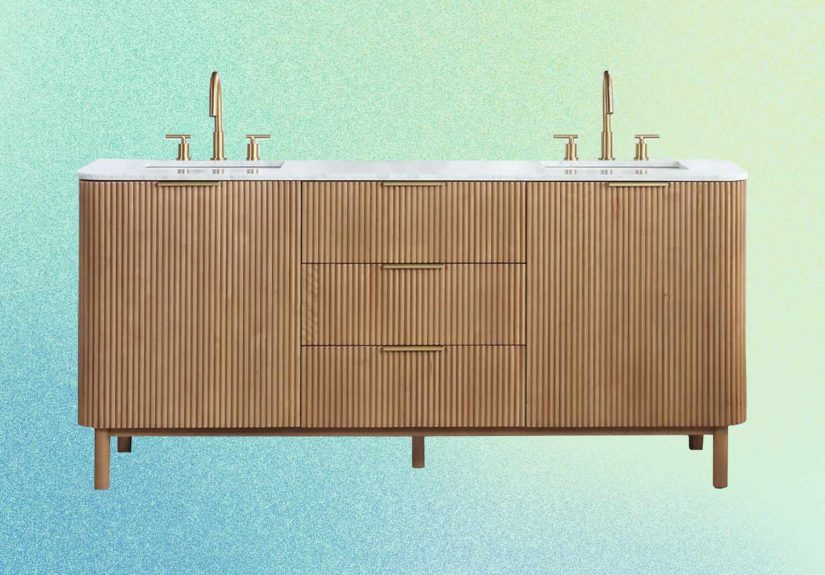
Furniture-style and vintage-inspired vanities (statement-makers)
These vanities look like a dresser that decided to get its life together and become bathroom-appropriate.
They’re ideal for traditional, transitional, or eclectic spacesespecially if you love carved details and rich finishes.
Look for construction that can handle moisture and a finish that’s sealed well.
Cabinet Construction: What Actually Holds Up in a Wet Room
Bathrooms are basically a daily stress test: steam, splashes, hair tools, cleaning sprays, and the occasional “oops”
when someone forgets the faucet is on. So your vanity cabinet material matters.
Solid wood
Beautiful, durable, and often pricier. If you’re investing in a long-term vanity for a primary bath, solid wood doors and frames
can be worth itespecially when paired with quality joinery and a protective finish.
Plywood (a practical favorite)
Plywood is widely used for cabinet boxes in mid-range and higher-quality builds because it’s strong for its weight,
holds fasteners well, and generally performs better than cheaper engineered boards when conditions get rough.
If you want a vanity that feels sturdy when you tug a drawer, plywood construction is a strong sign.
MDF / engineered board (budget-friendly, but be picky)
MDF can be cost-effective and paints smoothly, which is why you’ll see it frequently in budget vanities.
The key is build quality and protection: well-sealed surfaces and careful edge finishing help.
For bathrooms that get a lot of humidity (hello, long showers), look for better construction, upgraded finishes,
and avoid setups where water can repeatedly soak the cabinet base.
Hardware and details that signal quality
- Soft-close hinges and slides: less slamming, longer lifespan, fewer “Why is everyone angry?” moments.
- Real drawers (not just doors): drawers give you usable storage around plumbing.
- Adjustable feet or levelers: helpful on older floors that aren’t perfectly flat.
- Back panel access: makes plumbing connections simpler and less rage-inducing.
Countertops & Sinks: Choose Your “Maintenance Personality”
A bathroom vanity top is where style meets reality. Some materials look amazing but demand attention.
Others are basically the low-maintenance friend who always brings snacks and never causes drama.
Quartz (the “set it and forget it” pick)
Quartz is popular because it’s durable, low-maintenance, and resists staining wellgreat for busy bathrooms.
If you want a vanity that looks upscale without requiring a lifestyle change, quartz is hard to beat.
Solid surface (smooth, repairable, quietly luxurious)
Solid surface vanity tops have a seamless look and are generally easy to clean.
They’re often a sweet spot when you want a modern, spa-like finish without the fragility of more porous stones.
Marble (gorgeous, but high-maintenance)
Marble is classic and stunning, but it can require regular sealing and more careful cleaning.
If your household treats skincare bottles like confetti, you may prefer a tougher surface.
If you love the look and accept the upkeep, marble can be totally worth it.
Vitreous china & cultured marble (budget-friendly and clean-looking)
These options can offer a polished look at a more approachable price, often with integrated sink designs.
They’re common in prefabricated vanity combos and can be a great choice for guest baths and rentals.
Sink styles that change the whole vibe
- Undermount: easy to wipe water into the sink; sleek and modern.
- Drop-in: simple installation; lots of options.
- Integral: sink and top in one pieceeasy cleaning, fewer seams.
- Vessel: major style statement; just remember it changes faucet height needs.
Quick faucet note: make sure your faucet matches the sink/top drilling (single-hole vs. widespread configurations),
otherwise your “quick upgrade” turns into “creative problem-solving with extra trips to the store.”
The Best Bathroom Vanities by Style & Budget
Instead of one impossible “best vanity,” here are smart matches by styleeach with a budget, mid-range, and splurge direction.
Use these as a shopping filter so you don’t scroll for three hours and emerge with 47 open tabs and no decision.
Modern & minimalist
- Budget: a compact, clean-lined freestanding vanity in white, gray, or matte black with simple hardware.
- Mid-range: a floating vanity with wide drawers and a quartz or solid surface top for a streamlined look.
- Splurge: a wall-mounted vanity with premium drawer organization and a statement slab top (quartz or stone).
Modern bathrooms look best when clutter is contained. Prioritize drawers, integrated organizers, and a countertop that’s easy to wipe down.
Modern farmhouse
- Budget: shaker-style doors, brushed nickel hardware, and a bright top that feels clean and timeless.
- Mid-range: warm wood tones (or a white vanity with a contrasting top) plus a practical undermount sink.
- Splurge: furniture-style details, upgraded finishes, and thoughtful storage like deep drawers for hair tools.
Farmhouse style is forgiving: it hides daily life well. Choose a finish that can handle moisture and family traffic.
Traditional & classic
- Budget: raised-panel doors, warm finishes, and a cultured marble or vitreous china top for easy upkeep.
- Mid-range: furniture-style feet, richer hardware, and a more substantial countertop material.
- Splurge: detailed millwork, high-end stone, and custom storage inserts that keep everything tidy.
Traditional vanities look best when they feel “built,” not flimsy. Look for sturdy cabinet construction and doors that close cleanly.
Coastal & light and airy
- Budget: white or pale gray cabinetry with simple pulls and a bright, easy-clean top.
- Mid-range: a floating vanity or console vanity to keep the floor visible and the room feeling open.
- Splurge: natural wood tones, subtle texture, and lighting/mirror upgrades that amplify the breezy look.
Industrial & edgy
- Budget: darker finishes, straightforward shapes, and strong hardware (black or brushed metal).
- Mid-range: a concrete-look top or a solid surface top with angular, modern lines.
- Splurge: a statement vessel sink and a wall-mounted vanity that looks like it belongs in a boutique hotel.
Glam & luxe
- Budget: glossy finishes, upgraded hardware, and a bright top that reflects light.
- Mid-range: a vanity with elegant details (curves, fluting, or luxe pulls) plus quartz for durability.
- Splurge: bold stone patterns, designer-style cabinet fronts, and lighting that makes the mirror feel cinematic.
Budget Strategies That Don’t Look Like Budget Strategies
- Buy the “combo” when you can: a vanity with top and sink is often more affordable than piecing everything together.
- Spend on what you touch daily: drawer slides, hinges, faucet, and countertop matter more than decorative trim.
- Upgrade the hardware: swapping pulls can make an inexpensive vanity look intentionally styled.
- Let the mirror do some heavy lifting: a better mirror (and lighting) can elevate the whole wall.
Costs & Installation: The Reality Check (Without the Panic)
A new bathroom vanity can be a quick refreshbut costs vary depending on size, materials, and how much plumbing needs to move.
Prefabricated vanities tend to be the most budget-friendly, while custom builds rise quickly in price.
Installation costs can also change depending on whether you’re swapping like-for-like or reworking the layout.
When DIY is reasonable
If you’re comfortable turning off water, disconnecting supply lines, and carefully removing an old unit,
you may be able to handle demolition and basic prep. Many homeowners DIY the “cabinet part” and hire a plumber
for connectionsespecially if local codes require it or the setup is complicated.
When hiring a pro is worth it
- If plumbing locations don’t line up with the new vanity.
- If you’re installing a floating vanity (wall support and mounting must be solid).
- If your bathroom has older shutoffs, questionable pipes, or any sign of past leaking.
- If you’d rather not gamble on water damage (a very expensive “oops”).
Real-World Vanity Experiences (The Stuff People Wish They Knew Sooner)
Ask a handful of homeowners about their bathroom vanity experience and you’ll hear a consistent theme:
“I thought I was buying a cabinet. Turns out I was buying a daily relationship.” The vanity is where routines happen,
where clutter gathers, and where water tries (enthusiastically) to break physics. So here are the lived-in lessons
people commonly share after the remodel dust settles.
First: drawers change everything. A big cabinet looks spacious, but the plumbing eats the most useful center area,
leaving you with two awkward caves on either side. People who choose vanities with wide drawers (or a drawer-and-door combo)
say they can actually store what they ownwithout stacking bottles like a tiny skincare Jenga tower.
If a household has multiple users, drawer organization is the difference between “calm morning” and “who moved my thing?”
Second: the countertop is a personality test. Busy families love low-maintenance surfaces because bathrooms are
high-traffic zones. In real life, toothpaste dries like cement, hair products migrate, and someone always sets a damp item
where it shouldn’t go. Homeowners who choose tough, easy-clean tops (like quartz or solid surface) often report fewer regrets,
while those who choose delicate stone say they still love the lookbut only if they went in expecting more upkeep.
Translation: if you enjoy “ritual sealing day,” marble can be romantic. If you don’t, pick the countertop that lets you live.
Third: height matters more than you think. People switching from older, shorter vanities to a slightly taller setup often say
it feels more comfortable day-to-dayespecially for adults. But families with kids sometimes prefer a more moderate height or add
a small step stool. In other words, comfort height can be a win, but it’s worth thinking about who uses the bathroom the most.
Fourth: floating vanities are fantasticuntil the wall isn’t ready. Many homeowners love the airy, modern look and the fact that
cleaning the floor becomes easier (no more dust bunnies auditioning for a horror movie under the toe-kick).
But the best experiences come from planning: solid mounting support, thoughtful placement, and a plan for how plumbing will be hidden.
When those pieces are ignored, the vibe shifts from “luxury hotel” to “why does this feel… wobbly?”
Fifth: don’t underestimate lighting and mirrors. People often expect the vanity itself to do all the style work,
then realize the mirror and lighting determine whether the space feels expensiveor just “fine.”
A well-sized mirror, flattering light temperature, and enough brightness can make even a budget vanity look intentionally designed.
Meanwhile, a gorgeous vanity under sad lighting is like wearing a great outfit in a room with terrible fluorescent bulbs:
it’s not you, it’s the lighting. (Okay, sometimes it’s also the lighting.)
Finally: buy for your real habits. If you’re a “clear counter” person, a slimmer vanity can look amazing.
If you’re a “my products have products” person, prioritize storage and a countertop that can handle daily chaos.
The happiest vanity owners aren’t the ones who chased the trendthey’re the ones who matched the vanity to their actual life.
Conclusion
The best bathroom vanity isn’t just prettyit fits your space, supports your routine, and stays unfazed by humidity and hurry.
Start with measurements and clearances, pick the vanity type that matches your room (floating for openness, freestanding for maximum storage),
and choose materials that align with your maintenance tolerance. Add smart upgrades like drawers and soft-close hardware,
and you’ll end up with a vanity that looks great on day oneand still feels great on day one hundred.