Table of Contents >> Show >> Hide
- Why Scientists Are Talking About Brain “Eras”
- The Study Behind the Headline
- The Brain’s Five Eras, Explained
- What This Means for Learning, Memory, and Brain Health
- What the “Eras Tour” Metaphor Gets Right
- What the Study Does Not Mean
- Experiences Related to the Topic: What a Life-Long Brain “Eras Tour” Feels Like
- Conclusion
For years, the human brain has been described like a machine that slowly wears down over time. Useful image, sure. Also a little boring. A newer and much more interesting idea is now taking center stage: the brain does not move through life in one smooth, predictable line. Instead, it shifts through distinct eras, each with its own wiring style, strengths, vulnerabilities, and personality quirks. In other words, your brain is not doing a sleepy walk from cradle to rocking chair. It is doing costume changes.
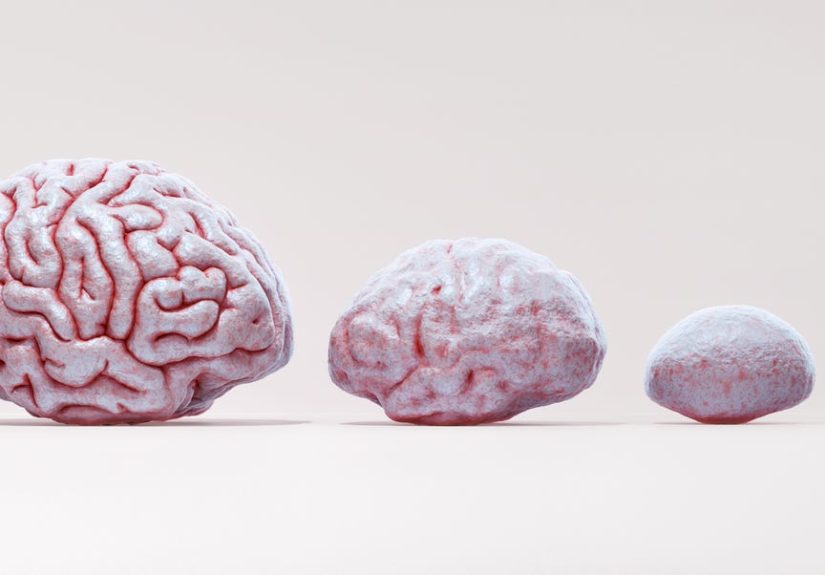
That idea got a major boost from a recent study that examined thousands of MRI brain scans and found that the structure of the human brain appears to reorganize around four major turning points, creating five broad stages across the lifespan. The headline version is irresistible: the brain goes on a life-long “Eras Tour.” The scientific version is even better. These eras are not just poetic labels. They reflect changes in neural wiring, white matter organization, and the way different brain regions communicate with one another over time.
The finding matters because it gives us a more realistic way to think about brain development, brain aging, neuroplasticity, and mental performance. It also helps explain why certain challenges and abilities seem to cluster at different ages. Childhood is not just “small adulthood.” Adolescence may last longer in the brain than most people expect. Midlife is less static than it looks from the outside. And older adulthood is not simply one long decline, but a set of changing brain states with real variation from person to person.
Why Scientists Are Talking About Brain “Eras”
Researchers have known for a long time that the brain changes across the lifespan. That part is not news. Babies and children rapidly build and prune connections. Teens and young adults refine networks involved in learning, emotion, and decision-making. Older adults may see shifts in white matter integrity, processing speed, and memory performance. What has been harder to pin down is the bigger map. When do those changes start to look meaningfully different? When does one broad stage end and another begin?
The new study tried to answer exactly that. Rather than focusing on one tiny slice of life, the researchers analyzed diffusion MRI scans from thousands of people ranging from infancy to old age. Diffusion MRI tracks how water moves through brain tissue, which helps scientists infer the structure of the brain’s communication highways. That makes it especially useful for studying white matter and connectivity patterns. Instead of asking whether one region grows or shrinks, the team looked at the overall topology of brain networks across life.
Their conclusion was striking: the brain’s structural organization appears to pass through five major epochs, with turning points around ages 9, 32, 66, and 83. Those ages are averages, not magic birthdays with confetti cannons, but they suggest that the brain develops and ages in waves rather than in a straight line. That is a big shift in perspective, and it matches a broader trend in modern science. Other research on human aging has also found that biological changes often happen in bursts, not just as a slow, steady drip.
The Study Behind the Headline
How the research worked
The researchers compared specialized MRI scans from roughly 4,000 people between birth and age 90. They used graph theory measures to describe how brain networks are organized, then projected those measures into larger patterns to identify turning points across the lifespan. That sounds intimidating, but the basic concept is simple: they were looking for moments when the brain’s communication system starts following a meaningfully different path.
The result was not a fuzzy “maybe something changes in adulthood” sort of finding. It was a more defined picture showing five broad eras. The first runs from birth to about age 9. The second, labeled adolescence in structural terms, stretches from 9 all the way to about 32. Then comes adulthood from 32 to 66, followed by early aging from 66 to 83, and late aging from 83 onward.
That second stage is the headline-maker. Most people do not expect to hear that adolescent-like changes in brain structure may continue into the early thirties. But the researchers were careful: they were not saying a 30-year-old has the judgment of a high school sophomore. They were saying that the type of structural reorganization happening in the brain remains part of the same larger developmental era longer than many older models assumed.
Why the finding is important
This kind of framework helps scientists understand when the brain may be especially flexible, when it may be stabilizing, and when it may be increasingly vulnerable to disruption. It also offers a more useful baseline for studying conditions tied to brain wiring, including learning differences, some mental health disorders, and neurodegenerative disease. If you want to know when the brain is most likely to shift gears, it helps to know where the gears actually are.
The Brain’s Five Eras, Explained
Era 1: Birth to About 9 The Great Build-and-Edit Phase
Early childhood is the brain’s construction boom. Synapses are overproduced, connections are tested, and the most active pathways are strengthened while others are trimmed back. Scientists often describe this as pruning, which sounds severe but is actually efficient. The brain is learning what to keep and what to let go. Grey matter and white matter grow rapidly, cortical thickness reaches key peaks, and the architecture of the brain becomes more organized.
In real life, this is why children can seem like tiny chaos goblins one minute and astonishing learners the next. Language, movement, social understanding, memory, and emotional regulation are all under heavy construction. By around age 9, the study suggests, the brain reaches a turning point where its pattern of rewiring begins to shift.
Era 2: About 9 to 32 The Long Adolescent Remix
This may be the most fascinating stage. White matter continues to grow, communication across the brain becomes more efficient, and networks refine themselves for faster, cleaner signaling. The researchers found that this era is the only one in which neural efficiency is still increasing. That has huge implications for learning, adaptation, creativity, and risk.
It also helps explain why adolescence and young adulthood can feel like a strange combination of brilliance and mayhem. People in this stage are often terrific at learning, forming identities, building complex skills, and rethinking the world. They may also be more vulnerable to certain mental health conditions that commonly emerge during the teen years or early adulthood. The brain is powerful here, but it is also still tuning the orchestra while the concert has already started.
The idea that this era lasts into the early thirties does not infantilize adults. It actually recognizes how long high-level brain refinement continues. Plenty of people notice that their late twenties and early thirties bring a different kind of thinking: less mental static, stronger pattern recognition, better judgment, and a greater ability to integrate emotion with long-range planning. The science suggests that feeling may have structural roots.
Era 3: About 32 to 66 Stability, Specialization, and the Long Middle Set
Around age 32, the brain enters its longest era. The study suggests that architecture becomes more stable, with fewer major turning points for decades. Researchers also observed greater segregation, meaning brain regions become more compartmentalized and specialized. That can sound ominous, but it is not necessarily bad. Specialized systems can support efficient performance, accumulated expertise, and the kind of judgment that makes younger adults say, “How did you think of that so fast?”
This is the era of experience paying rent. Many adults in this stage become better at synthesizing information, seeing patterns, prioritizing what matters, and resisting distractions that would have hijacked them at 19. Intelligence is not one thing, and not every cognitive skill peaks at the same age, but the broad adult brain seems less like a frantic startup and more like a company that finally figured out its workflows.
That said, stability is not the same as stasis. Midlife brains are still plastic. They still respond to learning, exercise, sleep, stress, social connection, and health conditions. Neuroplasticity does not retire in your thirties and move to Florida.
Era 4: About 66 to 83 Reorganization in Early Aging
The turning point around age 66 appears milder than the shift at 32, but it still matters. Researchers found meaningful changes in network patterns, likely related to aging and reduced connectivity as white matter begins to degenerate. This does not mean everyone suddenly becomes forgetful at 66. It means the average brain starts reorganizing again in ways that may affect processing speed, flexibility, and vulnerability to conditions influenced by vascular health and brain aging.
This is where lifestyle and health factors become especially important. Brain health in later life is linked to more than crossword puzzles and wishful thinking. Exercise, blood pressure control, sleep, social connection, treatment of hearing and vision issues, and management of chronic disease all matter. The National Institute on Aging emphasizes that many environmental and lifestyle factors affecting cognitive health can be changed or managed, which is science’s polite way of saying your choices still count.
Era 5: About 83 and Beyond A More Local Strategy
In the final era, the study found a shift from more global connectivity toward increased reliance on certain regions. The dataset for this stage was more limited, so scientists are careful not to oversell it. But the overall picture suggests that as whole-brain connectivity declines further, the brain may lean more heavily on selected local systems.
Importantly, this stage should not be framed as the brain’s sad final encore. Older brains still show adaptation, resilience, and individuality. Some people remain cognitively sharp well into late life, and researchers increasingly study why. Cognitive reserve, lifelong learning, cardiovascular health, and social engagement are all part of that conversation. The late-life brain may be working differently, but “differently” is not the same thing as “empty.”
What This Means for Learning, Memory, and Brain Health
The biggest takeaway is that the human brain remains dynamic for far longer than many people assume. Harvard Health describes neuroplasticity as the brain’s ability to change throughout life in response to experience, learning, and environment. That matters because the new lifespan study is not just about decline. It is also about adaptation. Each era reflects a different style of wiring, which means the goals of brain health change over time too.
In childhood, the focus is on rich environments, language, play, and support for healthy development. In adolescence and young adulthood, the brain is highly efficient at building and refining networks, making this a powerful time for education, identity formation, and skill acquisition. In adulthood, the priorities may shift toward maintaining flexibility, reducing chronic stress, and protecting cardiovascular and metabolic health. In older age, preserving sensory health, movement, sleep, and social contact can have outsized value.
There is also a comforting message here. If your brain is always changing, then your abilities are not frozen in place. You are not a finished product at 22, and you are not a ruined one at 72. Different abilities may rise, level off, or soften at different times, but the brain keeps responding to how you live.
What the “Eras Tour” Metaphor Gets Right
Usually, science metaphors get weird fast. This one actually works. A musical era comes with a different style, different mood, different costume, and a different audience reaction. The same artist is there, but the expression changes. That is a surprisingly good way to think about the brain.
Your childhood brain is all growth and experimentation. Your adolescent brain is a high-energy remix obsessed with optimization and possibility. Your adult brain becomes more curated and stable. Early aging introduces a quieter, more selective arrangement. Late aging may rely on a narrower but still meaningful set of recurring themes. Same brain, different set list.
And just like an actual tour, no two performances are identical. Genetics matter. Health matters. Education matters. Stress matters. Sleep matters. Exercise matters. Social life matters. The study gives us the average map, not your personal destiny.
What the Study Does Not Mean
It does not mean every 32-year-old wakes up on their birthday with a fully upgraded “adult brain” notification. It does not mean everyone over 66 enters instant decline. It does not mean brain development is finished in one clean moment, or that age alone explains intelligence, wisdom, or maturity. Human brains remain wildly variable.
It also does not mean structure equals fate. Brain architecture matters, but so do education, experience, trauma, disease, culture, opportunity, and daily habits. Scientists are building better reference maps for the brain across the lifespan, but a map is not the whole trip. It tells you the terrain. It does not tell you what music you play on the drive.
Experiences Related to the Topic: What a Life-Long Brain “Eras Tour” Feels Like
The beauty of this research is that most people can recognize these eras in their own lives, even if they never use words like “white matter organization” at dinner. In childhood, the experience is often explosive growth. A kid who could barely tie a shoe one year can suddenly read signs in the grocery store, invent bizarre but sophisticated games, and ask questions so deep they send adults into fake coughing fits. That is what a rapidly consolidating brain looks like from the outside: curiosity everywhere, impulse control still negotiating its contract, and learning happening at an almost rude speed.
Then comes the long adolescent stretch, and this is where life gets especially interesting. Many people remember their teens and twenties as a period of intensity. Emotions feel louder. Decisions feel bigger. Friendships and heartbreaks land like meteor strikes. At the same time, abilities bloom. You can learn a language, master a skill, switch identities, move cities, rewrite ambitions, and somehow survive on terrible sleep and iced coffee. The brain in this era is refining itself in real time. It is powerful, adaptive, and occasionally dramatic enough to deserve stage lighting.
By the early thirties and into midlife, many people describe a different mental texture. They may not feel “smarter” in the cartoon genius sense, but they often feel clearer. They recognize patterns faster. They know which risks are worth taking and which are just expensive personality tests. They can hold complexity without panicking. Work, relationships, parenting, and responsibility all demand more integration, and the adult brain often seems better equipped to provide it. This is also why adults sometimes look at their younger selves and whisper, “Why did I do that?” The answer, in part, is that the band was still rearranging the set list.
Later adulthood brings another shift. People may notice that speed changes before wisdom does. Retrieving a name can take longer, but seeing the larger picture may come more easily. There can be more selectivity, more patience, and a stronger sense of what deserves attention. For some, this era includes health challenges that affect cognition. For others, it becomes a time of deep creativity, reflection, teaching, volunteering, or reinvention. The point is not that every older brain performs the same way. The point is that the brain is still adapting, still responding, still very much on tour.
Seen this way, the human lifespan is not one long fade-out. It is a sequence of transitions, each with trade-offs, each with opportunities, and each with its own rhythm. The brain changes its sound, but it never stops making music.
Conclusion
The new research on lifespan brain wiring gives us a richer, more human way to think about development and aging. The brain is not a static organ that peaks early and then coasts downhill forever. It is an evolving network that seems to move through five broad eras, each marked by different patterns of organization, performance, and vulnerability.
That insight is scientifically useful, but it is also personally useful. It reminds us that growth is not only for children, that adaptation does not vanish in adulthood, and that aging is not one flat category. Whether you are helping a child learn to read, trying to understand your own twenties, protecting your cognitive health in midlife, or supporting a loved one in older age, the lesson is the same: the brain keeps changing, and that change is part of the story, not the end of it.
So yes, the human brain may really be on a life-long “Eras Tour.” The science says the wardrobe changes are real. The good news is that the show is still going.