Table of Contents >> Show >> Hide
- Where This Debate Really Comes From
- Why Some People Say Equal Pay Doesn’t Always Make Sense
- Why That Argument Still Feels Deeply Incomplete
- What Fair Pay in Hollywood Should Actually Look Like
- So, Does Equal Pay for Male and Female Actors Make Sense?
- Additional Experiences Related to This Debate
- Conclusion
Hollywood loves a glamorous red carpet, but when the cameras stop flashing, the least glamorous thing in the room usually takes over: math. Not the cute kind either. We’re talking about contracts, quotes, backend points, reshoots, agent leverage, and the age-old studio tradition of acting like compensation is a state secret protected by a dragon.
That is why the claim that “equal pay for male and female actors doesn’t make sense” keeps showing up online and starting food fights in comment sections. On the surface, the argument sounds practical. A studio is not a charity. If one actor brings more box office value, more awards heat, more audience recognition, or more negotiating leverage, that actor may command a bigger check. In plain English: this is show business, not show fairness.
But here’s the twist worthy of a season finale cliffhanger: that argument is not entirely wrong, yet it is nowhere near the whole story. In Hollywood, pay is rarely just about talent or time on set. It is also about who had a hit franchise, who got paid more last time, who can push the deal harder, and who the industry already decided was “bankable.” That means salary differences can look like market logic on paper while still reinforcing very old inequalities in practice.
So yes, the guy making that argument has a point. But only if we stop pretending the point ends the conversation. The smarter question is not whether every actor should be paid the exact same amount under every circumstance. The real question is this: when does pay reflect value, and when does it reflect an outdated system that keeps rewarding the same people for the same reasons?
Where This Debate Really Comes From
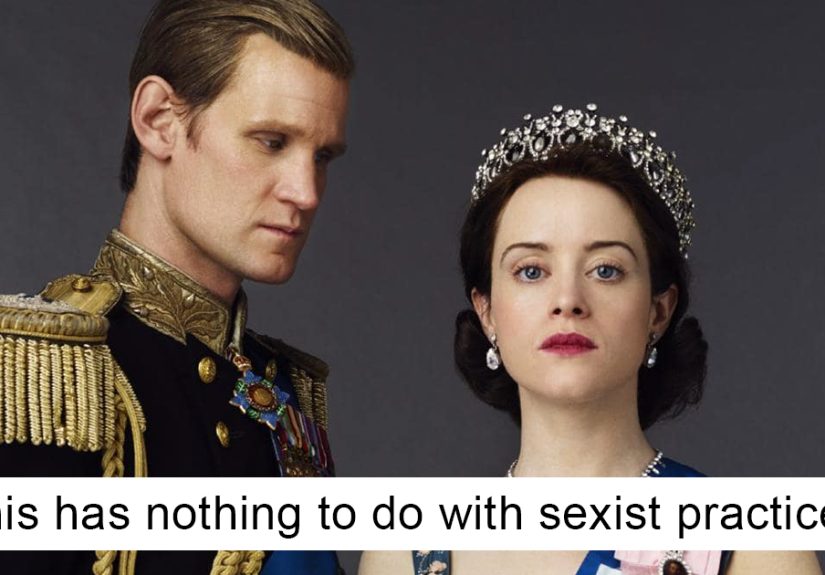
This debate did not appear out of thin air like a reboot nobody asked for. It flared up publicly after a series of high-profile salary controversies made people realize just how messy Hollywood compensation can be. One of the biggest flashpoints involved The Crown, when it emerged that Claire Foy, who played Queen Elizabeth II and was the dramatic center of the series, had been paid less than Matt Smith, whose prior fame from Doctor Who gave him stronger leverage at the negotiating table.
That reveal triggered a familiar split in public opinion. One side argued the disparity proved sexism, full stop. The other side argued that Smith had the bigger preexisting profile and therefore deserved the bigger deal. That second camp is where the “equal pay doesn’t make sense” argument usually lives. The logic goes like this: two actors may work on the same show, but they are not selling the same package to the market. One may have more international name recognition, a stronger salary history, or a bigger role in attracting financing and early press.
There is some truth there. Studios and streamers do not price actors like identical cans of soup. They pay for leverage, risk reduction, and marketability. If one performer has proven they can open a movie, headline a franchise, or boost overseas sales, the market often rewards that. Hollywood has never been a clean hourly-wage environment, and nobody who has spent ten minutes around an agency office would pretend otherwise.
Still, the The Crown controversy exposed the problem with using market logic as a magical eraser. Foy was not a background player. She was the star, the awards magnet, and the face of the series. When the lead gets less than her male co-star on a show literally built around her character, people understandably start smelling something funky.
Why Some People Say Equal Pay Doesn’t Always Make Sense
1. Star Power Changes the Price Tag
The simplest defense of unequal pay is star power. An actor with a longer track record, stronger audience recognition, or franchise history can often negotiate a higher upfront salary. That happens across gender lines in theory, and it is not automatically unfair. If one performer helps a project get financed, boosts presales, drives subscriptions, or draws audiences on opening weekend, studios will argue that performer is worth more money. Welcome to capitalism with better lighting.
This is also why comparing salaries without context can mislead people. Two actors can appear in the same project while bringing different levels of commercial leverage. One may have awards prestige, another may have blockbuster credibility, and another may have a massive social-media or international fan base. Those differences matter in negotiations, especially at the top of the industry.
2. Hollywood Runs on the “Quote” System
If there is one piece of Hollywood jargon that explains a lot of nonsense, it is the word quote. An actor’s quote is basically the salary benchmark created by previous deals. If someone got paid a big number on their last project, that number becomes the starting point for the next one. Agents love it. Accountants tolerate it. Anyone trying to fix structural inequality probably wants to throw it into the sea.
The quote system rewards past wins, but it also carries past inequities forward like expensive luggage. If women were underpaid earlier in their careers, their later negotiations may start from a lower baseline. That means today’s “market rate” can quietly be yesterday’s unfairness wearing a new suit.
3. Not Every Deal Is Just Salary
Another reason equal pay gets tricky is that actor compensation is rarely a single number. One performer may get a larger upfront fee. Another may get backend participation, producer credits, bonuses tied to performance, or reshoot compensation. Sometimes the public sees one number and assumes it tells the whole story. Usually it does not.
That does not excuse outrageous gaps, but it does explain why simple comparisons can fall apart. In Hollywood, two “equal” deals can be assembled from very different pieces.
Why That Argument Still Feels Deeply Incomplete
1. Because the Industry Has a Long Memory for Men and a Short One for Women
The biggest weakness in the “equal pay doesn’t make sense” argument is that it treats the market as neutral. It isn’t. Markets are shaped by history, reputation, access, and assumptions about who can lead, sell, and scale. Hollywood has spent decades giving men more opportunities to build quote, franchise leverage, and long-term salary momentum. Then, once that uneven history produces uneven numbers, the industry points at those numbers and says, “See? The market has spoken.”
That is convenient. It is also a little like rigging the game, winning by three touchdowns, and then delivering a lecture about meritocracy.
Jennifer Lawrence, Amy Adams, Patricia Arquette, Emma Stone, and many others helped push this issue into the mainstream because they showed that the problem was not limited to a few isolated bad deals. The pattern kept repeating: women could be central to a film’s success, publicly celebrated, critically praised, and still end up paid less or forced to negotiate harder for parity.
2. Because Women-Led Projects Clearly Make Money
One of the oldest lazy excuses in Hollywood was that stories centered on women were somehow financially riskier. That argument has aged about as gracefully as a flip phone in a streaming war. Women-led films and series have repeatedly drawn audiences, and current research shows women reached a historic high in lead and co-lead roles in top-grossing films in 2024.
In other words, the idea that actresses are automatically less commercially valuable is not supported by what audiences actually watch. When women lead strong projects, viewers show up. The problem is not demand. The problem is the industry’s habit of pricing women as if success only counts after it has happened three extra times and preferably with a man in the room to validate it.
3. Because “Equal Pay” Does Not Have to Mean “Identical Pay in Every Situation”
This is where the online argument usually loses the plot. Fair pay and identical pay are not the same concept. No serious person is saying every actor on every project must earn the exact same amount regardless of role size, billing, track record, or deal structure. What people usually mean by equal pay is comparable compensation for comparable value.
If two actors are carrying a project together, doing equivalent promotional work, receiving similar billing, and serving similar commercial importance, massive gaps become much harder to justify. If the lead actress is treated as the artistic centerpiece but paid like the supporting cousin who wandered in from craft services, the problem is no longer “the market.” The problem is the priorities built into it.
What Fair Pay in Hollywood Should Actually Look Like
Comparable Value Should Mean Comparable Compensation
Studios do not need a cartoonishly rigid one-size-fits-all rule. They do need a more disciplined standard for parity. Comparable role size, billing, workload, awards profile, promotional obligations, and commercial value should produce compensation in the same neighborhood. Not necessarily identical down to the last dollar, but close enough that nobody has to hire a forensic accountant and a therapist to explain the difference.
Minimums Matter, but Transparency Matters More
SAG-AFTRA contracts establish minimum rates and basic protections, which are essential. But star salaries usually happen above scale, where leverage matters most and secrecy thrives. That is exactly why transparency matters. Without better visibility, unfair patterns can hide behind the language of negotiation.
Studios also need to stop acting as if salary history is sacred scripture. If earlier deals were distorted by bias, using those old numbers as the foundation for new numbers only repeats the problem with better stationery.
There Are Models That Work Better
Hollywood already has proof that alternative approaches can work. Some ensemble projects have leaned into flatter pay structures to keep negotiations sane and signal fairness. More recently, The White Lotus drew attention for using the same modest salary for main cast members, proving that at least some productions can choose cohesion over hierarchy.
That model will not fit every blockbuster or prestige drama. But it does show the current system is not a law of nature handed down from Mount Studio Lot. It is a choice. And choices can be changed.
So, Does Equal Pay for Male and Female Actors Make Sense?
Yes and no, which is the least satisfying answer and therefore probably the most honest one.
No, it does not make sense if by equal pay people mean every man and woman in the same movie or series must automatically receive identical compensation regardless of role, leverage, or commercial pull. That is not how Hollywood works, and pretending otherwise makes the debate sound simpler than it is.
Yes, it absolutely makes sense if by equal pay people mean the industry should stop undervaluing actresses in comparable positions, stop using yesterday’s biased salary history to justify today’s deals, and stop dressing up old inequality as neutral market wisdom. That version of equal pay is not only sensible. It is overdue.
So the guy explaining why equal pay for male and female actors “doesn’t make sense” is only half right. Hollywood compensation is more complicated than a slogan. But complexity is not a get-out-of-fairness-free card. A business can account for leverage and still build better rules. It can recognize star power without permanently discounting women. It can acknowledge negotiation reality without pretending the system has no blind spots.
And frankly, if an industry can budget dragons, de-aging technology, and eight-figure marketing campaigns, it can probably figure out how to pay people more fairly.
Additional Experiences Related to This Debate
One of the clearest real-world experiences tied to this conversation came from Claire Foy’s run on The Crown. The awkwardness of that case was not just the pay gap itself. It was the symbolism. She played the title role, won awards, anchored the series, and still found herself at the center of a story about being paid less than a male co-star whose deal benefited from earlier fame. That experience became a shorthand for how the industry often values a woman’s contribution only after the public notices the mismatch. It was less a single bad headline and more a public demonstration of how prestige, centrality, and acclaim do not always translate into the strongest paycheck for actresses.
Then there was Michelle Williams, whose experience on All the Money in the World turned into one of the most jaw-dropping pay stories in recent memory. The details became so public, and so lopsided, that the story escaped entertainment news and moved into the broader cultural conversation. What made that moment hit so hard was not only the number, but the feeling that so many people had while reading it: “Wait, this is still happening? Like, this obviously?” That disbelief matters. It shows how many viewers assume progress has already happened, while actresses often live with a different reality behind the scenes.
Another revealing experience came from Emma Stone’s remarks about male co-stars taking pay cuts so she could reach parity. That detail matters because it highlights something uncomfortable: sometimes fairness arrives not because the system was designed well, but because individual men choose to give up part of their advantage. That is generous, and it can make a real difference. But it also exposes how fragile parity can be when it depends on personal goodwill rather than standard practice.
Octavia Spencer’s experience, helped along by Jessica Chastain’s advocacy, showed yet another version of the problem. Even highly respected, award-winning actresses can struggle to convert acclaim into pay that reflects their actual value, especially women of color. That case reminded people that there is a gender conversation in Hollywood, but there is also an intersectional one. Not every actress enters negotiations with the same leverage, and the industry does not hand out opportunity in an evenly wrapped package.
Finally, the equal-pay ensemble approach associated with some prestige television projects offers a completely different experience: less ego theater, fewer headlines about who beat whom, and more focus on the work itself. That does not mean flat pay should become universal. It does mean the industry has options. And whenever Hollywood claims its current compensation culture is simply the only rational system, these examples suggest otherwise.
Conclusion
The loudest version of this debate usually asks the wrong question. It asks whether men and women should always be paid the same in Hollywood, as if the only options are identical checks or total free-for-all chaos. Real life is more interesting than that. Pay should reflect role, leverage, and business value, but it should also be examined for the ways it preserves stale assumptions about who matters most.
That is why the most useful takeaway is not that equal pay “doesn’t make sense.” It is that fairness requires more precision than slogans and more courage than the current system usually shows. Hollywood already knows how to reward value. What it still struggles with is recognizing value early, consistently, and without making women fight twice as hard to prove what audiences can already see.