Table of Contents >> Show >> Hide
- What Makes This “Traditional” Pumpkin Pie?
- Main Keyword + Helpful LSI Keywords
- Ingredients
- Equipment You’ll Want (Nothing Fancy)
- Step-by-Step: Traditional Pumpkin Pie Recipe
- How to Tell When Pumpkin Pie Is Done (Without Guessing)
- Preventing Cracks: The “Slow Cool” Trick
- Serving Tips (Because Presentation Matters)
- Traditional Pumpkin Pie Troubleshooting
- Make-Ahead, Storage, and Food Safety
- Ingredient Notes (So You Don’t Accidentally Buy the Wrong Can)
- Traditional Pumpkin Pie Variations (Still Classic, Just Wearing a Different Hat)
- Recipe Recap (Quick View)
- Real-Life Pumpkin Pie Experiences (Because the Pie Always Has a Story)
Pumpkin pie is the dessert equivalent of a cozy sweater: reliable, a little nostalgic, and somehow always welcome even if you swore you were “just going to have a small slice.” This is a traditional pumpkin pie recipe with the classic ingredients (pumpkin purée, eggs, evaporated milk, warm spices) plus the modern know-how that keeps it creamy, sliceable, and free from the two great pie tragedies: soggy crust and Grand Canyon cracks.
We’ll do it the old-school waysimple pantry ingredients, no fussy gadgetswhile borrowing a few smart techniques from test kitchens and baking pros. You’ll end up with a pie that tastes like fall, slices like a dream, and makes your kitchen smell like you have your life together (whether or not that’s true).
What Makes This “Traditional” Pumpkin Pie?
In America, “traditional pumpkin pie” usually means: pumpkin purée (not pre-sweetened pie filling), eggs, evaporated milk, sugar, and a straightforward spice blendmost commonly cinnamon, ginger, and cloves (nutmeg often joins the party). It’s a custard pie, which means the filling sets when the eggs gently coagulate. The trick is baking it just enoughset around the edges, still a little wobbly in the centerso it finishes setting as it cools.
Main Keyword + Helpful LSI Keywords
You’re in the right place if you searched for: traditional pumpkin pie recipe, homemade pumpkin pie, classic pumpkin pie, pumpkin pie filling, evaporated milk pumpkin pie, flaky pie crust, or how to tell when pumpkin pie is done.
Ingredients
For the pie crust (homemade, classic)
- 1 1/4 cups all-purpose flour
- 1/2 teaspoon fine salt
- 1 tablespoon sugar (optional, but helps browning)
- 1/2 cup (1 stick) cold unsalted butter, cut into cubes
- 3 to 5 tablespoons ice water
Shortcut option: Use 1 (9-inch) store-bought pie crust. No judgment. The pie police are busy elsewhere.
For the traditional pumpkin filling
- 1 can (15 oz) pumpkin purée (100% pure pumpkin, not pumpkin pie filling)
- 2 large eggs
- 3/4 cup sugar (granulated) or 1/2 cup light brown sugar + 1/4 cup granulated sugar
- 1 1/2 teaspoons ground cinnamon
- 1/2 teaspoon ground ginger
- 1/4 teaspoon ground cloves
- 1/4 teaspoon ground nutmeg (optional but highly recommended)
- 1/2 teaspoon fine salt
- 1 can (12 oz) evaporated milk (about 1 1/2 cups)
- 1 teaspoon vanilla extract (optional)
Equipment You’ll Want (Nothing Fancy)
- 9-inch pie dish (standard depth)
- Rolling pin (if making homemade crust)
- Mixing bowls + whisk
- Baking sheet (to catch drips and make moving the pie easier)
- Optional but awesome: instant-read thermometer
- Optional: pie crust shield or foil strips for protecting edges
Step-by-Step: Traditional Pumpkin Pie Recipe
Step 1: Make (or prep) the crust
- Mix dry ingredients. In a large bowl, whisk flour, salt, and sugar (if using).
- Cut in the butter. Add cold butter cubes and work them in using a pastry cutter or your fingertips until you get pea-size pieces plus a few flatter flakes (flakes = flakiness).
- Add ice water sparingly. Drizzle in 3 tablespoons ice water and toss with a fork. Add 1 tablespoon at a time until the dough holds together when you squeeze it. It should look a bit shaggy, not wet.
- Chill. Form into a disk, wrap, and refrigerate 30–60 minutes. (Cold dough is happy dough.)
- Roll and shape. Roll to about a 12-inch circle, fit into a 9-inch pie dish, and crimp the edges. Chill the shaped crust for 15–30 minutes while the oven heats.
Step 2: Decidefully traditional or crisp-crust upgrade?
Option A (most traditional): Pour filling into an unbaked crust and bake. This is the classic method many families grew up with.
Option B (recommended for a crispier bottom): Par-bake (partially blind-bake) the crust first. Custard fillings can make crusts soggy; a short par-bake helps prevent that.
If you choose Option B (par-bake):
- Preheat oven to 375°F.
- Line chilled crust with parchment or foil and fill with pie weights or dried beans.
- Bake 20–25 minutes, until edges look set and lightly golden.
- Remove weights and parchment; bake 8–12 minutes more until the bottom looks dry and lightly golden.
- Let crust cool slightly while you make the filling.
Step 3: Mix the pumpkin pie filling
- Combine sugar + spices. In a small bowl, stir sugar, cinnamon, ginger, cloves, nutmeg (if using), and salt. This keeps the spices evenly distributedno surprise clove “hot spots.”
- Whisk eggs first. In a large bowl, whisk eggs until smooth.
- Add pumpkin + dry mix. Whisk in pumpkin purée, then whisk in the sugar-spice mixture.
- Add evaporated milk. Slowly whisk in evaporated milk (and vanilla if using) until silky and uniform. Don’t whip air into it; we want custard, not pumpkin foam.
Step 4: Bake with the classic high-then-low temperature method
- Place a baking sheet on the middle rack (or set the pie on a sheet).
- Preheat oven to 425°F.
- Pour filling into the crust. If your crust is very full, pause and don’t overfillleave a little headspace. (Overfilled custard pies have a dramatic streak, and not in a good way.)
- Bake at 425°F for 15 minutes. This gives the crust a head start and begins setting the custard.
- Without opening the oven too much, reduce heat to 350°F and bake 35–50 minutes, depending on your dish and oven. Start checking at 35 minutes.
- If the crust edges brown too quickly, cover them with a pie shield or strips of foil.
How to Tell When Pumpkin Pie Is Done (Without Guessing)
Pumpkin pie is a custard. Custards don’t “look done” the way cookies do. They look done right after they’re already overdone, which is rude, but here we are.
The wobble test
Gently nudge the pie dish. The edges should be set and matte, and the center should still jigglethink Jell-O, not “lava lamp.” A good target is about a 4-inch circle in the center that moves as one piece.
The temperature test (optional, super reliable)
If you use an instant-read thermometer, aim for the center to read roughly 165–175°F. Pulling it in this range helps keep the custard creamy. Much above that, and you’re more likely to get cracks and a drier texture. (Yes, the tiny hole is realbut whipped cream exists for a reason.)
Preventing Cracks: The “Slow Cool” Trick
Most pumpkin pie cracks happen for one of two reasons: overbaking or cooling too fast. Here’s a simple fix:
- When the pie is done, turn the oven off.
- Crack the oven door open with a wooden spoon.
- Let the pie sit inside for 10–20 minutes.
- Move to a rack and cool at room temperature for about 2 hours before chilling.
This gentle cool-down reduces the dramatic temperature shock that can cause the custard to contract and split.
Serving Tips (Because Presentation Matters)
- Wait to slice. Pumpkin pie needs time to set. Give it at least 2 hours after baking.
- Clean slices. Use a sharp knife wiped clean between cuts.
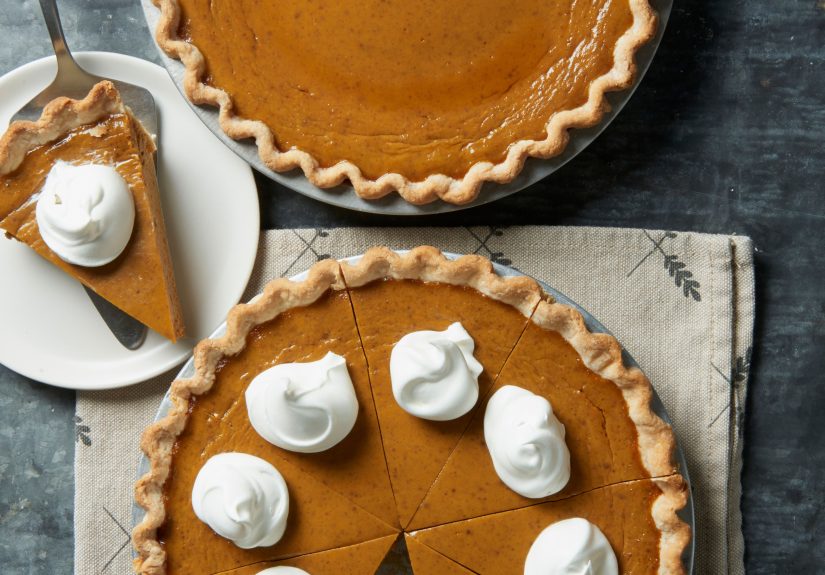
- Classic topping: freshly whipped cream with a pinch of cinnamon or nutmeg.
- Extra-credit topping: a drizzle of maple syrup over the whipped cream (fall energy: 100%).
Traditional Pumpkin Pie Troubleshooting
“My crust is soggy.”
Custard fillings release moisture, especially if overbaked. For next time, choose the par-bake option, bake on a sheet pan, and avoid underbaking the crust. Also: don’t cover the pie while it’s still warmsteam is the enemy of crispness.
“My pie cracked on top.”
Most often: it baked too long or too hot, or cooled too quickly. Pull it when the center is still wobbly and try the slow-cool method. And remember: whipped cream covers a multitude of sins. Deliciously.
“My filling looks grainy or watery.”
Grainy texture can happen when the custard overcooks and the egg proteins tighten too much. Wateriness can also show up when the filling is overbaked and begins to “weep.” Bake gently, pull at the wobble stage, and cool properly.
“My pie tastes bland.”
Two easy upgrades that still keep it traditional: (1) use fresh spices (old spice jars can taste like dust), and (2) add a pinch more salt than you think you needsalt makes pumpkin and spices taste like themselves.
Make-Ahead, Storage, and Food Safety
Pumpkin pie contains eggs and dairy, so it shouldn’t sit out for long. For best quality (and safety), refrigerate the pie after it cools and don’t leave it out at room temperature for more than about 2 hours.
- Refrigerator: typically best within 3–4 days.
- Freezer: pumpkin pie can be frozen for 1–2 months if wrapped well.
- Thawing: thaw overnight in the fridge for the cleanest texture.
Ingredient Notes (So You Don’t Accidentally Buy the Wrong Can)
Pumpkin purée vs. pumpkin pie filling
Pumpkin purée is just cooked, mashed pumpkin (or pumpkin-like winter squash) with no added sugar or spices. Pumpkin pie filling is pre-sweetened and pre-spiced. For a classic pie with control over flavor, buy the purée.
“Is canned pumpkin really pumpkin?”
Sometimes it’s pumpkin, sometimes it’s a mix of pumpkin and certain sweet winter squash varietiesstill labeled “pumpkin” under U.S. guidance. The good news: it’s consistent, smooth, and excellent for pie, which is why so many bakers swear by it.
Traditional Pumpkin Pie Variations (Still Classic, Just Wearing a Different Hat)
Deeper caramel flavor
Swap half the white sugar for light brown sugar. It still tastes traditionaljust a little toastier.
Spice control
Prefer more ginger bite? Increase ginger to 3/4 teaspoon and reduce cloves slightly. Cloves are powerful; they should whisper, not shout.
Evaporated milk substitutes (in a pinch)
If you’re out of evaporated milk, you can use half-and-half or cream. The texture may be slightly richer and the bake time may shift. If using regular milk, the filling can be softermany bakers stabilize with a small amount of starch.
Recipe Recap (Quick View)
Bake: 425°F for 15 min, then 350°F for 35–50 min, until edges are set and center is slightly wobbly.
Cool: 2 hours at room temp (optional slow-cool in oven 10–20 min), then chill.
Real-Life Pumpkin Pie Experiences (Because the Pie Always Has a Story)
Pumpkin pie isn’t just a recipeit’s a yearly reunion between you, your oven, and every memory you’ve ever had of holidays, potlucks, and that one aunt who “doesn’t like desserts” but somehow ends up with the largest slice. If you’ve baked pumpkin pie more than once, you know there are two versions of the experience: the calm, confident baker who pulls a perfectly set pie and says, “Oh, this old thing?” and the other versionalso known as the rest of us.
One of the most common pumpkin pie moments is the dramatic mid-bake realization that pies are basically liquid confidence tests. You slide the pie into the oven and immediately question everything: Is it too full? Did I remember the salt? Why does the crust look like it’s shrinking? Is the oven actually 350°F or is it just “oven 350,” which is a mysterious vibe-based temperature? This is why the baking sheet under the pie feels like an emotional support animalit catches drips and makes you feel like a person who plans ahead.
Then comes The Jiggle Stage, the part where pumpkin pie teaches humility. At some point, the filling looks set around the edges but still wobbles in the middle. First-time bakers often panic and keep baking “just a few more minutes.” That’s how you get cracks: the pie goes from creamy to overcooked in the time it takes to answer one text message. The more you bake, the more you learn to trust the wobble. A slight jiggle is not failure; it’s the pie quietly saying, “I will finish this on my own, thank you.”
Another classic experience: trying to slice too soon. The pie smells incredible. Everyone’s hovering. You cut in early, and the slice slumps like it needs a nap. It’s not that the recipe “didn’t work”it’s that custard pies need time to set. Waiting can feel impossible, but it’s the difference between a clean, creamy wedge and pumpkin pudding with a crust hat.
And of course there’s the “traditional vs. upgraded” debate that happens in almost every family kitchen. Someone insists that par-baking the crust is unnecessary because “Grandma never did that.” Someone else points out that Grandma also didn’t have a phone that tells her the weather, yet here we are. The truth is, both approaches can be wonderful. The traditional method tastes like memory. The par-bake method tastes like memory with better texture. You can choose your own adventureand still end up with a pie that disappears before the dishes are done.
The best pumpkin pie experiences usually end the same way: a table full of people, a pie that’s slightly imperfect in a charming, very human way, and a refrigerator holding a few leftover slices that taste even better the next day. Pumpkin pie has a way of rewarding you for showing upwhether you’re a meticulous baker with a thermometer or a “looks right to me” optimist who trusts instincts and keeps whipped cream on standby. Either way, you made tradition. And that’s the whole point.