Table of Contents >> Show >> Hide
- What Makes an Alvar Aalto–Style Dining Set So Appealing?
- The “High” Version: Why the Real Thing Still Deserves Respect
- The “Low” Version: How to Get the Look for Less
- How to Style an Alvar Aalto–Style Dining Area
- Why This Style Works So Well in Real Life
- High or Low: Which One Is Right for You?
- Experience: What It Feels Like to Live With an Alvar Aalto–Style Dining Table and Chairs
Note: This is body-only HTML, formatted for direct web publishing.
Some dining sets try very hard to look important. They puff up, spread out, and demand a chandelier introduction. An Alvar Aalto–style dining table and chairs do something much smarter: they make good design look easy. That is exactly why the look has stayed relevant for decades. It is warm without being rustic, modern without acting cold, and compact without giving off “I lost a fight with square footage” energy.
If you love Scandinavian interiors, small-space furniture, or dining pieces that can survive both dinner parties and Tuesday-night takeout, the Aalto approach is worth studying. The magic is not just in the silhouette. It is in the balance of soft curves, practical scale, natural wood, and everyday usefulness. In other words, this is the rare dining setup that looks gallery-worthy but still seems perfectly happy holding a bowl of pasta, a laptop, and somebody’s unopened mail.
In this high/low guide, we will look at what defines the Alvar Aalto dining style, why it remains so desirable, how the authentic version earns its reputation, and how to recreate the same feel for less. Whether you are shopping for a forever piece or simply trying to fake expensive taste on a reasonable budget, there is good news: this look is surprisingly adaptable.
What Makes an Alvar Aalto–Style Dining Set So Appealing?
The first thing people notice is the shape. Aalto furniture is known for clean lines softened by curves, especially in bent birch and gently rounded forms. The result feels human. Not stiff. Not fussy. Not trying to win an argument. Aalto’s dining pieces often look as if they were designed by someone who understood that homes are for living, not posing.
That design language matters in a dining room. Hard-edged furniture can feel visually heavy, especially in apartments, breakfast nooks, and smaller open-plan spaces. By contrast, a round or softly profiled table with chairs that tuck neatly underneath feels lighter and calmer. It gives you breathing room, even when the room itself is not exactly generous.
Another reason the style lasts: natural wood brings warmth without demanding a matching cabin. Light birch, pale oak, or similar finishes pair beautifully with white walls, colorful art, stone floors, black accents, linen curtains, or vintage rugs. The set can swing minimalist, playful, family-friendly, or quietly sophisticated depending on what surrounds it.
And then there is the functional genius. Great Aalto-inspired dining furniture is not just nice to look at. It is easy to move, easy to live with, and often scaled for real homes. That is a big reason the style works so well in urban interiors, studio apartments, compact kitchens, and multi-use rooms where the dining table is also expected to moonlight as an office, homework station, coffee bar, and emotional support surface.
The “High” Version: Why the Real Thing Still Deserves Respect
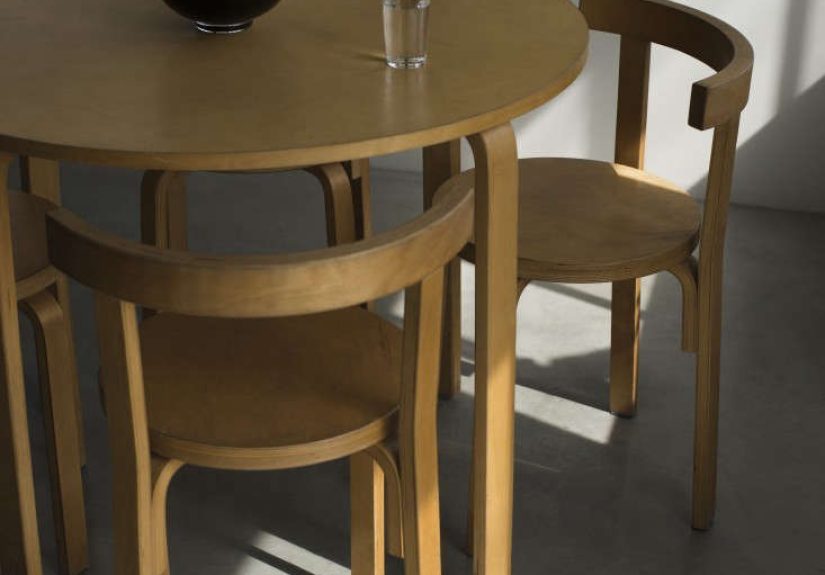
If you want the purest expression of the look, the high version starts with authentic Aalto furniture from Artek. A classic combination is a round Aalto table paired with Chair 66 or Chair 69. This is the setup that design lovers keep returning to because it captures the essence of Scandinavian modernism without looking precious.
An authentic Aalto dining table, especially a compact round model, is a masterclass in restraint. The table feels modest in the best way. It does not need elaborate detailing because the proportions do the work. The legs are visually clean, the top is simple, and the overall profile has that elusive quality designers are always chasing: it disappears and stands out at the same time.
Pair that with classic Aalto chairs and the effect becomes even better. Chair 66 has a broad, handle-like backrest that is comfortable, practical, and easy to move around. Chair 69 offers a wider supportive back and a slightly more substantial look while still staying light on its feet. Both have the kind of quiet confidence that cheaper furniture spends its entire life trying to imitate.
Why pay more for the real thing? First, material quality. Authentic versions are rooted in carefully made bent birch construction, and that matters. Good wood furniture ages with dignity. It develops character instead of looking tired. Second, the proportions are incredibly hard to copy well. Plenty of budget chairs borrow the general mood, but many miss the elegance of the backrest curve, the leg thickness, or the way the seat visually relates to the table.
Third, there is design legacy. Owning an authentic Aalto piece is not just about furniture; it is about living with a design idea that has proved itself over time. That may sound dramatic for a dining chair, but some objects really do earn that kind of respect. These are pieces that have remained relevant through trend cycles, color obsessions, farmhouse phases, and more beige bouclé than society was probably prepared for.
Who Should Buy the High Version?
The high version makes sense for buyers who want longevity, historical design credibility, and materials that can go the distance. It is ideal if you are furnishing a long-term home, want fewer but better pieces, or simply love design enough to notice the difference between “inspired by” and “yes, that is the one.”
It is also a smart choice for smaller homes where every piece matters. In a compact space, you interact with your dining set constantly. When furniture is always in view, quality and proportion become more important. A beautifully scaled table and chairs can make the entire room feel better behaved.
The “Low” Version: How to Get the Look for Less
Now for the fun part. You absolutely can recreate the Aalto mood without paying authentic Artek prices. The trick is to stop chasing an exact replica and instead focus on the design ingredients that make the look work.
Start with the table. Look for a round or softly edged wood table with a light, unfussy profile. Avoid anything too chunky, heavily distressed, or aggressively farmhouse. The best low-budget alternatives feel clean and architectural but still warm. A pale wood finish, simple base, and compact diameter will get you most of the way there.
Then move to the chairs. This is where the room gets its personality. Look for chairs with a curved wood back, visible bentwood influence, or a slim Scandinavian-modern silhouette. A slightly rounded seat and gently angled legs can help. Mainstream retailers now offer plenty of dining chairs that echo this language, from bentwood-inspired café styles to modern curved-back wooden chairs that pair beautifully with a small round table.
The smartest low option is often a “mood match,” not a direct dupe. In other words, do not obsess over whether a chair looks exactly like Chair 66 from six feet away. Instead, ask whether the set captures the same values: lightness, warmth, simplicity, usefulness, and a little bit of cheerful intelligence.
A good low setup might be a round wood dining table from a big-box or modern retailer paired with four curved-back chairs in a natural or dark wood tone. Another great strategy is mixing price levels: invest in a better table, save on the chairs, or buy two nicer chairs for the ends and use more affordable side chairs around the rest. That keeps the room from looking too matched and gives it a more collected feel.
What to Avoid When Going Low
Not every “Scandinavian” dining set deserves the label. Some are just beige furniture with good marketing. Be careful with pieces that look overly bulky, have awkwardly thick legs, shiny orange-toned finishes, or exaggerated mid-century details. If the chair looks like it belongs in a themed diner or the table resembles an inflatable mushroom made of laminate, keep walking.
Also watch out for scale mismatches. The Aalto look succeeds because the table and chairs feel naturally related. If the table is too heavy or the chairs are too dramatic, the set loses its calm rhythm. Think graceful, not loud.
How to Style an Alvar Aalto–Style Dining Area
The beauty of this look is that styling does not need to be complicated. In fact, complication is the fastest route to ruining it. Start with restraint. Let the table and chairs be the stars, then layer in texture and color with a light hand.
A simple pendant above the table works well, especially in paper, glass, or metal with a sculptural but not flashy shape. Add a wool rug if you want softness underfoot, but do not feel obligated. Aalto-style dining furniture often looks wonderful directly on wood, tile, or concrete floors because the shapes are strong enough on their own.
For the tabletop, think useful beauty: a ceramic bowl, a small vase with branches, linen placemats, or a single candleholder. This is not the place for a giant faux floral arrangement having an emotional breakdown in the middle of the table.
Color-wise, the furniture plays nicely with whites, soft grays, earthy greens, warm browns, black accents, muted blues, and even brighter art. It also looks fantastic with vintage pieces. One of the best ways to keep an Aalto-inspired room from feeling too showroom-perfect is to pair it with something slightly unexpected: a colorful painting, an old cabinet, a striped textile, or a quirky lamp.
Why This Style Works So Well in Real Life
Some furniture is photogenic but annoying. It looks fabulous online, then turns out to be too deep, too delicate, too trendy, or too weirdly uncomfortable for a meal longer than twelve minutes. Aalto-style dining furniture wins because it tends to behave itself in everyday life.
A round table encourages conversation. Chairs that tuck in neatly free up floor space. Light wood tones keep the room from feeling overstuffed. Curved backs soften the scene visually. Even when the space is small, the overall effect feels generous rather than cramped.
That is the secret sauce of great dining design: it does not just decorate the room. It improves how the room functions. Aalto understood that. Good contemporary versions understand it too. The form is lovely, but the usefulness is what makes people fall in love and keep the furniture for years.
High or Low: Which One Is Right for You?
Choose high if you want the real design history, the refined details, and the kind of furniture you plan to keep through multiple addresses and multiple versions of yourself. Choose low if you love the spirit of the look, want flexibility, or are furnishing a space where budget matters more than brand lineage.
There is no shame in either route. The smartest home is rarely the one with the most expensive furniture. It is the one where the pieces make sense together and support the way people actually live. If your budget version captures the same balance of warmth, utility, and timeless simplicity, then congratulations: you understood the assignment.
And that is really the genius of the Alvar Aalto–style dining table and chairs. High or low, the goal is the same: create a dining space that feels thoughtful, unfussy, and beautifully human. That is a lot to ask from a table and a few chairs. But then again, the best furniture has always done more than just sit there.
Experience: What It Feels Like to Live With an Alvar Aalto–Style Dining Table and Chairs
There is a difference between admiring a dining set in a photo and actually living with one every day. An Alvar Aalto–style setup tends to win people over slowly, and then all at once. At first, you notice the clean lines and soft wood tones. A week later, you realize the room feels calmer. A month later, you wonder why every dining set is not this sensible.
One of the biggest real-life advantages is how approachable the furniture feels. Guests do not hesitate before sitting down. Kids are not intimidated by it. It does not read as museum furniture, even when the design pedigree is strong. That makes a huge difference in a home where the dining area is constantly in use. Breakfast becomes easier, coffee feels more civilized, and even a late-night frozen pizza somehow looks like it was invited on purpose.
In smaller homes, the experience is even better. A compact round table with chairs that tuck neatly underneath creates visual order. You can walk around it more easily. The room feels less blocked. If the dining area shares space with the living room or kitchen, that light footprint matters every single day. It is not flashy, but it is the kind of improvement you feel in your shoulders. You move through the room without bumping into corners or apologizing to furniture.
Another pleasant surprise is how adaptable the set becomes. In the morning, it is a breakfast nook. By noon, it is a laptop station. In the afternoon, it holds groceries, homework, flowers, or a sewing project. At night, it returns to dinner duty without complaint. That flexibility is a huge part of the appeal. Aalto-style furniture does not insist on one identity. It just quietly works.
There is also an emotional quality to the materials. Light wood has a way of making a room feel awake without becoming sterile. It reflects natural light softly and pairs well with almost anything around it. If you change your rug, wall color, or dishware, the furniture rarely looks out of place. That long-term compatibility is one of the reasons people stay loyal to the style. It does not box you into one decorating phase and then punish you for evolving.
Comfort matters too. A good curved wood chair is more supportive than it looks, especially when the backrest is shaped well. Add a thin seat pad if you want, but many people find the chair comfortable enough for long dinners, card games, or lingering conversations. That is when the design proves itself. A chair is not successful because it looks good for ten seconds. It is successful when nobody notices time passing while they are sitting in it.
There is something quietly social about this kind of dining setup as well. Round tables encourage eye contact. Slim chairs make it easier to add a guest without turning the evening into a geometry problem. The furniture does not dominate the room, so the people around it become the focus. That may sound sentimental, but it is true. The best dining furniture supports connection instead of staging a performance.
Perhaps the most satisfying experience is how timeless the setup feels after the novelty wears off. Trend-driven furniture often arrives with fireworks and leaves with regret. An Aalto-style table and chairs do the opposite. The longer you live with them, the more sense they make. They look good on rushed weekdays, on holidays, in bright daylight, and under a single pendant at night. They are useful without being boring, distinctive without being loud, and refined without acting superior. In home design, that is a rare combination. In daily life, it is even better.