Table of Contents >> Show >> Hide
- Why Fairy Tales Still Cast a Spell on Our Brains
- The Photo Series: A Modern Fairy Tale Told in Portraits
- What Makes a Photo Feel Like a Fairy Tale?
- A Guided Tour of the “32 Pics” (No Spoilers, Just Vibes)
- How to Create Your Own Fairy-Tale Photoshoot (Without Losing Your Mind)
- Step 1: Start with a story beat, not a prop haul
- Step 2: Choose a location that already looks like a “once upon a time”
- Step 3: Wardrobe mattersbecause fabric is basically special effects
- Step 4: Use light like a storyteller
- Step 5: Compose like you’re directing a film
- Step 6: Edit for mood, not for “look what I can do”
- Ethics, Safety, and Practical Magic
- Why Fairy-Tale Photo Galleries Go Viral
- FAQ: Fairy-Tale Photography, Explained Like You’re Not In Wizard School (Yet)
- Experiences: Chasing Fairy-Tale Magic in Real Life (And Bringing It Back to Photos)
There are two kinds of people in this world: the ones who outgrew fairy tales…and the ones who secretly
still want a closet that opens into a forest. If you’re reading this, I’m guessing you’re in Group B (welcome,
your membership card comes with glitter).
This article is a deep dive into a photo set that leans hard into fairy-tale energyflowing dresses, storybook
symbolism, and that “wait, is this real?” feeling you get when a picture looks like it was taken one step
away from an enchanted castle. We’ll talk about what makes fantasy portrait photography work, why fairy tales
still hit us right in the imagination, and how you can plan your own magical photoshoot without accidentally
turning your living room into a craft-store tornado.
Why Fairy Tales Still Cast a Spell on Our Brains
Some of these stories are older than your entire timeline
Fairy tales don’t just “survive” across generationsthey travel like folklore superheroes. Research discussed
in mainstream outlets has suggested that certain classic story types could be thousands of years old, passed
down long before anyone could doomscroll their way through boredom. That long shelf life matters: when a story
sticks around for centuries, it’s usually because it’s doing something usefulteaching, warning, comforting,
or helping us make meaning.
Fantasy is not “fake”it’s practice
Psychologists and child-development experts often describe imaginative play as a powerful training ground:
kids (and honestly, adults too) use make-believe to explore emotions, roles, and “what if” scenarios in a safe way.
Fairy tales are basically pretend play in narrative formcomplete with costumes, quests, and the occasional dramatic entrance.
Yes, fairy tales can be dark, and that’s part of the point
A lot of traditional fairy tales were sharper-edged than the modern, sugar-coated versions. Earlier tellings often
carried warnings about danger, trust, or survivalthen later got softened for children’s books. But the core appeal
remains the same: fairy tales make big feelings portable. They put fear, courage, jealousy, hope, and resilience into
symbols you can hold in your headlike a candle in a forest, a door you shouldn’t open, or a cloak that makes you feel brave.
The Photo Series: A Modern Fairy Tale Told in Portraits
The gallery that inspired this piece was published as a set of 32 images with a clear creative mission:
portraits of women styled like fairy-tale characterspaired with animals, dramatic costumes, and cinematic locations.
The artist describes growing up on family albums, illustrated fairy tales, and fantasy films, then later turning that
imagination into photo sessions after getting a DSLR and photographing friends. In other words: a classic origin story,
but instead of being bitten by a radioactive spider, she got bitten by the “what if this was magical?” bug.
The result is fantasy portrait photography that doesn’t feel like a random costume party. It feels like a world.
And that’s the difference between “a nice photo” and “a photo that makes you want to read the next chapter.”
What Makes a Photo Feel Like a Fairy Tale?
1) A character you can root for in one second
Fairy tales move fast. You meet the hero, sense the stakes, and instantly understand the vibe. Great fairy-tale photos
do the same thing. The subject’s posture, gaze, and styling signal a role: the wanderer, the princess, the witchy botanist,
the librarian with secrets, the forest guardian, the girl who definitely knows how to talk to owls.
2) Symbolism that does some storytelling heavy lifting
Fairy tales run on symbols: apples, mirrors, keys, candles, cloaks, forests, wolves. In photography, symbols keep the image
from being “just pretty.” They give it narrative gravity. One image title in the set (“The Magic of Books”) practically
writes the story for you: books become portals, knowledge becomes a spell, and suddenly the library feels like a
doorway instead of a quiet room with fines.
3) Light that feels like a mood, not just illumination
In fantasy portrait photography, light is not neutral. Soft, golden light reads as warmth and wonder. Cool tones can feel
mysterious or moonlit. Backlighting can turn hair and fabric into a halo. If you’ve ever seen a portrait taken near sunset
and thought, “Why does this look like a movie poster?”that’s the fairy-tale effect doing its thing.
4) A touch of the surreal
Fairy-tale visuals often overlap with surrealism: the familiar world, but slightly offdreamlike, heightened, uncanny in a
beautiful way. Museums and art history have long tracked how surrealist ideas shaped photography, including the use of
staged scenes and unexpected juxtapositions. In modern photo storytelling, that surreal edge is the secret ingredient
that makes a portrait feel enchanted instead of merely styled.
A Guided Tour of the “32 Pics” (No Spoilers, Just Vibes)
Because this is a written article (and not a magical picture frame), we can’t paste the entire gallery here. But we can
talk about what the set does welland why readers gravitate toward it.
Owl energy, wolf energy, and “forest friend” energy
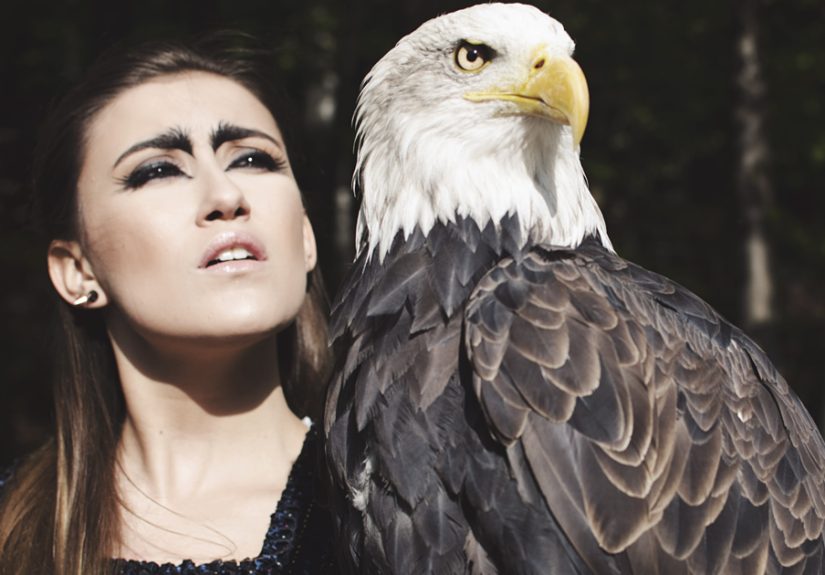
One of the images is titled “Owl’s Story”, which signals a classic fairy-tale alliance: a human character paired with
a creature that feels wise, symbolic, and slightly supernatural. Another title plays with wolf lore in a cheeky way:
“- Little Girl, Where Is Your Hood? – It’s Not This Fairytale, Dear Wolf.” That’s the fun of modern fairy-tale art:
it respects the classics, but it also winks at them.
Books, pearls, dreams, and monochrome spells
Titles like “Enchanted Pearls” and “I Had A Beautiful Dream” lean into a softer kind of magicless “battle the dragon,”
more “follow the glowing thread of your imagination.” There’s also a piece called “Black & White”, which suggests the artist
knows an important truth: sometimes removing color makes a fantasy feel even more timeless, like it belongs to an older story.
The best fairy-tale photo sets feel curated, not random
A strong gallery isn’t just 32 unrelated “cool shots.” It’s a collection with recurring motifsanimals, dresses, nature,
storybook propsso your brain keeps recognizing the world. That repetition (used wisely) creates coherence without turning
into boredom. Think: a series of chapters, not 32 disconnected sentences.
How to Create Your Own Fairy-Tale Photoshoot (Without Losing Your Mind)
Step 1: Start with a story beat, not a prop haul
Before you buy a crown, decide what’s happening in your scene. Try prompts like:
- “A girl finds a door in the woods.”
- “A librarian discovers a book that whispers.”
- “A traveler bargains for a single enchanted pearl.”
- “A forest guardian makes a pact with an owl.”
Once you have a story beat, everything else becomes easier: wardrobe, location, lighting, and editing all support the same idea.
Step 2: Choose a location that already looks like a “once upon a time”
You don’t need an actual castle (though if you have one, please adopt me as your court writer). Look for natural textures:
tall grass, fog, old stone, tree tunnels, ivy walls, creeks, and fields at dusk. Even a simple park can look enchanted if you
shoot at the right time and frame it thoughtfully.
Step 3: Wardrobe mattersbecause fabric is basically special effects
In fairy-tale photos, clothing is not just clothing. Flowing sleeves, layered skirts, capes, lace, and textured knits catch light
and movement. Neutral or jewel tones often read as timeless. And a simple trick: long fabric + wind (natural or a gentle fan)
equals instant cinematic drama.
Step 4: Use light like a storyteller
For dreamy portraits, many photographers aim for the “golden hour” (early morning or late afternoon) because the light is softer
and more flattering. Backlighting can give hair and fabric that glowing edge that screams “magic is nearby.” If you’re indoors,
window light plus a sheer curtain can mimic that softness. The goal isn’t brightnessit’s atmosphere.
Step 5: Compose like you’re directing a film
Composition rules exist because they work. Try the rule of thirds to place your subject in a way that feels dynamic, or try centered
composition for a more iconic, “storybook cover” look. Use foreground elements (leaves, curtains, branches) to frame the subject and
build depthlike you’re peeking into a secret world.
Step 6: Edit for mood, not for “look what I can do”
Editing is where fairy-tale photography often becomes truly magicalif you keep it tasteful. Color grading can shift the whole
emotional temperature of an image: warm and golden for wonder, cool and blue for moonlit mystery, desaturated for a vintage myth vibe.
If you’re compositing elements (like adding glow, mist, or extra sparkles), blending modes and careful shadow work help the final image
feel cohesive. The best fantasy edits don’t scream “I edited this!”they whisper, “This world might be real.”
Ethics, Safety, and Practical Magic
Fairy-tale imagery often includes animals, outdoor locations, and elaborate costumes. Keep the real world safe while you chase the fantasy:
- Animals: Work only with trained handlers or safe, humane setups. Never stress an animal for a shot.
- Locations: Respect nature and rulesno trampling protected areas or leaving props behind.
- Costumes: Make sure outfits allow movement and breathing. “Enchanted” should not mean “unable to sit down.”
- Weather & timing: Plan for daylight changes, temperature, and comfortespecially for long sessions.
Why Fairy-Tale Photo Galleries Go Viral
Scroll culture loves images that tell a story instantly. A fairy-tale portrait does three things fast:
it delivers beauty, it triggers nostalgia, and it offers escape. Also, it gives people something they can share with a caption like
“me in my alternate universe where my life is a cottagecore musical.”
And there’s something deeper: fairy tales often center transformation. A poor kid becomes brave. A lost traveler finds a guide.
A quiet person discovers power. That theme lands because people want changeand pictures are a quick way to feel it.
FAQ: Fairy-Tale Photography, Explained Like You’re Not In Wizard School (Yet)
Do I need Photoshop to make fairy-tale photos?
Not always. Great wardrobe, location, and light can create a fairy-tale look straight out of camera. Editing helps refine the mood,
but it’s not the only path.
What’s the easiest fairy-tale theme for beginners?
“Lost in the woods” is beginner-friendly: natural locations are accessible, wardrobe can be simple, and the story reads clearly.
Add one strong prop (a lantern, a book, a cloak) and you’re set.
How do I keep it from looking cheesy?
Focus on emotion. If the subject looks like they believe the story, the viewer will too. Keep props meaningful, limit clutter,
and edit for atmosphere rather than maximum sparkle output.
Experiences: Chasing Fairy-Tale Magic in Real Life (And Bringing It Back to Photos)
If you’ve ever felt a little spark when you see a foggy morning outside your window, you already understand the beginning of a fairy tale.
The funny thing about “magic” is that it often starts with ordinary lifethen your brain adds story. A sidewalk becomes a path. A streetlamp
becomes a lantern. A quiet library becomes a portal. The best fairy-tale photo experiences don’t require a dragon budget; they require
attention and a willingness to play.
A classic place to practice this mindset is anywhere people lean into costumes and storytelling: local Renaissance fairs, seasonal festivals,
community theater productions, and even small craft markets where handmade capes and flower crowns show up like they’re totally normal Tuesday attire.
When you’re surrounded by people who are also pretending (in the most joyful way), it becomes easier to step into character without feeling awkward.
You start noticing how a simple accessory changes posture, how a cloak changes movement, and how confidence shows up when someone feels “in role.”
Those are practical skills for fantasy portrait photographybecause the camera doesn’t just record clothing; it records belief.
Another real-world “experience hack” is to go on a location walk with story in mind. Not a serious hikemore like a gentle mission where you’re
collecting backdrops. You might find a tunnel of trees that looks like a secret corridor, a field that glows at golden hour, or an old staircase that
feels like it leads to a hidden room. The trick is to take a few quick reference photos with your phone and write a one-sentence story idea next to each:
“Here’s where the traveler meets the owl.” “Here’s where the enchanted book opens.” Later, when you plan a shoot, you’re not starting from scratch.
You’re building on a tiny map of places that already feel mythical.
The most memorable fairy-tale photo sessions usually have a behind-the-scenes moment that becomes part of the story too: the friend who fixes your crown
at the last second, the unexpected breeze that makes the fabric fly like it was choreographed, the sun slipping behind clouds at exactly the right time.
Those moments can make the final images feel alive because the subject isn’t just posingthey’re reacting. Even the “imperfect” parts can become magic:
a little mud on the hem can read like adventure, not failure. A slightly crooked braid can look like you’ve been running through the woods for three chapters.
And then there’s the post-shoot ritual: sitting down with the photos and deciding what the story really was. This is where editing becomes less technical
and more emotional. You ask: was this scene warm and hopeful, or cool and mysterious? Should the greens feel lush and inviting, or deep and haunted?
Do you want a subtle glow, or a more painterly look? When you edit with story in mind, you’re not just “making it pretty”you’re choosing the genre.
That’s why fairy-tale photography is so addictive: it’s part visual art, part costume design, part storytelling, and part personal daydream that finally
gets to exist outside your head.
If you’re looking for a simple way to start, try a mini “three-image fairy tale.” Create one portrait that introduces the character, one that shows the
discovery (a book, a lantern, a hidden door), and one that suggests transformation (a change in light, expression, or setting). You’ll learn more from
making a tiny story you can finish than from planning an epic series you never shoot. Magic loves momentum.