Table of Contents >> Show >> Hide
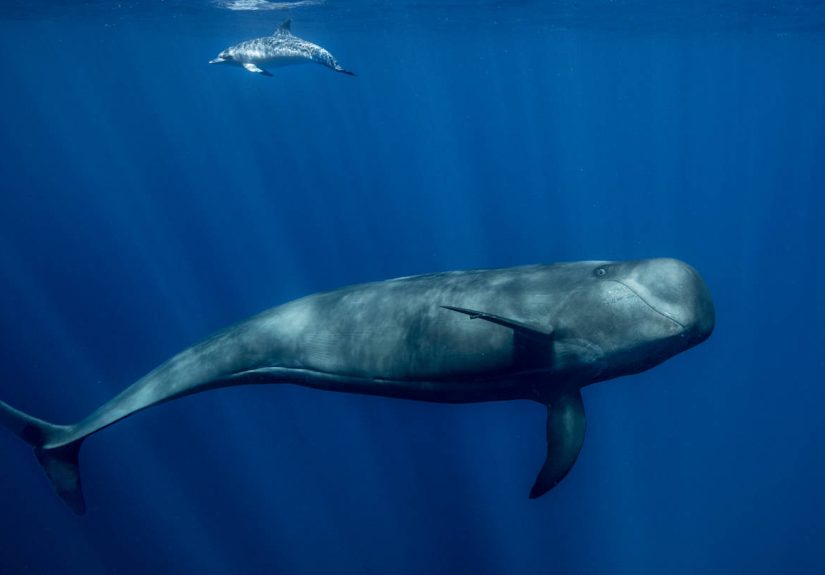
For a long time, the popular image of whales and dolphins sharing the ocean has been pretty simple: the big one swims, the small one zips around like an overcaffeinated sidekick, and humans on boats point excitedly while trying not to drop their phones overboard. But new research suggests that this relationship is more interesting than a casual drive-by. In some cases, whales and dolphins may be doing something closer to socializing, playing, and actively responding to one another.
That matters because whales and dolphins are not just floating sausages with excellent PR teams. They are highly social cetaceans with complex communication, strong group behavior, and a real talent for making scientists say, “Well, that’s unexpected.” A recent study examining whale-dolphin encounters found evidence that many of these interactions are not random, not always one-sided, and definitely not as boring as “animal A passed animal B.” In short, the ocean may be hosting a lot more mixed-species mingling than anyone realized.
This surprising whale and dolphin dynamic is turning heads because it challenges an older assumption that dolphins were mostly the instigators while whales just tolerated the nonsense. Instead, some whales seem to lean in. Literally. In several documented cases, especially with humpback whales, the larger animals appeared to respond in positive ways, suggesting that the relationship can be more mutual than scientists once thought.
What the Study Actually Found
The study at the center of this buzz analyzed 199 separate whale-dolphin interactions involving 19 species from around the world. Researchers reviewed photos and videos collected over about two decades, including footage from animal-borne cameras. Their goal was straightforward: figure out whether dolphins were just using whales as moving surfboards or whether something more social was going on.
The answer was not a dramatic Hollywood-style “they are besties forever,” but it was still striking. About a quarter of the documented interactions were classified as possible positive, mutual exchanges. That is a big deal in marine behavior research, where proving play or friendly intent is notoriously tricky. Scientists have to be cautious. A dolphin zooming near a whale’s face could be affection, curiosity, opportunism, or the cetacean version of being weird in public.
Still, the patterns were hard to ignore. Dolphins were often observed swimming near whales’ heads, particularly near the rostrum. In many cases, they seemed to be seeking direct contact or at least very close visual proximity. Some rubbed against whales. Some appeared to bow ride on the pressure wave created by the larger animal. That can save energy, yes, but the repeated close-contact behavior hints that the exchange may not be purely practical.
Even more surprising, many whales did not avoid the dolphins. In humpback whale encounters especially, researchers recorded rolling, belly presentation, movements toward dolphins, and pectoral fin displays that are often associated with socializing or courtship-like behavior. In other words, the whales were not acting like irritated neighbors banging on the wall because the dolphins were too loud.
Why Humpback Whales Keep Stealing the Show
If there is a golden retriever of the baleen whale world, humpbacks keep making a strong case for the title. Among the whale species documented in the study, humpbacks appeared especially open to interacting with dolphins. In at least a third of the humpback encounters classified as positive, the whales seemed to actively respond rather than simply endure the attention.
That fits with the humpback whale’s broader reputation. Scientists and wildlife observers have long noted humpbacks displaying curiosity, tolerance, and in some cases behavior that looks downright generous. Humpbacks have been seen interfering with orca attacks on other animals, which has fueled ongoing discussion about whether they are capable of a kind of broad interspecies responsiveness that goes beyond simple instinct.
Now, that does not mean humpbacks are running an underwater friendship club with weekly mixers and snacks. Animal behavior is messier than that. But it does suggest that humpbacks may be unusually receptive to other species, including dolphins, under the right conditions. When a humpback rolls toward a dolphin, presents its belly, or extends a fin instead of fleeing, it changes the interpretation of the encounter.
Dolphins Are Not Just Along for the Ride
Dolphins bring their own social complexity to the scene. NOAA notes that bottlenose dolphins engage in play, gentle body contact, cooperative foraging, and highly social group behavior. So when dolphins approach whales repeatedly, touch them, and stay near them for extended periods, it is reasonable to ask whether they are doing more than chasing convenience.
One obvious benefit is movement efficiency. Dolphins often bow ride near boats, and whales create a similar hydrodynamic opportunity. Riding pressure waves can reduce the energy cost of travel. That is a smart move, not laziness. Marine mammals are basically nature’s elite endurance athletes; saving energy is part of the game.
But there may also be a social or cognitive payoff. Play matters in intelligent animals. It can reinforce bonds, develop motor skills, test social boundaries, and sharpen decision-making. In species that rely heavily on communication and social learning, playful interactions may help build the kind of flexible behavior that makes survival easier in a changing ocean.
So Are Whales and Dolphins Friends?
That depends on how poetic you want to get. If by “friends” you mean two species that sometimes seek each other out, engage in close contact, and appear to enjoy or benefit from the interaction, then yes, the evidence is getting harder to shrug off. If by “friends” you mean the marine mammal equivalent of matching bracelets and emotional support group chats, science is not ready to sign that paperwork.
The best answer is that whales and dolphins can have different kinds of relationships depending on the species, place, and moment. Some encounters seem playful. Some may be practical. Some may be neutral. Some are probably annoying for one side. And some are clearly hostile.
That last point matters. Cetacean interactions are not all sunshine and cinematic leaps through golden-hour surf. Discover Magazine has highlighted that in some places dolphins and whales are friends or partners, while in others they can be predators, competitors, or outright troublemakers. Dolphins have been seen harassing larger cetaceans. Orcas, which are actually the largest members of the dolphin family, hunt other marine mammals and can create very different dynamics depending on the population and prey involved.
The Ocean Also Has Frenemies
One reason this new whale-dolphin study is so fascinating is that it lands in a bigger scientific story: cetaceans do not have one fixed relationship model. For example, Scientific American previously reported long-term associations between false killer whales and bottlenose dolphins, with individuals staying together across years and large distances. That is not random overlap. That is persistent interspecies company.
Meanwhile, more recent reporting has covered northern resident killer whales and Pacific white-sided dolphins appearing to coordinate around salmon hunts. Scientists are still debating whether that relationship is truly cooperative or partly opportunistic, but either way it shows that whale-and-dolphin dynamics can involve more than one script. Sometimes the story may be social play. Sometimes it may be food. Sometimes it may be both. Nature loves refusing to stay in neat little boxes.
Why Play Matters More Than It Sounds
Play can sound like a fluffy concept, but in animal behavior it is serious business. In social mammals, play helps build flexibility, communication skills, and confidence in complex environments. For dolphins, which live in pods and depend on social learning, play can reinforce relationships and help young animals practice movement and response patterns that later matter for hunting, defense, or courtship.
For whales, especially highly social species, playful or tolerant responses to another cetacean species may reveal more about their behavioral range than scientists previously appreciated. NOAA’s cetacean behavior research emphasizes that social organization and social signals are essential for understanding how these animals live, reproduce, and respond to change. The more we learn about their interactions, the less the ocean looks like a silent blue void and the more it looks like a layered social world with rules we are only beginning to decode.
That is part of what makes this study so exciting for both science and conservation. It is not just about one cute video of dolphins hanging around a whale like tiny aquatic interns. It is about recognizing that these species may be making choices, responding to one another, and participating in mixed-species interactions that have real ecological and social meaning.
Why This Research Matters for Conservation
There is another reason to pay attention to this surprising dynamic between whales and dolphins: conservation depends on behavior. If scientists do not understand how marine mammals socialize, travel, forage, or react to disturbance, it becomes harder to protect them well.
Human activity can disrupt cetacean behavior in ways that are easy to underestimate. NOAA warns that irresponsible viewing can interfere with feeding, nursing, mating, and migration. That means a whale-dolphin interaction that looks magical from a tourist boat can be altered by noise, crowding, or harassment. In other words, people can accidentally crash the party.
The study also highlights the value of citizen footage when used carefully. Many of the documented interactions came from images or videos captured by the public, tourism operators, or researchers. That does not replace field science, but it can help reveal patterns that are otherwise difficult to observe across huge ocean spaces. Sometimes the internet gives us chaos. Sometimes it gives marine biology a useful archive.
And if whales and dolphins are indeed engaging in mixed-species social behavior more often than expected, that adds another layer to habitat protection. We are not only protecting individual species; we may also be protecting relationships, routines, and social opportunities that help shape their lives.
What These Encounters Feel Like in Real Life
For people lucky enough to witness one of these encounters in the wild, the experience can feel almost unreal. A calm stretch of ocean suddenly turns into a moving stage set: the broad back of a whale rises like a slow hill, a blow bursts into the air, and then dolphins appear in quick silver arcs, slicing through the water with the kind of confidence that makes every human swimmer feel deeply underqualified.
At first, many observers assume the dolphins are just doing what dolphins do best: showing off. They race toward the whale, angle around its head, dip under its chin, and flash in and out of sight so quickly that even experienced whale-watchers can miss half the action. Then the whale responds. It rolls. It shifts direction. It lingers. It raises a fin. And that is the moment the whole thing stops looking like random overlap and starts feeling like a conversation with no words.
Researchers who spend long hours on the water often describe these moments as the kind that reset your brain. You go out expecting to log behavior, collect data, and try not to get sunburned into a crisp, and suddenly you are staring at two species that seem to be reading each other in real time. Not with language in the human sense, maybe, but with movement, spacing, timing, and trust. It is one thing to know cetaceans are intelligent. It is another thing entirely to watch that intelligence unfold between species.
Photographers and naturalists often say the most memorable part is not the splashiest behavior. It is the pause. The instant when a dolphin hovers near a whale’s rostrum. The long glide when both animals seem to settle into the same rhythm. The brief surface moment when the size difference becomes almost funny: one animal the size of a bus, the other a sleek torpedo with the energy of a kid who had too much birthday cake. Yet somehow the pairing does not look mismatched. It looks natural.
There is also a strange emotional effect on the humans watching. Even seasoned marine biologists are careful not to project too much onto wild animals, but it is hard not to feel a spark of recognition when two very different creatures appear curious about each other. It taps into something old and simple in us: the hope that intelligence does not always lead to conflict, that curiosity can cross boundaries, and that the ocean still contains social dramas we have barely begun to understand.
Of course, real-life encounters are not always tidy. Sea conditions are rough. Animals vanish. A perfect interaction can last 20 seconds and leave everyone on the boat arguing over what exactly they just saw. One person swears the dolphin touched the whale. Another insists it was just riding the pressure wave. Someone else is too busy fumbling with a camera lens cap to contribute anything useful. That uncertainty is part of the experience too. The ocean rarely hands out easy answers.
But maybe that is why these encounters stick with people. They are beautiful, yes, but also unresolved. They invite attention instead of closure. You leave with salt on your skin, dozens of blurry photos, and the pleasant discomfort of not fully knowing what happened. And in science, that is often where the best questions begin.
Final Thoughts
The most surprising thing about this study is not just that whales and dolphins interact. Anyone who has spent time around the ocean has seen enough footage to know that. The real surprise is that the relationship may be more mutual, more social, and more nuanced than the old assumptions allowed.
Some dolphins seem to approach whales for a fast ride, a closer look, or a playful encounter. Some whales, especially humpbacks, appear willing to respond with curiosity instead of indifference. Add in examples of long-term interspecies bonds, possible cooperative hunting, and the rich social lives already documented in cetaceans, and the picture becomes clear: whales and dolphins are not just coexisting. Sometimes they are engaging.
That does not mean every encounter is friendly, and it definitely does not mean scientists should start writing rom-com titles for marine biology journals. But it does mean the ocean’s social world is more textured than we once believed. And honestly, that feels right. If any animals were going to reveal that the sea has a surprisingly active social scene, it was always going to be the whales and the dolphins.