Table of Contents >> Show >> Hide
Fall is the season of ambition. We suddenly decide we are the kind of people who stroll through farmers markets, commute in style, take leafy weekend walks, and maybe even look cute while doing it. Then reality arrives in the form of stiff loafers, slippery boots, or fashion sneakers with the structural integrity of wet toast. That is usually when your feet file a formal complaint.
The good news is that comfortable fall shoes do not have to look orthopedic, beige, or like they were borrowed from a hospital supply closet. Podiatrists consistently point to the same handful of features when they talk about foot-friendly footwear: a roomy toe box, stable construction, cushioning that matches your gait, supportive arches, and enough traction to handle slick sidewalks and surprise weather. Some of the shoes below carry respected foot-health credentials, while others keep showing up in podiatrist-informed testing and recommendations because they simply do the right things for your feet.
So, instead of choosing between fashion and function like it is some cruel seasonal game show, here are 10 comfortable shoes for fall that make your feet, knees, and daily step count far less dramatic.
What podiatrists actually want in a fall shoe
Before we get to the shoe list, let’s talk about the traits that matter most. A good fall shoe should feel comfortable right away. Not “after a heroic break-in period.” Not “once the leather learns your soul.” Right away. That is one of the biggest takeaways from foot-health experts: if a shoe feels wrong in the store, it will not magically become Prince Charming on your third commute.
- A roomy toe box: Your toes should be able to spread naturally instead of huddling together like commuters on a delayed train.
- Reliable arch and heel support: This helps with alignment, comfort, and reducing the strain that often shows up as heel pain or fatigue.
- Stable construction: Fall shoes should not twist like a tortilla. Side-to-side stability matters, especially in boots and clogs.
- Cushioning with a purpose: Plush is great, but not if it turns every step into a wobble board. Supportive cushioning usually wins.
- Traction: Wet leaves, drizzly sidewalks, polished office floors, and slippery entryways are all waiting to humble you.
- Good fit: Leave a little space in front of your longest toe, make sure your heel does not slip, and try on shoes later in the day when your feet are slightly more swollen and realistic.
Now let’s get to the pairs that deserve a spot in your fall rotation.
10 comfortable shoes for fall that podiatrists would not side-eye
1. Hoka Bondi 9
If your fall involves a lot of pavement, errands, standing, or “just one quick walk” that somehow turns into 11,000 steps, the Hoka Bondi 9 is a strong starting point. This shoe is famous for high-stack cushioning, but the real magic is that it does not feel wildly unstable. It offers a plush ride with enough structure to keep long days from turning your arches into grumpy little raisins.
Best for: long walks, all-day city wear, travel days, and anyone who wants maximum cushioning without going full marshmallow.
2. Brooks Ghost Max 2
The Brooks Ghost Max 2 is the sort of shoe that makes a lot of sense for people who want comfort but do not want to feel like they are walking on trampoline foam. Its rocker shape helps encourage smoother transitions from heel strike to toe-off, while its broader base adds a welcome sense of stability. For fall, it is a great “daily driver” shoe: reliable, supportive, and not overly fussy.
Best for: walking commutes, standing desks that become standing lives, and people who want cushion plus control.
3. ASICS GEL-KAYANO 32
If your feet tend to roll inward when you walk or run, or if you often feel like softer shoes make you wobble, the GEL-KAYANO line deserves a look. The latest version keeps the signature stability focus that has made it a longtime favorite in podiatrist-informed recommendations. It is supportive without looking like a punishment, and that is no small achievement in the world of motion-control footwear.
Best for: overpronators, walkers who need extra guidance, and anyone who likes a secure, grounded feel.
4. New Balance 990v6
The 990v6 is what happens when comfort and grown-up style agree to stop fighting. It has a loyal following for good reason: supportive underfoot feel, quality materials, and a silhouette that can move from jeans to joggers to casual office wear without drama. This is the pair for people who want one sneaker that feels substantial enough for everyday life but still looks polished in a fall wardrobe.
Best for: all-day casual wear, smart-casual outfits, and shoppers who want support without obvious athletic styling.
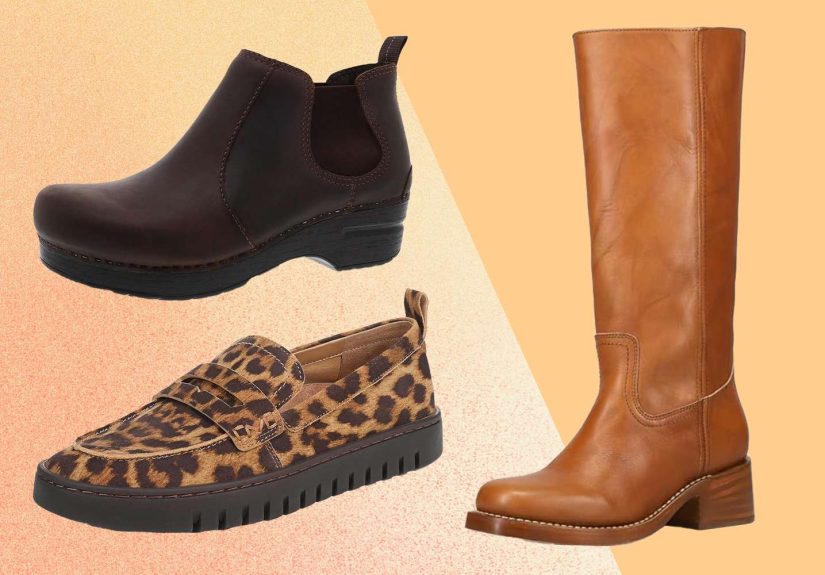
5. Vionic Uptown Loafer
Loafers are the unofficial mascot of fall, but many of them feel like decorative foot traps. The Vionic Uptown Loafer is different because it is built around support, not just vibes. It gives you that classic slip-on look while offering a more foot-friendly foundation than the typical flat, flimsy office loafer. If you want a fall shoe that works with trousers, denim, or travel outfits, this one is an easy yes.
Best for: office days, travel, elevated casual outfits, and anyone who wants a stylish alternative to sneakers.
6. Dansko Professional Clog
The Dansko Professional Clog has been the patron saint of people who stand for a living for years. Nurses, teachers, retail workers, chefs, and other heroes of civilization keep coming back to it because it offers structure, a contoured feel, and dependable support. It is not the softest shoe on the list, but that is partly the point. This clog is about holding its shape and giving your foot a stable platform.
Best for: long shifts, structured support, and people who prefer firm comfort over sink-in softness.
7. Birkenstock Boston Soft Footbed
The Boston clog has become a fall icon, and unlike some trendy shoes, it actually has a credible comfort story. The contoured footbed, deep heel cup, and supportive cork-latex base help explain why it has real staying power. The soft footbed version is especially appealing if you want that molded support with a gentler first impression. Think of it as the shoe equivalent of a cozy sweater that also has strong opinions about posture.
Best for: casual weekends, work-from-home days, coffee runs, and people who like a supportive slip-on with personality.
8. Blundstone Original #500 Chelsea Boot
Fall without a Chelsea boot is like pumpkin spice without the controversy. The trick is finding one that feels good past hour one. The Blundstone #500 works because it balances classic boot styling with practical comfort details, including a cushioned footbed, flexible sole, and leather upper that handles changing weather well. It is not a medical shoe, but it checks many of the boxes podiatrists care about in a casual boot.
Best for: everyday fall wear, wet weather, travel, and people who want one boot that can do almost everything.
9. Skechers Go Walk Max Cushioning Arch Fit – Areena
Not everyone wants laces, and not everyone has the patience to wrestle with shoes before coffee. This Skechers slip-in option brings solid cushioning and a supportive feel in a remarkably easy format. It is especially appealing for errands, neighborhood walks, and anyone who wants convenience without giving up comfort. Bonus points for the fact that it does not look like a total compromise.
Best for: hands-free wear, quick outings, casual walking, and people who prioritize easy on-and-off access.
10. On Cloud 6 Waterproof
Fall weather loves surprises, and the On Cloud 6 Waterproof is ready for them. It combines a sleek commuter-friendly look with a waterproof membrane and traction-minded outsole details that make rainy days less annoying. It also has the kind of cushioning and lightweight feel that works well for travel or long city days. If you want a modern sneaker that plays nicely with jeans, joggers, or a raincoat, this one earns its keep.
Best for: damp sidewalks, travel, urban commutes, and people who want a less bulky fall sneaker.
How to choose the right one for your feet
Here is the part that no one wants to hear but everyone needs: the “best” shoe is not universal. The best fall shoe for someone with high arches, a narrow heel, and a love of brisk city walking may be awful for someone with bunions, flatter feet, or a job that involves standing on concrete for nine hours.
If you want to narrow the field quickly, think in categories:
- For max cushioning: Hoka Bondi 9 or Brooks Ghost Max 2.
- For extra stability: ASICS GEL-KAYANO 32.
- For polished everyday wear: New Balance 990v6 or Vionic Uptown Loafer.
- For long hours standing: Dansko Professional Clog.
- For easy slip-on comfort: Birkenstock Boston or Skechers Arch Fit Areena.
- For classic fall boot weather: Blundstone #500.
- For wet conditions: On Cloud 6 Waterproof.
Also, pay attention to what your current shoes are doing wrong. If your toes feel cramped, you likely need more toe-box room. If your heel lifts while walking, you need a better lockdown. If your arches ache after an hour, you may need more support or a firmer platform. Your feet are surprisingly honest critics.
Why fall footwear mistakes hit so hard
There is something sneaky about fall shoes. Summer makes obvious mistakes easy to spot. Flip-flops are barely pretending to be supportive, and sky-high sandals are clearly not here to help your plantar fascia. Fall shoes, though? They look practical. They look respectable. They look like they have their life together. Then they show up with narrow toe boxes, slick soles, rigid uppers, or zero support.
That is why this season can be rough on feet. You are transitioning from airy summer footwear into heavier materials, more walking, cooler weather, and sometimes longer days on your feet. Boots and loafers get stylish all the attention, but sneakers and clogs often win the comfort war because they offer better shock absorption, more forgiving uppers, and stronger underfoot support.
The smartest approach is not to build a fall wardrobe around one perfect pair. It is to create a small rotation. A supportive sneaker, a structured work shoe, and a weather-friendly boot will cover most real life without forcing your feet into the same shape every day.
A 500-word reality check: what wearing better fall shoes actually feels like
People often think supportive shoes are about preventing some dramatic future problem, but the biggest difference usually shows up in the boring, everyday moments. It is the walk from the parking lot. The second half of the grocery run. The line at the coffee shop. The trip through the airport. The hour you spend standing at a weekend event wondering why your lower back suddenly feels older than your driver’s license suggests.
When you switch into truly supportive fall shoes, the first thing you notice is not always fireworks. Sometimes it is simply the absence of irritation. Your heel is not barking at you by 10 a.m. Your toes are not plotting a revolt inside a pointy loafer. You are not thinking about your shoes every five minutes, which is secretly the highest compliment footwear can earn. Good shoes disappear in the best way.
Take the typical office day. You leave home in the morning, walk from the train or parking garage, stand during a meeting because the conference room is weirdly full, grab lunch, take stairs because the elevator is taking its sweet time, and then head out for dinner afterward. In a flimsy fashion shoe, that day can feel like an endurance event. In a supportive loafer or stable sneaker, your feet stay quieter. Your calves are less tense. Your knees do not feel every hard surface like a personal insult. You still get tired, of course, because you are a human being and not a gazelle, but it is the normal kind of tired.
The same thing happens on weekends. A supportive clog or cushioned sneaker lets you do the little zigzags of life without paying a tax in soreness later. Farmers market, bookstore, lunch, park, grocery store, home. That is not a marathon, but it adds up fast. The right shoes spread pressure more evenly, give your toes room to move, and soften the repetitive impact that usually gets ignored until nighttime, when you kick your shoes off and realize your arches are furious.
Boots are especially revealing. A stylish boot that lacks support can look amazing in a mirror and feel terrible by the time you have crossed two city blocks. A better boot feels stable on uneven sidewalks, handles surprise rain without panic, and does not force you to grip with your toes just to stay balanced. That last point matters more than most people realize. When shoes are sloppy or unstable, your feet start overworking to compensate. That effort travels upward into your ankles, calves, knees, and even your back.
There is also the confidence factor. Comfortable shoes make you move differently. You walk faster. You take the longer route on purpose. You stop avoiding activities because you are worried your feet will tap out early. The best fall shoes do not just support your arches; they expand your day. And honestly, that is the whole point. Shoes should help you live your life, not negotiate terms with it.
Final thoughts
If you remember just one thing from this list, make it this: podiatrist-endorsed comfort is less about chasing a trendy label and more about choosing shoes that respect the mechanics of your feet. The best fall shoes usually have enough cushioning to feel good, enough structure to feel stable, and enough room to let your feet behave like feet.
So yes, you can have the sleek loafer, the handsome Chelsea boot, the cozy clog, and the shock-absorbing sneaker. You just need them to do their jobs. Because the only thing worse than sore feet in October is realizing you still have November and December to go.