Table of Contents >> Show >> Hide
- What Does “House Calculation” Actually Mean?
- Why Birth Time Matters So Much
- Are Houses the Same as Zodiac Signs?
- The Most Common House Systems, Explained Without the Headache
- The 12 Houses of Astrology, Explained Like a Real Human Would Explain Them
- 1st House: Self, Identity, Appearance
- 2nd House: Money, Values, Resources
- 3rd House: Communication, Learning, Siblings, Local Life
- 4th House: Home, Family, Roots
- 5th House: Creativity, Joy, Romance
- 6th House: Work, Health, Routines, Service
- 7th House: Partnership
- 8th House: Shared Resources, Loss, Intimacy, Transformation
- 9th House: Travel, Higher Learning, Belief Systems
- 10th House: Career, Status, Public Life
- 11th House: Friends, Networks, Community, Aspirations
- 12th House: Solitude, Hidden Patterns, Inner Life
- How Astrologers Actually Read Houses
- Common Myths About Houses
- Experiences People Commonly Have When They Start Paying Attention to Houses
- Final Thoughts
Note: This article discusses astrology as a symbolic and cultural framework for interpretation and self-reflection, not as a scientific method.
If zodiac signs are the celebrities of astrology, houses are the camera crew, lighting team, and suspiciously dramatic soundtrack. Everybody talks about Sun signs, but houses are what tell astrologers where the action is happening. Career drama? That is a house topic. Family roots? Also a house topic. Romance, money, travel, daily routines, friendships, secrets, and the mysterious talent you have for overthinking texts at 1:12 a.m.? Yep, the houses want a word.
So what is house calculation in astrology? In plain English, it is the process used to determine where each of the twelve houses begins in your birth chart. Those house boundaries are calculated from your birth date, exact birth time, birthplace, and chosen house system. Once the chart is set, astrologers read planets through three layers: the planet shows what energy is active, the zodiac sign shows how it behaves, and the house shows where in life that energy plays out.
That is why two people can both be Leo Suns and still come across like totally different species. One might have a 10th-house Sun and walk into every room like they are accepting an award. Another might have a 4th-house Sun and shine brightest in private, around home, family, and deeply personal foundations. Same Sun sign. Different stage. Different spotlight. Different soundtrack.
What Does “House Calculation” Actually Mean?
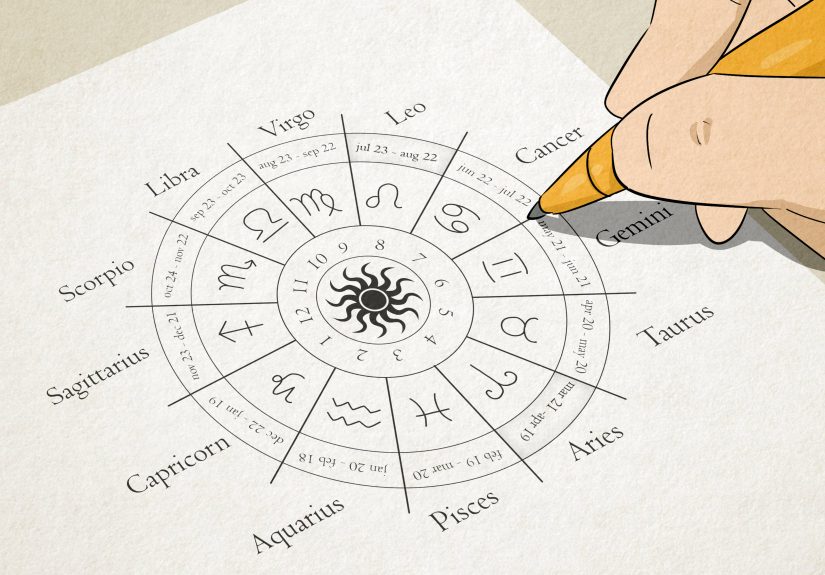
In astrology, your chart is divided into twelve sections called houses. Each house represents a life area, such as identity, money, communication, home, health, partnership, career, or community. House calculation is the method used to place those sections onto your chart wheel.
The calculation starts with your birth details. Your birth time matters enormously because astrologers use it to determine the Ascendant, also called the rising sign. The Ascendant is the zodiac sign rising over the eastern horizon at the moment you were born, and it acts as the anchor point for the house structure. If the time is off, the rising sign can change, and the entire house layout can shift with it. In many explanations for beginners, the Ascendant is said to move quickly enough that even a small time error can change chart interpretation in a noticeable way.
Then comes the house system. This is where astrology gets delightfully nerdy. Different systems divide the sky in different ways, which means the same planet can sometimes land in a different house depending on whether you use Whole Sign, Placidus, Equal House, or another system. Think of it like having several maps of the same city: the city is still there, but the neighborhoods may be drawn a little differently.
The Four Main Ingredients of House Calculation
- Birth date the calendar day that sets the sky snapshot.
- Birth time the crucial detail that helps determine the Ascendant and house layout.
- Birthplace location changes the sky perspective.
- House system the method used to divide the chart into twelve houses.
If you have ever entered your birth details into a chart calculator and then stared at the wheel like it was a sacred pizza diagram, congratulations: you have already encountered house calculation.
Why Birth Time Matters So Much
Astrology beginners are often surprised that birth time is not just a cute extra detail. It is central to house calculation. Your date of birth can tell astrologers your Sun sign, and usually your Moon sign with enough precision, but the house structure depends on time. Without it, astrologers cannot reliably identify the rising sign or the house cusps, which are the starting points of each house.
This is why astrologers can sound dramatic about birth certificates. They are not trying to ruin brunch. They are trying to keep your 10th house from accidentally moving into your 9th. And yes, that matters. A planet in the 9th house might be read through education, publishing, faith, travel, or worldview. That same planet in the 10th house might point more toward public reputation, leadership, vocation, or career visibility. Small input change, big interpretive difference.
If your birth time is approximate, the chart can still be interesting, but the house positions may be less certain. That is why some astrologers treat house analysis with caution unless the birth time is confirmed.
Are Houses the Same as Zodiac Signs?
No, and this is one of the most common beginner mix-ups. Zodiac signs and houses are related, but they are not identical. Signs are fixed 30-degree sections of the zodiac. Houses are a separate framework tied to your birth time and location. In some systems, especially Whole Sign Houses, the signs and houses line up in a clean, elegant way. In many other systems, they do not. One house does not always equal one sign.
That explains why someone can have Gemini on a house cusp but still have planets in Cancer inside that same house. Astrology loves complexity. It did not come here to be boring.
The Most Common House Systems, Explained Without the Headache
Whole Sign Houses
Whole Sign is one of the oldest house systems. In this method, the entire sign of the Ascendant becomes the 1st house, the next sign becomes the 2nd house, and so on. If you are 22 degrees Pisces rising, all of Pisces is your 1st house, all of Aries is your 2nd, and the sequence continues from there. Many astrologers like Whole Sign because it is visually clean and beginner-friendly.
Placidus
Placidus is one of the most widely used modern house systems. It often creates houses of unequal size, especially at extreme latitudes. That means signs can be duplicated on cusps, intercepted, or spread in ways that confuse beginners and fascinate astrology veterans. In other words, Placidus is the house system that says, “You wanted nuance? Here is nuance with extra nuance.”
Equal House
Equal House starts from the Ascendant degree and divides the chart into twelve equal 30-degree houses. It keeps the houses evenly sized while still preserving the Ascendant as the starting point. Many students find it a helpful middle ground between the simplicity of Whole Sign and the sky-based complexity of quadrant systems.
Other Systems
Astrologers also work with Koch, Regiomontanus, Campanus, Porphyry, and others. There is no universal winner. In fact, the house-system debate has been going on for centuries and remains very alive. Many astrologers simply choose the system that best fits their training, tradition, or experience in reading charts.
The key takeaway is simple: house calculation is not one single formula used by everyone in exactly the same way. The chart data are the same, but the interpretive framework can shift depending on the system.
The 12 Houses of Astrology, Explained Like a Real Human Would Explain Them
1st House: Self, Identity, Appearance
This is the house of you being unmistakably you. It relates to identity, physical presence, vitality, temperament, and first impressions. If your chart were a movie, the 1st house would be the opening shot where the camera pans in and the audience says, “Ah, so this is our main character.”
2nd House: Money, Values, Resources
The 2nd house deals with personal finances, material resources, self-worth, and what helps you feel secure. It is not only about income; it is also about what you value and what you believe you deserve. In less poetic terms, this is your “can I pay rent and feel emotionally stable” house.
3rd House: Communication, Learning, Siblings, Local Life
This house rules communication, short trips, learning, writing, neighborhood life, and close connections such as siblings or extended kin. It is the house of daily interaction, curious questions, conversations, and the mental tabs you keep open in your brain at all times.
4th House: Home, Family, Roots
The 4th house points to home life, ancestry, private foundations, and the emotional roots that support your life. It can describe family patterns, domestic priorities, and the part of you that wants a safe place to exhale. It is the astrological equivalent of the basement, the hearth, and the locked diary.
5th House: Creativity, Joy, Romance
This is the fun house. It covers pleasure, art, play, self-expression, children, and romantic sparkle. The 5th house is where the chart loosens its tie, kicks off its shoes, and says, “Let us make something beautiful or ridiculous, preferably both.”
6th House: Work, Health, Routines, Service
The 6th house is about daily labor, habits, wellness, responsibility, and practical upkeep. If the 5th house is inspiration, the 6th is the calendar reminder that makes inspiration usable. This house is where your life becomes less about fantasy and more about systems, maintenance, and actual follow-through.
7th House: Partnership
The 7th house governs one-to-one relationships, including romance, business partnerships, contracts, and serious commitments. It is the “me and you” axis of the chart. If the 1st house says, “This is who I am,” the 7th house asks, “And how do I meet other people fairly, honestly, and without turning every disagreement into a Shakespeare reboot?”
8th House: Shared Resources, Loss, Intimacy, Transformation
The 8th house is one of astrology’s most layered spaces. It is linked with shared finances, inheritances, debts, psychological depth, endings, grief, healing, and transformative processes. It has a reputation for being spooky, but it is really about what changes us at the deepest level. Less haunted mansion, more emotional X-ray.
9th House: Travel, Higher Learning, Belief Systems
The 9th house covers long-distance travel, higher education, publishing, philosophy, religion, and worldview. This is the house of expanding your mind. It is what happens when the 3rd house stops reading quick messages and starts reading the thick book with tabs sticking out of it.
10th House: Career, Status, Public Life
The 10th house points to career, calling, leadership, public role, recognition, and reputation. This is where your chart puts on a blazer and thinks about legacy. It can describe the kind of work you are known for, the image you project publicly, and the achievements you want to be remembered for.
11th House: Friends, Networks, Community, Aspirations
The 11th house rules friendships, groups, social networks, collective goals, and shared hopes for the future. It is the house of community and collaboration. If the 10th house is the podium, the 11th is the people around you building the stage, passing the mic, and helping the dream get larger than one person.
12th House: Solitude, Hidden Patterns, Inner Life
The 12th house is associated with retreat, rest, seclusion, hidden processes, subconscious material, and the things operating behind the scenes. It can feel mysterious because it often relates to what is difficult to see directly. Think sleep, recovery, private reflection, and the shadowy corners of the psyche that usually do not announce themselves with confetti.
How Astrologers Actually Read Houses
Houses are rarely interpreted in isolation. A skilled astrologer will usually look at three things together:
- The house itself the life area involved
- The sign on the cusp the style or flavor of that life area
- The ruler of that sign where the story continues elsewhere in the chart
For example, if your 7th house begins in Libra, an astrologer may look to Venus, Libra’s ruler, to learn more about your partnership patterns. If Venus is in the 10th house, relationships may connect strongly with public life, ambition, or reputation. That is why house rulers matter: they link one part of life to another, like astrological extension cords.
Common Myths About Houses
“Empty houses mean nothing happens there.”
Nope. An empty house does not mean a cursed blank zone in your life. It usually just means there were no planets located there at birth. Astrologers still read the sign on the cusp, the ruler of that sign, and transits moving through the house over time.
“There is one correct house system.”
Also nope. Astrology traditions disagree. Some astrologers swear by Whole Sign. Others prefer Placidus or Equal House. The better question is not “Which one is universally right?” but “Which one helps produce the clearest, most useful reading for the astrologer and the client?”
“Signs and houses are interchangeable.”
Not quite. They can correspond symbolically, but they are not identical structures. Mixing them together too casually can flatten the chart and make interpretation less accurate.
Experiences People Commonly Have When They Start Paying Attention to Houses
Once people move beyond Sun-sign astrology and begin working with houses, the experience often feels like switching from a sketch to high-definition. A chart that once seemed vague suddenly becomes specific. Instead of hearing, “You are a passionate person,” they start hearing, “Your passion is especially loud in career matters,” or “Your emotional growth keeps showing up through home and family.” That difference is huge. It turns astrology from a personality label into a life-map framework.
A lot of beginners say the first house-related “aha” moment comes when they learn their rising sign. Before that, astrology may have felt only partially accurate. Then they see that the Ascendant sets the house structure, and suddenly the chart starts sounding more like them. Someone who never fully identified with their Sun sign may realize that their 1st-house placements, or the ruler of their Ascendant, explain why they come off very differently from what their basic horoscope suggests. It is the classic moment of, “Oh. So I am not broken. I was just reading the wrong layer.”
Another common experience happens when people compare house systems. This can be mildly alarming and weirdly exciting. A person may notice that in Whole Sign, their Sun lands in the 10th house, but in Placidus, it slips into the 9th. Then they start reflecting: do I experience this energy more through public achievement, or through study, teaching, travel, and worldview? Even when the answer is not immediate, the comparison itself can deepen self-understanding. It encourages reflection instead of blind acceptance, which is honestly a healthy habit in any symbolic system.
People also tend to notice houses most clearly during major life events. A difficult 4th-house period may coincide with moving, family stress, or rethinking what “home” means. A strong 10th-house season may bring promotions, public exposure, or a sudden urge to build a real career path instead of “just seeing what happens.” A 7th-house emphasis can bring serious relationship decisions, while a 12th-house phase often feels quieter, stranger, and more internal. People sometimes describe these periods as if life has spotlighted one room of the house at a time, turning up the brightness in one area while the others fade to the background for a while.
There is also a practical, almost comforting experience that comes from learning the houses: people often stop taking astrology so randomly. They begin to see structure. They understand why one transit might matter for work but not for romance, or why a friend with the same Sun sign is having a completely different year. Houses add context. And context, whether in astrology or real life, tends to make everything feel a little less chaotic.
Maybe that is the real reason house calculation fascinates so many people. It gives shape to the chart. It organizes the symbolism. It says, “Here is the part about money. Here is the part about home. Here is the part about love, grief, vocation, friendship, solitude.” It does not magically solve life, sadly. Your 6th house still cannot fold laundry. But it does offer a framework for asking better questions, and sometimes better questions are exactly where understanding begins.
Final Thoughts
So, what is house calculation in astrology? It is the process of determining the twelve life sectors of a birth chart using your date, time, place of birth, and a selected house system. Those houses help astrologers interpret where planetary energies are expressed in life. Once you understand that, the chart becomes much easier to read. It stops looking like an intimidating cosmic pie chart and starts acting more like a symbolic map.
If you are new to astrology, houses are one of the best places to level up your understanding. Learn your rising sign. Learn what each house represents. Compare one or two house systems without panicking. And remember: even if the chart looks complicated, the goal is not perfection. The goal is insight. Preferably with fewer headaches and only a moderate number of mysterious glyphs.