Table of Contents >> Show >> Hide
- What Happened in the “Bourgeois Lunch” Story?
- Why This Story Rubbed So Many People the Wrong Way
- The Bigger Issue: Caregiving Stress Changes Family Dynamics
- When “Too Bourgeois” Really Means Something Else
- So Who Was Wrong?
- What Families Can Learn From This Very Petty, Very Human Lunch Fight
- The Real Takeaway
- Experiences Related to the Topic: Why So Many People See Themselves in This Story
- Conclusion
- SEO Tags
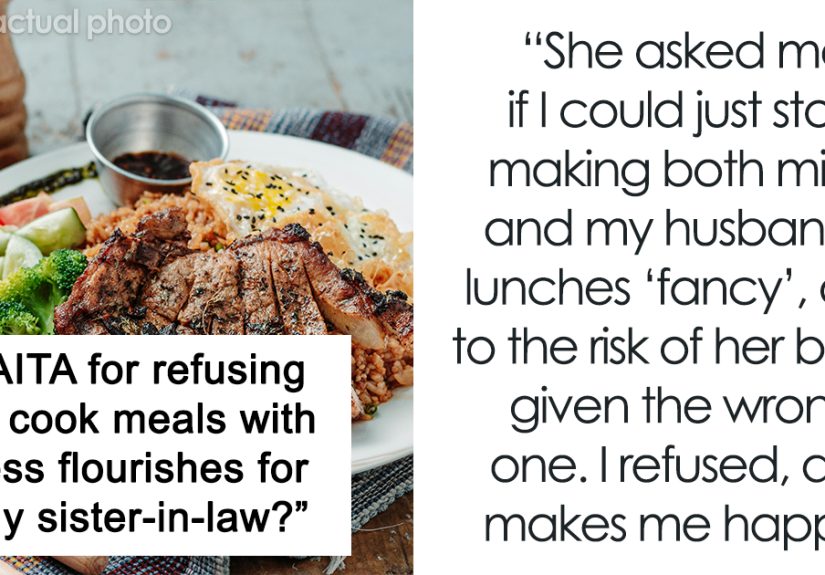
What starts as a sweet family favor can turn into a full-blown emotional casserole faster than you can say “extra cheese.” In the viral story behind Woman Cooks For Her SIL Every Day, Gets Complaints About The Meals Being Too “Bourgeois”, one woman packed lunches for her sister-in-law after an accident and job change left her in a tighter spot financially. The help was practical, thoughtful, and, by all appearances, made with care. Then came the plot twist: the meals were apparently too nice, too decorated, too “bourgeois,” and therefore too embarrassing to bring to work.
That complaint is funny on the surface because, let’s be honest, being offended by a lovingly packed lunch sounds like a luxury problem. But beneath the internet-ready absurdity sits a very real question about modern family life: what happens when generosity is met with criticism instead of gratitude? More importantly, what happens when everyday help becomes expected, then judged, then emotionally expensive?
This story hit a nerve because it is not really about lunch. It is about family boundaries, invisible labor, resentment, social anxiety, and the weird way good deeds can become obligations if people stop seeing them as gifts. When someone is cooking for you every day, the reasonable response is usually “thank you,” not “could you make my free food less fancy?” And yet, versions of this dynamic happen all the time in households across America.
What Happened in the “Bourgeois Lunch” Story?
According to the widely shared retelling, the woman began preparing lunches for her sister-in-law after the sister-in-law had an accident and moved into a lower-paying job. The lunches were delivered as part of a family routine, which already makes this more than a casual favor. It required time, planning, groceries, mental bandwidth, and consistency. In other words, it was labor. Loving labor, sure, but labor nonetheless.
The conflict began when the sister-in-law reportedly said her coworkers were making fun of the lunches for being too “fancy,” or, in her words, too “bourgeois.” Depending on how online you are, that word may have been used less in the Marxist sense and more in the slang sense of “bougie.” Either way, the complaint was essentially this: please continue doing the unpaid daily service, but edit the aesthetic because it is causing me social discomfort.
Now the lunch itself became a symbol. Was it a gift? A family duty? A performance? A reminder that someone else was taking care of her? Or just a meal with a bit too much decorative flair? The answer is probably all of the above, which is exactly why people reacted so strongly.
Why This Story Rubbed So Many People the Wrong Way
1. Free help usually comes with one accepted side dish: gratitude
Research and expert guidance on relationships keep circling back to the same point: appreciation matters. When people do not feel acknowledged for their effort, even small tasks can start to feel heavy. Cooking daily for another adult is not nothing. It is shopping, prepping, packing, remembering preferences, managing time, and showing up again tomorrow to do it all over again.
That is why the complaint sounded so jarring. It skipped right over appreciation and landed in critique. There is a huge emotional difference between “Thank you so much, but could we keep it a little simpler?” and “These meals are too bourgeois.” One invites collaboration. The other sounds like a Yelp review for kindness.
2. Family labor becomes invisible very quickly
One reason stories like this go viral is that they expose how fast repeated generosity becomes normalized. The first lunch feels like a gift. By lunch number 27, it can start to feel like part of the plumbing. You stop noticing it until something is “wrong” with it. That is where resentment sneaks in through the side door wearing slippers.
Family experts have long noted that conflict is often not just about the task itself, but about whether people feel respected in the exchange. In plain English: it is not only about the sandwich. It is about whether the sandwich-maker feels seen.
3. Social embarrassment can make people irrational
To be fair, the sister-in-law may not have been trying to insult the cook so much as trying to escape workplace teasing. When coworkers mock something personal, people often redirect that discomfort toward the safest target. Unfortunately, the safest target is frequently the person helping them.
That still does not make the complaint reasonable, but it does make it understandable. People under stress, especially after health and job disruptions, are not always operating from their best, most eloquent selves. Sometimes they are just tired, self-conscious, and one snarky comment away from saying something foolish about a heart-shaped seaweed garnish.
The Bigger Issue: Caregiving Stress Changes Family Dynamics
Here is where this story stops being internet fluff and starts sounding familiar to a lot of households. When one person steps into a helper role, even temporarily, family relationships shift. The helper has more responsibility. The receiver has more dependence. Both people may feel vulnerable, and both may start keeping private score without meaning to.
Health and caregiving experts consistently point out that helping a family member can be deeply meaningful, but also emotionally and physically draining. Even practical support like rides, errands, meal prep, and daily check-ins adds up. If there is little recognition or communication, the helper may feel used. If the recipient feels embarrassed or powerless, they may become prickly, defensive, or critical.
That is why this lunch conflict feels so believable. It is the sort of argument that happens when bigger feelings put on an apron and pretend to be about food. Underneath the complaint may be shame about needing help, class anxiety around coworkers, frustration over changed circumstances, or plain old resentment that life is hard right now. None of those feelings are solved by blaming the lunchbox.
When “Too Bourgeois” Really Means Something Else
The phrase “too bourgeois” is doing a lot of work here. It could mean “my coworkers think this looks fancy.” It could mean “I do not want attention.” It could mean “your care is so visible that it makes me feel dependent.” It could even mean “I am getting teased and I do not know how to handle it, so I am asking you to make yourself smaller for my comfort.”
That last one is where the story really stings. Because many people, especially women, are socialized to smooth things over, do the emotional labor, and quietly modify their effort so everyone else feels okay. Make the lunch. Make it cheaper-looking. Make it less cute. Make it easier to explain. Make it all disappear. That script is exhausting.
There is a point where adaptation stops being kindness and starts becoming self-erasure. A simpler meal request is fine. A respectful conversation about what works is fine. But when someone is already carrying the burden and is then told to make their generosity less visible, less thoughtful, or less “much,” the message can land as: your effort is inconvenient.
So Who Was Wrong?
If we are grading this family drama like a pop quiz, the sister-in-law handled it poorly. Complaining about free daily meals as if they failed a branding test is, at minimum, ungracious. The cook, on the other hand, seems to have been operating from generosity.
But real life is rarely as neat as internet verdicts. The more useful question is not “Who is the villain?” It is “What would stop this from getting worse?” Because once resentment enters the kitchen, every future favor risks tasting like obligation.
The healthiest response is usually some version of this: acknowledge the help, explain the discomfort clearly, and reset expectations. Maybe the lunches become simpler. Maybe they stop altogether. Maybe the sister-in-law starts packing her own meals a few days a week. Maybe the decorative seaweed retires with honor. The point is that a favor should not continue under silent resentment on either side.
What Families Can Learn From This Very Petty, Very Human Lunch Fight
Say thank you before you say anything else
This should not be revolutionary, but apparently it still needs airtime. Appreciation first. Correction second, if needed. Gratitude is not fluff. It is relationship glue. People can handle a practical request much better when they do not feel like their effort is being dismissed.
Be specific instead of dramatic
If the actual problem is workplace teasing, say that. If the actual problem is decorative presentation, say that. If the actual problem is “I feel weird receiving help,” definitely say that. Vague labels like “bourgeois” are catchy, but they do not solve anything.
Do not let favors become permanent without a conversation
Temporary support has a sneaky way of becoming an unspoken system. That is when burnout grows. A quick check-in can prevent a lot of future bitterness: Is this still working? How long are we doing this? What would make it easier on both of us?
Protect the helper from helper burnout
People offering support also need boundaries. They are allowed to simplify, scale back, or stop. Being kind does not require becoming a one-person meal subscription service with emotional concierge support included.
Remember that embarrassment is not always ingratitude, but it can sound exactly like it
This is the charitable read. Sometimes people lash out because they feel exposed, ashamed, or dependent. That context matters. Still, hurt feelings caused by stress are not magically less hurtful. Intent explains behavior; it does not erase the impact.
The Real Takeaway
Woman Cooks For Her SIL Every Day, Gets Complaints About The Meals Being Too “Bourgeois” became a juicy internet story because it combines three things people cannot resist: food, family, and audacity. But what makes it worth discussing is that it reflects a common problem in ordinary households. Someone gives a lot. Someone else feels awkward, stressed, or ashamed. Nobody says the honest thing early enough. Then the argument shows up wearing a ridiculous outfit and pretending to be about lunch aesthetics.
The truth is simple. Thoughtful care should not be mocked. Practical preferences can be expressed kindly. And family help works best when everyone remembers that generosity is not a vending machine. You do not get to pound the side of it because the free sandwich came with garnish.
Experiences Related to the Topic: Why So Many People See Themselves in This Story
One reason this story spread so quickly is that many people have lived through some version of it, minus the viral headline and the accidental class vocabulary. Maybe it was a daughter driving her mother to appointments every week, only to get criticized for taking the “wrong route.” Maybe it was a brother helping with groceries and hearing complaints about the brand of pasta. Maybe it was a friend who watched the kids every Friday and then got notes about snack choices like she was running a Michelin-starred daycare with poor menu compliance.
These experiences often follow the same emotional pattern. At first, the helper is glad to step in. The support feels loving, useful, and temporary. Then the task repeats. A favor becomes a routine. The routine becomes expected. Once that happens, people sometimes stop reacting to the help as help. They react to it as a service. And when something becomes a service in the mind of the receiver, feedback starts sounding less like gratitude and more like customer dissatisfaction. Suddenly, the person doing you a kindness is being treated like they missed a quality-control benchmark on a free sample.
Another common experience is the embarrassment factor. Plenty of adults feel deeply uncomfortable needing help, especially when money, health, or work problems are involved. They may appreciate the support and still feel exposed by it. A lunch that looks homemade and carefully packed can be lovely, but in the wrong setting it can also feel like a billboard announcing, “Someone is taking care of me because my life is currently a mess.” That does not excuse rude behavior, but it helps explain why some people react strangely to obvious acts of care.
There is also the issue of mismatched communication styles. One person expresses love through effort, detail, and presentation. Another person values low drama, low visibility, and “please do not draw attention to me in public.” Neither instinct is automatically wrong. Trouble starts when those preferences are not discussed and each person assumes the other should just know. The cook thinks, “I am being thoughtful.” The recipient thinks, “Please make this less noticeable.” Both may be acting from understandable motives, yet the collision still hurts.
That is why so many readers do not just laugh at this story. They recognize it. They remember the casserole that was judged, the ride that was nitpicked, the favor that became a chore, or the moment they realized their generosity had quietly turned into someone else’s expectation. If the story has a silver lining, it is this: these conflicts are fixable when people name the real issue early. Say thank you. Say what you need. Ask what the helper needs. And maybe let the heart-shaped seaweed be the final warning sign before the relationship itself starts feeling overpacked.
Conclusion
At its core, this story is not about whether a lunch can be too fancy. It is about what happens when care is offered generously but received awkwardly. The woman making daily meals for her sister-in-law was doing something thoughtful and time-consuming. The complaint that the food looked too “bourgeois” may have come from embarrassment, workplace pressure, or plain bad wording, but it still highlighted a truth many families know well: once appreciation disappears, even kindness can start to feel heavy.
The healthiest lesson here is not “never help people.” It is “help with communication, gratitude, and boundaries attached.” Family support should feel like a bridge, not a burden; a kindness, not a contract. And when a free lunch becomes a source of conflict, it is usually a sign that the real hunger in the room is for honesty, respect, and a little more grace.