Table of Contents >> Show >> Hide
- What Makes The Book Club in London Different?
- Location, Setting, and First Impressions
- The Food: More Than a Supporting Character
- The Drinks: Where the Venue Shows Its Personality
- Atmosphere: The Real Reason People Return
- Who Should Visit The Book Club?
- What to Order for the Best Experience
- Final Verdict: Is The Book Club in London Worth Visiting?
- Extended Experience: What a Full Evening at The Book Club Feels Like
If you hear the words The Book Club in London and picture a quiet room, a cup of tea, and someone whispering about 19th-century novels, let me save you a very confused taxi ride. This Shoreditch favorite has always been more mischievous than its name suggests. Today, the venue is officially operating as TBC, formerly The Book Club, and it still delivers the same creative East London energy that made it a destination in the first place. The difference is that now the food, drinks, and nightlife identity feel even more sharpened, more intentional, and more in tune with the neighborhood around it.
So, is this a restaurant? Yes, but not in the white-tablecloth, whisper-about-the-wine-list way. It is better understood as a restaurant-bar-club hybrid: the sort of place where dinner can become cocktails, cocktails can become dancing, and your “one quick drink” can quietly evolve into a full-scale Shoreditch plot twist. For anyone searching for a London restaurant review with personality, atmosphere, and a little unpredictability, The Book Club remains one of the most interesting spots in East London.
What Makes The Book Club in London Different?
Plenty of places in Shoreditch are cool. Some are so cool they practically need their own weather system. The Book Club stands out because it does not rely on one trick. It is not just a bar. It is not just a restaurant. It is not just a nightlife venue. It has long built its reputation on being a social space where food, music, events, and creative programming all share the same address.
That layered identity is a huge part of the appeal. By day and early evening, the venue reads as relaxed, casual, and easygoing. By later hours, it leans into vinyl-led sessions, DJs, parties, and basement energy. That means a meal here never feels disconnected from the place itself. You are not just eating in a room. You are entering a setting with its own rhythm, crowd, and personality.
For diners and travelers, that matters. Restaurants are everywhere. Memorable restaurant experiences are rarer. The Book Club works because it gives you both food and context. Your drink arrives in a room with exposed brick, industrial bones, communal-social energy, and enough Shoreditch attitude to remind you that yes, you are absolutely in one of London’s most style-conscious neighborhoods.
Location, Setting, and First Impressions
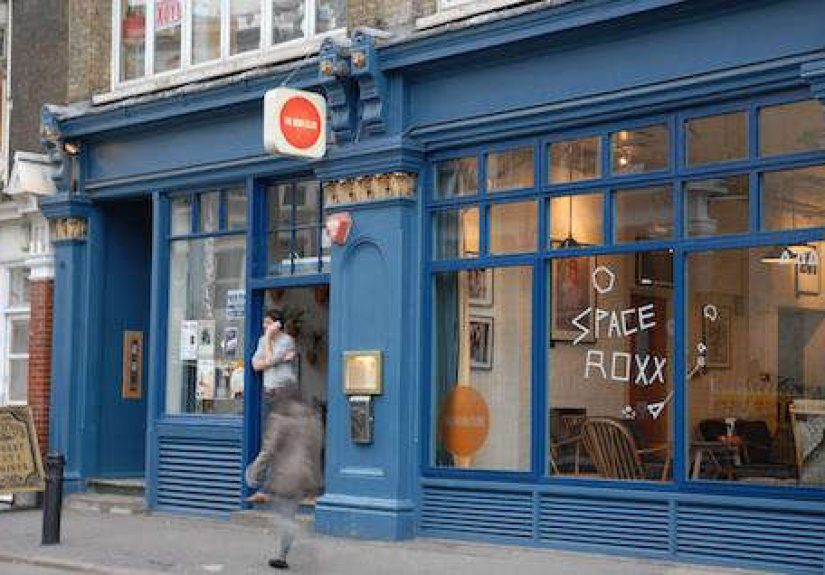
The venue sits on Leonard Street in Shoreditch, within easy reach of Old Street and Shoreditch High Street. That location does some heavy lifting. Shoreditch is one of those London areas where street art, start-up culture, late-night bars, design studios, and people wearing very expensive “casual” jackets all somehow coexist. The Book Club fits naturally into that scene because it feels both polished and slightly scruffy in the best possible way.
Walk in and the first impression is not formal elegance. It is warmth, buzz, and a sense that the space was designed for people to settle in, talk, laugh loudly, order another round, and perhaps challenge each other to ping pong after two cocktails and a dangerous amount of confidence. The old warehouse structure gives the place character, and that industrial-Shoreditch framework helps it avoid feeling over-designed. It is stylish, but not stiff. Fun, but not fake. Casual, but not careless.
That balance is hard to pull off. Many “creative” venues try too hard and end up looking like a furniture showroom having a midlife crisis. The Book Club feels lived in. That is one of its strengths.
The Food: More Than a Supporting Character
Let’s talk about the food, because this is where some people still underestimate the venue. Historically, The Book Club built a reputation for comfort-driven, social, group-friendly food, with older reviews praising brunches, platters, nachos, and the kind of easy menu that suited long hangs and big tables. The current chapter, however, is more specific and arguably more exciting: Young Nola’s Louisiana Creole menu.
This is not background food. It is rich, bold, warming, and designed to hold its own in a place known for music and nightlife. That matters because many nightlife-driven venues serve food as a legal technicality. Here, the menu has enough identity to make a dinner-first visit worthwhile.
Standout Small Plates
The small plates are built for sharing, snacking, and the classic “we should get just two things” lie that ends with a table full of dishes. Highlights include Louisiana fried chicken strips, baked chicken wings in multiple sauces, Mac & Gold macaroni and cheese, fried okra, cornbread, Bayou fried shrimp, and Cajun oyster mushrooms for a plant-based option that still feels indulgent instead of punitive.
The appeal here is texture and comfort. Crunch, heat, butter, smoke, spice, richness. This is food that understands its job. It is not trying to be delicate. It is trying to be delicious. In a venue like this, that is exactly the right move.
Large Plates Worth Ordering
If you are visiting with a real appetite, the larger dishes make the strongest case for calling The Book Club a true dining destination. The smoked Louisiana beef short rib sounds like the kind of plate meant to stop conversation for a moment. The seafood gumbo and chicken gumbo bring soul, depth, and a slower, heartier mood to the menu. There is also Creole red beans and rice, plus larger versions of the mac and cheese dressed up with toppings like shrimp, chicken, mushrooms, or short rib.
That menu direction suits the venue perfectly. Shoreditch has no shortage of restaurants chasing trend points. The Book Club does something smarter: it leans into food that feels social, flavorful, satisfying, and easy to pair with drinks and a long evening. In other words, this is a menu that understands where it lives.
The Drinks: Where the Venue Shows Its Personality
If the food gives the evening its structure, the drinks give it swagger. The cocktail list is playful without becoming gimmicky, and that is a tougher line to walk than it sounds. Signature drinks such as Slow Jams, Off Record, Nothing Neat, Side A, and Soft Focus tell you everything you need to know about the venue’s tone: musical, cheeky, and not interested in boring you.
Flavor-wise, the menu covers a lot of ground. You have fruity and spicy profiles, smoky and bittersweet combinations, floral notes, tropical builds, martini options, and strong classic staples like a Margarita, Negroni, French 75, Pornstar Martini, and Espresso Martini. Prices place the venue firmly in modern London cocktail territory, but the experience feels on-brand enough to justify it.
The best part is that the drinks do not feel disconnected from the place. At some bars, cocktails feel like they were written by committee and served by obligation. Here, the menu speaks the same language as the room: music, mood, flirtation, movement, late-night possibility. Even the names sound like they already have a playlist attached.
Atmosphere: The Real Reason People Return
Food may get people through the door, but atmosphere is why The Book Club has endured. This has long been one of the venue’s strongest assets. Public reviews over the years repeatedly describe it as fun, informal, social, and especially strong for groups. People mention music, cocktails, table tennis, communal energy, and the sense that it works for everything from birthdays to spontaneous nights out.
That said, the atmosphere is also what defines the trade-off. This is not the place for a hushed anniversary dinner where you want to analyze sauce technique in total peace. It is a place for people who like a little motion in the background. A little bass in the bones. A little unpredictability in the room. That does not make it chaotic; it makes it alive.
And yes, as with many popular London venues, some older review feedback points to slower service during peak periods. Honestly, that is not shocking. A busy Shoreditch spot that combines food, drinks, events, and nightlife is not always going to move with surgical calm on a packed evening. The smarter move is to go in understanding the venue’s strengths: vibe, energy, group dynamics, social dining, and a sense of occasion.
Who Should Visit The Book Club?
This is one of the most important questions for any restaurant review, because the best places are rarely “for everyone.” The Book Club is ideal for:
1. Groups of Friends
If you are planning a birthday dinner, pre-party meal, casual celebration, or a “let’s go somewhere fun but not too formal” gathering, this venue makes a lot of sense. The shared plates, cocktails, music, and social layout support group energy naturally.
2. Travelers Exploring Shoreditch
For visitors wanting a Shoreditch restaurant experience that captures the area’s creative identity, this is a strong pick. It feels local in spirit, even though it is well known.
3. People Who Want Dinner Plus Something Else
If your ideal night ends after dessert and a polite thank you, there are calmer restaurants nearby. If your ideal night continues into DJs, more drinks, and maybe a spontaneous “one more round,” The Book Club speaks your language.
4. Diners Who Care About Mood as Much as Menu
Some people choose restaurants based only on plates. Others want the full package: setting, soundtrack, energy, location, and crowd. This place is very much for the second group.
What to Order for the Best Experience
If you want to visit strategically rather than emotionally ordering like a caffeinated raccoon, here is the smart move. Start with cornbread, fried okra, and either shrimp or chicken strips for the table. Add wings if your group is serious about flavor. Then move to one or two larger dishes, especially the gumbo or short rib, depending on whether you want comfort with a spoon or comfort with a knife and fork.
For drinks, start with one of the house cocktails rather than playing it safe. The menu is clearly designed to be part of the experience, not just a liquid side quest. After that, decide whether the night is heading toward conversation, dancing, or harmlessly bad life decisions. The bar can accommodate all three.
Final Verdict: Is The Book Club in London Worth Visiting?
Yes, especially if you understand what it is. The Book Club is not trying to be the most refined restaurant in London, nor should it. Its real strength is that it offers something more layered: a fun, food-forward, music-infused Shoreditch experience that feels social, memorable, and rooted in the neighborhood’s personality.
The current food direction with Young Nola gives the venue more culinary focus than many nightlife-adjacent spots. The cocktails are playful and well matched to the room. The setting is lively without losing character. And the overall experience has that increasingly rare quality in city dining: it feels like a place where something might happen.
In a city packed with technically good restaurants and aesthetically polished bars, The Book Club remains appealing because it has actual character. It is relaxed but intentional, cool without being unbearable, and energetic without forgetting that people came to eat. That alone earns it a recommendation.
So, if you are putting together a list of the best places to eat and drink in Shoreditch, this one deserves a spot. Just do not come expecting silence, starch, and solemnity. Come hungry, come sociable, and come prepared for dinner to flirt with nightlife.
Extended Experience: What a Full Evening at The Book Club Feels Like
A longer visit to The Book Club works best when you let the place unfold in stages. It starts with the neighborhood itself. Shoreditch has a way of warming you up before you even arrive, with its mural-covered streets, fashionable crowds, and low-key competition for who can look the most effortless while clearly trying very hard. By the time you step through the door, the venue already feels like part of a bigger East London scene rather than an isolated restaurant.
Once inside, the first few minutes are all about orientation. You notice the warehouse feel, the looseness of the layout, the way the venue invites movement instead of insisting you stay politely glued to one chair all night. There is an ease to it. You could come here for dinner, but you could also come here for drinks, for music, for an event, or for the kind of evening that starts with no plan and ends with someone saying, “Wait, what time is it?”
That flexibility changes the mood of the meal. A lot of restaurant visits feel linear: sit, order, eat, pay, leave. The Book Club feels more open-ended. Food lands, drinks follow, conversation stretches, the room gets louder, the energy shifts. One minute you are discussing whether the cornbread needs anything else besides more cornbread, and the next you are hearing a better song than expected and considering whether the night has quietly upgraded itself.
The social side of the experience matters too. This is a place where groups make sense. Shared plates feel natural, cocktails feel communal, and even the room itself seems designed for overlap rather than isolation. It is easy to imagine birthdays here, reunion dinners, casual dates, after-work gatherings, or visiting friends insisting, “No, trust me, this place gets better later.” That kind of restaurant-bar chemistry is hard to fake.
And then there is the emotional texture of the venue, which is what really makes it memorable. The Book Club is not polished into blandness. It has edges, movement, noise, and personality. That means the experience feels human. It feels like London. Not museum London. Not postcard London. Real, contemporary, slightly chaotic London, where dinner is rarely just dinner and where a good venue earns loyalty by giving people more than one reason to return.
That is why a visit here lingers. You do not leave talking only about one dish or one cocktail. You leave remembering the whole flow of the night: the room, the sound, the crowd, the plates in the middle of the table, the sense that the evening kept expanding just when you thought it had reached its final form. For a Shoreditch night out, that is a win.