Table of Contents >> Show >> Hide
- Why Long Island Porch Dining Has Its Own Personality
- The Original Design Clue: A Low-Key Long Island Porch
- Best Materials for Porch Dining Furniture on Long Island
- How to Size a Porch Dining Set Correctly
- Style Ideas for a Long Island Porch Dining Room
- Where to Shop for Porch Dining Furniture on Long Island
- What to Look for Before Buying
- Porch Dining Layout Tips That Actually Work
- Care and Maintenance for Long Island Conditions
- Budget: Where to Save and Where to Spend
- Common Mistakes to Avoid
- Experience Notes: Living With Porch Dining Furniture on Long Island
- Conclusion
Porch dining furniture on Long Island has a funny little job description: it must look relaxed enough for barefoot breakfasts, sturdy enough for salty coastal air, polished enough for weekend guests, and forgiving enough when someone drops a clam fork under the table during dinner. In other words, it has to be beautiful, practical, and emotionally prepared for potato salad.
The phrase “Design Sleuth” fits perfectly here because choosing the right porch dining set is not just shopping. It is detective work. You study the porch, the wind direction, the sunlight, the family habits, the architectural style, the storage situation, and the very real possibility that a neighbor will stop by “for five minutes” and stay through dessert. Long Island porches, especially in the Hamptons, North Fork, South Shore, and Nassau County village homes, often blur the line between indoor comfort and outdoor living. That makes furniture selection both exciting and slightly dangerous to your wallet.
The best porch dining furniture for Long Island is not always the biggest, newest, or most expensive set in the showroom. It is the set that understands the assignment: coastal durability, easy maintenance, generous seating, breezy style, and a scale that works with your porch instead of swallowing it like a whale in a linen shirt.
Why Long Island Porch Dining Has Its Own Personality
Long Island outdoor spaces are not one-size-fits-all. A screened-in porch in Southampton behaves differently from a compact covered porch in Huntington, a breezy deck in Montauk, or a shady backyard dining corner in Garden City. The island’s geography brings humidity, salt air, summer storms, bright sun, cool evenings, and the occasional dramatic gust that makes lightweight chairs rethink their life choices.
That is why porch dining furniture on Long Island needs to be chosen with more intention than a simple “that looks cute” click. Covered porches can handle more refined materials than fully exposed patios, but they still need outdoor-friendly construction. Screened porches protect against rain and bugs, yet moisture and temperature swings remain part of daily life. Ocean-adjacent homes require even more attention to corrosion-resistant frames, breathable cushions, and finishes that will not panic at the first hint of salt.
The most successful Long Island porch dining rooms usually share three qualities: they feel casual, they are built to last, and they look as if they belong to the home rather than a catalog dropped from the sky.
The Original Design Clue: A Low-Key Long Island Porch
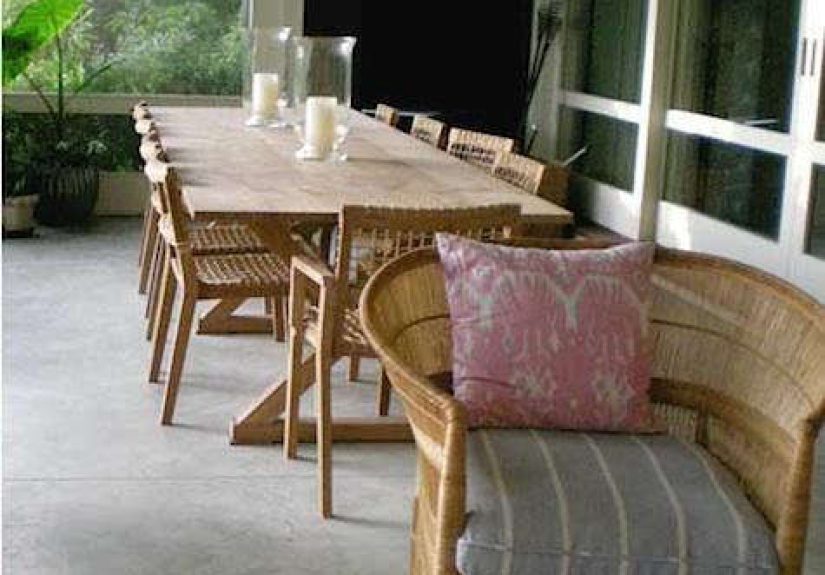
A well-known design reference for this topic featured a Long Island project by designer Alexandra Kasmin, where the charm came from casual dining furniture on a screened-in porch. The look was understated rather than showy: a long teak dining table, simple dining chairs, and a relaxed setting that allowed the architecture and landscape to breathe.
That is the secret sauce. Great porch dining furniture does not scream, “Observe my luxury!” It quietly says, “Dinner is at seven, bring a sweater.” A long teak table, for example, can ground a porch beautifully. Teak has warmth, weight, and a natural connection to coastal living. Paired with slim dining armchairs or side chairs, it creates a room-like outdoor setting without making the porch feel overly decorated.
One important lesson from this style of porch is that covered outdoor spaces can support more elegant furniture choices, but only when those choices match the exposure level. A solid teak table recommended for covered porch use is different from a fully weatherproof table meant to live uncovered through every storm. The detective work matters.
Best Materials for Porch Dining Furniture on Long Island
Teak: The Coastal Classic
Teak is a favorite for Long Island porch dining because it has a warm, timeless look and performs well in outdoor environments. It can age into a silvery gray patina, which many homeowners love because it feels relaxed and beachy. If you prefer the original golden tone, teak requires cleaning and occasional care. Think of it as owning a linen shirt: effortless in appearance, not entirely effort-free in reality.
For covered porches, teak dining tables are especially appealing. They work with shingle-style homes, farmhouse porches, modern glass additions, and traditional cottages. A long rectangular teak table is ideal for family-style dinners, while a round teak table creates easier conversation on smaller porches.
Powder-Coated Aluminum: Light, Clean, and Coastal-Smart
Powder-coated aluminum is a strong option for Long Island homes because it resists rust better than many metals and is lighter than wrought iron or steel. It suits modern porches, poolside dining areas, and homes where furniture may need to be moved around often. The key is quality. Thin, bargain-bin aluminum may wobble, dent, or feel temporary. Better aluminum pieces offer a crisp silhouette and reliable structure.
All-Weather Wicker: Pretty, But Choose Carefully
All-weather wicker can look wonderful on a porch, especially when paired with performance cushions and a teak or aluminum table. The phrase “all-weather,” however, deserves a raised eyebrow. Look for high-density synthetic wicker over a powder-coated aluminum frame. Natural wicker is charming indoors, but on a humid Long Island porch it can become fragile, mold-prone, or fussy.
HDPE and Recycled Plastic Lumber: Low-Maintenance Muscle
High-density polyethylene furniture, often associated with brands such as POLYWOOD and similar recycled-plastic lumber products, is a practical choice for families who want durability without constant refinishing. It is heavy enough to feel stable, easy to clean, and available in coastal-friendly colors. For porch dining, HDPE chairs can work beautifully with a teak, composite, or matching dining table.
Performance Fabrics: Do Not Negotiate With Cushions
Outdoor cushions on Long Island should be made from performance fabrics designed to resist fading, moisture, mildew, and stains. Sunbrella-style fabrics are popular because they are engineered for outdoor use and can be cleaned more aggressively than ordinary indoor textiles. Cushions still need care, though. Leaving them wet, trapped under a plastic cover, or forgotten after a storm is an invitation to mildew. Mildew is not a design feature, no matter how confidently it spreads.
How to Size a Porch Dining Set Correctly
The most common mistake in porch dining design is buying a table that looks perfect online and enormous in real life. Before choosing furniture, measure the porch carefully. You need room for the table, chairs, chair movement, serving access, and normal human behavior, such as someone scooting back dramatically to tell a story.
As a practical rule, leave at least 36 inches around the table where possible. On narrower porches, benches can save space because they tuck under the table. Armchairs are comfortable, but they require more width. Side chairs are easier to fit, while a mix of armchairs at the ends and side chairs along the sides often gives the best balance.
For a small porch, consider a 36- to 48-inch round table for four. For a medium porch, a 72-inch rectangular table can seat six comfortably. For a large screened porch or Hamptons-style entertaining space, a 96- to 120-inch table can turn dinner into an event. Just make sure the table does not block doors, views, or airflow.
Style Ideas for a Long Island Porch Dining Room
The Screened-In Supper Club
A screened porch is the dream setting for Long Island dining. Choose a long teak or reclaimed wood table, simple chairs with woven or metal frames, and a low-glare pendant or lantern. Add washable seat cushions in sand, navy, moss, or soft gray. The goal is comfort without clutter.
The North Fork Farm-Coastal Look
For a North Fork-inspired porch, lean into farmhouse simplicity: a trestle table, bench seating, black metal accents, striped cushions, and stoneware dishes. This look pairs beautifully with casual seafood dinners, local wine, and vegetables that make you feel virtuous until the pie arrives.
The Hamptons Minimalist Porch
The Hamptons version is cleaner and quieter: pale teak, white or charcoal chairs, linen-toned cushions, oversized planters, and almost no visual clutter. The furniture should look expensive even if you cleverly bought it on sale. Pro tip: restraint is cheaper than overdecorating.
The Family-Friendly Nassau Porch
For active families, choose wipeable surfaces, stackable chairs, rounded table corners, and durable materials such as HDPE, aluminum, or composite. Add an outdoor rug only if it dries quickly and can be cleaned easily. This is not the place for a precious rug that faints when exposed to lemonade.
Where to Shop for Porch Dining Furniture on Long Island
Long Island homeowners have access to a strong mix of local showrooms, regional outdoor furniture specialists, and national retailers. Stores such as Fortunoff Backyard Store have Long Island-area locations and a long association with patio and outdoor entertaining. Backyard Masters in Farmingdale is another regional destination for outdoor living products, including patio furniture, fire pits, and backyard upgrades.
Mecox has a Hamptons presence and is known for elevated furniture, garden pieces, and coastal design style. Design Within Reach offers modern outdoor dining furniture for those who prefer clean-lined contemporary pieces. National retailers such as Pottery Barn, Frontgate, West Elm, Crate & Barrel, and Williams Sonoma can also be useful for comparing styles, dimensions, and performance materials.
The smartest approach is to browse online but sit in chairs in person whenever possible. Outdoor dining chairs can look gorgeous and feel like a punishment device. Check seat height, arm height, back angle, cushion firmness, and whether the chair slides easily under the table. Your future dinner guests will thank you silently, which is the highest form of furniture praise.
What to Look for Before Buying
Before purchasing porch dining furniture, inspect the details. Look for stainless steel or corrosion-resistant hardware, smooth joints, stable legs, replaceable cushions, and finishes designed for outdoor conditions. If the furniture is wood, ask whether it is suitable for covered porch use or full outdoor exposure. If it is metal, confirm the frame material and coating. If it includes cushions, check whether the covers are removable and washable.
Also consider storage. Long Island winters can be hard on outdoor furniture, especially cushions, rugs, and pieces made from steel or natural wicker. A dining table may stay on a covered porch year-round, but cushions should usually be stored in a dry, ventilated place during the off-season. Furniture covers can help, but breathable covers are better than plastic tarps that trap moisture like a bad secret.
Porch Dining Layout Tips That Actually Work
Start with the table location. Place it where people can move around comfortably and where the view is best. If the porch overlooks a garden, pool, bay, or tree line, orient the seating to enjoy that view. Avoid placing the table directly in the path between the kitchen and porch door unless you enjoy obstacle courses with hot dishes.
Lighting matters more than many people realize. A porch dining area should have enough light for food but not so much that it feels like a dental exam. Lanterns, shaded pendants, wall sconces, and dimmable bulbs create a softer mood. Add hurricane candles or rechargeable table lamps for atmosphere.
Finally, include a serving surface if space allows. A console table, bar cart, or narrow sideboard keeps drinks, condiments, and extra plates nearby. It also prevents the dining table from becoming a crowded battlefield of bowls, bottles, and one mysterious spoon nobody claims.
Care and Maintenance for Long Island Conditions
Outdoor furniture lasts longer when you clean it before it looks dirty. Salt, pollen, moisture, and sunscreen residue can build up quietly. Rinse frames periodically with fresh water, especially near the coast. Use mild soap for routine cleaning and avoid harsh abrasives unless the manufacturer specifically recommends them.
For teak, decide whether you want a silver patina or a maintained golden finish. Both are valid. For aluminum, check for chips in the coating and clean salt residue. For all-weather wicker, use a soft brush to remove grime from crevices. For cushions, brush off loose dirt, clean spills quickly, and let fabric dry completely before covering or storing.
The best maintenance habit is simple: after storms or damp nights, give the porch a quick inspection. Flip cushions upright, wipe standing water, and let air circulate. Five minutes of care can prevent five hours of scrubbing later.
Budget: Where to Save and Where to Spend
Spend on the table, frames, and cushions. These are the pieces that take the most abuse and define the comfort of the porch. Save on accessories such as table linens, lanterns, planters, and seasonal pillows. A high-quality table with simple chairs will usually age better than a trendy set with questionable construction.
If the budget is tight, buy fewer better pieces. A four-seat teak or aluminum dining set can be expanded later with benches, folding chairs, or side tables. Avoid buying a huge low-quality set just because it seats twelve. Nothing ruins a dinner party faster than a chair that feels like it was assembled during a thunderstorm.
Common Mistakes to Avoid
Do not buy indoor furniture for a porch unless the porch is truly enclosed and climate-protected. Do not assume every “outdoor” label means coastal-ready. Do not choose white cushions if your household includes children, pets, red sauce, or enthusiastic sangria. Do not forget shade. A porch may be covered, but low-angle sun can still make dinner feel like a slow roast.
Most importantly, do not design only for photographs. Design for how you actually live. If you eat outside every weekend, prioritize comfort and cleaning. If you host large summer gatherings, choose flexible seating. If the porch is mainly for morning coffee and quiet dinners, a smaller table with excellent chairs may be the perfect answer.
Experience Notes: Living With Porch Dining Furniture on Long Island
The real test of porch dining furniture on Long Island begins after the delivery truck leaves. At first, everything looks magazine-ready. The table is clean, the chairs are aligned, the cushions are plump, and everyone in the house suddenly promises to use coasters. Then real life arrives with wet swimsuits, sandy feet, lobster shells, sunscreen fingerprints, and a thunderstorm that was definitely not in the forecast five minutes ago.
One of the most useful experiences is learning how much the porch itself affects the furniture. A deep covered porch can make even refined teak and woven chairs feel protected. A shallow porch with sideways rain needs tougher materials and fewer delicate details. A screened porch changes the mood completely because it becomes an outdoor dining room rather than just a place to eat outside. Screens reduce bugs, soften wind, and help people linger longer after dinner. Suddenly, the porch is not a bonus space; it becomes the favorite room in the house.
Another lesson is that chair comfort matters more than table drama. A spectacular table may win the first compliment, but comfortable chairs win the evening. Guests remember whether they could relax, lean back, and enjoy another glass of iced tea. Chairs with arms feel generous, but they need space. Stackable side chairs are practical, especially for families who host often. Benches are great for children and casual meals, although adults may eventually start negotiating for the chairs with backs.
Long Island weather also teaches humility. Cushions should not be treated as invincible. Even excellent outdoor fabric benefits from being stored during heavy storms or long stretches of damp weather. A cushion box, mudroom shelf, or garage rack quickly becomes part of the porch dining system. The same goes for placemats, throws, and outdoor rugs. The homes that look effortless usually have a behind-the-scenes storage plan doing all the unglamorous work.
Style-wise, the most successful porches often avoid matching every piece too perfectly. A teak table with black aluminum chairs can feel crisp and current. A reclaimed wood table with woven chairs can feel relaxed and collected. A white dining set with navy cushions gives classic coastal energy without turning the porch into a souvenir shop. The trick is to repeat materials or colors just enough to create rhythm. For example, black chair frames can connect to black lanterns, while natural teak can echo planters, baskets, or the porch ceiling.
Finally, porch dining furniture changes how people use a home. Breakfast moves outside. Work calls become less terrible. Teenagers appear when food is served. Neighbors wave, dogs supervise, and dinner stretches into the blue hour. That is the real reason to investigate the right furniture so carefully. You are not just buying a table and chairs. You are creating a place where summer slows down, conversations get better, and even a Tuesday sandwich can feel like a small vacation.
Conclusion
Choosing porch dining furniture on Long Island is part style study, part climate strategy, and part family anthropology. The right set should suit the home’s architecture, survive coastal conditions, support the way you actually entertain, and feel comfortable enough for long meals that drift into evening. Teak, powder-coated aluminum, HDPE lumber, all-weather wicker, and performance fabrics all have a place, but the best choice depends on exposure, maintenance tolerance, porch size, and personal taste.
A beautiful Long Island porch does not need to look overly designed. In fact, the best ones often feel relaxed, collected, and quietly durable. Start with scale, choose materials honestly, invest in comfort, and let the porch become what it wants to be: the dining room with better air.