Table of Contents >> Show >> Hide
- What Makes a Superheterodyne Receiver So Useful?
- The 74xx Twist: A Radio Built From Logic Parts
- Filtering the IF Without Coils
- Strengths and Trade-Offs of the 74xx-Defined Radio
- Practical Build Tips for Better Results
- Why This Project Still Matters in the SDR Era
- Builder Experience: What It Feels Like to Work With a 74xx Superhet
- Conclusion
A superheterodyne receiver is one of those inventions that sounds intimidating until you realize the core idea is beautifully simple: take a radio signal that is hard to handle, mix it with a local oscillator, and turn it into a friendlier intermediate frequency. Then filter it, amplify it, demodulate it, and enjoy the broadcast. Easy, right? Well, usually that sentence hides a parts drawer full of coils, tuned LC circuits, variable capacitors, RF transformers, detector diodes, and a few mysterious components that seem to have been blessed by a retired ham operator under a full moon.
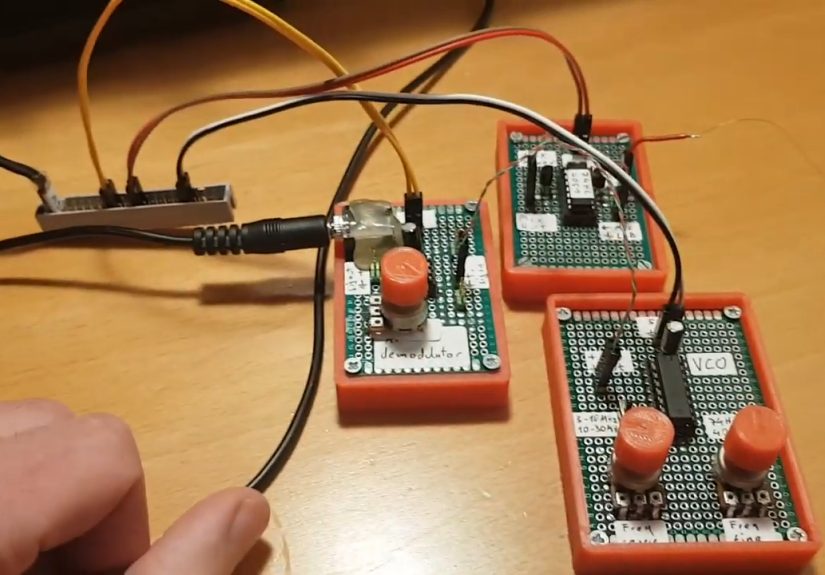
But the project behind A Superheterodyne Receiver With A 74xx Twist takes a more mischievous path. Instead of building a traditional shortwave superhet with classic radio hardware, it asks a wonderfully dangerous question: what if we built a working receiver using ordinary 74xx logic-family parts, op-amps, common transistors, and a stubborn refusal to wind coils? The result is a “74xx-defined radio” that is part radio experiment, part electronics lesson, and part proof that constraints can make engineering more fun than a perfectly stocked lab.
What Makes a Superheterodyne Receiver So Useful?
The superheterodyne receiver, often shortened to “superhet,” became the dominant radio architecture because it solves a practical problem. Radio signals arrive at many different carrier frequencies. If every stage of a receiver had to tune, amplify, and filter directly at each incoming frequency, the design would quickly become fussy and unstable. The superhet avoids that headache by converting the chosen signal to a fixed intermediate frequency, or IF.
In a basic AM shortwave example, suppose a station is transmitting at 10 MHz. If the local oscillator is tuned to 10.1 MHz, the mixer produces a difference signal at 100 kHz. That 100 kHz signal still carries the original amplitude modulation, but it is much easier to filter and amplify than the original 10 MHz carrier. In other words, the receiver does not “move the music”; it moves the carrier while preserving the audio information riding on it.
The Usual Superhet Building Blocks
A conventional superheterodyne radio typically includes an antenna, RF filtering, an RF amplifier, a mixer, a local oscillator, one or more IF filters, an IF amplifier, a detector, and an audio output stage. In many AM broadcast receivers, 455 kHz became a common IF because it offers a practical compromise between selectivity and image rejection. FM broadcast receivers often use 10.7 MHz. Shortwave and communications receivers may use other IF values depending on the design goals.
The magic is not that the superhet avoids complexity. It reorganizes complexity. Instead of making every tuned stage track across the full receive band, the receiver concentrates most of its gain and selectivity at one fixed frequency. That is why the architecture has survived vacuum tubes, transistors, ICs, portable radios, scanner receivers, satellite hardware, and modern RF modules.
The 74xx Twist: A Radio Built From Logic Parts
The 74xx family is famous for digital logic: gates, counters, flip-flops, multiplexers, and glue logic that has held hobby projects and industrial systems together for decades. It is not the first place most builders look when they hear “shortwave receiver.” Yet that is exactly what makes the 74xx-defined radio so entertaining.
The original project set a few playful but serious design rules: no coils, no transformers, no mechanically variable capacitors, no exotic detector diodes, and no traditional tuned LC circuits. It still had to receive shortwave broadcasts, roughly the 3 MHz to 30 MHz range. That is like trying to cook a good pizza while banning flour, cheese, and tomato sauce. You can do it, but your solution had better be clever.
A 74HC4051 as the Switching Mixer
The mixer is the heart of the superhet. A classic receiver might use a diode ring mixer, a transistor mixer, a Gilbert cell, or an integrated part such as the NE602/NE612. The 74xx version instead uses a 74HC4051 analog multiplexer. The 74HC4051 is normally an eight-channel analog mux/demux, but in this design it behaves like an electronically controlled switch.
Here is the clever part: a 2N3904 transistor phase splitter creates two versions of the RF input, one non-inverted and one inverted. The 74HC4051 rapidly switches between those two signals under control of the local oscillator. Switching between opposite-polarity copies is effectively multiplication by a square wave. That is mixing. It is not a perfect sine-wave mixer, because a square wave contains harmonics, but for a practical experimental shortwave receiver, it works surprisingly well.
In the original test, a 30 MHz RF sine wave mixed with a 31 MHz square-wave LO produced a strong 1 MHz difference component. Across much of the shortwave range, the mixer behaved with nearly unity gain before noticeable losses appeared at higher frequencies. That is not bad for a humble logic-family part that probably expected a quiet life selecting sensor inputs.
The 74HC4046 Local Oscillator
A receiver needs a tunable local oscillator. In this project, that job falls to the 74HC4046, a high-speed CMOS phase-locked-loop chip with a built-in voltage-controlled oscillator. The PLL section is not the star here; the VCO is. By adjusting the control voltage and timing components, the oscillator can sweep through the desired shortwave range.
The practical lesson is that chip families matter. “4046” does not always mean “drop-in success.” Older CMOS versions may not run fast enough for this shortwave experiment, while the high-speed HC or HCT versions are more suitable. This is one of those moments where the datasheet and the real bench shake hands, argue briefly, and force you to grab a frequency counter.
Checking Frequency With a 74HC4024 Counter
Measuring a 30 MHz oscillator is not always easy for beginners with modest tools. The project offers a neat workaround: feed the oscillator output into a 74HC4024 seven-stage binary counter. The counter divides the frequency by powers of two. Its Q6 output divides by 128, so a 30 MHz signal becomes about 234 kHz, which is much easier to see on an inexpensive oscilloscope or count with a microcontroller.
That trick is classic maker engineering. Instead of buying a better instrument immediately, you use logic to pull the signal into a range your existing tools can understand. Your wallet sighs with relief. Your oscilloscope feels useful again.
Filtering the IF Without Coils
After the RF signal is mixed down, the receiver must select the desired intermediate frequency and reject unwanted mixing products. A traditional receiver would often use tuned LC transformers, ceramic filters, crystal filters, or mechanical filters. This project stays faithful to its “no coils” rule by using an op-amp bandpass filter centered around the chosen IF, about 100 kHz in the example.
The filter needs enough gain to boost the wanted IF signal, but it cannot be too narrow. If the passband is too tight, the recovered audio sounds thin and muffled because parts of the modulation are cut away. A bandwidth of several kilohertz is enough for intelligible AM audio, even if the result is charmingly lo-fi. That lo-fi character is not a defect here; it is part of the personality. This receiver sounds like radio, not like a studio monitor wearing a lab coat.
Demodulation With an Active Rectifier
Once the IF filter has selected the signal, AM demodulation is straightforward in concept: rectify the waveform and smooth it with a low-pass filter to recover the audio envelope. Old-school radios often use germanium or Schottky diodes because their lower forward voltage helps detect small signals. The 74xx-twist receiver avoids exotic detector parts by using an op-amp active half-wave rectifier.
In an active rectifier, feedback helps compensate for the diode’s forward-voltage limitation. The circuit can also add gain, which is useful because the receiver’s front end is intentionally simple. After smoothing and volume control, the output is ready for an amplifier, powered speaker, recorder, or audio interface.
Strengths and Trade-Offs of the 74xx-Defined Radio
The biggest strength of this receiver is educational value. It makes the invisible architecture of a superhet visible. You can point to the multiplexer and say, “That is the mixer.” You can point to the 4046 and say, “That is the local oscillator.” You can point to the op-amp stage and say, “That is the IF filter.” Instead of hiding the radio inside a single IC, the circuit spreads the ideas across friendly, buildable blocks.
The second strength is accessibility. Many builders already have 74HC logic chips, 2N3904 transistors, op-amps, resistors, and capacitors in their parts bins. The design removes the beginner-frightening tasks of winding coils and aligning multi-section tuning capacitors. That does not make RF “easy,” but it makes the first step less dramatic.
The trade-offs are real. Without a strong RF preselector, the receiver is more vulnerable to strong out-of-band signals and image responses. A square-wave switching mixer can create extra products because of LO harmonics. The VCO may drift more than a carefully designed RF oscillator. The op-amp IF filter will not outperform a polished communications receiver with crystal filtering. And yes, the layout matters. At shortwave frequencies, long jumper wires behave like tiny antennas with opinions.
Still, judging this project against a commercial receiver misses the point. This is not trying to beat a modern SDR dongle or a high-end ham transceiver. It is trying to show that the superheterodyne principle can be rebuilt from unexpected parts. It is radio education with a grin.
Practical Build Tips for Better Results
Keep Leads Short and Grounds Sensible
Breadboards are convenient, but RF does not respect convenience. At several megahertz, stray capacitance and inductance can affect performance. If the circuit works poorly on a solderless breadboard, try moving the RF mixer and oscillator sections to perfboard or a small PCB. Use short connections, a solid ground rail, and local bypass capacitors near each IC.
Use Decoupling Capacitors Generously
Every logic IC should have a ceramic bypass capacitor close to its power pins. The 74HC4046 oscillator and 74HC4051 switching mixer are especially likely to misbehave if the supply is noisy. A clean 5 V supply can make the difference between “I hear a station” and “I invented a square-wave mosquito.”
Choose the Antenna With Realistic Expectations
A few meters of wire can receive shortwave broadcasts, especially during favorable conditions. Shortwave propagation changes with time of day, season, solar activity, and band conditions. If the receiver seems quiet, the circuit may not be broken; the ionosphere may simply be taking a coffee break.
Add an RF Filter or Gain Control if Needed
The original simple version can work with the antenna feeding the mixer directly, but adding a basic RF high-pass filter, preamp, or input attenuator can improve behavior in noisy environments. A gain control before the RF amplifier helps prevent overload when a strong local signal or switching power supply tries to crash the party.
Why This Project Still Matters in the SDR Era
Software-defined radio is amazing. A small USB dongle can reveal a huge slice of spectrum, decode signals, and display waterfalls that look like electronic weather maps. But SDR can also hide the fundamentals. You click, drag, and listen. The 74xx superheterodyne receiver forces you to meet each concept in hardware.
That hands-on experience matters. You learn why an IF exists, why mixer products appear, why oscillator stability matters, why filtering is not optional, and why layout becomes part of the circuit. You learn that a radio is not just a schematic; it is an agreement between theory, parts tolerance, wiring, power supply noise, and the mood of the atmosphere.
Best of all, this project restores a sense of play. Electronics education can become overly polished, with modules that work perfectly but teach only a little. A 74xx-defined radio is imperfect in the best way. It invites poking, measuring, listening, swapping parts, and saying, “That should not work,” right before it does.
Builder Experience: What It Feels Like to Work With a 74xx Superhet
Building a receiver like this is a reminder that radio projects have two personalities. On paper, the circuit is organized and logical: antenna, mixer, local oscillator, IF filter, detector, audio. On the bench, it becomes a small detective story. The first clue is usually silence. Not peaceful silence, either. Suspicious silence. You check the power rails, touch the audio input, confirm the op-amp bias point, and wonder whether the station, the oscillator, or your dignity has disappeared.
The best approach is to test the project one block at a time. Start with the local oscillator. Does the 74HC4046 actually tune across the intended range? If your scope cannot see the highest frequency directly, divide it down with the 74HC4024 and verify the math. Then test the mixer with two known signals from a generator if available. Seeing the difference frequency appear is one of those small bench victories that makes the entire project feel alive.
The IF filter is where patience pays off. A bandpass filter centered around 100 kHz should not be treated as a magical black box. Inject a small test signal near the target IF and sweep above and below it. The output should peak around the desired center frequency. If the bandwidth is too narrow, audio may sound cramped. If it is too wide, nearby mixing products and noise stroll right through the door like they own the place.
The demodulator is more forgiving, but it still benefits from careful biasing. Because many single-supply op-amp stages use a virtual ground at half the supply voltage, that reference must be stable. A noisy or weak midpoint can make the audio stage behave strangely. Add the bypass capacitor, keep the ground layout tidy, and do not assume that “close enough” is always close enough at RF.
The first successful reception may not sound hi-fi. It may be warbly, narrow, noisy, and a little ghostly. That is part of the charm. You are not streaming a podcast through fiber-optic infrastructure; you are pulling amplitude-modulated energy out of the air with logic chips. A station fading in and out at night feels more rewarding when you know the signal survived your homemade switching mixer, your improvised IF filter, and the wire antenna taped to the wall.
After the first success, improvements become addictive. You may add shielding around the oscillator, replace long leads with shorter wiring, add an RF input filter, experiment with antenna length, or add a small audio amplifier. Each change teaches something. Sometimes it improves the receiver. Sometimes it makes things worse in an educational way, which is the polite engineering phrase for “oops.”
The biggest experience-related lesson is that this receiver is not only about listening to shortwave. It is about listening to the circuit. The oscillator tells you whether your timing components and chip choice are realistic. The mixer tells you whether switching theory works outside the textbook. The IF filter tells you how selectivity shapes sound. The demodulator tells you how AM becomes audio again. By the end, the project has done something better than merely receive a broadcast: it has made the superheterodyne receiver understandable.
Conclusion
A Superheterodyne Receiver With A 74xx Twist is a clever reminder that old radio ideas still have new teaching power. By replacing traditional tuned circuits and specialized RF parts with a 74HC4051 switching mixer, a 74HC4046 VCO, a 74HC4024 counter, op-amp filtering, and an active rectifier, the design turns the superhet architecture into a hands-on puzzle. It will not replace a commercial communications receiver, and it does not pretend to. Its purpose is better: it shows how frequency conversion, IF filtering, AM demodulation, and real-world RF trade-offs work in a circuit you can understand, modify, and laugh with when it squeals.
For hobbyists, students, and curious makers, this 74xx superheterodyne receiver is a refreshing build. It proves that radio is not locked away inside black-box chips or expensive instruments. Sometimes it is hiding in a multiplexer, a PLL chip, a transistor, and a handful of components, waiting for someone stubborn enough to ask, “What happens if we try this?”