Table of Contents >> Show >> Hide
- From “see you in the office” to “can you hear me now?”
- Professional growth: becoming a better clinician through the screen
- What my patients taught me through telehealth
- Telemedicine and my own well-being
- The hard truths: what telemedicine couldn’t fix
- Long-term professional impact: telemedicine as a permanent part of my career
- Extra reflections: 500 more words on what telemedicine taught me about myself
- Conclusion: how telemedicine reshaped my path
When people talk about “pandemic glow-ups,” they usually mean learning to bake sourdough or finally organizing that chaotic closet.
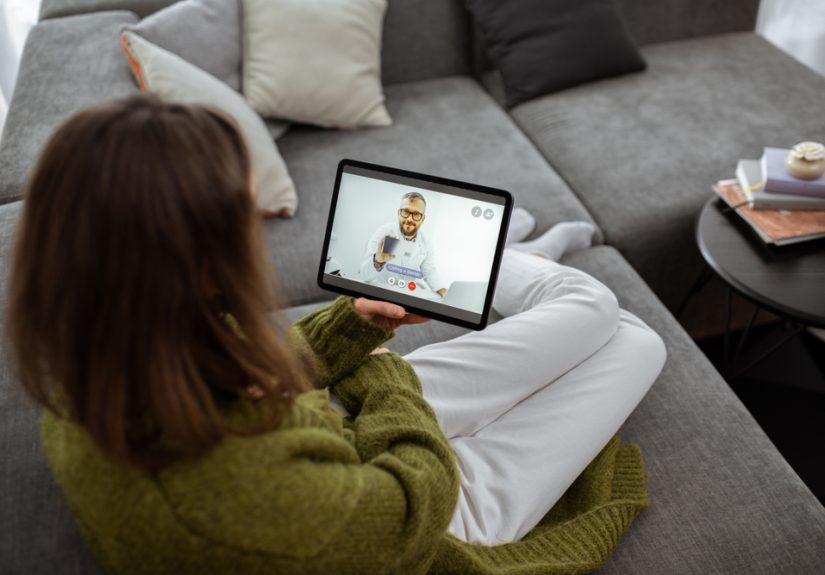
My glow-up looked a little different: it happened through a laptop webcam, a glitchy Wi-Fi connection, and a waiting room full of little spinning wheels that said “connecting…”.
During the COVID-19 pandemic, telemedicine went from a niche side option to the main door into healthcare almost overnight.
In the United States, telehealth use shot up to roughly 38 times its pre-pandemic baseline in 2020–2021,
as clinics scrambled to keep people safe while still delivering care.
Surveys later showed that about two-thirds of patients said they were more likely to use telehealth because of that experience.
I didn’t just watch that shift; I lived it. I learned to take a history through a screen, troubleshoot microphones like an IT intern,
and somehow maintain empathy while staring at my own face in the corner of the monitor.
Telemedicine didn’t just change how I worked. It changed how I saw my patients, my profession, and myself.
This is the story of how telemedicineborn of crisisended up being the unlikely engine of my personal and professional growth.
From “see you in the office” to “can you hear me now?”
Before 2020, telehealth in the U.S. was more of a bonus feature than a main service line.
Only a small fraction of visits were virtual, and many clinicians quietly assumed it would stay that way.
Then COVID-19 arrived, and in-person care suddenly became a potential health risk.
Policy shifts helped flip the switch. The U.S. Department of Health and Human Services announced that, during the public health emergency,
regulators would use enforcement discretion and temporarily relax strict HIPAA rules for telehealth platforms.
That meant providers could use common, non–public-facing video apps in good faith without immediate penalties,
as long as they were doing their best to keep patients safe.
Almost instantly, “we don’t really do video visits” turned into “we are entirely virtual for now.”
National data showed that by 2021, around four out of five office-based physicians were using telemedicine,
compared to fewer than one in five before the pandemic.
For many practices, telehealth became the default doorway to care, not the backup.
For me, this meant that my familiar routineswhite coat, exam room, physical waiting areawere replaced by living rooms, parked cars, kitchen tables, and the occasional patient calling from a minivan outside a grocery store.
My clinic didn’t just go online; my entire mental model of “a visit” had to be rebuilt.
Professional growth: becoming a better clinician through the screen
Learning to build rapport without a handshake
One of my first lessons in telemedicine was this: you can’t rely on the usual in-person shortcuts to connection.
There’s no handshake, no casual “how was parking?” small talk, no chance to read someone’s whole body language as they walk into the room.
Instead, I had to sharpen different skills:
- My voice had to carry more empathy. Tone, pace, and pauses suddenly mattered a lot more. A warm greeting and one extra sentence of reassurance often did more than a fancy stethoscope ever could during a video visit.
- My eyes needed to work harder. I started paying closer attention to micro-expressions, posture, and the little details in someone’s surroundingsfamily photos, clutter, or an oxygen tank quietly sitting in the corner.
- My questions became more precise. Without the full-body exam, I had to ask better, more focused questions and guide patients through self-exams: “Press hereany pain? Turn like this. Can you show me the swelling?”
Far from making care “less personal,” telehealth forced me to become more intentional about how I connected with people.
I couldn’t just rely on clinical habits; I had to build new communication muscles.
Turning into a part-time tech coach (and that’s okay)
On paper, telehealth sounds simple: click a link, join a visit.
In reality, I spent a surprising amount of time saying, “Try turning your camera on… the little icon that looks like a video camera… no, the other one.”
This could have been purely frustrating, but it actually taught me a few things that made me better professionally:
- Patience as a clinical skill. Walking someone through app downloads, password resets, or browser settings is oddly similar to walking them through a new medication or lifestyle change. Clear steps, no judgment, lots of reassurance.
- Designing smoother workflows. Our team rewrote instructions, simplified links, and created reminder scripts. Learning to think like a product designer“where will people get stuck?”made me more effective in every part of my job.
- Respect for the digital divide. Telehealth showed me who had strong internet and updated devices… and who did not. That awareness now shapes the way I suggest follow-ups and tailor care plans, especially for older adults and low-income patients.
Understanding systems, policy, and privacy
Before COVID-19, I mostly thought about privacy in terms of closed doors and shredded paper charts.
Telemedicine made me think about encrypted connections, camera angles, and who else might be in the room off-screen.
I learned the basics of:
- Regulatory flexibilities: what was temporarily allowed during the public health emergency versus what would change when those flexibilities expired.
- Platform choice: which tools were secure enough to keep long-term and which ones were “emergency only.”
- Documentation and consent: how to document virtual visits, ensure informed consent for telehealth, and explain risks and benefits clearly.
This deeper understanding of policy and infrastructure made me more than just a clinician “using” telehealth.
It turned me into a stakeholder who could sit in meetings and actually contribute when we discussed long-term virtual care strategy.
What my patients taught me through telehealth
Telemedicine didn’t just change me; it gave me a front-row seat to the reality of my patients’ lives.
Instead of seeing them in a neutral, clinical exam room, I saw them in their actual environments.
I remember:
- A patient with uncontrolled diabetes whose “mysteriously high sugars” suddenly made sense when I saw the shelf behind him stacked with soda and snack cakes.
- An anxious teenager who barely spoke in clinic but opened up from the safety of their bedroom, surrounded by posters and string lights.
- An older adult who always missed appointments before telehealth, simply because transportation was unreliable. Once we switched to video visits, their no-show rate dropped to almost zero.
Research supports what I saw: telehealth dramatically improved access to care for many people during COVID-19, especially those facing transportation, distance, or mobility barriers.
It also played a huge role in mental health and behavioral health services, where talking through a screen turned out to be not just “good enough” but sometimes ideal.
Working this way taught me to:
- Honor the home context. I began integrating what I could see into my care: “Can we move your meds to a spot you walk past every morning?” or “Who else is usually home with you?”
- Be flexible with communication. Sometimes a video call was too muchbandwidth issues, shyness, or privacy concernsso we pivoted to phone calls where appropriate.
- See patients as whole humans. Pets wandering on screen, kids bursting into the room, family members chiming inthese moments didn’t distract from care; they enriched it.
Telemedicine and my own well-being
Healthcare workers often joke that we’re very good at telling other people to take care of themselves and very bad at doing it ourselves.
By 2021, physician burnout in the U.S. hit alarming levels, with over 60% of physicians reporting burnout.
Telemedicine didn’t magically fix burnout, but it did help me in some very real ways:
- Less commute, more breathing room. On telehealth-heavy days, I wasn’t racing between exam rooms or battling traffic. That time gave me space to prepare, eat actual meals, and briefly reset between emotionally heavy visits.
- More control over my schedule. Our practice began offering a hybrid model, with some days fully virtual and others in-person. The predictability and variety helped me feel more in control of my work life.
- Reduced exposure anxiety. In the early pandemic months, every in-person day carried a real fear of bringing the virus home. Telehealth days eased that tension without sacrificing continuity of care.
Personally, telemedicine also forced me to rethink boundaries.
Working from home part of the week meant I had to draw clear linesclosing the laptop, going for walks, and consciously “leaving work,” even if my office was technically in the next room.
Over time, I realized that telehealth wasn’t just a tool I used.
It was a structure that encouraged healthier patterns for me, too: less rushing, more focus, and a bit more room to be human.
The hard truths: what telemedicine couldn’t fix
For all its advantages, telemedicine had clear limitsand recognizing those limits was part of my growth as well.
Some problems simply require hands-on care: heart murmurs you can’t hear through a microphone, abdominal exams that can’t be done through a screen, emergencies that absolutely should not be handled over video.
I learned to be decisive about when to say, “You need to be seen in persontoday.”
There were also technology and equity gaps:
- No internet, no visit. Patients without reliable broadband or smart devices were shut out unless we could pivot to phone-only care, which was not always reimbursed or clinically ideal.
- Privacy at home was not guaranteed. I saw patients trying to whisper about mental health, domestic violence, or sexual health while someone else was in the next room. Sometimes, the safest option was to switch to in-person care.
- Policy whiplash. As emergency flexibilities evolved and expiration dates loomed, there was ongoing uncertainty about how much telehealth we could safely and sustainably keep.
Facing these realities made me less idealistic but more grounded.
Telemedicine is powerful, but it isn’t magic. It works best as part of a thoughtful hybrid model, not as a universal replacement.
Long-term professional impact: telemedicine as a permanent part of my career
Even as the worst waves of COVID-19 eased, telemedicine never went back to its tiny pre-pandemic footprint.
Studies and industry analyses show that telehealth use stabilized well above 2019 levels,
supported by patient demand, investment, and evolving regulation.
For me, that shift translated into concrete career growth:
- New roles and responsibilities. I became the unofficial “telehealth champion” in my teamhelping colleagues set up workflows, mentoring newer clinicians on virtual bedside manner, and contributing to internal guidelines.
- A broader skill set. Experience with telemedicine made me more comfortable with other digital health toolsremote monitoring, patient portals, secure messaging, and even early AI documentation tools.
- Career flexibility. Knowing I can deliver quality care virtually has opened doors: cross-state collaborations, remote consults, and potential opportunities that don’t require me to relocate.
Telemedicine turned out to be more than an emergency adaptation.
It became a core competencysomething that will shape where and how I practice for years to come.
Extra reflections: 500 more words on what telemedicine taught me about myself
When I look back on those first months of the pandemic, I remember the fear, the uncertainty, and the constant news alerts.
But I also remember something else: the feeling of growth, even in the middle of chaos, as I learned to care for people in a new way.
Telemedicine pushed me out of my comfort zone in very specific, unexpected ways.
1. I learned to let go of perfection
In the traditional clinic setting, there’s a subtle pressure to make everything look polishedneatly pressed coats, carefully arranged exam rooms,
smooth small talk at the door. Telemedicine stripped all of that away.
Suddenly, I was apologizing for my dog barking during a visit, or for a package delivery interrupting our conversation.
At first, I hated that loss of control. Over time, something shifted: I realized that a slightly imperfect, very human visit was often more comforting than a perfectly staged one.
Patients would laugh, show me their own pets, or admit that they too were working from a cluttered kitchen table.
That shared imperfection became a form of connection.
It helped me drop some of my own unrealistic standards and made me more relaxed and authenticnot just on video, but in person as well.
2. I became more intentional about boundaries
When your living room is also your clinic, work-life boundaries can evaporate fast.
Early on, I found myself checking messages late at night, squeezing in “just one more visit,” or mentally replaying stressful calls long after I closed the laptop.
Learning to set boundaries became non-negotiable. I started blocking off real breaks between visits, creating a ritual for “starting” and “ending” my workdayeven if that just meant taking a short walk, changing clothes,
or moving to a different room to signal to my brain that work was over.
That practice of consciously turning off work has stayed with me, even as my schedule returned to a hybrid model.
It’s one of the quiet ways telemedicine helped me grow: not by forcing me to do more, but by making me recognize when I needed to do less.
3. I rediscovered the core of why I went into healthcare
The early telehealth days were full of technical headaches, shifting rules, and constant uncertainty.
It would have been easy to focus on what was broken.
But in the middle of all that, I kept having simple, powerful moments: a patient crying with relief because they could finally talk to someone,
a parent grateful they didn’t have to drag three kids across town for a ten-minute follow-up, a senior patient who proudly mastered the “Join Visit” button.
Those moments reminded me that the core of healthcare isn’t the exam room or the equipment.
It’s the relationship, the continuity, the feeling of being accompanied through something hard.
Telemedicine gave me new ways to offer that accompanimentsometimes from hundreds of miles away.
Professionally, that realization made me more flexible and more hopeful.
I became less attached to where care happens and more focused on how it feels for the person on the other side.
That mindset has shaped my approach to everything from clinic redesign to patient communication.
4. I saw the futureand decided I want to be part of it
Telemedicine is evolving again, now intersecting with remote monitoring, digital therapeutics, and AI-powered tools that can help document visits or flag high-risk patients.
Instead of feeling threatened by these changes, my pandemic-era experience with telehealth has made me curious.
Because I’ve already lived through one massive shiftfrom mostly in-person care to a telehealth-heavy modelI know that I can adapt.
That confidence is a huge part of my professional growth. The question is no longer, “Can I handle this change?” but “How can I shape this change to be safer, more humane, and more equitable?”
Personally, telemedicine also taught me something simple but powerful: growth can happen in unlikely places.
It can happen on a shaky video call, in a virtual waiting room, or during a troubleshooting session about a stubborn microphone.
It can happen when everything feels uncertain, but you keep showing up anyway.
When I think about the COVID-19 pandemic years from now, I will remember the loss and the fear.
But I will also remember the quiet transformation that happened on my side of the screenhow telemedicine pushed me, stretched me, and ultimately helped me become a more resilient clinician and a more grounded human being.
Conclusion: how telemedicine reshaped my path
Telemedicine began as an emergency solution during an unprecedented crisis.
Along the way, it became a classroom, a mirror, and a catalyst for my growth.
It taught me to communicate differently, to understand my patients more fully, to care for myself more intentionally, and to step into new professional roles I wouldn’t have imagined before the pandemic.
The COVID-19 pandemic permanently altered healthcare, but it also expanded what’s possible in how we deliver care and how we grow within this profession.
For me, telemedicine wasn’t just a temporary workaround. It was the path that led me toward a more flexible, connected, and sustainable way of practicing medicineand living my life.