Table of Contents >> Show >> Hide
- What “Clustering” Means (and What It Definitely Doesn’t)
- The TikTok Dos and Don’ts (Straight From the Cluster Universe)
- The Dos of Clustering (AKA How to Make It Look Intentional)
- The Don’ts of Clustering (Because Your Home Isn’t a Prop Closet)
- How to Build a Cluster in 10 Minutes (A No-Overthinking Method)
- Room-by-Room Clustering Examples (So You Can Actually Picture It)
- Common Clustering Problems (and Quick Fixes)
- Conclusion: Clustering Is a Love Letter to Your Life (Not a Contest)
- My Real-Life Clustering Experiment (500+ Words of “I Tried It So You Don’t Have to Panic”)
If you’ve ever looked at your nightstand and thought, “This is either art or I’m one sock away from chaos,” congratulations:
you’re already spiritually involved in the TikTok trend known as clustering. Clustering is the decorating sweet spot between
sterile minimalism and “I swear I’m organizing, I’m just doing it horizontally.”
In TikTok’s world, your stuff doesn’t have to disappear into drawers like it’s in witness protection. Instead, it gets to live out loudon
trays, on books, on shelves, on that one corner of your dresser that has become the unofficial museum of your personality. And yes, there are
rules (kind of). Or at least… vibes.
One creator in particularAvery-Claire, aka @acnugs, founder of Girls Who Clusterhas helped popularize the idea that
small, meaningful objects can be styled into “effortlessly beautiful” little scenes. She also has a few very specific “icks” (TikTok-speak for
pet peeves) about how people do it. And honestly? They’re the kind of tough love your coffee table needed.
What “Clustering” Means (and What It Definitely Doesn’t)
Clustering vs. clutter: the difference is intention (and hygiene)
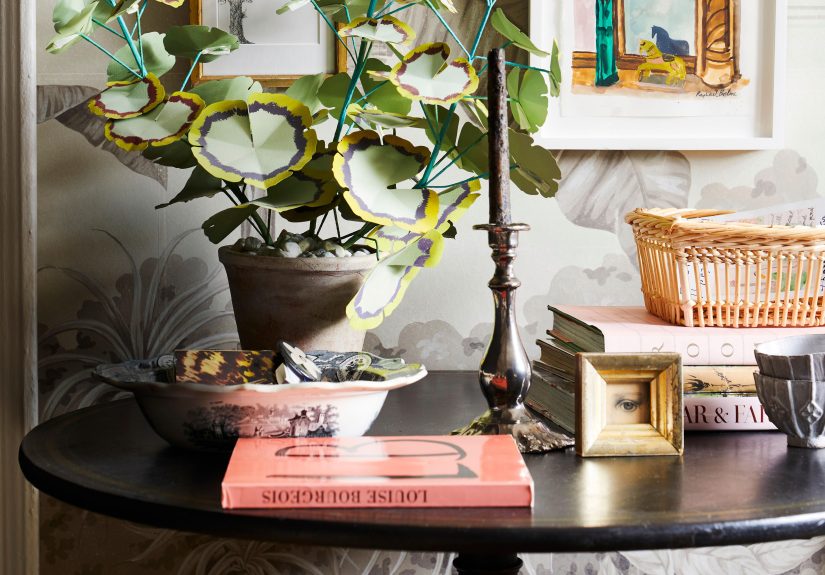
Clustering is arranging small itemstrinkets, candles, matchbooks, perfume bottles, framed photos, souvenirs, jewelry dishes, cute
coastersinto a deliberate grouping that looks styled, personal, and lived-in. Think of it as a mini “still life” that tells a story about
you, not a random pile that tells a story about your procrastination.
This trend is often discussed alongside clustercore and cluttercore. Here’s the easiest way to remember it:
clustercore is usually vignette-based (smaller pockets of styled abundance), while cluttercore can be an entire-room maximalist statement.
Both can look amazingwhen they’re curated. Neither is an excuse to keep actual trash on display and call it “aesthetic.”
Why TikTok is obsessed with it
Social media spent years yelling “declutter!” like it was a universal moral virtue. Then reality hit: people are sentimental, people collect things,
people live in small spaces, and people like seeing objects that remind them who they are. Clustering feels like permission to stop hiding your
personality in a drawer just because your home isn’t a minimalist showroom.
It also scratches a very modern itch: we want spaces that feel comforting, expressive, and real. A good cluster gives “main character energy” without
requiring a full renovationor a personality transplant.
The TikTok Dos and Don’ts (Straight From the Cluster Universe)
Avery-Claire’s whole thing is celebrating clusters from followersand she’s famously generous about it. But after seeing clusters all day, every day,
she’s built up a short list of “please don’t do this” habits that can turn a charming cluster into a confusing one.
Don’t #1: The “unused product museum” problem
If your cluster includes a candle that’s never been lit, a lotion tube that’s still perfectly smooth, or packaging that’s still hanging around like a
bad party guestAvery-Claire would like you to gently… use the thing. Clustering is meant to show what you love and live with, not what
you bought and then treated like a collectible action figure.
Don’t #2: Trapping your best cluster in a drawer
A cluster inside a drawer can look pretty… for the five seconds the drawer is open. But if it’s closed 99% of the time, it’s basically a private art
exhibit for you and your socks. The whole point of clustering is displayso your favorite little objects can actually do their job: bringing you joy.
Don’t #3: Submitting literal trash (or styling it)
A cluster is not a pile. A pile is not a cluster. And a pile of trash is… a pile of trash. Receipts, empty packaging, and random debris don’t become
“design” because they’re near a candle. Clustering is whimsical, not landfill-adjacent.
The Dos of Clustering (AKA How to Make It Look Intentional)
Do start with a base so your objects look “styled,” not stranded
The fastest way to make a cluster look purposeful is to give it a home base. Great options:
a tray, a shallow bowl, a catchall dish, a small riser, or a stack of coffee table books. The base does two things: it visually “contains” the cluster
and it makes the grouping feel designed rather than accidental.
Do pick items you actually use and love
The charm of clustering is authenticity. A cluster should feel like your life:
the hand cream you keep reaching for, the perfume you wear, the matchbook you grabbed from that restaurant where your friend told the wildest story,
the little dish where you toss earrings, the book you’re halfway through.
Bonus: used objects naturally look more relaxed and lived-in, which is basically the entire clustering vibe.
Do vary height, texture, and shape
A strong cluster usually has:
(1) something tall (a vase, framed photo, lamp, sculpture),
(2) something medium (candle, container, stack of books),
(3) something small (trinket dish, matchbox, miniature, small bowl).
This creates visual rhythmthe kind that makes people think, “Oh, this person has it together,” even if you ate cereal for dinner.
Do repeat one “thread” so the cluster feels cohesive
Cohesion doesn’t require matching sets. It just needs a thread:
a repeated color (brass accents, black frames, soft pinks), a material (ceramic + ceramic + ceramic), or a theme (travel objects, vintage beauty,
reading nook energy). A single repeated element makes a mixed group feel intentional.
Do leave breathing room
The secret to “effortlessly beautiful” is that your eye needs a place to rest. Let the surface show through. Create a cluster that has edges, not one
that expands until it becomes a continent.
Do keep it functional
A cluster should enhance your life, not block it. If you can’t set down your coffee without playing tabletop Jenga, your cluster is asking too much of
itself. The best clusters make everyday routines feel nicerlike a vanity setup that makes getting ready easier, not more chaotic.
The Don’ts of Clustering (Because Your Home Isn’t a Prop Closet)
Don’t treat clustering like shopping homework
Clustering is at its best when it’s built over time. If you buy a cart full of “cluster items” in one go, it can feel stagedand ironically less
personal. Start with what you already have. Add slowly. Let it evolve.
Don’t cluster everything everywhere
Clustering works because it’s a highlightnot the entire novel. Choose a few “hero” zones:
a coffee table, a nightstand, a bookshelf, a console table, a vanity. Leave other areas clean so your clusters feel special.
Don’t ignore cleaning reality
Dust is the natural predator of tiny objects. If your cluster has 47 micro-items and you hate dusting, you’re creating a tiny-object wildlife preserve
that will eventually be abandoned. Edit the number of pieces to match your real life, not your fantasy life.
Don’t confuse “messy” with “cool”
The line is simple: if the items feel cared for, curated, and meaningful, it’s clustering. If it looks like you swept everything off the counter with
your forearm and called it “design,” it’s not.
How to Build a Cluster in 10 Minutes (A No-Overthinking Method)
- Pick one surface. Choose a spot you see daily: nightstand, dresser, entry table, coffee table.
- Choose a base. Tray, books, bowl, or a small plate. This is your “container.”
- Select 5–9 items. Mix sizes. Include at least one tall element and one practical element you actually use.
- Group in odd numbers. Trios and fives often feel more natural than pairs.
- Create height. Stack books, add a small riser, or place one item slightly behind another.
- Add one softener. A small plant, a flower stem, or a textile element can make the cluster feel warm.
- Edit. Remove one item. Then remove another. Stop when it looks intentional, not crowded.
Room-by-Room Clustering Examples (So You Can Actually Picture It)
1) Coffee table: “I read, I relax, I’m mysterious”
Try: a stack of two books + a candle (lit occasionally!) + a small dish for matches + a sculptural object. Add a coaster set if it’s a real-life table,
not a museum display. Keep a clear zone so people can put down a drink without negotiating with your decor.
2) Nightstand: “Functional but make it cute”
Try: a small tray + hand cream + a book + a jewelry dish + a tiny lamp or framed photo. This is an ideal place to “prove” clustering isn’t clutter:
everything here has a job, and the job is “make bedtime feel nicer.”
3) Bathroom vanity: “Ready in five, but with taste”
Try: a shallow bowl for daily jewelry + a small perfume + a hand soap in a nice dispenser + a candle or tiny bud vase. Keep it minimal enough that you
can wipe the counter quicklybecause bathroom counters are not known for their patience.
4) Kitchen counter: “Warm and lived-in, not crowded”
Try: a small tray near the coffee machine with a sugar jar, teaspoons, and a favorite mug. Or cluster oils and spices in one contained zonethen leave
your prep space open. The kitchen is where clustering must obey function, or it becomes a daily annoyance.
5) Bookshelf: “Collections, but curated”
Try: books stacked both vertically and horizontally + small objects layered in front (a framed photo, a ceramic piece, a souvenir). Use negative space:
leave at least one shelf section calmer so the whole unit feels designed, not overloaded.
Common Clustering Problems (and Quick Fixes)
“It looks messy, not stylish.”
Fix: add a base (tray/books), reduce the number of items, and introduce one unifying thread (color/material/theme). Messy usually means “uncontained” or
“too many competing shapes.”
“It looks too matchy and staged.”
Fix: swap in one object with history (a thrifted piece, a souvenir, something slightly imperfect). Overly matching clusters often feel like they were
purchased as a set rather than collected as a life.
“I love it, but dust is winning.”
Fix: fewer, larger pieces; avoid too many micro-items; keep one “swap bin” where you rotate objects seasonally instead of displaying everything at once.
Conclusion: Clustering Is a Love Letter to Your Life (Not a Contest)
The best thing about clustering is that it isn’t about perfectionit’s about presence. It’s a way to put your everyday joys where you can see
them: the book you’re into, the little object that makes you laugh, the perfume that reminds you of a trip, the candle you actually light when you need
a reset.
If you take one lesson from TikTok’s cluster queen, let it be this: display what you love, use what you display, and pleaseset the trash free by
escorting it directly to the bin.
My Real-Life Clustering Experiment (500+ Words of “I Tried It So You Don’t Have to Panic”)
I decided to test clustering the way real people do it: with a normal apartment, a normal schedule, and a normal amount of motivation (meaning: some
days I’m thriving, some days I’m eating crackers over the sink). The goal wasn’t to create a magazine spread. It was to make my space feel warmer
without turning my surfaces into obstacle courses.
Day 1: I started with the easiest surface: my nightstand. I grabbed a small tray, my hand cream, a lip balm, the book I’m actually
reading (not the one I pretend I’m reading), and a tiny dish for rings. Instantly, the nightstand looked “styled.” More importantly, everything had a
home. The tray worked like a boundary line: the cluster lived here, and the rest of the table stayed usable.
Day 2: I tried the “used items only” rule. This was humbling. The candle I wanted to include was pristinebeautiful, yes, but it had
big “I’m afraid to mess it up” energy. I lit it for twenty minutes, and weirdly, it looked better afterward. The wax made it feel like part of my
life, not a prop. That’s when I understood the TikTok ick: unused products can make a cluster feel performative.
Day 3: I attempted a coffee table cluster. My first version had too many small objects, and it looked like a gift shop display. The fix
was editing: I removed two items and replaced them with one taller element (a small vase) and one “anchor” (a larger book). Suddenly, it felt calmer
and more intentional. The best clustering lesson I learned that day: when something looks messy, it often needs fewer piecesnot a better arrangement
of the same chaos.
Day 4: I made the classic mistake: I tried clustering inside a drawer. It looked adorable. Then I closed the drawer and never saw it
again. It was like I created art for a ghost. I moved the best pieces to a small shelf near my desk, and the mood boost was immediate. Turns out,
“display” is not a technicalityit’s the entire point.
Day 5: I tested clustering in the bathroom, where surfaces are limited and cleaning is frequent. The solution was a tight edit:
one shallow bowl, one perfume, one hand soap, one small candle. Four pieces. That’s it. It still read as a cluster, it didn’t interfere with wiping
down the counter, and it made the bathroom feel more like a space I chose rather than a space I tolerate.
Day 6: I experimented with “one unifying thread.” I picked brass as my through-linebrass tray, brass-toned candle holder, and a small
brass trinket dish. Everything else could be eclectic, but that repeated metal made the scene feel cohesive. This is the trick I’d recommend to anyone
who loves random objects (hi, it’s me) but wants them to look like they belong together.
Day 7: I learned the final, most important rule: clustering should make your life easier, not harder. If a cluster blocks your coffee
habit, it’s going to annoy you. If it makes dusting miserable, you’ll resent it. The best clusters I made were the ones that supported my routines:
bedtime, coffee, getting ready, sitting down to read. Clustering isn’t about having more stuff on displayit’s about displaying the right stuff in the
right places, with just enough structure to feel intentional.
After a week, the surprising outcome wasn’t that my home looked “trendier.” It was that it felt more like mine. Clustering didn’t add noise;
it added little moments of recognitiontiny reminders of what I like, what I use, and what I’ve collected along the way. That’s not clutter. That’s
a personality with good lighting.