Table of Contents >> Show >> Hide
- Why “A Modchip For A Fridge” Makes Perfect Sense Now
- How Refrigerators Became Software Platforms
- Why People Reach for Fridge Hacks
- Smart Fridge Security, Privacy, and the “Zombie Appliance” Problem
- What Manufacturers Should Learn From a Fridge Modchip
- What Shoppers Should Ask Before Buying a Smart Refrigerator
- Experiences From the Smart-Fridge Era
- Conclusion
Once upon a time, a refrigerator had a humble job description: stay cold, keep leftovers from becoming science projects, and maybe make ice when politely asked. Now? Some fridges have touchscreens, cameras, voice assistants, companion apps, software updates, energy dashboards, and enough connected features to make your laptop feel underdressed. So when someone says, “I built a modchip for my fridge,” it sounds ridiculous for about three seconds. Then you remember modern appliances are basically domestic computers that happen to chill cheese.
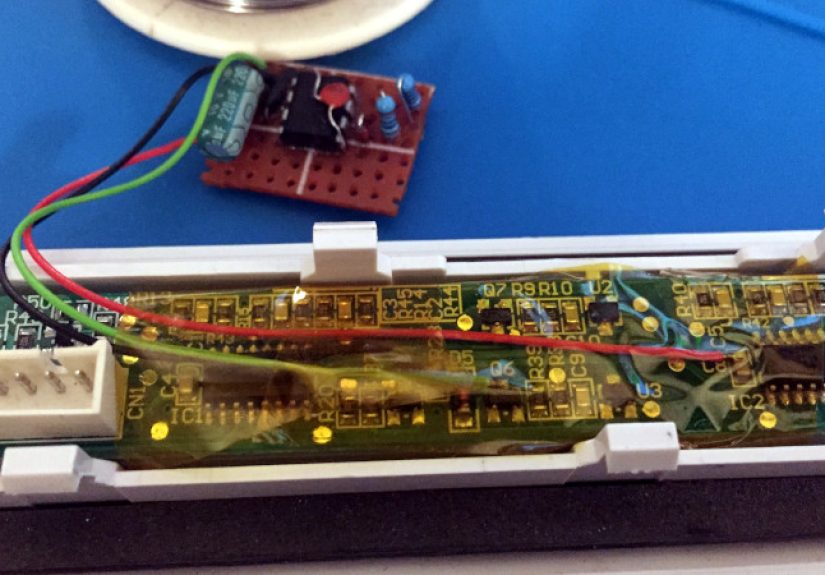
That is exactly why the phrase modchip for a fridge lands so well. In 2024, maker Joshua Kennedy documented a wonderfully absurd but very real fix for an overzealous refrigerator alarm. He could not easily reach the main board or speaker, so he reverse-engineered the control-panel daughterboard instead, studied how the buttons and door-state sensing worked, and built a tiny timer-based board that briefly spoofed a “door closed” state before the alarm could start screaming. In other words, he did not smash the fridge. He negotiated with it. Aggressively. With electronics.
On the surface, it is a delightful hacker story. Underneath, it is a perfect metaphor for the modern appliance market. We are buying machines that mix compressors and coolant with firmware, apps, cloud services, and product-management decisions. When that happens, ownership changes. Suddenly, you are not just owning a box that keeps milk cold. You are living with a machine whose behavior is partly mechanical, partly digital, and sometimes a little too convinced it knows what is best for you.
Why “A Modchip For A Fridge” Makes Perfect Sense Now
The old console-modchip comparison is not just there for laughs. A traditional modchip changes the behavior of a locked-down device by slipping a new layer into the conversation between hardware and software. Kennedy’s fridge fix followed that same spirit. He reportedly worked around the alarm not by destroying the appliance, but by understanding its control logic and then nudging that logic in a different direction.
That is the key idea: the refrigerator was not broken in the classic sense. The compressor was fine. The shelves were doing shelf things. The produce drawer remained a mysterious swamp of forgotten cilantro. What was “broken” was the user experience. The fridge had a behavior the owner hated, and the manufacturer had not provided a practical way to change it. Enter the modchip.
In previous appliance eras, annoying behavior often meant a physical workaround. Tape over a buzzer. Unplug a light. Bend a switch. Today, many features are mediated by software and sensor logic. That changes the game. The owner who wants a quieter, simpler, or more customizable appliance increasingly has to think like a reverse engineer, not just a handyman. Your butter compartment now has a software layer. That sentence alone should be enough to make anyone sit down.
How Refrigerators Became Software Platforms
From cold box to connected hub
Manufacturers did not accidentally wander into this future. They sprinted. Samsung’s Family Hub line turned the refrigerator door into a smart-home command center with a large screen, SmartThings integration, shopping lists, media features, recipe tools, and family-organization widgets. Some models can show what is inside the fridge from your phone, manage ingredients, and act like a smart display that wandered into the kitchen and decided to get a day job.
LG took a slightly different route with ThinQ and ThinQ UP, leaning into the idea that appliances can gain features over time through software updates. That sounds slick in marketing copy because, honestly, it is slick. Consumers like the idea that a major purchase can improve after they bring it home. Bosch has made similar moves with Home Connect, app-based monitoring, remote alerts, and increasing interoperability through Matter-compatible workflows.
Seen from the industry side, this all makes sense. Connected appliances can offer remote temperature control, door-open notifications, diagnostic information, energy tools, support features, and deeper ties to the broader smart home. That is real value. Nobody should pretend every smart feature is pointless. A phone alert telling you the fridge door is open can be genuinely useful, especially if someone in your house treats “closing the fridge” as a vague philosophical suggestion.
The problem with feature creep in a kitchen coat
Still, smart refrigerators also illustrate the problem of feature creep better than almost any other appliance. Once a fridge has a screen, the temptation is enormous: add streaming, add voice assistants, add widgets, add calendars, add AI food recognition, add shopping integrations, add lifestyle fluff, add one more update, then another, and suddenly your refrigerator has a software roadmap.
That creates a subtle shift in consumer expectations. A refrigerator is normally judged on boring but beautiful qualities: temperature stability, reliability, repairability, energy efficiency, storage design, and lifespan. Software platforms are judged differently. They get judged on updates, interface design, cloud reliability, app quality, account systems, privacy, and whether a feature that worked last year disappears after a refresh from someone’s quarterly planning deck.
When those two worlds collide, things get weird. People spend thousands on an appliance built to last for many years, but some of the “premium” value is tied to software support that may be vague, short-lived, or changeable. The stainless steel might outlive the smart layer by a mile. The cabinet keeps humming along while the app grows old, the cloud service gets neglected, and the once-fancy features start looking like digital wallpaper on a very expensive cold box.
Why People Reach for Fridge Hacks
Because ownership should mean something
The fridge-modchip story resonates because it captures a basic consumer frustration: I bought this thing, so why can’t I make it behave the way I want? That is not a fringe question anymore. It sits at the heart of the modern right to repair and device-ownership debate.
Owners do not always want to jailbreak appliances into some cyberpunk kitchen dystopia. Usually, they want much smaller, more normal freedoms. They want quieter alarms. More transparent settings. Fewer forced accounts. Clearer support policies. The option to use features locally. Access to diagnostics. Repair information that is not treated like nuclear launch codes. A machine that respects the fact that it lives in their house, not the manufacturer’s imagination.
Kennedy’s fix was funny, but it was also a form of product feedback in hardware form. He did not write a cranky review and move on. He demonstrated that when manufacturers leave obvious user needs unmet, technically minded owners will solve the problem themselves. That is not a failure of consumers. It is a signal that product design left a customization gap wide enough to drive a freezer drawer through.
Because repair is increasingly digital
There is another reason the modchip story hits a nerve: appliances are becoming harder to fully understand, service, and modify without access to software, board-level information, or proprietary tools. Repair advocates have been warning about this for years. Independent technicians say that service bulletins, board updates, and software-dependent calibration can be essential to fixing appliances properly. When access to those resources is restricted, repair gets more expensive, more centralized, and more frustrating.
That is why this is bigger than one beeping fridge. A control board is no longer just a component; it can be a gatekeeper. Once appliance behavior is defined by firmware and digital interfaces, the practical power over the product can drift away from the owner. The Federal Trade Commission has spent years examining repair restrictions, and the broader legal and policy conversation increasingly recognizes that warranty terms and repair barriers should not trap consumers into one approved path for everything.
A modchip, then, becomes more than a clever hack. It becomes a symbol of pushback against the idea that the machine’s behavior is fixed forever because some buried menu, hidden board, or inaccessible service layer says so.
Smart Fridge Security, Privacy, and the “Zombie Appliance” Problem
Security is not a punchline anymore
For years, “hacked fridge” sounded like the sort of headline people shared because it was hilarious, not because it mattered. But connected appliances are part of the broader Internet of Things ecosystem now, and that makes security a practical issue, not a novelty gag. Government guidance keeps coming back to the same fundamentals: change default passwords, keep devices updated, reduce unnecessary exposure, and treat internet-connected hardware like real computing equipment, because that is what it is.
There is also a useful reality check here. The biggest risk is not always that a villain will target your yogurt drawer specifically. As security reporting has pointed out for years, the bigger prize is often the data and cloud infrastructure around connected devices. A smart appliance can collect usage information, household routines, device status, and account-linked data. In other words, the fridge itself may be boring to attackers, but the digital ecosystem around it may not be.
Software support may end long before the appliance does
This is where the story turns from amusing to expensive. Consumer advocates and regulators have found that many manufacturers still do a lousy job telling people how long software support will last. That matters because software updates do more than add shiny features. They can fix bugs, patch vulnerabilities, maintain app compatibility, and keep connected services functioning.
If support ends and the appliance keeps running, you can wind up with what some advocates call a “zombie” smart product: still physically alive, still sitting in your kitchen, but partially abandoned on the software side. It cools food, maybe, but the premium smart layer becomes shaky, insecure, or quietly diminished. For a product category that often costs serious money and is expected to last a decade or more, that mismatch is brutal.
That support-lifespan problem changes how consumers should think about a smart fridge. You are not only buying shelves, insulation, and a compressor. You are also buying a software-support relationship. If that relationship is murky, then some part of the product’s real value is murky too. Suddenly, the old dumb fridge starts looking less dumb and more like the wise elder in the room.
What Manufacturers Should Learn From a Fridge Modchip
1. Make behavioral controls easy and local
If a feature can annoy a normal person every day, it should have a normal-person setting. Alarm volume, alarm timing, display brightness, reminders, notifications, and similar behaviors should be clearly adjustable without special apps, hidden service menus, or digital scavenger hunts. Give owners a “less chatty” mode. Give them a “kitchen is asleep” mode. Give them a “please stop treating me like I don’t know how soup works” mode.
2. Design smart features as optional, not tyrannical
The refrigerator’s core function should stand on its own. Smart layers should feel like bonuses, not conditions of peace. A connected feature that stops working should not poison the ownership experience of the base appliance. The more gracefully a product can fall back to local, offline, core functionality, the more consumer trust it earns.
3. Publish software support timelines up front
This should be standard practice by now. If a refrigerator includes smart features that depend on updates, apps, or cloud services, the manufacturer should disclose how long those features will be supported. Not in fine print hidden behind four clicks and a sacrificial goat. Right there, where people shop.
4. Treat repairability like a feature
Consumers notice when a product feels sealed off from them. They also notice when a company respects their ability to maintain what they own. Accessible diagnostics, clear documentation, software support, and independent repair pathways are not niche perks. For a lot of shoppers, they are now part of the quality equation.
What Shoppers Should Ask Before Buying a Smart Refrigerator
Before paying extra for a connected model, buyers should ask a few boring questions that can save a lot of future irritation. How long will the software and app be supported? What features keep working if the appliance is offline? Can you use it without creating multiple accounts? Are notifications and alarms customizable? Can independent repair shops access the information needed to fix it? Does the company have a clear track record of updates and customer support?
Those questions are not anti-technology. They are pro-common sense. Smart appliances can be genuinely helpful. But smart features should earn their keep. If the connectivity layer is vague, overly dependent on cloud systems, or wrapped in mystery, then the product may be selling digital sparkle without long-term digital responsibility.
Experiences From the Smart-Fridge Era
Anyone who has lived with a modern connected appliance knows the emotional arc. It starts with wonder. You unbox the thing, admire the finish, tap through the display, and feel like you are living in the future. Your refrigerator has an app. It can send a notification if the door is open. It has widgets. It may even offer recipes, family notes, or some sort of food-management intelligence that sounds suspiciously like your leftovers have entered middle management.
For the first week, all of this feels charming. You show the screen to visitors. You test the notifications. You peek at the app while standing three feet from the fridge for absolutely no good reason. You tell yourself this is convenience. And sometimes it is. Door-open alerts are handy. Remote temperature checks can be reassuring. Support tools inside an app can beat digging for a paper manual wedged behind the junk drawer full of batteries and expired coupons.
Then normal life resumes, and that is when the real relationship begins. The screen that looked futuristic starts looking like another thing demanding attention. A pop-up appears when you just wanted mustard. A software update asks for patience while you are trying to unload groceries before the ice cream becomes a milkshake. An account prompt materializes at the exact moment you have chicken juice on your hands. Suddenly, the refrigerator is not just an appliance; it is a participant. An eager participant. A participant with opinions.
The most irritating experiences are rarely dramatic. They are tiny, repetitive frictions. The alarm that sounds too soon. The app notification you never asked for. The setting that can only be changed through a maze of menus. The feeling that the product was designed for a demo booth first and a real kitchen second. This is why the Kennedy-style hack feels so relatable. Even people who would never touch a soldering iron understand the impulse. They know what it is like to live with a machine that is technically impressive and personally exhausting.
There is also a strangely intimate side to smart appliances. Refrigerators live in the background of family life. They are always there. They hear the late-night snack raids, witness rushed school mornings, and quietly host every phase of your household’s diet ambitions, including the “this week we become smoothie people” phase that lasts four days. When a fridge starts behaving like a fussy gadget instead of a dependable household fixture, the annoyance feels bigger because the object is so central and so constant. You do not visit a fridge occasionally. You orbit it.
That is why the best smart-appliance experiences tend to be the quietest ones. The truly useful features are the ones that slip into the background: a reliable alert when the door is left open, a service diagnostic that saves a repair visit, a support page that actually helps, an update that fixes a bug without rearranging your life. The worst experiences are the ones that remind you the appliance has product managers, marketing goals, and software ambitions. A refrigerator should never feel like it is trying to become your favorite screen. That is a job opening nobody posted.
In that sense, “a modchip for a fridge” is not really about rebellion. It is about balance. It is about restoring the relationship people want with household technology: useful, respectful, and a little less noisy. The dream is not a dumber home. It is a smarter one that knows when to shut up.
Conclusion
A modchip for a fridge sounds like a joke until you realize it is actually a diagnosis. It tells us that refrigerators have crossed an invisible line from static appliances into tweakable digital products. Once that happens, owners start expecting the same freedoms they expect elsewhere in tech: customization, transparency, repairability, and control.
The real lesson is not that everyone should start reverse-engineering their kitchen. It is that manufacturers should stop forcing ordinary consumers into absurd workarounds just to make premium products behave sanely. Smart refrigerators are not doomed. They just need to remember they are refrigerators first and software platforms second.
And if the industry forgets, well, someone out there probably already has a 555 timer, a Raspberry Pi, and a deeply personal grudge against a door alarm.