Table of Contents >> Show >> Hide
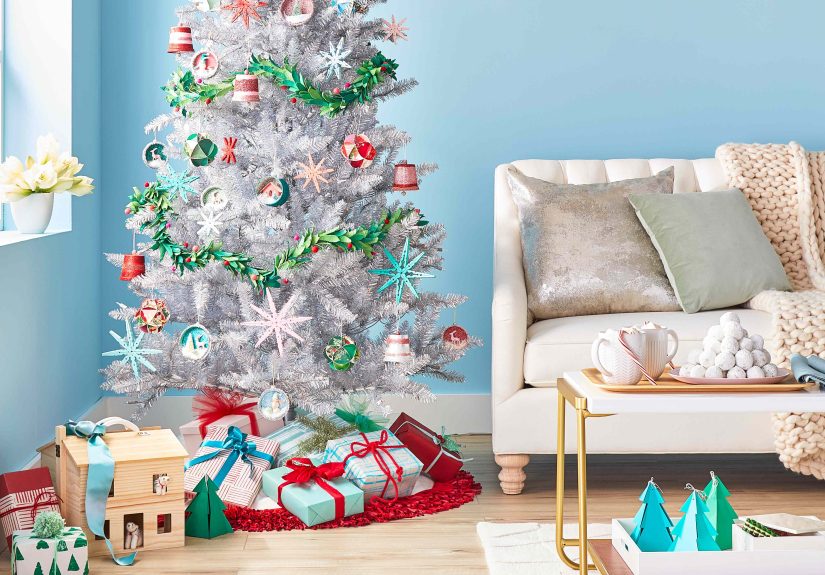
Every holiday season brings back something from the decorating attic. One year it is bows on everything. The next year it is gingerbread villages the size of a studio apartment. And now? The aluminum Christmas tree has strutted back into the room like a shiny little disco relic from 1962, fully convinced it is the main character.
For some homeowners, that silver sparkle is exactly the point. Aluminum Christmas trees tap into the vintage charm of midcentury modern holiday decor, the kind of look that says, “I appreciate design history, and yes, my bar cart also has opinions.” But for plenty of designers, decorators, and traditionalists, the trend lands with a metallic thud. They see something cold where Christmas is supposed to feel warm. They see sharp branches where a cozy evergreen once stood. They see a tree that looks less like family tradition and more like a retro prop from a holiday special filmed on a soundstage.
That tension is what makes this comeback interesting. Aluminum Christmas trees are not just another artificial Christmas tree trend. They represent a clash between nostalgia and comfort, between visual drama and emotional warmth, between “wow, that is chic” and “why does my Christmas tree look like it was ordered by a robot with excellent taste?”
Still, the silver tree is back. It is showing up in entryways, apartments, kitchens, vintage-inspired homes, and social feeds filled with shiny ornaments and rotating color wheels. Love them or hate them, aluminum Christmas trees have once again entered the holiday chat. And like many comebacks, they are returning with baggage, attitude, and a very strong point of view.
The Strange, Sparkly History of Aluminum Christmas Trees
To understand why aluminum Christmas trees stir up such strong feelings, it helps to know where they came from. These trees rose to fame in the late 1950s and peaked in the 1960s, when America was deeply in love with futuristic design, convenience, and anything that looked like it belonged in the Space Age. The Evergleam aluminum Christmas tree, introduced in 1959, became a hit, and the company behind it manufactured more than one million trees over the decade that followed.
That shiny success made sense for the era. Aluminum trees were modern, reusable, dramatic, and just different enough to feel exciting. They did not shed needles. They did not need watering. They looked glamorous beneath a rotating color wheel, which washed their metallic branches in pink, blue, green, and gold. In an age obsessed with innovation, the silver tree was not a gimmick. It was progress wearing tinsel.
Then came A Charlie Brown Christmas. In pop culture memory, that 1965 special helped turn the aluminum tree into a symbol of holiday over-commercialization. Lucy famously tells Charlie Brown to get the biggest aluminum tree he can find, maybe painted pink, and the joke lands because the aluminum tree already represented a polished, artificial version of Christmas. Historians and museum experts note that the story is a bit more complicated than blaming one cartoon for an entire decline, but the symbolism stuck. Real trees came to stand for authenticity. Aluminum trees became shorthand for shiny excess.
By the early 1970s, production had largely stopped. The fad faded. Many trees ended up boxed in basements, forgotten in attics, or sold off for almost nothing. Then nostalgia, as it always does, showed up years later and said, “Actually, that weird thing was iconic.”
Why Aluminum Christmas Trees Are Back
Nostalgia sells, especially when it sparkles
The return of aluminum Christmas trees is tied to a bigger decorating shift: people are embracing vintage holiday decor again. From Shiny Brite ornaments to ceramic trees to tinsel-heavy styling, old-school Christmas charm is having a major moment. Better Homes & Gardens has noted that these trees, once considered Space Age curiosities, have surged in popularity again. Apartment Therapy reported that vintage decor is rising overall, with metallic Christmas trees and ornaments gaining renewed attention as homeowners chase nostalgic shine.
In other words, the aluminum tree is no longer a punch line. It is now a collectible, a conversation starter, and a shortcut to retro personality. It signals a decorating sensibility that is curated instead of conventional. It says you know your way around a flea market, a design blog, and probably a record player.
They fit the midcentury modern fantasy
There is also a style reason for the comeback. The Spruce pointed out that aluminum trees feel perfectly at home in midcentury modern interiors, which have stayed popular for years. If your home already leans into walnut furniture, sculptural lamps, starburst clocks, and clean lines, a classic green tree can sometimes feel visually off-key. A silver tree, on the other hand, looks like it belongs there, as if it has been waiting all year beside the credenza for its seasonal close-up.
That makes aluminum Christmas trees especially appealing to people who treat holiday decor as an extension of their year-round aesthetic, not a temporary decorating detour. They do not want Christmas to bulldoze their interiors. They want it to blend in with style.
Small spaces love them
Another reason these retro Christmas trees are back is practical. Not everyone wants a giant evergreen dominating the living room. Smaller homes, apartments, and secondary spaces benefit from a tree that acts more like a sculptural accent than a full-blown family centerpiece. Better Homes & Gardens has suggested that tinsel and aluminum trees work especially well on buffets, dining tables, consoles, and nightstands. In homes where square footage is tight, that flexibility matters.
And in a culture that increasingly values intentional decorating over maximal holiday clutter, a silver tree can feel surprisingly efficient. It delivers visual impact without needing fifty pounds of ornaments and three emotional support wreaths.
Why Designers Aren’t Happy
They are dramatic, but not always warm
Here is where the backlash begins. While some designers appreciate the nostalgia, many are not thrilled with the full-scale return of aluminum trees as the main event. One of the strongest complaints is emotional, not technical: these trees can feel cold. Literally silver, visually sharp, and often styled with restraint, they do not give off the lush, soft, glowing comfort many people associate with Christmas.
That criticism lines up with a broader holiday trend conversation. House Beautiful highlighted that recent holiday decorating trends have leaned heavily toward what feels cozy and comfortable. Real Simple also emphasized nostalgia, personal meaning, warm colors, and layered charm as defining directions in holiday decor. In that context, an aluminum tree can feel a little like showing up to a cookie swap in a chrome jumpsuit. Memorable? Absolutely. Snuggly? Not exactly.
Southern Living was even more blunt, arguing that while the trees may be visually fun in retro photos, they can overtake an entire holiday scheme with a garish metallic spotlight. That is the big design issue in one sentence. Aluminum trees do not whisper. They announce themselves.
Some designers like them only in small doses
Even experts who appreciate the look tend to set boundaries. The Spruce quoted designer Andrea Sinkin saying she would not use an aluminum Christmas tree as her only tree. That is an important distinction. In designer terms, this is not a universal replacement for the traditional evergreen. It is a sidekick. A secondary tree. A festive accent with strong opinions.
Placed in a foyer, a breakfast nook, a guest room, or a kitchen corner, the aluminum tree can be witty and stylish. Used as the main family tree with every heirloom ornament, mismatched school craft, and sentimental bauble hanging from it? That is usually where the magic starts to wobble.
There is also the “ow” factor
Designers are not just worried about mood. Some are also worried about practicality. Vintage seller Michele Cicatello criticized aluminum trees for looking sharp and borderline dangerous, especially in homes with children. That concern may sound dramatic until you stand close to one of these trees and realize the branches are not exactly soft and forgiving. This is not the tree you absentmindedly crash into while carrying wrapping paper and hot cocoa.
So yes, the aluminum Christmas tree is stylish. It is also the kind of stylish that asks you to maintain eye contact and respect boundaries.
Where Aluminum Christmas Trees Actually Work
As a secondary tree
The best use for an aluminum Christmas tree is often not as the star of the show, but as a supporting player. In a home with a traditional green tree in the living room, a silver tree in the entryway can feel playful and intentional. It gives guests a fun first impression without forcing the entire home into a midcentury modern costume party.
In design-forward homes
If your interior style is already clean, graphic, and vintage-minded, the tree can look genuinely fabulous. It complements walnut wood tones, brass accents, geometric ornaments, and restrained palettes. In those spaces, it feels less like a novelty and more like a historical nod with style credibility.
For collectors and holiday maximalists with taste
There is also a collector culture surrounding these trees. Wisconsin’s historical exhibit “Ever Gleaming” and North Carolina’s famously quirky aluminum tree museum in Brevard prove that the fascination is real. These trees have moved beyond trend territory into American design folklore. For collectors, decorating with one is not just about aesthetics. It is about preserving a joyful little piece of design history.
And to be fair, there is something undeniably entertaining about a room with a silver tree glowing under a color wheel. It is theatrical. It is campy. It is slightly ridiculous in the best possible way. Christmas has room for that, too.
So, Should You Buy One?
If you want your holiday decor to feel cozy, traditional, fragrant, and family-room soft, an aluminum Christmas tree is probably not your soulmate. If you want sparkle, nostalgia, visual wit, and a very specific midcentury mood, it might be exactly your thing.
The real answer is not whether aluminum Christmas trees are objectively good or bad. It is whether they fit the feeling you want your home to have in December. That is why designers are split. They are not arguing about whether silver branches can look cool. They are arguing about what Christmas is supposed to feel like.
And that, honestly, is what makes this trend so fun. It is not just a decor choice. It is a holiday personality test with tinsel.
The Experience of Living With an Aluminum Christmas Tree
Bringing home an aluminum Christmas tree is a very different experience from hauling in a fresh evergreen. There is no pine scent drifting through the room. No sticky sap. No dramatic moment where the trunk does not fit the stand and everyone suddenly becomes an amateur engineer. Instead, there is a box, a collection of metallic branches, and the strange but satisfying realization that your Christmas decor is about to look like it was art-directed by a very festive time traveler.
At first, the tree can feel almost too neat. A real tree arrives with chaos built in. It has gaps, quirks, and branches that refuse to cooperate. An aluminum tree is more orderly, more deliberate. Each piece slides into place with the kind of precision that makes you think, “This is either genius or holiday Ikea.” Once assembled, though, it has presence. Not warmth exactly, but presence. It catches every bit of light in the room and throws it back with a little extra attitude.
Decorating it is its own adventure. Suddenly, the ornaments you always use may not be the right ones. Heavy ornaments can overwhelm it. Too many decorations can bury the whole point. A silver tree teaches restraint, whether you asked for that lesson or not. Instead of piling on everything you own, you start editing. One color family. A few glass balls. Maybe a vintage topper. Maybe nothing at all except the color wheel doing the heavy lifting. It is less “decorate until the branches vanish” and more “curate like your tree has a publicist.”
Then comes the light. This is where the experience changes from interesting to unforgettable. A traditional green tree glows. An aluminum tree shimmers, flashes, and reflects. Under colored light, it can turn pink one second, icy blue the next, then green, then gold. It does not just sit there looking festive. It performs. Even people who swear they hate them usually pause when the room goes dim and the branches start catching those rotating colors. The tree becomes less of an object and more of a tiny holiday stage set.
Of course, living with one also means accepting its limitations. It will not give you that woodsy, nostalgic, curl-up-with-cocoa mood all on its own. You have to build that around it with candles, textiles, music, garlands, and softer touches elsewhere in the room. Left alone, an aluminum tree can feel glamorous but emotionally aloof, like a guest who is incredibly well dressed and slightly hard to hug.
But maybe that is part of the charm. For many people, the experience of owning an aluminum Christmas tree is not about replacing tradition. It is about remixing it. The tree becomes a conversation piece, a wink to the past, a little dose of holiday weirdness that makes the season feel less predictable. Kids ask questions. Guests laugh. Someone always says, “My grandmother had one of these,” and suddenly the room is full of stories.
That is the funny thing about aluminum Christmas trees. For all their reputation as cold, artificial, and overly shiny, they tend to spark something very human: memory. They remind people of old department store displays, family basements, vintage ornaments, cartoon specials, and decades when the future still looked silver and optimistic. Even the people who dislike them usually have a reaction, and that is more than can be said for plenty of tasteful, beige, forgettable decor.
So the lived experience is not exactly cozy in the classic sense. It is brighter, stranger, more playful, and a little more self-aware. It feels like Christmas with eyeliner. And honestly, for some homes, that is exactly the right kind of holiday magic.
Conclusion
Aluminum Christmas trees are back because they hit several modern decorating sweet spots at once: nostalgia, personality, reusability, and serious visual punch. But the designer pushback is just as understandable. Christmas decor is not only about how it looks. It is about how it feels. And for many people, a silver tree delivers sparkle without softness.
That does not make the trend wrong. It just makes it specific. When used thoughtfully, an aluminum Christmas tree can be clever, stylish, and joyfully retro. When overused, it can feel chilly, cluttered, or oddly theatrical. The best holiday homes know the difference. They use trend where it adds charm, and tradition where it adds soul.
So yes, aluminum Christmas trees are back. Designers are not all thrilled. But if holiday decorating teaches us anything, it is that there is room at the party for both the lush green evergreen and the silver diva in the corner demanding her own spotlight.