Table of Contents >> Show >> Hide
- The MakerBot Story: From Open-Source Hero to Professional Toolmaker
- What Made the MakerBot Method Different?
- Why Makers Felt Left Behind
- The Market Had Changed Around MakerBot
- Was MakerBot Wrong to Move Away From Makers?
- The Open-Source Question
- How Method Repositioned the MakerBot Brand
- What Makers Can Learn From the Shift
- Specific Examples of the Divide
- The Bigger Meaning for Desktop 3D Printing
- Experience Notes: What This Shift Feels Like in the Real World
- Conclusion
Once upon a time, MakerBot was the scrappy darling of the maker movement: a Brooklyn-born 3D printer company with plywood vibes, open-source energy, and the kind of garage-lab optimism that made people believe every kitchen table would soon have a printer making replacement knobs, robot parts, and possibly a slightly suspicious-looking Yoda. Then came the MakerBot Method, a polished, professional-grade 3D printer that made one thing very clear: MakerBot was no longer building primarily for the tinkerer with a soldering iron and a weekend to burn. It was courting engineers, educators, product designers, and businesses that wanted fewer surprises and more repeatable parts.
That shift did not happen overnight. MakerBot’s move away from its original maker audience was the result of years of pressure: the cooling of the consumer 3D printing hype cycle, the difficulty of supporting beginners, competition from lower-cost machines, and the influence of industrial 3D printing expectations after MakerBot became part of Stratasys. The Method printer simply made the strategy impossible to miss. This was not a “hack me, mod me, tune me until midnight” machine. It was a controlled, enclosed, sensor-heavy system designed to print reliably in offices and classrooms. In other words, MakerBot traded the basement workbench for the engineering department.
The MakerBot Story: From Open-Source Hero to Professional Toolmaker
MakerBot began as one of the most recognizable names in desktop 3D printing. It arrived at a moment when the RepRap movement and open-source hardware culture were convincing people that manufacturing could become personal. Instead of waiting for a factory, anyone with curiosity, patience, and enough filament could turn digital ideas into physical objects. That was the dream, and MakerBot gave the dream a brand name.
The early MakerBot machines were not appliances in the modern sense. They were projects. Users assembled, calibrated, adjusted, complained, celebrated, and then adjusted again. A print failure was not always a disaster; sometimes it was a lesson wearing spaghetti-shaped plastic pants. This was exactly what appealed to makers. The machine was part tool, part puzzle, part community membership card.
Thingiverse, the design-sharing platform originally associated with MakerBot, played a huge role in that culture. It gave users a place to share printable files, remix ideas, and see what other people were creating. For many hobbyists, the printer and the community were inseparable. The hardware mattered, but so did the ecosystem of shared designs, forum wisdom, and collective troubleshooting.
But a company built on enthusiast enthusiasm eventually has to answer a harder question: can enthusiasm scale into a profitable, supportable, mainstream business? MakerBot’s answer changed over time. The company moved from kits toward finished machines, from open-source ideals toward more controlled products, and from hobbyists toward professionals. The Method printer was one of the clearest signs that the transformation was complete.
What Made the MakerBot Method Different?
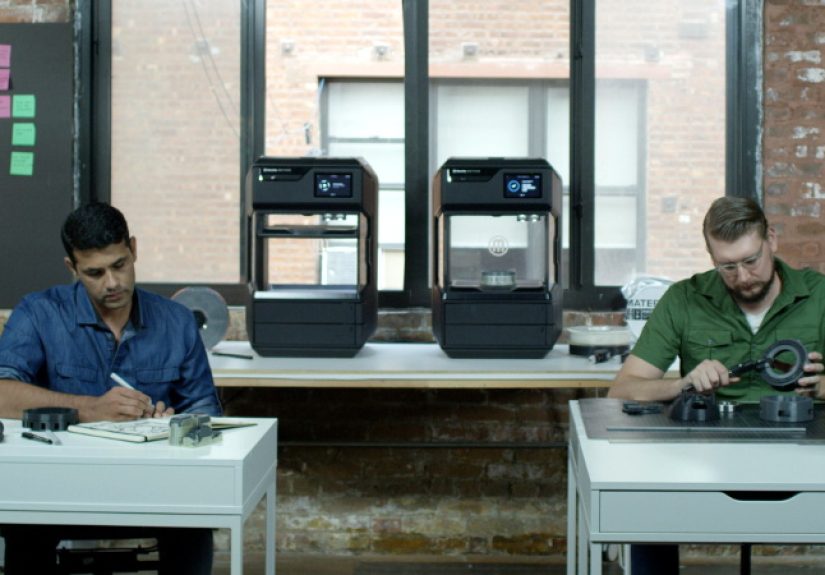
MakerBot Method was introduced as a “performance” 3D printer, a phrase that sounds like it should come with a gym membership and a protein shake, but in this case meant something specific. MakerBot wanted to place the machine between ordinary desktop printers and expensive industrial systems. It was built to offer more control, more accuracy, and less tinkering than a typical hobby printer.
A Heated Chamber for Better Print Control
One of the Method’s major selling points was its controlled heated chamber. Many desktop 3D printers rely on a heated bed to improve first-layer adhesion, but the rest of the print still cools in the surrounding air. That can cause warping, weak layer bonding, and dimensional issues, especially with more demanding materials. A heated chamber helps maintain a more stable printing environment from the first layer to the last.
For a hobbyist, that feature may sound nice but not essential. For a product designer trying to test a functional prototype that needs to fit another part, it matters a lot. A bracket that warps by a fraction of a millimeter can turn a “finished prototype” into a tiny plastic disappointment. Method aimed to reduce that drama.
Dual Extruders and Soluble Supports
The Method also leaned into dual extrusion, allowing users to print model material and support material separately. That matters when printing complex geometries, overhangs, internal channels, or shapes that would otherwise be difficult to clean up by hand. Soluble support material can be dissolved away, leaving cleaner surfaces and more complex design possibilities.
This is the kind of feature that sounds boring until you need it. Then it becomes magic. Anyone who has ever tried to remove stubborn support material from a delicate part knows the emotional journey: optimism, careful scraping, bargaining, regret, and finally pretending the scarred surface was “intentional texture.”
Dry Material Bays and Automation
Method also included dry-sealed material bays and sensor-driven features designed to reduce common print failures. Moisture is a real enemy in 3D printing, especially for materials that absorb humidity. Wet filament can lead to popping, stringing, weak prints, and surfaces that look like they were finished by a nervous raccoon. By controlling the material environment, MakerBot was clearly thinking about repeatability rather than experimentation alone.
That design philosophy separated Method from many lower-cost printers. Hobbyist machines often assume users will tune, modify, and solve problems themselves. Method assumed users wanted a managed workflow. That may sound less romantic, but for a school lab, design studio, or engineering office, romance is usually less important than getting the part done before a meeting.
Why Makers Felt Left Behind
The reaction from longtime maker communities was not simply about price, though price mattered. Method’s launch price placed it far outside the impulse-buy range for most hobbyists. The bigger issue was identity. MakerBot had once represented access, openness, and playful experimentation. Method represented control, professional workflows, and a closed ecosystem feel. It was not necessarily a bad printer; it was just not a love letter to the people who had helped make the brand famous.
For makers, a 3D printer is often not just a tool. It is a platform. They want to modify firmware, swap hot ends, test weird filament, print upgrade parts for the printer itself, and squeeze extra performance out of the machine through patience and stubbornness. The Method approach was different: reduce variables, protect the process, and give the user a more appliance-like experience.
That difference explains the emotional divide. Professionals saw a more reliable desktop machine with industrial inspiration. Makers saw a brand that had once invited them into the engine room now politely directing them to the waiting area.
The Market Had Changed Around MakerBot
By the time Method arrived, the desktop 3D printing market had become crowded and sharply divided. On one end, budget printers from brands such as Creality were making 3D printing cheaper and more accessible. These machines often required assembly, tuning, upgrades, and patience, but they gave hobbyists a lot of capability for far less money. On the other end, professional desktop printers from companies such as Ultimaker were targeting offices, universities, labs, and product teams that wanted reliable output and material support.
MakerBot had to choose where it could compete. Fighting at the budget end would have meant battling companies with extremely aggressive pricing. Staying in the consumer dreamland would have meant selling to a market that never became as large as early hype promised. Moving professional gave MakerBot a clearer business case: fewer casual buyers, but customers with budgets, repeat needs, and a willingness to pay for support.
In that sense, MakerBot’s move was not irrational. It was strategic. The maker community may have felt abandoned, but the business logic was visible. Businesses and schools do not want to spend three evenings watching calibration videos before printing a prototype. They want training, software, support, predictable materials, and machines that do not require a personality compatibility test.
Was MakerBot Wrong to Move Away From Makers?
The honest answer is: not entirely. MakerBot’s shift was painful for its original fans, but the company was responding to real market conditions. The dream of a 3D printer in every home did not arrive the way many predicted. Most people do not need to print plastic objects daily. They also do not want to learn bed leveling, slicer settings, nozzle temperatures, filament drying, support angles, and why their “simple print” has become abstract art.
For professionals, however, 3D printing has obvious value. Engineers use it for prototypes. Teachers use it for STEM learning. Designers use it to test form and fit. Small businesses use it for jigs, fixtures, replacement parts, and short-run production aids. In these settings, reliability has a clear return on investment. A printer that costs more but wastes less time can be easier to justify.
Still, MakerBot paid a reputational price. Brands are emotional shortcuts. When people hear “MakerBot,” many still think of open-source desktop 3D printing, Thingiverse, and the early maker movement. When the company released a professional printer that did not feel aimed at those users, it created a mismatch between brand memory and product reality.
The Open-Source Question
No discussion of MakerBot’s evolution is complete without mentioning open source. Early MakerBot grew in a world where openness was not a decoration; it was part of the mission. Users expected to inspect, modify, and improve hardware and software. Over time, MakerBot moved toward more proprietary systems, which frustrated many early supporters.
From a business perspective, proprietary control can make sense. It can protect intellectual property, improve quality control, and simplify support. From a community perspective, it can feel like a locked door where there used to be a welcome mat. This tension still exists across the 3D printing world. Some users want polished appliances. Others want machines they can rebuild like tiny manufacturing hot rods.
Method landed firmly on the polished-appliance side. It was not designed to be a playground for endless modification. It was designed to be a tool that worked in controlled ways. That made it attractive to some buyers and disappointing to others.
How Method Repositioned the MakerBot Brand
Method repositioned MakerBot as a company focused less on hobbyist discovery and more on professional confidence. Its marketing emphasized accuracy, repeatability, engineering materials, dual extrusion, heated chambers, and workflow reliability. Those are not the usual words of a weekend maker browsing for a fun new machine. They are the words of someone who has a project deadline and does not want their prototype curling off the build plate like a potato chip.
The printer also signaled closer alignment with Stratasys-style industrial thinking. MakerBot was not trying to be the cheapest or most open machine in the room. It was trying to bring some industrial ideas into a desktop footprint. That is a very different mission from “let’s help everyone build a 3D printer and share designs online.”
Later, the merger of MakerBot and Ultimaker into UltiMaker continued the broader pattern: desktop 3D printing was becoming less about a single hobbyist machine and more about ecosystems. Hardware, software, materials, cloud workflows, training, and support all became part of the package. For businesses and schools, that can be useful. For tinkerers, it can feel like the fun is being bubble-wrapped.
What Makers Can Learn From the Shift
MakerBot’s move away from makers is not just a story about one printer. It is a lesson in how technology markets mature. Early communities often build the excitement. They tolerate rough edges, create tutorials, share fixes, and forgive products that require effort. Later, companies chase broader or more profitable markets that want simplicity and support. The original community then wonders why the party suddenly has name tags and a procurement department.
This happens everywhere: software, cameras, drones, computers, music gear, and now 3D printers. Enthusiasts want openness and control. Mainstream users want convenience. Businesses want reliability and accountability. A company cannot always satisfy all three groups with one product.
For makers, the good news is that the spirit of desktop 3D printing did not disappear. It moved elsewhere. Open-source printers, budget machines, community firmware, slicer projects, printable upgrades, and independent design platforms continued to thrive. MakerBot may have changed direction, but the maker movement did not pack up and go home. It simply found other workbenches.
Specific Examples of the Divide
Imagine two users looking at the same Method printer. The first is a mechanical engineer at a small product company. She wants to print a housing prototype, test snap-fit features, and show the result to a client. She values dimensional accuracy, soluble supports, and a stable heated chamber. She does not want to explain to her boss that the prototype failed because the filament was damp or the room got chilly overnight.
The second user is a hobbyist who loves modifying printers. He wants to install custom firmware, experiment with third-party materials, print a new extruder mount, and spend Saturday improving the machine just because he can. He looks at Method and sees a system that is elegant but restrictive. It may be good, but it does not invite him to tinker.
Both users are right. The printer simply serves one better than the other. That is the heart of the MakerBot debate. Method was not proof that MakerBot forgot how to build 3D printers. It was proof that MakerBot had chosen a different customer.
The Bigger Meaning for Desktop 3D Printing
The Method era showed that desktop 3D printing had grown up, but growing up is complicated. The market split into categories: budget hobby machines, enthusiast workhorses, education-focused printers, professional desktop systems, and true industrial machines. MakerBot chose the professional and education path because that is where controlled workflows and brand support mattered most.
This does not make the original maker vision obsolete. In fact, the maker vision remains one of the reasons 3D printing continues to evolve. Community-driven innovation keeps pressure on companies to offer better features, fairer pricing, and more flexibility. Meanwhile, professional systems push reliability and material performance forward. The healthiest market needs both.
MakerBot Method, then, was less a betrayal than a turning point. It marked the moment when one of the most famous maker brands admitted that the next phase of its business was not about every hobbyist’s desk. It was about offices, labs, classrooms, and organizations that wanted 3D printing without needing to become 3D printer mechanics.
Experience Notes: What This Shift Feels Like in the Real World
Anyone who has spent time around desktop 3D printers knows there are two very different joys in this hobby. The first joy is making the object. You design a part, slice the file, press print, and watch a real thing appear out of nothing but heated plastic and unreasonable optimism. The second joy is making the machine better. You adjust belts, change nozzles, improve cooling, test new profiles, and feel like a wizard every time the first layer lands perfectly. MakerBot’s early identity spoke to both joys, especially the second one.
The Method-style experience is different. It is quieter, more controlled, and less emotionally chaotic. That can be wonderful. In a classroom, for example, a teacher does not need thirty students watching a failed print curl up like a sad fortune cookie. In an engineering office, nobody wants a prototype delayed because the printer decided to cosplay as a pasta machine. A reliable printer lets people focus on design decisions instead of machine babysitting.
But there is a trade-off. When a printer becomes more appliance-like, the user becomes less of a co-creator of the machine. That is great if your goal is output. It is less satisfying if your goal is exploration. Some makers enjoy the weird little rituals of desktop 3D printing: listening for bad bearings, saving a print with painter’s tape, swapping fan ducts, or arguing online about whether direct drive is worth it. A locked-down professional system removes much of that mess, but it also removes some of the personality.
That is why MakerBot’s move can feel bittersweet. On one hand, it helped validate 3D printing as a serious tool. Schools and businesses need machines that are safer, easier to manage, and more consistent. A professional printer can introduce more people to 3D printing because it lowers the frustration barrier. On the other hand, the maker movement was never just about easy output. It was about access, curiosity, repair, modification, and the stubborn belief that users should be allowed to open the box and improve what is inside.
In practical terms, choosing between a maker-friendly printer and a professional system depends on what kind of experience you want. If you want to learn the machine deeply, customize parts, and treat failures as part of the education, an open, affordable, mod-friendly printer may be more rewarding. If you need clean prototypes, predictable classroom use, or office-friendly workflows, a controlled system like Method makes more sense. The mistake is assuming one philosophy should win everywhere.
The best lesson from MakerBot’s evolution is that 3D printing is no longer one single culture. It is a collection of overlapping worlds. There are artists, teachers, engineers, cosplay builders, repair nerds, product teams, robotics clubs, and weekend experimenters all using similar technology for different reasons. MakerBot moved toward the professional world, and that decision left some makers feeling stranded. But the broader maker ecosystem survived because curiosity does not depend on one brand. Give makers a tool, a problem, and a roll of filament, and they will find a way to make something strange, useful, or both.
Conclusion
MakerBot Moves Away From Makers With New Printer is more than a catchy headline. It captures a major shift in desktop 3D printing history. MakerBot Method represented a company choosing reliability, professional workflows, and controlled performance over the open-ended tinkering culture that made the brand famous. For engineers, educators, and businesses, that shift offered real value. For longtime makers, it felt like a familiar friend had traded the garage hoodie for a corporate blazer.
Was the move good or bad? It depends on where you stand. As a business strategy, it made sense in a market where consumer 3D printing did not explode as predicted and professional use cases became more practical. As a community story, it remains complicated because MakerBot’s early success was built on the enthusiasm of people who loved openness, experimentation, and shared invention. The Method printer did not kill the maker movement. It simply showed that MakerBot was no longer trying to be its mascot.