Table of Contents >> Show >> Hide
- Why Green and Gray Work So Well Together
- Choosing the Right Green for Your Living Room
- Choosing the Right Gray: Cool, Warm, Light, or Charcoal?
- Best Green and Gray Living Room Color Schemes
- Furniture Ideas for a Green and Gray Living Room
- Rugs, Curtains, and Textiles That Pull the Room Together
- Lighting Matters More Than You Think
- Decor Accents That Make Green and Gray Feel Finished
- Common Mistakes to Avoid
- Experience-Based Tips for Designing A Green & Gray Living Room
- Conclusion
A green and gray living room is what happens when calm shakes hands with sophistication and both agree not to wear beige to the party. Green brings the outdoors in, gray adds structure, and together they create a room that feels relaxed, stylish, and surprisingly easy to live with. It is the kind of color combination that can look cozy in a cottage, polished in a city apartment, and quietly luxurious in a modern family home.
The beauty of this palette is its flexibility. Sage green and soft gray can feel airy and peaceful. Olive green with charcoal gray becomes moody and dramatic. Emerald accents against a pale gray sofa can look glamorous without screaming, “I bought one velvet pillow and now I am an interior designer.” The trick is not simply choosing green and gray, but choosing the right versions of both colors, then balancing them with texture, lighting, wood tones, and a few warm accents so the room does not feel like a cloudy forest in February.
Why Green and Gray Work So Well Together
Green and gray are natural partners because both can behave like neutrals. Gray is steady, quiet, and adaptable. Green, especially muted greens like sage, eucalyptus, moss, olive, and gray-green, brings depth without overwhelming the room. When paired correctly, green softens gray’s coolness, while gray keeps green from feeling too loud or themed.
This combination also taps into biophilic design, a decorating approach that connects indoor spaces with nature. You do not need a living wall, a koi pond, or a houseplant collection that requires its own spreadsheet. Even a soft green wall, a gray linen sofa, wood furniture, and natural fiber accents can create that grounded, nature-inspired feeling.
Another reason the palette works is contrast. Green has life; gray has restraint. Put them together and the room feels designed, not accidental. A pale gray sectional against deep green walls looks intentional. A moss green sofa on a warm gray rug feels layered. Gray curtains beside sage walls create softness without turning the room into a color sample aisle.
Choosing the Right Green for Your Living Room
The first major decision is the green. Green can be elegant, earthy, cheerful, coastal, vintage, dramatic, or, if chosen poorly, vaguely reminiscent of hospital Jell-O. The safest route for a living room is usually a muted green with gray, brown, or blue undertones.
Sage Green for Soft, Everyday Calm
Sage green is one of the most livable choices for a green and gray living room. It pairs beautifully with light gray upholstery, warm white trim, oak furniture, rattan baskets, and cream textiles. Sage works especially well in small or medium living rooms because it adds color without shrinking the space visually.
For a soft look, use sage on the walls and add a pale gray sofa, ivory curtains, and a natural wood coffee table. Then repeat the green in small ways: a ceramic lamp, throw pillows, framed botanical art, or a patterned rug. Repetition is what makes the room feel collected instead of “one wall had a crisis.”
Olive Green for Warmth and Character
Olive green is slightly moodier and more grown-up. It works well with warm gray, mushroom gray, greige, walnut, brass, leather, and vintage-inspired decor. If your living room has wood floors or warm lighting, olive green can make the space feel rich and inviting.
Try olive green walls with a medium gray sofa, tan leather accent chairs, brass picture lights, and cream textiles. The result feels cozy but not heavy. Olive is also excellent for accent walls, built-in bookcases, and fireplace surrounds because it adds depth without demanding applause every time you walk into the room.
Emerald Green for a Bold Statement
Emerald green is the dramatic cousin who arrives late but somehow becomes the best part of dinner. It can look gorgeous in a gray living room when used strategically. Instead of painting every wall emerald, consider an emerald velvet sofa, accent chairs, curtains, or pillows against a soft gray backdrop.
Emerald pairs well with charcoal, black, brass, marble, walnut, and warm white. To keep it from feeling too formal, mix in casual textures like linen, jute, boucle, or woven baskets. A green velvet sofa can look glamorous, but add a chunky knit throw and suddenly it says, “Yes, I am elegant, but I also watch movies with snacks.”
Gray-Green for a Seamless Look
Gray-green paint colors are ideal when you want color that still feels neutral. These shades shift throughout the day, sometimes reading more gray, sometimes more green, depending on the light. In north-facing rooms, they may look cooler and moodier. In south-facing rooms, they may feel softer and more balanced.
Gray-green is especially useful in open-concept homes because it flows well into kitchens, dining rooms, and hallways. It is colorful enough to feel special, but not so intense that it fights with furniture, art, or flooring.
Choosing the Right Gray: Cool, Warm, Light, or Charcoal?
Gray is not just gray. It can lean blue, purple, green, beige, brown, or even slightly silver. That is why two gray sofas can look completely different in the same room. One feels chic; the other looks like it has been emotionally affected by fluorescent lighting.
Light Gray for Airy Rooms
Light gray is a great foundation for a green and gray living room. It works on sofas, walls, curtains, rugs, and built-ins. A light gray sofa with sage green walls creates a peaceful, modern look. Add white trim, wood furniture, and a few black accents for definition.
If the room is small, light gray helps keep the space open. Use green as the main wall color or as accents through pillows, artwork, plants, and decor. The key is contrast. If everything is pale gray and pale green, the room may feel flat. Add texture, wood, and at least one darker accent.
Warm Gray for Cozy Balance
Warm gray, greige, or mushroom gray is often the easiest partner for green. It prevents the room from feeling cold and works beautifully with olive, moss, eucalyptus, and forest green. Warm gray also plays nicely with beige, cream, camel, rust, terracotta, and natural wood.
For a comfortable family room, use warm gray walls, an olive green sofa, woven shades, cream pillows, and a patterned rug with hints of green and tan. This type of palette feels relaxed and layered, not overly decorated.
Charcoal Gray for Drama
Charcoal gray brings sophistication and depth. It is ideal for larger rooms, rooms with strong natural light, or spaces where you want a cozy evening atmosphere. Pair charcoal walls with a green sofa, or reverse the formula with deep green walls and charcoal chairs.
Because charcoal absorbs light, balance it with reflective materials and lighter accents. Use brass lamps, glass tables, cream curtains, pale artwork, or a light rug. Without contrast, charcoal and dark green can become too heavy, like a room designed by a very stylish thundercloud.
Best Green and Gray Living Room Color Schemes
1. Sage Green Walls + Light Gray Sofa
This is the easiest and most popular version of the green and gray living room. Sage walls create a calming background, while a light gray sofa keeps the room neutral and practical. Add cream curtains, white trim, pale oak furniture, and a woven rug for a fresh, natural look.
2. Gray Walls + Green Sofa
If you already have gray walls, a green sofa can instantly make the room feel more current and personal. Choose olive for warmth, forest green for depth, or emerald for drama. Repeat the green in artwork, plants, or a patterned pillow so the sofa feels connected to the room.
3. Olive Green + Warm Gray + Leather
This palette feels cozy, mature, and timeless. Olive walls, a warm gray sectional, camel leather chairs, walnut tables, and brass lighting create a room that feels collected over time. It is especially good for homes with traditional, rustic, transitional, or modern organic style.
4. Emerald Green + Charcoal + Brass
This is the glamorous option. Use emerald velvet accents, charcoal walls or furniture, brass lighting, and a cream rug. The contrast is strong, so keep the layout clean and avoid too many competing colors. A little drama is lovely; too much drama belongs in group chats, not living rooms.
5. Gray-Green Walls + Cream + Black Accents
Gray-green walls are a wonderful middle ground. Pair them with cream upholstery, black-framed art, pale wood, and layered textiles. This palette works in modern, Scandinavian, farmhouse, and transitional spaces because it feels calm but still interesting.
Furniture Ideas for a Green and Gray Living Room
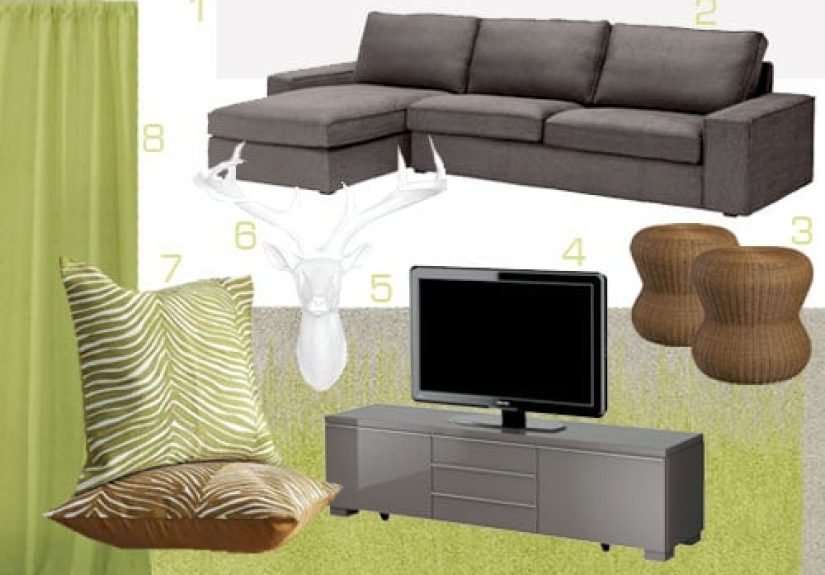
Start with the biggest piece: the sofa. If your sofa is gray, green can appear on the walls, pillows, curtains, artwork, or rug. If your sofa is green, keep the surrounding elements more neutral so the sofa can shine. Both approaches work, but they create different moods.
A gray sofa is the safer choice because it adapts easily as trends change. You can refresh it with green pillows, patterned throws, or seasonal decor. A green sofa is bolder and more memorable. It works best when the rest of the room includes supporting tones, such as gray rugs, cream walls, wood furniture, and art that repeats the green.
For accent chairs, consider charcoal boucle, olive velvet, gray linen, tan leather, or cream performance fabric. If you have a lot of gray already, add warmth with wood or leather. If you have deep green walls, choose lighter chairs to keep the room from feeling closed in.
Rugs, Curtains, and Textiles That Pull the Room Together
Textiles are where a green and gray living room becomes comfortable instead of merely color-coordinated. A rug can bridge both colors beautifully. Look for patterns that include gray, green, cream, tan, or muted blue. Persian-style rugs, geometric wool rugs, jute blends, and soft abstract designs all work well.
Curtains can be light and quiet or bold and dramatic. Cream linen curtains soften green walls. Light gray curtains create a seamless look. Olive or forest green curtains can make the room feel enveloping, especially when paired with pale walls and gray furniture.
Throw pillows are the easiest way to test the palette. Mix solids, stripes, botanical prints, checks, and textured fabrics. Try sage linen, charcoal velvet, cream boucle, olive cotton, and a patterned pillow that includes both green and gray. Avoid using five identical pillows unless you want your sofa to look like it is wearing a uniform.
Lighting Matters More Than You Think
Lighting can completely change how green and gray appear. Natural daylight, warm bulbs, cool bulbs, and shadows all affect undertones. A gray-green wall may look soft in the morning and surprisingly moody at night. A cool gray sofa may appear blue next to warm olive paint. This is normal, not a decorating conspiracy.
Before painting, test large swatches on multiple walls. Check them in morning light, afternoon light, and evening lamplight. Use warm white bulbs in living rooms for a cozy atmosphere. Layer lighting with floor lamps, table lamps, sconces, and overhead fixtures so the room does not rely on one lonely ceiling light doing the emotional labor.
Decor Accents That Make Green and Gray Feel Finished
A green and gray living room benefits from a few supporting colors. Warm white, cream, black, brass, tan, camel, walnut, terracotta, blush, and muted gold can all work beautifully. These accents prevent the palette from feeling too cool or one-dimensional.
Plants are an obvious addition, but use them thoughtfully. A fiddle-leaf fig, snake plant, pothos, or olive tree can strengthen the natural feel of the room. If real plants tend to lose the will to live in your care, high-quality faux greenery is acceptable. Your secret is safe with the decorative basket.
Artwork is another powerful tool. Choose pieces that include green, gray, cream, black, or warm earth tones. Landscape prints, abstract art, botanical illustrations, and black-and-white photography all fit the palette. Large art can make a simple room feel intentional without adding clutter.
Common Mistakes to Avoid
Using Only Cool Colors
Green and gray can become chilly if every element leans cool. Add warmth with wood, woven textures, brass, leather, warm white, or earthy accent colors.
Forgetting Texture
A room with flat gray paint, a flat green sofa, and flat decor will look unfinished. Mix linen, velvet, wool, wood, metal, stone, glass, and woven materials for depth.
Choosing Paint Without Testing
Green and gray are famous for changing under different lighting. Always sample first. A tiny paint chip is not enough; it is basically a color fortune cookie.
Overmatching Everything
Your greens do not need to match perfectly. In fact, layered greens often look better. Sage, olive, eucalyptus, and moss can work together when balanced with gray and neutral tones.
Experience-Based Tips for Designing A Green & Gray Living Room
In real homes, the most successful green and gray living rooms are rarely built in one shopping trip. They evolve. The sofa arrives first, then the rug causes a small identity crisis, then the paint swatches go up, then someone realizes the old coffee table suddenly looks like it came from a dentist’s waiting room. That is normal. Decorating is a process, not a magic trick performed by a person holding a throw pillow.
One practical experience is that gray sofas are incredibly forgiving, but they need personality around them. A plain gray sofa in a plain gray room can feel sleepy. Add sage pillows, a moss green throw, black-framed art, a warm wood table, and one textured rug, and suddenly the same sofa looks intentional. The furniture did not change; the supporting cast got better.
Another lesson: green paint is emotional. A soft sage that looks perfect online may look minty in one room, muddy in another, and oddly blue in a third. The wall is not being difficult; it is reacting to light, flooring, trim, and nearby furniture. Large samples are essential. Paint at least two coats on poster board or directly on the wall, then move the sample around the room. Check it beside the sofa, near the window, behind the TV, and next to the trim. This step can save you from repainting an entire living room while muttering things your neighbors should not hear.
Gray also needs attention. If your gray sofa has blue undertones, it will pair best with cooler greens like eucalyptus, pine, or blue-green sage. If your gray rug or walls lean warm, olive and moss greens usually feel more natural. Matching undertones is one of the quiet secrets of interior design. It is not flashy, but it prevents the room from feeling “off” in a way nobody can explain.
In family spaces, performance fabrics are worth considering. Green and gray can look elegant, but living rooms are for actual living: snacks, pets, movie nights, homework, coffee, and the occasional mysterious crumb that appears from another dimension. Washable pillow covers, durable rugs, and stain-resistant upholstery make the room easier to enjoy.
The final experience-based tip is to leave a little breathing room. A green and gray living room does not need green walls, a green sofa, green curtains, green pillows, green art, and a plant army standing at attention. Choose one main green moment, one main gray foundation, and a few supporting accents. The best rooms feel layered, not color-coded. When in doubt, add texture before adding more color.
Conclusion
A green and gray living room is stylish because it balances nature and neutrality. Green brings freshness, mood, and personality, while gray provides structure, calm, and flexibility. Whether you prefer sage walls with a light gray sofa, an emerald couch in a charcoal room, or olive accents layered over warm gray, this palette can be adapted to almost any home style.
The secret is balance. Choose undertones carefully, test paint in real light, repeat colors in small ways, and warm up the palette with wood, cream, brass, leather, or woven textures. Done well, a green and gray living room feels peaceful without being boring, elegant without being stiff, and cozy without looking like the furniture is trying too hard.
Note: This article is written as original web-ready content and synthesizes current interior design, paint color, and home decor guidance from reputable home and lifestyle sources.