Table of Contents >> Show >> Hide
- A 1700s Kitchen With a Modern Mission
- The Before: When Old Is Not the Same as Charming
- The Design Inspiration: A Painting Becomes a Palette
- Shaker Style: The Quiet Hero of the Room
- Beadboard, Apron Sink, and the Cottage Feeling
- Butcher Block Counters: Warmth You Can Actually Use
- White Painted Floors: Brave, Bright, and Surprisingly Practical
- Vintage Objects Make the Kitchen Feel Collected
- Historic Preservation Meets Everyday Function
- What Modern Kitchen Trends Can Learn From This 1700s Cookspace
- Why This Kitchen Feels So Human
- Experience Section: Lessons From Living With a Painting-Led Historic Kitchen
- Conclusion: A Small Kitchen With a Long Memory
- SEO Tags
Some kitchens arrive with a mood board. Others arrive with a family painting, a Dutch door, late-1700s barn beams, two cats, and enough renovation surprises to make a contractor quietly stare into the middle distance. This 1700s cookspace in Hastings on Hudson belongs to the second groupand thank goodness for that.
Set inside a former goat barn that once formed part of a larger estate, the kitchen’s story is less about chasing a glossy trend and more about listening to an old house speak. The homeowner and designer, Emma Tuccillo, approached the renovation with a rare combination of practicality and romance. The room had outdated linoleum, damaged counters, cabinets that barely functioned, and a tight layout that made cooking feel like a polite wrestling match. Yet the house itself had undeniable soul: river views, historic bones, and an original Dutch door worth protecting like the last cookie at a bake sale.
The final design draws from English cottage kitchens, Shaker simplicity, Hudson Valley character, and one deeply personal source: a painting by Emma’s grandfather Kenneth. Its palette of dark green, mustard yellow, sky blue, black, and white became the emotional compass for the room. The result is a kitchen that feels old without being theatrical, fresh without being flashy, and functional without surrendering its charm.
A 1700s Kitchen With a Modern Mission
Historic kitchen renovation is a balancing act. Go too modern, and the room may look like it landed from a luxury condo showroom and got lost on the way to Manhattan. Go too literal, and suddenly everyone is pretending they enjoy chopping onions by candlelight. This Hastings on Hudson kitchen succeeds because it chooses rehabilitation over museum-style restoration.
In preservation language, rehabilitation means making a historic structure useful for contemporary life while protecting the features that give it character. That distinction matters. A real home needs safe wiring, functional plumbing, storage, lighting, appliances, and surfaces that can survive coffee, crumbs, and the occasional “who spilled maple syrup in the drawer?” incident. But those modern needs do not have to erase the architectural memory of the house.
Here, the original Dutch door stayed. The old barn beams, revealed during the gut renovation, became part of the room’s identity. The new cabinetry, surfaces, lighting, hardware, and shelving were chosen to harmonize with the home rather than overpower it. Instead of making the kitchen scream “new renovation,” the design quietly says, “I have always belonged hereplease pass the butter.”
The Before: When Old Is Not the Same as Charming
Old houses are romantic until the cabinet door refuses to open and the floor looks like it has been through three centuries of soup incidents. Before renovation, this kitchen suffered from the less lovable side of age: rough counters, worn linoleum, unusable cabinets, and poor use of limited space. The layout created clutter instead of flow, and the existing storage could not keep up with everyday cooking.
That is an important lesson for anyone planning a historic kitchen remodel. Not every existing feature is historic. Some things are merely old, damaged, unsafe, or awkward. Linoleum from a late remodel, sticky cabinets, asbestos tile, and failing counters do not automatically deserve preservation just because they have birthdays. The goal is to identify what truly defines the home’s character, then build a kitchen that supports daily life around those elements.
The Design Inspiration: A Painting Becomes a Palette
The most memorable kitchens usually begin with a feeling, not a faucet. In this case, the feeling came from a cherished painting by Emma’s grandfather. The artwork featured a distinctive mix of dark green, mustard yellow, sky blue, black, and white. Rather than copying those colors literally on every surface, the kitchen uses them as a subtle guide.
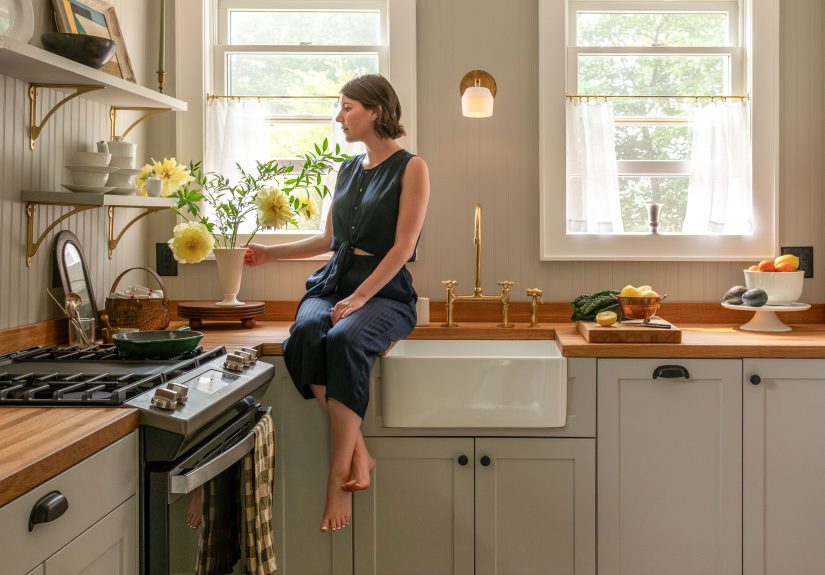
The walls are calm and pale, creating space for texture and light. White-painted floors make the small room feel bigger and brighter. Warm wood counters add depth. Dark accents, brass details, and collected vintage pieces prevent the palette from drifting into sterile territory. It is a smart lesson in color storytelling: inspiration does not need to shout. Sometimes it can whisper from a shelf and still direct the entire room.
Why Painting-Inspired Design Works
Using a painting as a design anchor gives a kitchen something trend reports cannot provide: emotional continuity. A painting has proportion, contrast, mood, and memory. It can suggest a color scheme without forcing a rigid formula. In this kitchen, the artwork connects family history to architectural history, turning a practical renovation into a layered personal narrative.
For homeowners, this is a powerful idea. Before choosing cabinet colors, backsplash tile, or hardware finishes, look around for an object that already means something: a landscape painting, a ceramic bowl, a textile, a family photograph, or even an old cookbook cover. A meaningful object can help you choose colors and materials that feel personal rather than algorithm-approved.
Shaker Style: The Quiet Hero of the Room
Shaker design is often described with three words: simplicity, utility, and craftsmanship. That trio fits this Hastings on Hudson kitchen beautifully. The cabinets use a Shaker line in a soft mushroom tone, giving the space a clean structure without feeling cold. The recessed panels, plain lines, and practical hardware make sense in a former 1700s barn because they respect the modesty of the architecture.
Shaker style is especially effective in historic kitchens because it avoids both extremes: it is not ornate enough to feel fussy, and it is not so minimal that it feels disconnected from the past. It also works well with natural materials such as butcher block, painted wood, beadboard, iron, brass, linen, and hand-thrown pottery. In other words, it plays nicely with othersa rare and underrated personality trait in kitchen design.
The Peg Rail: Small Detail, Big Storage Energy
One of the most charming features in the kitchen is a petite Shaker peg rail shelf. It is a simple detail, but it delivers both function and atmosphere. Peg rails have long been admired because they lift everyday objects off counters and floors while turning storage into display. Aprons, baskets, brushes, mugs, towels, and small tools suddenly look intentional instead of abandoned.
In a small kitchen, that matters. Open storage can become visual chaos if overused, but a modest peg rail creates order. It gives frequently used items a place to land and adds rhythm to the wall. The trick is restraint. Hang what is useful or beautiful, not every object that has ever entered the house. A peg rail should not look like a yard sale learned to levitate.
Beadboard, Apron Sink, and the Cottage Feeling
The kitchen’s English cottage influence appears in details such as beadboard walls, linen cafe curtains, and an apron-front sink. These choices work because they feel appropriate to a hardworking, historic room. Beadboard adds vertical texture without heavy ornament. The apron sink has the generous, practical presence of an old utility fixture. Cafe curtains soften the light and give privacy while keeping the room relaxed.
This is where the kitchen avoids the trap of “theme decorating.” It does not pile on every cottage cue available. There are no fake chickens, no forced rustic signs, and no aggressive nostalgia. Instead, the design uses a few well-chosen elements that support the architecture. The result is warm, not theatrical.
Butcher Block Counters: Warmth You Can Actually Use
The custom butcher block counters, made from local white oak, are one of the most important material decisions in the room. Stone might have introduced a grander look, but wood feels more aligned with the home’s age and informal character. It also brings warmth to the pale palette and creates a useful work surface for cooking.
Wood counters do require care. They need appropriate sealing or oiling, and they are not as carefree as quartz. But in a historic kitchen, a few signs of use can be part of the appeal. Wood develops a lived-in patina. It records the daily rituals of the home: bread slicing, coffee making, flower trimming, and emergency grilled-cheese assembly. The key is accepting that natural materials are not meant to stay frozen in showroom perfection.
White Painted Floors: Brave, Bright, and Surprisingly Practical
White painted floors may sound like a dare. In a kitchen, they raise obvious questions: What about dirt? What about pets? What about the mysterious crumbs that appear even when nobody has eaten toast? Yet in this room, the floors help make the compact kitchen feel larger, lighter, and more connected to the river-facing windows.
Painted floors can be a smart solution in old homes when the existing boards need refreshing but replacement would feel too aggressive. Gloss porch and patio paint, properly applied, can handle more wear than many people expect. The maintenance is straightforward: sweep, mop, repeat, and accept that life happens. In return, the room gains brightness and a relaxed, cottage-like charm.
Vintage Objects Make the Kitchen Feel Collected
A historic kitchen can quickly feel flat if everything is brand new. This is why the styling matters. Emma brought in vintage and personal pieces, including a Royal Copenhagen tea set, her grandmother’s arched brass mirror, and the painting that inspired the palette. These objects do not merely decorate the kitchen; they give it a sense of continuity.
Open shelves are ideal for this kind of storytelling, but they require editing. The best collected kitchens mix useful items with sentimental ones. A bowl you use, a teapot you love, a framed painting, a small lamp, a stack of plates, a brass mirrortogether, they create a room that feels assembled over time. The goal is not clutter. The goal is evidence of life.
Historic Preservation Meets Everyday Function
Behind the romance of this kitchen is a serious design principle: a historic home should not be frozen in time. It should be allowed to keep living. That means modern conveniences are not enemies of old-house character. A dishwasher tucked beneath the counter, a refrigerator placed just outside the main view, functional lighting, and smart storage all help the kitchen serve the present without erasing the past.
The renovation also shows why old homes require patience. During the gut renovation, layers of asbestos tile and original beams appeared. Unexpected conditions are common in centuries-old structures. Walls are not always straight. Floors slope. Hidden materials may require professional remediation. Timelines stretch. Budgets sigh dramatically. A six-month renovation in a 1700s structure is not a delay; it is the house participating in the conversation.
What Modern Kitchen Trends Can Learn From This 1700s Cookspace
Current kitchen trends favor personalization, natural materials, clutter reduction, earthy colors, hidden appliances, and a stronger connection to nature. This Hastings on Hudson kitchen checks many of those boxes without looking trendy. That is the difference between following a trend and understanding why a trend works.
The kitchen uses natural wood, not because a report said wood is back, but because wood belongs in the house. It uses color with restraint, not because green and blue are popular, but because a family painting gave those colors meaning. It reduces clutter through better cabinetry and thoughtful shelving, not through sterile minimalism. It connects to nature through river views, light, and a Dutch door that can open to the air.
The Best Ideas to Steal
First, keep the character-defining features. If a Dutch door, original beam, old floor, fireplace wall, or unusual window gives the house personality, design around it. Second, choose cabinetry that speaks the language of the architecture. Shaker cabinets are a reliable choice because they are simple, flexible, and historically sympathetic. Third, mix new function with old texture. A dishwasher can live happily beside a butcher block counter if the design is thoughtful.
Fourth, use art as a color roadmap. A painting, textile, or heirloom can help create a palette that feels authentic. Fifth, let small details work hard. Peg rails, cafe curtains, brass switches, open shelves, and vintage mirrors may be modest, but they add soul. Finally, do not over-polish the room. Historic kitchens look best when they retain a little imperfection. A perfectly smooth old house is suspicious. It probably has a secret.
Why This Kitchen Feels So Human
The most appealing part of this renovation is not a single material or product. It is the sense of relationship. Emma collaborated with her contractor, Donald Wemer, and consulted closely with her 97-year-old grandmother, Nan. That detail gives the kitchen a rare warmth. Design decisions were discussed, revised, imagined, and lived with before construction began.
When the work was done, Nan helped style the room. That final act matters. A kitchen is not finished when the last cabinet pull is installed. It is finished when the objects find their places, the kettle comes on, the cat claims the Dutch door, and someone stands there long enough to feel grateful.
Experience Section: Lessons From Living With a Painting-Led Historic Kitchen
Designing or renovating a kitchen like this teaches a lesson that glossy before-and-after photos often skip: the best rooms are not built only from products. They are built from decisions, compromises, memories, and a few very unglamorous discoveries behind the wall. A 1700s cookspace will not behave like a new-build kitchen. It has opinions. It may reveal old beams, strange layers of flooring, unexpected hazards, and measurements that seem to have been invented by a person allergic to right angles.
One useful experience for homeowners is learning to separate charm from inconvenience. An original Dutch door is charm. A cabinet that traps your mixing bowls like a tiny wooden prison is inconvenience. Exposed beams can be charm. Unsafe materials require professional attention. Painted floors can be charming and practical if finished properly. A layout that leaves no prep space is not charming; it is a daily negotiation with frustration.
Another lesson is that personal inspiration often produces better results than trend chasing. A painting, especially one with family meaning, can guide choices in a way that feels natural. Instead of asking, “What color is popular this year?” the better question becomes, “What colors already belong to my story?” In this Hastings on Hudson kitchen, the grandfather’s painting gave the room direction. It helped the homeowner choose contrast, warmth, and restraint. That is why the kitchen feels layered rather than decorated in a single shopping trip.
There is also a practical experience hidden in the styling. Open shelves and peg rails look effortless in photographs, but they work best when edited carefully. The most successful historic kitchens display objects that earn their place. A tea set, a brass mirror, a ceramic bowl, a linen curtain, a wooden spoon, a framed paintingthese pieces create character because they feel used or loved. Too many objects, however, can make a small room feel busy. The secret is to leave breathing room. Even a 1700s kitchen deserves a little personal space.
Finally, a project like this reminds homeowners to leave room for ritual. The renovated kitchen is not just a composition of Shaker cabinets, butcher block counters, white floors, and cottage details. It is a morning routine: lights clicking on, an electric kettle filling, a Dutch door opening, a cat taking its post, and the Hudson River waiting outside the window. That is the real success of the room. It does not merely look historic. It supports a life that feels connected to the past while fully inhabiting the present.
Conclusion: A Small Kitchen With a Long Memory
This 1700s cookspace in Hastings on Hudson proves that historic kitchen design does not require grand square footage or theatrical restoration. It requires listening. The room listens to the old goat barn, the Dutch door, the exposed beams, the river view, the needs of modern cooking, and the quiet authority of a family painting. It respects the past without becoming trapped by it.
For anyone planning a historic kitchen renovation, the takeaway is clear: preserve what matters, repair what can be saved, replace what no longer serves, and let personal meaning guide the details. A kitchen should work hard, age gracefully, and make everyday rituals feel a little more beautiful. If it can also give the cat a scenic perch, that is simply excellent design.