Table of Contents >> Show >> Hide
- Quick Picks: The Best Watering Wands (Bob Vila Tested)
- Why a Watering Wand Beats a Regular Hose Nozzle
- How Bob Vila Tested These Watering Wands
- Top Pick Deep Dive: What Makes Each Wand Worth Buying
- Best Overall: Dramm One Touch Rain Wand
- Best Bang for the Buck: Melnor RelaxGrip 8-Pattern Watering Extension Wand
- Best Midrange: Gilmour Watering Wand with Swivel Connect
- Best for Small Gardens: Green Mount 16-Inch Sprayer Wand (8 Patterns)
- Best Reach: Orbit 36-Inch Turret Wand with Ratcheting Head
- Most Ergonomic: Orbit 14-Inch Pro Flo 7-Pattern Watering Wand
- What to Look for When Choosing the Best Watering Wand
- How to Water Better With a Wand (Without Loving Fungus Too Much)
- Maintenance Tips to Make Your Watering Wand Last
- FAQs
- Real-World Experiences: What Gardeners Notice After Switching to a Great Watering Wand (500+ Words)
If you’ve ever tried to water hanging baskets while doing a one-legged yoga pose (the kind where you also spill water directly into your shoe),
you already understand the appeal of a good watering wand. A watering wand turns your hose into a gentle, rain-like shower with extra reachso you
can hydrate delicate seedlings, tuck water under shrub canopies, and hit those “how is that plant still alive back there?” corners without bending,
stretching, or swearing (as much).
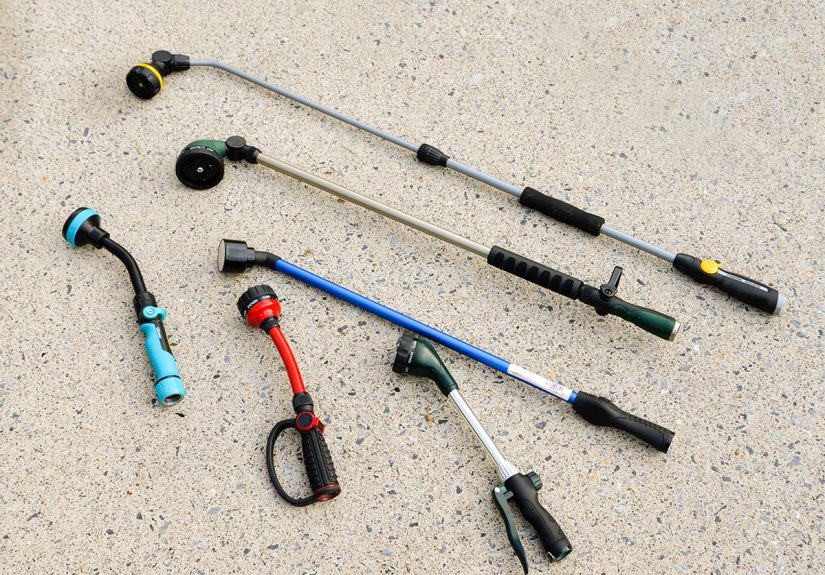
BobVila.com’s testing team took several popular watering wands into a real gardenhanging baskets, potted plants, raised beds, and in-ground borders
and judged them the way gardeners actually use them: by how comfortable they feel, how easy they are to control, and whether they leak, wobble, or
generally behave like a mischievous garden gnome. The result: a short list of standouts that cover different garden sizes, reach needs, and budgets.
Quick Picks: The Best Watering Wands (Bob Vila Tested)
- Best Overall: Dramm One Touch Rain Wand
- Best Bang for the Buck: Melnor RelaxGrip 8-Pattern Watering Extension Wand
- Best Midrange: Gilmour Watering Wand with Swivel Connect
- Best for Small Gardens: Green Mount 16-Inch Sprayer Wand (8 patterns)
- Best Reach: Orbit 36-Inch Turret Wand with Ratcheting Head
- Most Ergonomic: Orbit 14-Inch Pro Flo 7-Pattern Watering Wand
Why a Watering Wand Beats a Regular Hose Nozzle
A standard nozzle can be great for blasting dirt off a shovel or chasing the neighbor’s cat off your mulch (kidding… mostly). But plantsespecially
tender seedlings and freshly planted startsprefer water delivered gently, aimed at the soil, and controlled in a way that doesn’t carve trenches in
your raised bed like you’re reenacting the Grand Canyon.
A good watering wand helps you:
- Water at the root zone without crouching or doing the “old-lawn-chair knees” maneuver.
- Deliver a softer shower that won’t flatten seedlings or bounce soil out of containers.
- Reach up and in to hanging baskets, deep borders, and back-row containers.
- Control flow at the handle so you’re not sprinting back to the spigot like it’s a game show.
How Bob Vila Tested These Watering Wands
The Bob Vila testing approach was refreshingly practical: use watering wands in a real garden with real obstacles and real anglesraised beds,
hanging baskets, containers, flower borders, and shrub/perennial plantings. Testers focused on durability, ease of use, and how well each wand
handled common tasks like soaking beds, watering baskets overhead, and navigating crowded plant groupings.
In other words: not “Does it technically spray water?” but “Does it make watering easier, gentler, and less annoying?”
Top Pick Deep Dive: What Makes Each Wand Worth Buying
Best Overall: Dramm One Touch Rain Wand
Dramm’s One Touch Rain Wand is the “do-it-all” choice for most gardeners because it leans into what watering wands do best: deliver a consistent,
gentle shower with excellent control. In Bob Vila’s testing, the Dramm stood out for its sturdy feel, smooth thumb control, and balanced handling
when the hose is pressurized (which is when many tools suddenly feel like they’ve gained a personality… and it’s not a friendly one).
Why it works in real gardens:
- Simple shower-style watering that’s plant-friendly for everyday use.
- Thumb-operated control so you can dial the flow up or down without hand strain.
- Durable construction designed for frequent watering sessions.
This is the wand for gardeners who value dependable performance over a dozen spray modes they’ll never touch.
Best Bang for the Buck: Melnor RelaxGrip 8-Pattern Watering Extension Wand
If your garden is bigger, taller, or simply arranged like a maze designed by a mischievous landscape architect, the Melnor RelaxGrip extension wand
brings versatility. It extends to help you reach hanging planters and far corners, and it offers multiple spray patterns for different jobsgentle
shower for plants, stronger streams for rinsing pots, and in-between options for mixed beds.
Standout features gardeners actually use:
- Telescoping reach (helpful for baskets, tall containers, and back-of-bed watering).
- Multiple patterns for switching between delicate and durable plantings.
- Ratcheting head that pivots to hit awkward angles without twisting your wrist.
- Quick-connect convenience (especially handy if you swap hoses or attachments a lot).
This is a strong “one wand for everything” pickespecially when your watering routine changes by the hour (seedlings in the morning, patio pots at lunch,
and the vegetable beds before dinner).
Best Midrange: Gilmour Watering Wand with Swivel Connect
Compact gardens need control more than reach. The Gilmour model Bob Vila tested is shorter, easier to maneuver in tight spaces, and includes a
swivel-action connector that reduces hose twisting and kinkingtwo classic problems when you’re watering around clustered pots or navigating balcony rails.
- Swivel connector helps the hose move with you instead of fighting you.
- Practical spray patterns (the ones you’ll actually use, not “mist tornado”).
- Good fit for small spaces like patios, balconies, and compact in-ground beds.
If you’ve ever had the hose kink at the exact moment you’re trying to water a thirsty tomato, you’ll appreciate anything that keeps water flowing smoothly.
Best for Small Gardens: Green Mount 16-Inch Sprayer Wand (8 Patterns)
For patios and tightly packed plant groupings, the Green Mount 16-inch wand offers a compact build with a surprisingly secure pattern selector and a
handle design that includes both a squeeze lever and a separate flow-control knob. Bob Vila’s testers liked its sturdy feel in tight quarterswhere a longer
wand can knock over pots like a slow-motion domino show.
- Short length for precision in crowded container gardens.
- Eight patterns to match spray to plant type.
- Lever lock to keep water flowing without constant squeezing.
Best Reach: Orbit 36-Inch Turret Wand with Ratcheting Head
If you’re watering hanging baskets, shrubs, and those deep border areas that are basically “plant country,” reach matters. Orbit’s 36-inch turret wand
is built for distance, and its pivoting head makes it easier to water down at the soil line (where it counts) or angle upward for elevated planters.
- Long shaft to extend your reach across beds and up to baskets.
- Pivoting head (helpful for awkward angles and root-zone targeting).
- Oversize lever that’s easy to operateeven with gloves.
This is the wand for gardeners who want fewer steps, less bending, and more “stand in one spot and water like royalty.”
Most Ergonomic: Orbit 14-Inch Pro Flo 7-Pattern Watering Wand
Comfort isn’t “nice to have” when watering takes 20–40 minutes and your hands are doing all the work. Bob Vila’s testers called this Orbit Pro Flo the
most comfortable in the group, thanks to a cushioned, slip-resistant grip and smooth thumb control that reduces fatigue compared to squeeze triggers.
- D-shaped grip for a secure hold and easy hanging storage.
- Thumb control that’s smoother than many trigger designs.
- Seven patterns including gentle mist, shower, and stronger streams.
If you have wrist pain, arthritis concerns, or you just hate tools that require a death-grip, ergonomic features can be the difference between “pleasant garden time”
and “why does my hand feel like a claw?”
What to Look for When Choosing the Best Watering Wand
1) Length (and the Right Kind of Reach)
Longer isn’t automatically better. A 30–36-inch wand can save your back when watering low beds or reaching hanging baskets, but in tight spaces, it can be clumsy.
Many gardeners find a longer wand (roughly 24–36 inches) helpful for reducing bending and reaching, while balcony and patio gardeners often prefer shorter, more precise tools.
Telescoping models add flexibility if you water both up high and down low.
2) A Gentle “Shower” Mode You Actually Like
Ignore the marketing hype about 9, 10, or 12 patterns unless you truly plan to use them. The shower pattern is the bread-and-butter for plants because it wets the soil evenly
without blasting it. Mist can be useful for certain situations, and a stronger stream can help with cleanupbut if the shower mode is weak, uneven, or harsh, the wand won’t earn its keep.
3) Handle Comfort and Flow Control
Look for a control style you can use comfortably for a long session:
- Thumb levers are often easier on hands than squeeze triggers.
- Locking features reduce fatigue if you’re watering a lot.
- Soft, nonslip grips matter more than you think once everything gets wet.
4) Materials That Survive Real Gardens
Gardens are not gentle environments. Tools get dropped, dragged, left in the sun, and occasionally used as an impromptu pointer while explaining to a friend why your basil “is being dramatic.”
Metal shafts tend to be more durable, while plastic components can keep weight down. The sweet spot is often a sturdy metal wand with well-made fittings and a comfortable grip.
5) Hose Connection and Leak Prevention
A leaky connection is more than annoyingit reduces flow and makes controlled watering harder. Look for solid fittings (often metal) and a connection that threads smoothly.
If you love swapping attachments, a quick-connect system can make watering faster and less fiddly.
How to Water Better With a Wand (Without Loving Fungus Too Much)
A watering wand is a tool, not a magic spell, so technique still matters. Here are practical habits that make wand watering more effective:
- Water the soil, not the leaves. Aim at the base of plants to hydrate roots efficiently and reduce lingering moisture on foliage.
- Use the gentle shower and slow down. Let water soak in rather than running off the surface. This is especially important in containers and raised beds.
- Adjust flow for the job. Seedlings and new transplants need softer flow; established shrubs and deep beds can handle more volume.
- Work in zones. Water a section, move on, then come back. It gives moisture a chance to penetrate instead of puddling and escaping.
Maintenance Tips to Make Your Watering Wand Last
The easiest way to shorten a wand’s lifespan is to leave water trapped inside it during freezing weather. Drain tools before storing, keep them out of harsh sun when possible,
and store them indoors (garage or shed) to avoid temperature swings that can stress plastic parts.
A few quick habits that help:
- Drain after use and hang the wand so remaining water can drip out.
- Rinse grit off the head if you drop it in soil or mulch (tiny particles can affect pattern dials).
- Check washers/O-rings if you see leaks at the connectioncheap parts, big difference.
- Don’t overtighten the fitting; snug is good, Hulk-strength is not.
FAQs
Is a watering wand worth it if I already have a hose nozzle?
If you regularly water containers, hanging baskets, raised beds, or delicate plants, yes. A wand’s gentle shower and extended reach make targeted watering easier and can reduce strain on your back and knees.
How many spray patterns do I really need?
Most gardeners live on “shower” and occasionally use “mist” or a stronger stream for cleanup. More patterns can be nice, but only if the dial is sturdy and the shower pattern is genuinely plant-friendly.
What length is best?
Short wands (around 14–16 inches) are great for patios and tight spaces. Longer wands (around 30–36 inches) help with hanging baskets and deep beds. If you do both, a telescoping model can be the easiest compromise.
Real-World Experiences: What Gardeners Notice After Switching to a Great Watering Wand (500+ Words)
Gardeners talk about watering wands the way coffee people talk about grinders: you don’t realize how much the old setup was holding you back until you upgrade.
The first “aha” moment is usually physical. With a longer wand, you stop doing the half-squat, half-lunge that turns watering into a suspiciously intense leg workout.
You can stand upright, aim the shower where you want it, and move through beds without contorting your spine like you’re auditioning for a role as “Background Pretzel.”
The second big change is control. Many people start with a basic hose nozzle and think they’re being gentle… until they see what “gentle” really looks like.
A good shower head pattern distributes water in a way that’s less likely to crater potting mix or splash soil up onto leaves. That matters most with seedlings and
shallow-rooted plants, where one harsh blast can expose roots or bury tiny stems. Gardeners often describe it as the difference between “watering” and “pressure-washing, but politely.”
Container gardeners especially notice how a wand helps them water deeply without mess. When you can turn the flow down and keep the shower aimed at the soil surface,
the water has time to soak in instead of racing out the drainage holes like it’s late for a meeting. A common trick is to water once lightly to moisten the surface,
wait a minute, then water again more thoroughly. That second pass penetrates better because the soil is already receptivekind of like how a sponge works once it’s damp.
Hanging baskets are where watering wands become a genuine quality-of-life upgrade. Without a wand, you’re either climbing something (sketchy), stretching awkwardly (also sketchy),
or pulling the basket down and hoping you don’t snap a hanger (definitely sketchy). With a longer wand or a pivoting head, you can aim the shower into the basket, reduce splash,
and keep water from soaking the bloomsespecially useful for plants that don’t love wet petals.
Ergonomics become personal if you water frequently. Gardeners with hand soreness often prefer thumb controls over squeeze triggers because they reduce sustained gripping.
It’s not just comfort; it’s consistency. When a tool is easier to operate, you’re more likely to water slowly and thoughtfully rather than rushing to get it over with.
And rushing watering is how you end up with dry pockets in containers, uneven moisture in beds, and plants that look fine until they suddenly don’t.
Another “surprise benefit” people mention is how a wand encourages better aim. Because the head is out in front of you, you tend to water where you intendat the base of the plant
rather than spraying broadly and hoping the right amount lands near the roots. That can also reduce wasted water. Over a season, that adds upespecially if you’re watering daily in hot weather.
Finally, there’s the emotional piece. Watering is one of the few garden chores that forces you to slow down and actually look. With a reliable watering wand, the task feels smoother,
less frustrating, and more like a quiet routine than a small battle against kinks, leaks, and awkward angles. And yes, it’s still wateringnobody’s writing a power ballad about it.
But when the tool works with you instead of against you, watering stops being the chore you dread and starts being the moment you notice your basil finally stopped being dramatic.