Table of Contents >> Show >> Hide
- Why Before & After Weight Gain Pics Hit Different
- Self-Love Does Not Mean Loving Every Photo
- What Makes a Weight Gain Photo Empowering?
- The Problem With “Before” Photos in Recovery Content
- How Social Media Shapes Body Image
- Caption Ideas for Before & After Weight Gain Pics
- What Not to Comment on Weight Gain Photos
- How to Take Weight Gain Pics Without Making It All About Weight
- Weight Gain, Health, and the Bigger Picture
- Why These Photos Matter in a Culture Obsessed With Shrinking
- Real-Life Experience: What Weight Gain Photos Can Teach Us
- Conclusion: The Best “After” Is a Kinder Relationship With Yourself
- SEO Tags
For years, the internet treated “before and after” photos like a dramatic movie trailer: sad lighting on the left, triumphant pose on the right, and a caption that practically shouted, “Look, smaller!” But a refreshing shift is happening. More people are sharing before and after weight gain pics not to sell a miracle plan, but to celebrate self-love, recovery, body acceptance, strength, softness, joy, and the radical decision to stop treating their bodies like unfinished homework.
And honestly? It is about time. Bodies change. They grow, stretch, heal, rest, rebuild, fluctuate, and sometimes surprise us like a group chat notification at 2 a.m. Weight gain can happen for countless reasons: recovery from illness, a healthier relationship with food, strength training, aging, medication, stress relief, pregnancy or postpartum changes, a new routine, or simply life being life. The point is not that weight gain is automatically “good” or “bad.” The point is that a body’s worth was never supposed to be measured in pounds, inches, or how well it fits into last year’s jeans.
This article explores how weight gain transformation photos can support self-love when handled thoughtfully, why the caption matters as much as the image, and how to celebrate body changes without turning another body type into a new beauty rule. Because self-love is not a filter. It is more like Wi-Fi: invisible, occasionally unstable, but deeply missed when it disappears.
Why Before & After Weight Gain Pics Hit Different
Traditional transformation photos usually praise the body that becomes smaller. Before pictures are often framed as “unhappy,” “unhealthy,” or “less disciplined,” while after pictures are presented as the shiny final form. That format can be powerful for some people, but it can also create a narrow story: smaller equals better. Weight gain photos interrupt that script.
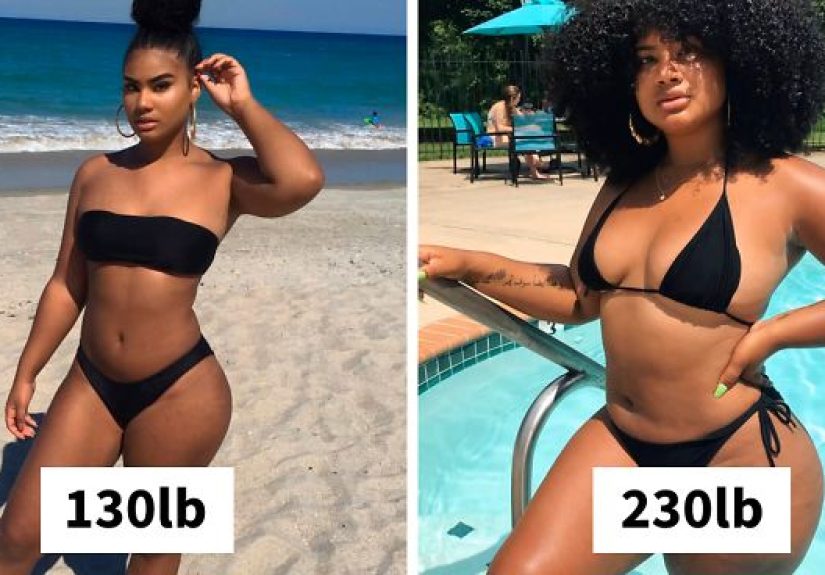
A weight gain before-and-after post may show someone who looks more relaxed, more energized, more present, or simply more comfortable existing. It may represent recovery from a period of stress. It may show a person who stopped chasing a body that made them miserable. It may also show someone who gained muscle, restored energy, or learned that food does not need to come with a courtroom trial.
The most meaningful part is not the size difference. It is the story behind the image. A photo can say, “I survived a season that asked too much of me.” It can say, “I am no longer shrinking myself to make other people comfortable.” It can say, “I bought clothes that fit my body instead of bullying my body to fit the clothes.” That last one deserves its own parade, preferably with snacks.
Self-Love Does Not Mean Loving Every Photo
Let’s be real: self-love is not waking up every morning, staring into the mirror, and declaring, “Wow, what a masterpiece!” Some days you feel confident. Other days, a weird bathroom light makes you question every life choice since middle school. That is normal.
Body positivity encourages acceptance of all bodies, while body neutrality focuses on respecting what your body does rather than forcing yourself to love how it looks every second. Both approaches can help. For many people, body neutrality is the more realistic doorway. Instead of “I love my stomach,” the first step might be, “My stomach helps me digest food, laugh, breathe, and live.” Not exactly a pop song lyric, but surprisingly powerful.
Before and after weight gain pics work best when they support that balanced mindset. The goal is not to say, “My larger body is the only good body.” The healthier message is, “My body changed, and I am still worthy of care, respect, style, joy, rest, and confidence.”
What Makes a Weight Gain Photo Empowering?
Not every transformation post is helpful. Some accidentally replace one kind of body pressure with another. A truly empowering post does not invite viewers to judge which version is prettier. It invites them to notice humanity.
1. It focuses on the person, not just the size
A strong caption might say, “The photo on the right shows me during a season when I had more energy, better friendships, and more peace around food.” That is very different from saying, “I finally look better.” One statement tells a life story. The other creates a beauty contest where the contestant is your own past self. Awkward.
2. It avoids numbers when numbers are not needed
Many weight gain posts do not need exact pounds, clothing sizes, calorie details, or measurements. Those details can pull viewers into comparison mode. A safer caption can say, “My body changed as I healed,” or “I gained weight and gained a life that felt more like mine.” Simple, human, and no calculator required.
3. It does not shame the “before” body
Your past body carried you through that chapter. Even if that chapter was painful, your body was not the villain. A thoughtful post avoids language like “disgusting,” “weak,” or “bad.” Try: “I was struggling then,” “I was disconnected from myself,” or “I was doing the best I could with what I knew.” That is kinder, and frankly, more accurate.
4. It makes room for different stories
Some people gain weight and feel stronger. Some gain weight and feel complicated emotions. Some are recovering. Some are adjusting to medication. Some are navigating grief, school stress, family changes, hormones, or a new routine. The internet loves simple captions, but bodies are not simple. They are more like group projects: lots of factors, not all of them under your control.
The Problem With “Before” Photos in Recovery Content
Weight gain photos can be inspiring, but they require care, especially when connected to eating disorder recovery or serious body image struggles. Showing a very low-weight “before” photo can unintentionally trigger comparison, reinforce the false idea that only certain bodies deserve help, or make viewers feel they are not “sick enough” to seek support.
A safer approach is to focus less on shocking contrast and more on lived experience. Instead of posting an image that spotlights illness, a person might share a recovery photo with a caption about what changed internally: more laughter, better sleep, clearer thinking, stronger relationships, less fear around food, or the ability to be present at dinner without treating bread like a suspicious stranger.
If someone still wants to share a visual story, they can choose neutral photos, avoid extreme comparisons, crop images thoughtfully, or use symbols: a favorite outfit that finally feels comfortable, a dinner with friends, a hiking trail, a graduation picture, a cozy room, or a selfie taken on a day they felt brave. The most powerful evidence of healing is not always a body. Sometimes it is a life.
How Social Media Shapes Body Image
Social media can be a beautiful place to find community, but it can also become a comparison machine with a ring light. Feeds often reward dramatic transformations, polished images, and captions that turn bodies into public property. When users scroll through endless photos, it becomes easy to forget that every image is only a moment, not a full biography.
Before and after weight gain pics can challenge unrealistic beauty standards, but they should not become another reason to inspect every curve, angle, or outfit. The healthiest posts tend to shift attention from “How does this body look?” to “What kind of life does this person get to live now?” That question changes everything.
It also helps to curate your feed. Follow creators who speak respectfully about bodies. Unfollow accounts that make you feel like your body is a renovation project. Mute keywords that pull you into obsessive comparison. Your feed is not a courtroom where your body must stand trial every morning. It is a space you are allowed to clean up.
Caption Ideas for Before & After Weight Gain Pics
If you are sharing your own weight gain transformation, the caption can make the post supportive instead of stressful. Here are thoughtful examples:
- “My body changed, but my worth did not. I am learning to meet myself with more patience.”
- “This is not a better body. It is simply my body in a different chapter.”
- “I gained weight, and I also gained energy, peace, and room to enjoy my life.”
- “Reminder: bodies are allowed to change without becoming public debates.”
- “The real transformation was not my size. It was how I talk to myself.”
- “No numbers, no shame, no ranking. Just a person learning to live more freely.”
Notice the pattern: the language does not insult the past body, glorify the current body as the only acceptable version, or tell strangers what their bodies should do. It celebrates personal growth without creating a new rulebook. Very considerate. Very stylish. Ten out of ten emotional tailoring.
What Not to Comment on Weight Gain Photos
Comment sections can be supportive, but they can also turn into a festival of unsolicited opinions. When someone posts a body-related transformation, avoid comments like “You looked better before,” “You look healthier now,” “How much did you gain?” or “I wish I could gain weight like that.” Even positive-sounding body comments can feel uncomfortable because they keep the focus on appearance.
Better comments include:
- “You look genuinely happy here.”
- “I love the confidence in this post.”
- “Thank you for sharing such a thoughtful message.”
- “This reminder helped me be kinder to myself today.”
- “Your peace really comes through.”
The golden rule is simple: praise the courage, the joy, the message, the styling, the smile, the honesty, or the growth. Do not turn someone’s body into a group assignment.
How to Take Weight Gain Pics Without Making It All About Weight
If you want to document your changing body, you can do it gently. Choose photos that reflect your life, not just your shape. Maybe the “after” picture is you dancing at a wedding, lifting groceries without feeling exhausted, wearing a bright outfit you used to avoid, or sitting at brunch without mentally negotiating with the menu.
Lighting, clothing, and angles can change how a body appears, so do not treat photos as scientific evidence. They are memories. Let them be memories. The camera is not a doctor, therapist, dietitian, judge, or magical truth machine. It is a rectangle with opinions.
Also, protect your privacy. You do not owe the internet details about your medical history, eating habits, diagnosis, weight, or timeline. Share only what feels safe. A strong post can simply say, “I am learning to respect my body through change.” That is enough.
Weight Gain, Health, and the Bigger Picture
Body acceptance does not mean ignoring health. It means refusing to define health by appearance alone. Weight is only one piece of a much larger picture that can include energy, sleep, blood pressure, mental health, nourishment, movement, stress, social connection, and access to respectful care.
It is also important not to diagnose strangers by looking at them. A person in a smaller body is not automatically healthy. A person in a larger body is not automatically unhealthy. A person who gained weight is not automatically “letting themselves go.” Sometimes they are finally letting themselves live.
If your own weight changes suddenly, feels distressing, or connects to eating struggles, anxiety, medication, illness, or major mood changes, it can help to speak with a qualified health professional. Getting support is not the opposite of self-love. It is self-love wearing practical shoes.
Why These Photos Matter in a Culture Obsessed With Shrinking
Before and after weight gain pics matter because they challenge a loud cultural message: that bodies should always become smaller, tighter, smoother, younger, and more controllable. They remind viewers that joy does not have a clothing size. Confidence does not require a “goal body.” Healing may look different for every person.
These photos also help normalize body changes across life stages. A student may gain weight after leaving a stressful environment. An athlete may gain weight while building strength. A parent may gain weight after pregnancy. A person recovering from illness may gain weight as their body rebuilds. Someone entering adulthood may simply notice their body no longer looks like it did at sixteen. None of these changes require a public apology.
The best weight gain posts do not say, “Everyone should want this.” They say, “Everyone deserves dignity while their body changes.” That is the heart of self-love.
Real-Life Experience: What Weight Gain Photos Can Teach Us
Think of someone who used to avoid every camera at family events. In old photos, they stood behind cousins, chairs, holiday decorations, and occasionally one suspiciously large plant. After gaining weight, they expected to hide even more. But one day, they saw a candid picture of themselves laughing at a birthday party. Their first instinct was to zoom in and criticize. Then they noticed something else: they looked present. Not perfect. Present. That moment became more meaningful than the size of their arms or the fit of their shirt. It was proof that a photo could hold joy instead of judgment.
Another common experience is the closet standoff. You know the scene: jeans on the bed, person staring at them like they are about to negotiate a hostage release. When a body changes, clothes can become emotional objects. A pair of pants may feel like a memory, a challenge, or a tiny denim bully. Self-love sometimes begins with buying clothes that fit now, not someday. The relief can be enormous. Suddenly, getting dressed is not a daily argument. It is just getting dressed. Revolutionary? Yes. Should there be confetti? Also yes.
For some people, weight gain photos mark recovery from a period when food felt complicated. The visible change may be only a small part of the story. The deeper win may be eating with friends again, accepting a spontaneous dessert, feeling warm, concentrating better, or no longer planning an entire day around body anxiety. A photo cannot show all of that, but a thoughtful caption can. It can say, “This body helped me return to my life.” That sentence carries more power than any number.
There are also experiences where the feelings are mixed. Someone may gain weight after starting a new medication, dealing with stress, or moving into a different routine. They may be grateful for stability while still struggling with body changes. That is valid. Self-love does not demand constant celebration. Sometimes it sounds like, “I am uncomfortable, but I will not be cruel to myself.” That is not small. That is emotional strength in sweatpants.
And then there is the experience of posting the photo. The moment before sharing can feel huge. Will people judge? Will old classmates appear from the digital bushes with opinions? Will Aunt Karen comment something weird? Possibly. The internet is the internet. But a carefully shared weight gain photo can also create connection. Someone else may see it and feel less alone. Someone may decide not to insult their own body that day. Someone may realize that change is not failure. In that way, one honest post can become a tiny lighthouse in a feed full of comparison storms.
Conclusion: The Best “After” Is a Kinder Relationship With Yourself
Before & after weight gain pics can be powerful when they celebrate self-love, body respect, and personal growth without shaming any version of the body. The most meaningful transformation is rarely just physical. It is the shift from punishment to care, from comparison to compassion, from hiding to participating in your own life.
Your body is allowed to change. Your relationship with it is allowed to change too. You do not need to adore every angle, post every milestone, or explain every pound. You are allowed to choose privacy. You are allowed to choose celebration. You are allowed to choose clothes that fit, meals that satisfy, movement that feels good, and photos that remind you of your life instead of your measurements.
At the end of the day, the most beautiful transformation photo is not the one that proves you became more acceptable. It is the one that proves you stopped asking permission to be kind to yourself.