Table of Contents >> Show >> Hide
- What Are Chives, Exactly?
- Chives Nutrition: Small Herb, Real Nutrients
- Potential Health Benefits of Chives
- How to Buy Chives That Won’t Turn into Green Sadness
- How to Store Chives (So You Actually Use Them)
- How to Wash and Prep Chives Safely
- How to Use Chives (Beyond the Baked Potato)
- Chives vs. Green Onions: A Quick Cheat Sheet
- Who Should Be Careful with Chives?
- Experience Notes: What Actually Happens in Real Kitchens (Extra )
- Conclusion
Chives are the underrated superhero of the herb world: they show up at the last second, sprinkle a little green confetti on your food, and somehow make
everything taste more “chef-y” with almost zero effort. They’re mild, fresh, onion-adjacent, and they don’t bully the rest of your ingredients the way
raw onion sometimes can. If your fridge has ever contained a sad, wilted bunch of chives you forgot about, don’t worrythis guide will help you actually
use them (and keep them alive long enough to do so).
What Are Chives, Exactly?
Chives (scientific name Allium schoenoprasum) are a perennial herb in the allium familythe same extended family reunion that includes onions,
garlic, leeks, and scallions. They look like thin, hollow green tubes and taste like a gentler, fresher version of onion. Think “onion’s polite cousin.”
Bonus feature: chives produce edible flowersusually purple pom-pomsthat are both pretty and tasty. If you’ve ever wanted your salad to look like it’s
attending a tiny garden wedding, chive blossoms are your moment.
You may also see garlic chives (Allium tuberosum). They have flat leaves (not hollow) and a stronger garlic vibe. They’re popular
in many Asian dishes and are absolutely worth trying if you like bolder flavor.
Chives Nutrition: Small Herb, Real Nutrients
Let’s be honest: most of us eat chives in “sprinkle quantities.” That means chives won’t single-handedly solve your entire nutrition plan, but they do
contribute helpful micronutrientsespecially vitamin K and vitamin Cand they add flavor without added sodium, sugar,
or fat.
Nutrition snapshot (raw chives)
Approximate values for 1 tablespoon chopped (about 3 grams):
| Nutrient | Amount | Why it matters (quick take) |
|---|---|---|
| Calories | ~1 | Big flavor, tiny energy cost. |
| Carbohydrates | ~0.1 g | Basically negligible in typical portions. |
| Fiber | ~0.1 g | A small bonus, especially when you use more than a pinch. |
| Protein | ~0.1 g | Not a protein source, but every little bit exists. |
| Vitamin K | ~6.4 mcg | Important for normal blood clotting and bone-related proteins. |
| Vitamin C | ~1.7 mg | Supports immune function and acts as an antioxidant. |
| Potassium | ~9 mg | Helps with fluid balance and normal muscle/nerve function. |
If you’re the type who goes beyond garnish and uses chives by the handful (respect), the nutrients add up more meaningfully. Per 100 grams, chives are
much higher in vitamin K and vitamin Cbut 100 grams is also a lot of chives unless you’re starring in a “Herbs: The Musical.”
Potential Health Benefits of Chives
“Benefits” can be a tricky word with herbs because the dose matters. Chives contain vitamins, minerals, and plant compounds, but most people eat small
portions. So the best way to think about chives is: they’re a smart supporting playernot the entire movie.
1) Vitamin K support for blood clotting and bones
Vitamin K helps the body make proteins involved in normal blood clotting and also supports proteins important to bone health. Chives are one of many green
foods that contribute vitamin K. If your diet includes chives along with other leafy greens, you’re stacking the deck in your favor.
2) More flavor, less salt (your heart may high-five you)
One of the most practical “health benefits” of chives is how they help you reduce sodium without feeling punished. Herbs add aroma and
brightness that makes food taste seasoned, even when you use less salt. Chives are especially good for this because their onion-like flavor signals
“savory” to your brain.
Try this: make scrambled eggs or mashed potatoes with half your normal salt, then add a generous shower of chives at the end. Your taste buds will be too
busy enjoying themselves to complain.
3) Antioxidants and plant compounds (promising, but don’t overhype it)
Like other alliums, chives contain plant compounds that researchers study for antioxidant and anti-inflammatory activity. That doesn’t mean chives are a
magical cure-all; it means they’re a nutrient-dense plant food that fits well into a balanced dietespecially when used often.
4) A gentler allium option for some people
Raw onions and garlic can be intense for sensitive stomachs. Chives are milder, and because they’re often used in smaller amounts, many people find them
easier to tolerate. Everyone’s digestion is different, so consider this a “maybe helpful” note, not a universal promise.
How to Buy Chives That Won’t Turn into Green Sadness
- Look for: bright, vibrant green stalks; firm texture; no slime; no yellowing.
- Avoid: limp bunches, dark mushy spots, or a smell that’s more “swamp” than “fresh onion.”
- Fresh vs. dried: dried chives exist, but fresh chives have a cleaner flavor and better texture for finishing.
How to Store Chives (So You Actually Use Them)
Refrigerator method (best for 5–7 days)
- Don’t wash them yet (extra moisture can speed up spoilage).
- Wrap chives loosely in a slightly damp paper towel.
- Place in a zip-top bag or airtight container, leaving a little airflow.
- Store in the fridge (crisper drawer if you have one).
- Swap the paper towel if it gets too wet.
Freezing chives (best for cooking)
Frozen chives won’t have the same crisp bite for garnishing, but they’re excellent for cooked dishes (soups, eggs, sauces).
- Flash-freeze: chop, spread on a tray, freeze, then transfer to a bag.
- Ice cube tray method: chop and freeze with a little water, broth, or oil in a tray for portioned “flavor cubes.”
- Pro tip: thin herbs freeze quicklychop first for easier use later.
Drying chives (works, but flavor is softer)
Drying can be handy if you grow chives and want a shelf-stable option. Just know the flavor becomes more muted compared with fresh or frozen. If you dry
them, make sure they’re fully dry before storing to prevent mold.
How to Wash and Prep Chives Safely
When you’re ready to use chives, rinse them under running water and pat dry. Skip soap or detergentproduce can absorb residues, and that’s not a fun
seasoning. Use clean hands, a clean cutting board, and a clean knife.
Slicing: the secret to “restaurant chives”
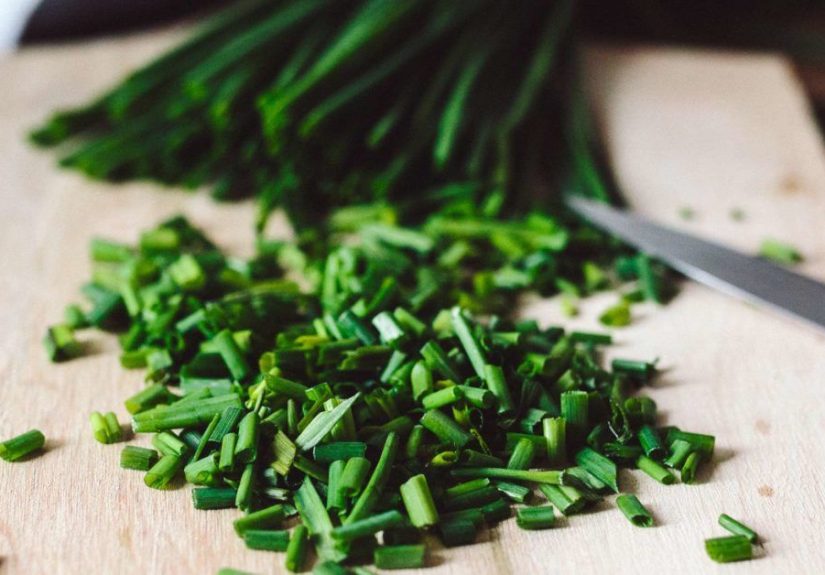
Chives bruise easily. A sharp knife helps you cut cleanly instead of crushing them. For extra-neat slices, some chefs use a technique often called a
“back-slice” to keep delicate allium herbs from getting mangled. Do you need that level of precision at home? Absolutely not. Will it make you feel like a
kitchen wizard? Possibly.
How to Use Chives (Beyond the Baked Potato)
Chives shine brightest as a finishing herb. Add them at the end of cooking, or right before serving, so their fresh flavor stays… fresh.
Easy everyday uses
- Eggs: scrambled eggs, omelets, frittatasadd at the end.
- Potatoes: baked, mashed, roasted, or in potato salad.
- Soups: sprinkle on top of creamy soups (tomato, potato, cauliflower).
- Salads: toss into green salads, tuna salad, chicken salad, egg salad.
- Dips & spreads: mix into Greek yogurt, sour cream, cottage cheese, or cream cheese.
- Seafood: great with salmon, shrimp, crab, or a simple lemony fish dish.
- Veggies: finish roasted carrots, broccoli, green beans, or mushrooms with chives.
Quick recipe: Chive compound butter
- Soften 4 tablespoons of unsalted butter.
- Stir in 2–3 tablespoons chopped chives, a pinch of salt, and optional lemon zest.
- Roll into a log (parchment paper helps), chill, and slice as needed.
Use it on corn, steak, fish, baked potatoes, or warm bread. It’s an easy way to make a regular Tuesday taste like it has a reservation.
Chive blossoms: edible “purple confetti”
If you grow chives (or find blossoms at a farmers’ market), don’t toss the flowers. Separate the tiny florets and sprinkle them on salads, deviled eggs,
roasted vegetables, or soft cheese. They add mild onion flavor and serious visual flair.
Chive oil (for saving wilting herbs)
When chives are starting to look tired, turning them into a chive-forward oil can stretch their usefulness. Herb oils are typically made by quickly
blanching herbs, cooling them, blending with oil, and straining. The result is a bright finishing oil that can elevate soups, grains, and dips.
Chives vs. Green Onions: A Quick Cheat Sheet
- Chives: thin, hollow, grass-like; mild onion flavor; usually used as garnish or stirred in at the end.
- Green onions (scallions): thicker stalks with a bulb; stronger flavor; often cooked and used in larger amounts.
- Substitution rule: you can swap in a pinch, but use less scallion if you want the same gentle vibe.
Who Should Be Careful with Chives?
Chives are safe for most people as a culinary herb. A few situations deserve extra attention:
-
People taking warfarin (blood thinner): vitamin K can interact with warfarin. The key is consistencydon’t swing wildly from “no vitamin K”
to “all the green things” without medical guidance. - Allium allergies: rare, but possible. If onions/garlic cause reactions, use caution.
- Digestive sensitivity: chives are milder than onions, but any allium can be irritating for some people.
If you’re managing a medical condition or medication, treat herbs like chives as part of your overall diet pattern and ask a clinician if you’re unsure.
Experience Notes: What Actually Happens in Real Kitchens (Extra )
Here’s the funny thing about chives: people buy them with big dreams and then use exactly seven pieces as garnish before the rest slowly dissolves into
compostable regret. The good news is that chives are easy to “fit in” if you think of them as a finishing move rather than a main ingredient. Home cooks
often say the biggest upgrade is simply remembering that chives don’t want to be cooked to death. If you toss them into a pan early, the delicate flavor
fades fast, and you’re left wondering why your dish tastes like… warm air with green strings.
One common experience is the “too-thick chop” problem. Chunky chive pieces can feel like little rubber bands in soft foods (looking at you, mashed
potatoes). When you slice chives thinly, they melt into the dish and distribute flavor more evenly. People who start slicing them smaller often notice they
can use a bit less salt because chives give that savory “oniony” impression without needing the shaker. It’s not magic; it’s just flavor layering, which
is basically the adult version of stacking LEGO bricks.
Another real-life lesson: moisture management is everything. Many cooks learn the hard way that storing wet chives is an express train to slime town. The
“wrap in a slightly damp paper towel” trick works because it balances humidity without soaking the herb. And yes, changing the towel feels fussyuntil you
realize it’s a 15-second job that saves you from throwing away a whole bunch. (Chives are inexpensive, but so are your feelings. Protect them.)
People also discover that chives are a “bridge herb” for picky eaters. If someone side-eyes raw onion, chives can be the gentle introduction: same general
flavor family, but softer, fresher, and less likely to dominate. Parents and home cooks often mix chives into scrambled eggs, cream cheese spreads, or
yogurt-based dips because the green bits look fun and the flavor is mild. The result is frequently, “Wait, I like this?” which is basically the highest
compliment a vegetable-adjacent ingredient can receive.
If you grow chives, the experience gets even better. Gardeners often love that chives are low-drama: they come back every year, tolerate a range of
conditions, and forgive you if you’re occasionally forgetful. Harvesting is satisfying toosnip from the base, and the plant keeps producing. And when the
flowers show up, there’s a brief window where you feel like a botanical genius. Many cooks like to sprinkle the blossoms on salads or fold them into soft
butter for special occasions, because nothing says “I made an effort” like edible purple flowers.
Finally, the most common “aha” moment is realizing chives aren’t just for baked potatoes. Once people start treating chives like a finishing saltsomething
you add right before eatingthey show up everywhere: soups, rice bowls, roasted vegetables, avocado toast, grilled chicken, and quick dips. The best
practice is to keep a small container of chopped chives ready in the fridge for a few days. When it’s visible and convenient, you’ll actually use it. If
it’s hidden behind three jars of mustard and a mystery container of leftovers, it will quietly retire before ever reaching its culinary potential.
Conclusion
Chives are the easiest way to make everyday food taste fresher and look more appetizingwithout adding much calories, sodium, or hassle. Nutritionally,
they contribute small but meaningful amounts of vitamins (especially vitamin K and vitamin C), and practically, they help you build flavor with fewer
“extra salt” moments. Buy them fresh, store them smart, slice them thin, and add them at the end. Your future selfand your sad, neglected baked potato
will thank you.