Table of Contents >> Show >> Hide
- What is a “complete protein,” exactly?
- Do vegans need to obsess over complete proteins?
- How to use this list without turning meal planning into a math class
- Vegan complete proteins: 13 plant-based options
- 1) Edamame (whole soybeans)
- 2) Tofu (yes, it can taste like something)
- 3) Tempeh (the “tofu with texture” option)
- 4) Soy milk (and unsweetened soy yogurt)
- 5) Quinoa
- 6) Buckwheat
- 7) Amaranth
- 8) Chia seeds
- 9) Hemp seeds (hemp hearts)
- 10) Spirulina (with a safety reality check)
- 11) Ezekiel-style sprouted grain + legume bread (complete in one loaf)
- 12) Rice + beans (the classic complete-protein pairing)
- 13) Hummus + whole-grain pita (or chickpeas + whole grains)
- Common questions (answered without yelling “just eat tofu”)
- Real-world experiences: how people actually eat vegan complete proteins
- Conclusion: make complete protein easy, not dramatic
- SEO tags
“Where do you get your protein?” is the unofficial national sport of talking to vegans.
The good news: you don’t need a secret stash of tofu in your sock drawer. You just need a basic understanding
of complete proteins and a few reliable, delicious foods that show up for you like a friend with a pickup truck on moving day.
This guide breaks down what “complete protein” really means, why it’s not the only thing that matters,
and the 13 best vegan complete-protein options (including a few “built-in combo” meals) that make hitting your protein goals
way easier than the internet makes it seem.
What is a “complete protein,” exactly?
Protein is made of amino acids. Your body can make some amino acids on its own, but nine are “essential”
because you have to get them from food. A complete protein is a protein source that includes all nine essential amino acids.
Many animal foods qualify, but several plant foods do tooplus you can create a complete amino acid “team”
by eating complementary plant foods over the course of the day.
Here’s the plot twist most people miss: you don’t have to perfectly “pair” proteins in the same bite or the same meal.
Your body keeps an amino-acid pool and draws from it as needed, so overall variety across the day matters more
than any single snack being a flawless amino acid résumé.
Do vegans need to obsess over complete proteins?
Not really. Complete proteins are useful, but they’re not the only way to meet your needs.
A well-planned vegan pattern can provide adequate protein and amino acids, especially when it includes a range of
legumes, grains, nuts, seeds, and soy foods. Think “rotation,” not “protein panic.”
Also, protein doesn’t travel alone. Plant-based protein sources often bring
fiber, minerals, and phytonutrients to the partythings many Americans don’t get enough of.
So yes, we’re here for protein… but we’re also here for the whole cast.
How to use this list without turning meal planning into a math class
- Start with one “anchor” protein per meal (tofu, tempeh, quinoa, beans + grain combo).
- Add a “booster” (hemp, chia, soy milk, or a second protein side) if you need more staying power.
- Don’t fear repeats. If tofu works for you, let tofu work. Variety can happen across the week.
- If you’re training hard or have medical needs, ask a clinician or registered dietitian for personalized targets.
Vegan complete proteins: 13 plant-based options
Below are foods that are naturally complete (contain all nine essential amino acids) and a few smart
“pairing” options that create a complete amino acid profile in one dish.
For each, you’ll get practical ways to eat itbecause nobody wants to raw-dog amaranth with a spoon.
1) Edamame (whole soybeans)
Soybeans are one of the most reliable complete vegan proteins, and edamame is the easy, snackable version.
It’s also a great “gateway protein” for people who claim they don’t like tofu (we’ll circle back to that).
Try it: steamed edamame with flaky salt + chili; tossed into salads; blended into a green pesto-style dip.
2) Tofu (yes, it can taste like something)
Tofu is a complete protein made from soy. Think of it as the culinary equivalent of a blank notebook:
boring only if you refuse to write in it. Press it, season it, and cook it with confidence.
Try it: crispy tofu “nuggets” in the air fryer; tofu scramble with salsa; silken tofu blended into smoothies or sauces.
Flavor cheat code: soy sauce + garlic + ginger + a little maple + lime. Suddenly tofu has a personality.
3) Tempeh (the “tofu with texture” option)
Tempeh is fermented soy pressed into a firm cake. It’s a complete protein and often feels more “meaty”
because it has bite and a nutty taste. If tofu is a sponge, tempeh is a sturdy paper towel: still absorbent,
but it won’t fall apart when life gets saucy.
Try it: thin-sliced tempeh “bacon”; crumbled tempeh tacos; tempeh cubes glazed and roasted for grain bowls.
4) Soy milk (and unsweetened soy yogurt)
If you want a complete protein that requires zero cooking skill, soy milk is your friend.
It’s especially helpful at breakfastwhen many vegan meals accidentally become “toast and vibes.”
Choose unsweetened most of the time, and check labels if you’re comparing brands.
Try it: overnight oats with soy milk; a latte upgrade; chia pudding; soy yogurt topped with fruit and hemp seeds.
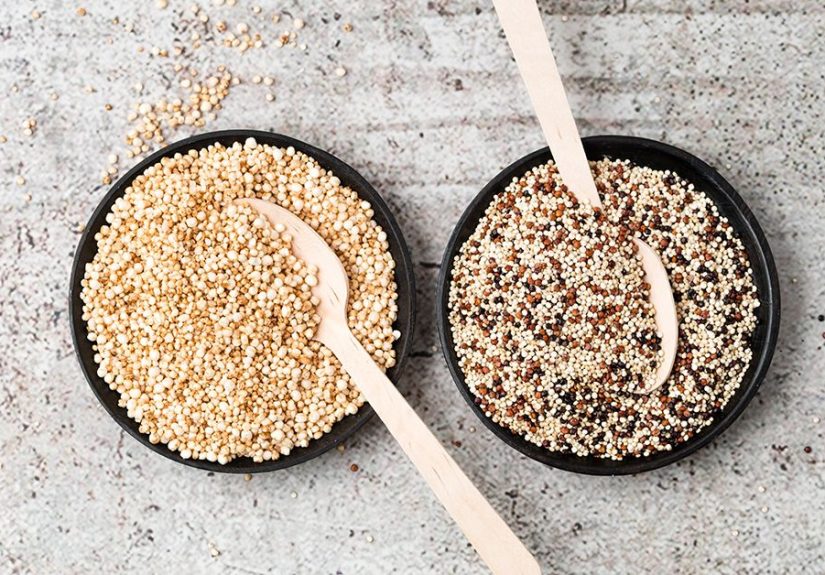
5) Quinoa
Quinoa is a complete protein and a weeknight lifesaver because it cooks fast and plays well with everything.
It also works in sweet and savory directions, which is rare for something that looks like birdseed’s sophisticated cousin.
Try it: quinoa bowls with roasted veggies + tahini; quinoa “fried rice”; quinoa breakfast porridge with cinnamon and berries.
6) Buckwheat
Despite the name, buckwheat isn’t wheat (it’s naturally gluten-free).
It’s commonly eaten as groats (kasha) or in soba noodles, and it’s often described as a complete protein option.
It has an earthy flavor that tastes like it knows what jazz is.
Try it: soba noodle salad with edamame; savory buckwheat porridge; toasted kasha as a crunchy topping.
7) Amaranth
Amaranth is a tiny pseudo-grain that’s frequently cited as a complete protein.
It cooks into a porridge-like texture, which makes it great for warm breakfasts or thickening soups.
Try it: amaranth breakfast bowl with fruit; savory amaranth with mushrooms and herbs; stirred into veggie chili for body.
8) Chia seeds
Chia seeds contain all nine essential amino acids and are an easy way to “quietly add protein”
without changing the whole meal. They also bring fiber and omega-3 fats (ALA), so they’re doing the most
for something smaller than a pencil eraser crumb.
Try it: chia pudding with soy milk; stirred into oatmeal; blended into smoothies; sprinkled onto avocado toast.
Heads-up: increase chia gradually and drink enough fluidsyour gut appreciates a warm introduction.
9) Hemp seeds (hemp hearts)
Hemp seeds are widely described as a complete plant protein and have a mild, nutty taste.
They’re basically “protein confetti”: sprinkle them on almost anything, and suddenly your meal is more serious.
Try it: on salads, oatmeal, soups, pasta; blended into pesto; mixed into hummus for a protein boost.
10) Spirulina (with a safety reality check)
Spirulina is a blue-green algae product often used as a powder. It contains a broad amino acid profile and is
used as a concentrated protein source in small amounts. It’s not a meal-sized protein on its own, but it can
support a higher-protein patternespecially when added to smoothies.
Important: because algae supplements can be contaminated (for example, with heavy metals or toxins),
choose reputable brands that use third-party testing, and talk to a clinician if you’re pregnant, immunocompromised,
or managing a medical condition.
Try it: 1 teaspoon in a smoothie with soy milk, banana, and peanut butter (taste: “green, but trying”).
11) Ezekiel-style sprouted grain + legume bread (complete in one loaf)
Some sprouted breads (often marketed “Ezekiel” style) combine grains and legumes in one product.
That grain+legume teamwork can create a complete amino acid profile in a single foodvery convenient for
lunches that need to happen between meetings, school, or your third attempt at being a morning person.
Try it: toast with hummus; tofu “egg” salad sandwich; avocado + hemp seeds; tempeh BLT-style sandwich.
Check labels: most are vegan, but ingredients vary by brand.
12) Rice + beans (the classic complete-protein pairing)
Beans are protein-rich but tend to be lower in one essential amino acid, while grains tend to be lower in another.
Put them together (like rice + beans), and you get a more complete amino acid profile in one meal.
This is traditional food wisdom that existed long before the internet discovered “macros.”
Try it: black beans + brown rice burrito bowls; red beans + rice; lentil dal over rice; beans with corn tortillas.
13) Hummus + whole-grain pita (or chickpeas + whole grains)
Chickpeas (hummus) paired with whole grains (like whole-wheat pita or whole-grain crackers) is another easy
complete-protein combo. It’s also one of the best “emergency meals” because it requires no cooking and still feels like food.
Try it: hummus + pita + crunchy veggies; hummus toast with tomatoes; chickpea salad stuffed into whole-grain wraps.
Common questions (answered without yelling “just eat tofu”)
Is “complete protein” the same as “high protein”?
Nope. “Complete” refers to amino acid coverage. A food can be complete but not provide a huge amount of protein per serving
(seeds are a good example). That’s why meals often work best when you combine an anchor protein (like tofu, tempeh, edamame, quinoa, or beans+grains)
with smaller boosters (like hemp or chia).
Do I need to combine proteins at every meal?
No. Eating a variety of plant foods across the day is generally enough. If you like tidy meal rules,
aim for “a protein + a plant + a carb + a fat” and you’ll naturally end up with good coverage.
What’s the easiest way to build a high-protein vegan breakfast?
Build around soy milk or soy yogurt, then add chia or hemp.
Example: soy yogurt + berries + hemp, or overnight oats with soy milk + chia.
(Breakfast doesn’t have to be dessert cosplay. But it can be, sometimes.)
Real-world experiences: how people actually eat vegan complete proteins
In real kitchens (not the fantasy land where everyone meal-preps for seven days with color-coded containers),
vegan protein success usually comes down to a few repeatable habits.
Experience #1: The “protein anchor” habit is a game-changer.
Many people find that once they pick a reliable anchorlike tofu, tempeh, edamame, or beans+grainseverything else gets easier.
Instead of asking, “How do I get protein today?” they ask, “Which anchor am I using?” A tofu scramble becomes the default breakfast twice a week.
A tempeh bowl becomes the Tuesday dinner that never fails. Quinoa becomes the “I forgot to grocery shop but still want a real meal” solution.
That mental switch reduces decision fatigue, which is secretly the biggest barrier to eating well.
Experience #2: People stop worrying about “complete” once they feel the difference.
There’s a common pattern: early on, someone tries vegan eating and ends up living on pasta, fruit, and optimism.
Then they discover that meals with a solid protein base feel differentmore stable energy, better fullness, fewer snack emergencies.
That’s when complete-protein options shine: tofu at lunch, quinoa at dinner, soy yogurt at breakfast.
The “complete protein” label becomes less of a rule and more of a helpful shortcut when planning.
Experience #3: The easiest upgrades are the tiny ones.
People who stick with plant-based eating often rely on “invisible protein upgrades”:
hemp hearts sprinkled on soup, chia added to overnight oats, soy milk swapped in for almond milk,
edamame tossed into salads, or hummus paired with whole grains instead of eaten with just veggies.
These aren’t dramatic changes, but they add upespecially for teens, busy adults, athletes-in-training,
or anyone who needs meals to be quick.
Experience #4: Texture matters more than ideology.
Some folks don’t like tofu until they stop eating it like tofu. Pressed and crisped tofu can convert people who swear they hate it.
Tempeh wins over the “I need something chewy” crowd. Quinoa and buckwheat help the “I’m tired of beans” crowd.
The practical lesson: rotate formatscrumbles, cubes, bowls, noodles, spreadsso protein doesn’t feel repetitive.
Experience #5: Social life is easier with “default orders.”
A lot of people do best when they have a few default choices at restaurants:
a burrito bowl (beans + rice), a tofu/veggie stir-fry, a quinoa salad with edamame, or hummus with whole-grain pita plus an extra side.
Having a plan reduces the awkward “I guess I’ll just get fries” moment and makes it easier to stay consistent without being perfect.
Experience #6: Supplements aren’t the same as foodespecially with algae powders.
People are often tempted by spirulina because it sounds like a nutritional superhero.
In practice, most use it as a small add-on rather than a major protein sourceand many learn to prioritize tested quality.
The most sustainable approach tends to be: rely on food first (soy, grains, legumes), then add “extras” thoughtfully.
Put simply: vegan complete proteins aren’t rare, expensive, or mysterious. They’re grocery-store normal.
The “experience” most people report after a few weeks is that protein becomes less of a daily puzzle and more like a familiar rhythm:
choose an anchor, add a booster if needed, and move on with your life.
Conclusion: make complete protein easy, not dramatic
If you remember one thing, make it this: vegan complete proteins are real, practical, and tasty.
Soy foods (edamame, tofu, tempeh, soy milk) are the MVPs. Quinoa, buckwheat, and amaranth bring variety.
Chia and hemp add effortless boosts. And classic combos like rice + beans or hummus + whole grains make complete protein feel like comfort food.
You don’t need to chase perfectionjust build meals that actually satisfy you. Your future self (and your snack drawer) will thank you.