Table of Contents >> Show >> Hide
- What We Know About Bruce Willis’ Health Journey (And Why the Family Shares Carefully)
- Demi Moore and Bruce Willis: The Exes Who Refused to Become Strangers
- The Blended-Family Blueprint: Demi Moore and Emma Heming Willis Aren’t Competing
- Frontotemporal Dementia (FTD) Explained: The Basics Without the Medical Maze
- Aphasia, Communication, and the Invisible Work of Staying Connected
- How “Celebrating” Changes When Someone Has Dementia (And Why It Still Matters)
- What Fans (and the Rest of Us) Can Learn From This Story
- Practical Resources for Families Facing Dementia (FTD Included)
- Extra: Real-World Experiences Families Share in Situations Like This (About )
- Conclusion
Hollywood loves a comeback story. But sometimes the most powerful “sequel” isn’t a box-office hitit’s a family showing up,
quietly and consistently, when life stops being cinematic and starts being real.
That’s the chapter Bruce Willis’ loved ones have been living in public: a season defined less by red carpets and more by
routine, compassion, and the kind of loyalty that doesn’t care what your relationship status says on paper.
As Willis lives with frontotemporal dementia (FTD), his ex-wife Demi Moore has remained a visible, steady presenceoffering
love, celebrating milestones, and helping their famously blended family stay, well… blended.
If the headline version is “Demi showers Bruce with love,” the human version is deeper: a co-parenting partnership that grew
into a family cultureone that makes room for new spouses, adult kids, grandkids, and hard daysall at the same table.
And yes, there are tender birthday posts and warm photos. But the real story is what those snapshots represent:
meeting someone where they are, and loving them there.
What We Know About Bruce Willis’ Health Journey (And Why the Family Shares Carefully)
Bruce Willis stepped away from acting after his family shared that he had been diagnosed with aphasia, a condition that affects
communication. Later, the family announced a more specific diagnosis: frontotemporal dementia, often called FTD.
Unlike some other forms of dementia that are primarily associated with memory changes early on, FTD is frequently linked to changes
in behavior, personality, and/or languagedepending on the type and which parts of the brain are affected.
The important part is not the medical vocabularyit’s what it means in everyday life. FTD is progressive, and symptoms can evolve.
Communication changes may be one of the first (and most frustrating) challenges, because language is how we connect, joke, apologize,
and say “I love you” without even thinking about it.
Willis’ family has generally kept updates limited, focusing on love and gratitude while protecting privacy. That balance matters.
A public figure’s illness can turn into a spectator sport if people aren’t carefuland this family has made it clear they’re not
offering a live feed. They’re offering context, awareness, and (occasionally) a glimpse of support.
A Quick Timeline in Plain English
- 2022: The family shares Willis’ aphasia diagnosis and his decision to step away from acting.
- 2023: The family announces Willis has frontotemporal dementia (FTD), providing clearer diagnostic specificity.
- 2024–2025: Loved ones share select updates and milestone moments, emphasizing care, stability, and togetherness.
That last bullet is where Demi Moore’s role becomes especially visiblenot because she’s performing support, but because she keeps
showing up in the ways families do: birthdays, benefits, hugs, and “we’re here” energy.
Demi Moore and Bruce Willis: The Exes Who Refused to Become Strangers
Many divorced couples aim for “civil.” Moore and Willis have long seemed to aim for “family.” They share three daughtersRumer,
Scout, and Tallulahand over the years, their co-parenting reputation has been less “awkward handshake at graduation” and more
“we’re still in the same group chat.”
When Willis’ health challenges became public, Moore didn’t drift to a polite distance. She remained part of the support system.
Not in a way that erases Willis’ wife Emma Heming Willis (more on that in a moment), but in a way that reinforces something
surprisingly modern: love doesn’t have to be romantic to be real, and family doesn’t have to be traditional to be strong.
The Love Language Here Is “Presence”
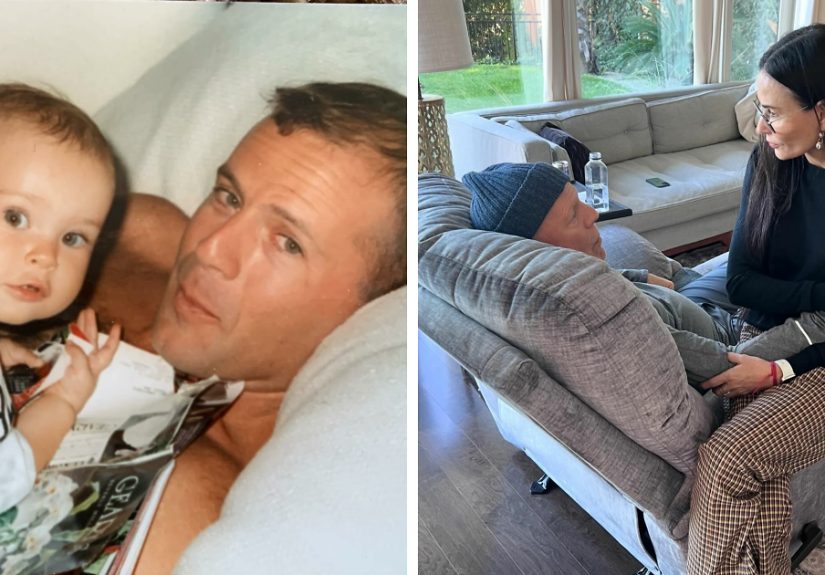
Publicly, that presence has looked like heartfelt birthday tributes and family photos that feel more like a living room than
a PR plan. It’s also included Moore speaking with empathy about what it’s like to witness someone you once built a life with
move through an illness that changes communication and personality.
One of the most meaningful ideas Moore has shared in interviews is a simple caregiving truth: you meet the person where they are.
Not where you wish they were. Not where they used to be. Where they aretoday.
That concept sounds gentle. In real life, it’s steel. It requires grieving and loving at the same time, which is a uniquely
human multitasking skill no one puts on a résumé.
The Blended-Family Blueprint: Demi Moore and Emma Heming Willis Aren’t Competing
If you’ve ever watched people try to navigate blended-family dynamics, you know the usual traps: silent tension, territorial
energy, and the classic “Who gets to be in the photo?” drama. The Willis-Moore-Heming family has been publicly modeling something
elsecooperation.
Demi Moore has spoken with compassion about Emma Heming Willis, who is both a spouse and a caregivertwo roles that can feel like
a duet until illness turns them into a marathon.
Heming Willis has also become an advocate for caregivers, sharing how difficult and isolating the role can be, while emphasizing
that Willis is surrounded by love and care. That message matters, because dementia caregiving often happens behind closed doors,
and it’s easy for the public to forget there are real people doing real work long after the headlines move on.
Why This Matters Beyond Celebrity Culture
You don’t need famous last names to recognize what’s happening here. Many families dealing with dementia face:
- The emotional weight of role changes (partner becomes caregiver; child becomes advocate).
- Communication shifts that can make everyday connection harder.
- Logistical complexity: appointments, routines, safety, and long-term planning.
- The constant balancing act between privacy and seeking support.
Seeing a high-profile blended family cooperaterather than fracturecan feel like a small permission slip for other families:
you don’t have to do this perfectly; you just have to do it together.
Frontotemporal Dementia (FTD) Explained: The Basics Without the Medical Maze
Frontotemporal dementia is an umbrella term for a group of disorders caused by progressive degeneration of the frontal and/or
temporal lobes of the brain. Those areas are involved in behavior, personality, decision-making, and language.
In practical terms, FTD can look different from person to personbecause brains are different, and because FTD includes multiple
subtypes. Some people show more behavior and personality changes early (behavioral variant FTD). Others experience primary
difficulties with language (often referred to under the umbrella of primary progressive aphasia).
Common Signs Families Notice (Often Before a Diagnosis)
- Language changes: trouble finding words, following conversation, or expressing thoughts clearly.
- Behavior shifts: impulsivity, reduced empathy, social missteps, or changes in judgment.
- Emotional changes: apathy, mood shifts, or seeming “not like themselves.”
- Functional impact: challenges at work, with planning, or in everyday routines.
FTD is also often misdiagnosed, especially early on, because symptoms can resemble depression, anxiety, midlife stress, or other
neurological conditions. That’s part of why the Willis family’s decision to share a specific diagnosis had ripple effects:
it helps people connect dots in their own lives and encourages awareness.
Aphasia, Communication, and the Invisible Work of Staying Connected
Aphasia affects a person’s ability to communicate. It can influence speaking, understanding speech, reading, and writing.
When communication becomes effortful, connection can feel effortful tooeven when love is still there.
Families often adapt by changing the way they communicate, not the relationship itself. That might include:
- Using shorter sentences and one idea at a time.
- Reducing background noise and distractions during conversation.
- Offering choices rather than open-ended questions.
- Using photos, familiar music, or routines to spark comfort and recognition.
- Leaning into nonverbal communication: touch, eye contact, and presence.
Speech-language therapy may help some people manage certain communication challenges. There is currently no cure for FTD, but
symptom-focused supportmedical, therapeutic, and socialcan make a meaningful difference in quality of life.
How “Celebrating” Changes When Someone Has Dementia (And Why It Still Matters)
One reason Demi Moore’s birthday tributes have resonated is that they spotlight something families quietly wrestle with:
how do you celebrate when the person you love is changing?
The answer is usually not a big reinvention. It’s a gentle adjustment.
Small Shifts That Often Make Milestones Better
- Keep gatherings calm: fewer people, familiar faces, low-pressure schedules.
- Use the “best time of day” rule: plan around when the person typically feels most comfortable.
- Honor traditions lightly: a favorite meal, a familiar song, a cozy ritualwithout forcing anything.
- Take photos without making it a production: candid moments tend to feel safest.
When Moore shares a warm family moment, it doesn’t read as performative. It reads as familiar: the way families say,
“We’re still here, and you’re still you, and we still love you.”
What Fans (and the Rest of Us) Can Learn From This Story
It’s easy to reduce celebrity illness to a headline: diagnosis, update, tribute, repeat. But the more useful takeaway is how
the family is navigating the in-between.
1) Love Can Be Reorganized Without Being Reduced
Moore and Willis are not marriedand yet Moore’s presence shows that shared history and shared children create a bond that can
evolve rather than disappear. That’s not a fairy tale. It’s mature love, the kind that’s less fireworks and more foundation.
2) Caregiving Is a Team Sport
Dementia care is demanding. When multiple family members can collaboratespouses, ex-spouses, adult children, close friendsthe
person at the center benefits, and caregivers are less isolated.
3) Awareness Helps Other Families Feel Less Alone
FTD is less widely understood than some other dementias. Public conversations can encourage earlier evaluation, more informed
support, and less stigma around behavioral and communication symptoms.
Practical Resources for Families Facing Dementia (FTD Included)
If this story hits close to home, consider reaching out to reputable organizations for education and support. Many families find
strength in caregiver groups, disease-specific resources, and professional guidance that helps them plan for care needs as symptoms
change over time.
- Support organizations focused on FTD and caregiver education
- Neurology or memory clinics experienced with frontotemporal disorders
- Speech-language pathology services for communication support
- Community-based caregiver support groups and respite resources
And if you’re supporting someone who’s supporting someoneyes, that countsremember the most underrated caregiving tool:
ask, specifically, what would help. Not “Let me know if you need anything” (which is kind, but vague). Try:
“Do you want me to bring dinner Tuesday, or handle school pickup Thursday?”
Extra: Real-World Experiences Families Share in Situations Like This (About )
Stories like Bruce Willis and Demi Moore’s resonate because they mirror what many families experienceminus the paparazzi and the
Wikipedia pages. In caregiver communities, people often describe the same emotional weather: moments of warmth and humor drifting
right alongside grief, fear, and exhaustion. It’s not a straight line. It’s a loop-de-loop.
One common experience is what some call “celebrating differently.” Birthdays may become shorter. Holidays may get quieter.
Families learn to trade the big, busy party for something gentler: a familiar playlist, a favorite meal, a calm room, and a few
people who feel safe. In those settings, connection tends to show up in small wayslike a hand squeeze, a smile at a familiar
face, or a relaxed moment that says, “I’m okay right now.” Caregivers often say those moments feel like gold, precisely because
they can’t be forced.
Another shared experience is adapting communication without making the person feel “tested.” Families learn that rapid-fire
questionsespecially ones that require memory or word-findingcan create frustration. Instead, they lean into choice-based prompts
(“Tea or coffee?”), supportive cues (“It’s the blue sweater you like”), and nonverbal reassurance. Caregivers also report that
tone matters as much as words. A calm voice, a patient pause, and a friendly facial expression can do more than a perfectly
phrased sentence.
People also talk about the emotional complexity of “meeting them where they are.” It sounds peaceful, but in practice it can feel
like learning a new map every few months. The person may have good days and hard days. They may be more engaged in the morning and
more tired later. Families often adjust routines to reduce stresskeeping the environment predictable, limiting overstimulation,
and using familiar objects (photos, music, favorite shows) as comfort anchors. Over time, caregivers become experts in subtle
signals: what agitation looks like before it escalates, what “I’m overwhelmed” looks like when words don’t cooperate.
A final experienceespecially relevant to the Willis-Moore-Heming dynamicis the power of “shared responsibility.” In families
that work well together, people take on roles: one person coordinates appointments, another handles meals, someone else manages
paperwork, and adult children help keep the mood light. When an ex-spouse stays involved in a respectful, supportive way, it can
reduce pressure on the primary caregiver and reinforce stability for everyone. Many families say the illness clarifies what
matters: old grudges become less interesting, and showing up becomes the main love language.
In the end, the most relatable part of this story isn’t celebrity. It’s the message underneath: love can change shape and still
be love. And in a season defined by change, that kind of steady presence is its own quiet miracle.
Conclusion
Bruce Willis’ health journey has been deeply personaland the family’s careful public updates reflect that. Still, what has come
through clearly is the support surrounding him: from his wife Emma Heming Willis, from his daughters, and from Demi Moore, who has
consistently shown that an ex can remain family when the foundation is respect and love.
Behind the headlines and the birthday photos is a bigger story: one about blended families choosing unity, caregivers carrying
invisible loads, and the hard, brave practice of meeting someone where they are. It’s not the Hollywood ending anyone ordered
but it is, undeniably, a story about love.