Table of Contents >> Show >> Hide
- Why a Hinge Became the Ultimate Handheld Power Move
- The Star of the Show: A Game Boy Pocket That Folds Like an SP
- What Makes a Hinged Game Boy Build So Hard?
- The Modern Modding Ecosystem That Makes This Possible
- If You’re Dreaming of a Hinged Game Boy, Think Like a Designer
- Why This Mod Matters (Beyond the Flex)
- Conclusion: The Cutest “Impossible” Upgrade You’ll Ever See
- Experiences From the Bench: What It’s Like to Chase the “Pocket SP” Dream
- SEO Tags
There are two kinds of retro gamers: the “keep it original” crowd and the “hand me a soldering iron and a
dream” crowd. If you’ve ever looked at a classic 1990s Game Boy and thought, “This needs the dramatic
entrance of a clamshell flip,” welcomeyou’re among friends.
In recent years, the retro handheld scene has turned into a full-blown renaissance: upgraded displays,
rechargeable batteries, custom shells, and audio mods that make your childhood “beep boop” sound like it
got an upgrade package. But one of the most delightful flexes is mechanical, not digital:
taking the iconic hinge design of the Game Boy Advance SP and bringing that foldable magic to an earlier
Game Boy generation.
This is the story of why a hinge matters, what it takes to pull off a hinged 1990s Game Boy build, and why
projects like the Game Boy Pocket SP are basically wearable art for people who think tri-wing screws are a
personality trait.
Why a Hinge Became the Ultimate Handheld Power Move
The original Game Boy era (DMG, Pocket, Color) was built like a small brick with a screen. It’s charming,
indestructible, and just ergonomic enough to make your hands forget what comfort feels like after a long
Tetris session. Then the early 2000s arrived, and Nintendo decided handhelds should foldlike a tiny laptop
for your thumbs.
A clamshell design isn’t just cute. It’s practical:
- Screen protection: close it and the display stops living in fear of keys, sand, and pocket lint.
- Portability: the device becomes easier to stash without feeling like you’re smuggling a paperback.
- That snap-shut satisfaction: the hinge “click” is the retro version of a mic drop.
With modern foldable phones making hinges trendy again, it’s only natural for makers to look back and ask:
“Could a 1990s Game Boy pull off the SP vibe?” The answer is yesif you’re willing to do some very serious
hardware origami.
The Star of the Show: A Game Boy Pocket That Folds Like an SP
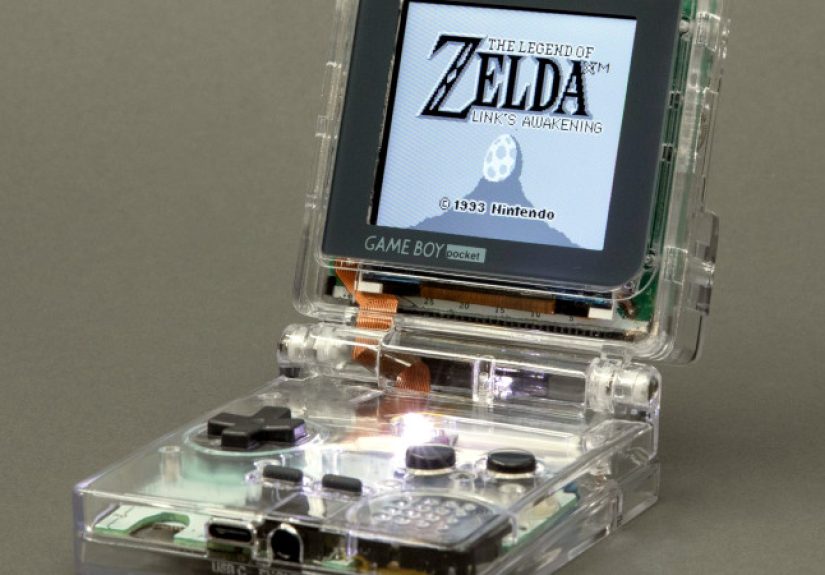
One of the most talked-about examples of “hinge meets 1990s handheld” is the Game Boy Pocket SP:
a build that takes a late-1990s Game Boy Pocket and reimagines it as a clamshell. The concept sounds simple
until you remember one inconvenient detail: a Game Boy Pocket was never designed to fold. Not even a little.
In builds like this, the challenge isn’t “Can I fit parts into a new shell?” It’s more like:
“Can I split a motherboard, route signals across a hinge, keep everything mechanically stable, and still make it
look like Nintendo could’ve shipped it in a glossy 2003 commercial?”
The magic comes from combining three worlds:
- Mechanical design: hinge geometry, screen angle, cable routing, durability.
- Electrical design: reconnecting board halves with reliable interconnects (often flex PCBs).
- Industrial design: a shell that looks intentionalsmooth, aligned, and “factory believable.”
When it’s done right, you get a device that feels like an alternate timeline Nintendo product: a “Pocket SP”
that never existed, but absolutely should have.
What Makes a Hinged Game Boy Build So Hard?
1) The Motherboard Problem: Electronics Don’t Like to Be Folded
A standard Game Boy Pocket motherboard is a single rigid PCBflat, simple, and very committed to staying in one piece.
Turning that into a clamshell often requires splitting the board so that the screen-related components can live in the lid
while controls, audio, and power stay in the base.
That’s where the build stops being “retro modding” and starts being “electronics surgery.” The goal isn’t just cutting:
it’s preserving signal integrity and reliability. Small handhelds are deceptively densetiny traces, tight tolerances,
and components that will absolutely punish sloppy work.
2) The Hinge Problem: Moving Parts Create New Failure Points
Hinges look innocent until you remember what they do: rotate, flex, and apply stress. Every open/close cycle is a tiny
durability test. The hinge has to:
- Hold a stable viewing angle (no “wobbly screen syndrome”).
- Protect any cable or flex connection running through/around the joint.
- Survive repeated use without cracking the shell or pinching electronics.
This is why many makers borrow ideas from proven clamshell devices: the SP’s hinge design, its cable routing logic,
and even the “two-position feel” that gives it that iconic snap.
3) The Cable Problem: Signals Need a Bridge Across the Fold
If you’ve ever opened a clamshell laptop or handheld, you’ve seen the unsung hero: a flex cable that bends without
breaking. In hinged Game Boy builds, makers often rely on custom flex PCBs or carefully chosen flex cables to connect
the two halves reliably.
This is where modern tools shine. CAD for the shell, PCB design software for interconnects, and 3D printing for
iterative prototyping make it possible to design a hinge-friendly layout instead of “hope and hot glue.”
The Modern Modding Ecosystem That Makes This Possible
Let’s be real: if we tried this in the 1990s, we’d be doing it with a flashlight accessory, a prayer, and a
suspicious-looking spool of wire from a junk drawer. Today’s retro handheld scene is powered by a whole ecosystem of
parts and knowledge that lower the barrier to ambitious builds.
Display Upgrades: The “I Can Finally See Pokémon” Era
For many enthusiasts, the gateway drug is an IPS screen upgrade. Modern IPS kits can dramatically improve
brightness, viewing angles, and clarity. Even if a hinged build keeps the original spirit, the display conversation is hard
to avoidbecause once you’ve seen a crisp modern panel in a classic shell, going back feels like choosing dial-up on purpose.
Screen upgrades also influence hinge builds in a practical way: modern panels can change internal space requirements,
cable routing needs, and where you place supporting electronics. The hinge becomes not just a mechanical joint, but a
design constraint that shapes the entire layout.
Shells, Materials, and the “Looks Like Nintendo Made It” Standard
Custom shells range from 3D printed designs to premium machined housings. That matters because a hinged build needs precise
alignment: the lid should close cleanly, the hinge should feel intentional, and the device shouldn’t look like it’s one drop
away from becoming a bag of parts.
The community has also standardized expectations: clean edges, thoughtful button feel, sturdy hinges, and an overall finish
that says “collector-grade,” not “science fair, but make it retro.”
Repair Culture: Keeping the Classics Alive
The hinge project also sits on top of something bigger: a strong repair culture. Tear-downs, parts guides, and step-by-step
repair documentation make it easier to safely disassemble old hardware without turning it into a tragic “before and after.”
Even if you never build a hinged Pocket, understanding how clamshell devices are assembled (and how hinges are replaced)
helps you design smarter and avoid common mechanical mistakes.
If You’re Dreaming of a Hinged Game Boy, Think Like a Designer
A hinged Game Boy project is less like swapping a screen and more like building a tiny product. The best results come from
approaching it with the same mindset a hardware team would use: requirements, constraints, testing, iteration.
Start With the “Why” (Not Just the “Wow”)
Ask yourself what you want the hinge to accomplish:
- Pure aesthetics: “I want a Pocket that looks like an SP.”
- Protection: “I want the screen safer when traveling.”
- Portability: “I want a smaller footprint in my bag.”
- Novelty and craftsmanship: “I want the hardest version of the problem.”
Plan for Durability (Because Hinges Keep Receipts)
The device should survive normal use: opening, closing, being carried around, and the occasional “oops” moment.
That means thinking about:
- Strain relief: protect flex connections from constant bending stress.
- Hinge tolerance: avoid rubbing, binding, or shell cracking.
- Battery strategy: where power fits matters more when the device splits into two zones.
Choose Your Difficulty Level Honestly
Some retro mods are beginner-friendly. A hinged 1990s Game Boy is not that. It’s advanced-level craftsmanship that mixes
mechanical engineering, electronics, and aesthetic finishing.
If you’re new to modding, it’s smarter to build up skills firstlearn safe disassembly, basic soldering, and how modern
screens or power mods work. And if you’re a teen maker: involve an experienced adult for anything involving soldering tools,
cutting, or batteries. Cool projects are great; burnt fingers and damaged lithium packs are not.
Why This Mod Matters (Beyond the Flex)
On the surface, “put a hinge on a 1990s Game Boy” sounds like a meme. But it points to something real:
retro hardware isn’t just nostalgiait’s a living platform.
Builds like the Pocket SP show what happens when modern maker tools collide with iconic design. People aren’t only restoring
old handhelds; they’re remixing history. They’re exploring alternative product timelines. They’re asking “What if Nintendo
had tried this earlier?”and then answering with CAD files, custom PCBs, and a clamshell snap that feels like it always belonged.
And in a world where modern retro-inspired handhelds keep appearing, the hinge mod also feels like a statement:
you don’t have to wait for a company to make the device you want. The community can build itone carefully measured hinge pin at a time.
Conclusion: The Cutest “Impossible” Upgrade You’ll Ever See
Bringing the hinge to a 1990s Game Boy is the kind of project that makes you grin even before you understand how hard it is.
It’s equal parts engineering and love lettera clamshell tribute to an era when handheld gaming was chunky, charming, and built
to survive being dropped on carpet… repeatedly… while you swear it “fell by itself.”
Whether you’re studying the Pocket SP as inspiration, dreaming up your own hinged handheld, or simply appreciating the artistry
of people who turn nostalgia into physical design, one thing is clear: retro modding isn’t stuck in the past. It’s folding the past
into the futureliterally.
Experiences From the Bench: What It’s Like to Chase the “Pocket SP” Dream
Makers who attempt hinged retro builds often describe the process as a mix of joy, chaos, and “Why did I choose the hard path?”
Not because the outcome isn’t worth itit’s because a hinge forces you to treat the whole device like a living system. You don’t
just upgrade a part; you redesign relationships between parts.
A common early experience is the paper-and-cardboard phase, where you sketch the clamshell shape and realize
the most annoying truth in handheld design: everything you want is fighting for the same millimeters of space. The screen wants
thickness for structure. The hinge wants clearance. The buttons want a stable faceplate. The battery wants to live somewhere that
doesn’t turn the base into a wobble brick. Before you even touch electronics, you’re already negotiating with physics.
Then comes the moment modders remember that “closing the lid” is not a cosmetic animationit’s a stress test. Builders often talk
about the first time they gently fold the shell and listen for the sound of nothing going wrong. No creak. No pinch. No mystery
crunch. That silence is a victory. It’s the maker equivalent of a game saving successfully.
People also describe a special kind of satisfaction when a hinge finally has the right feel. Too loose and it feels cheap.
Too tight and it feels like it’s grinding itself to death. The “sweet spot” is a tiny window where it opens smoothly, holds a
viewing angle, and closes with a confident snap. That’s when the build stops feeling like a project and starts feeling like a product.
Another shared experience: iterating the shell. Many makers will do multiple prints, tweaks, and refinements, because
clamshell geometry is unforgiving. A fraction of a millimeter can decide whether a seam looks clean or whether the lid sits crooked
forever. And the funny part is, the better you get, the pickier you become. A first successful closure feels amazing. The tenth revision
happens because the seam line “bugs you when you look at it from an angle.” That’s not perfectionismit’s the natural result of trying
to match Nintendo’s industrial design language.
The community side is a big part of it too. Builders swap notes about hinge wear, cable routing, and what fails after repeated opening.
Even people who never attempt a full Pocket SP-style build learn from the process: you come away with stronger troubleshooting instincts,
better respect for mechanical tolerances, and a deeper appreciation for why clamshell handhelds were so beloved.
Finally, there’s the “first real play session” moment: you load a familiar game, close the lid between rounds, reopen it, and feel the
absurd delight of a 1990s device acting like a 2000s icon. It’s nostalgia with an engineering punchline. And if the hinge survives a week
of normal use, that’s when many makers say it out loud: “Okay… this might actually be the coolest Game Boy I’ve ever held.”