Table of Contents >> Show >> Hide
- Why We Did This (Besides “Because Art Is Cool”)
- How the Collaboration Worked (A.K.A. “Project Management, But Make It Pretty”)
- What We Learned About Fundraising With Art (The Surprisingly Serious Part)
- The 9 Pics (Descriptions + The Cause Behind Each One)
- How You Can Replicate This (If You’re Feeling Inspired and Slightly Dangerous)
- Wrapping It Up (A Hopeful Reality Check)
- Bonus: 8 Artists, 1 Cause What It Actually Felt Like (Real Experience, No Rose-Colored Paint)
Sometimes the fastest way to get people to care about the planet is to show them something beautiful… and then gently (lovingly) remind them that beauty is not guaranteed forever.
Why We Did This (Besides “Because Art Is Cool”)
Climate change, plastic pollution, biodiversity loss, and environmental justice can feel like a nonstop doom-scrollbig numbers, bigger feelings, and the occasional
“Wait, is my city going to be underwater or just unbearably hot?” moment. If you’ve ever wanted to care and crawl under a blanket at the same time, welcome.
That’s exactly why I teamed up with eight artists. We wanted to turn overwhelm into actionusing art as the “open door” and nonprofit fundraising as the “actual help.”
The goal wasn’t to lecture people. It was to invite them in, hand them a story, and say: “If this moved you, here’s a concrete way to support the folks doing the work.”
Art already has a history of supporting causes through benefit auctions, limited-edition prints, and donation-driven releases. We borrowed what works, added transparency,
and built a mini-campaign that made it easy to participatewhether you had $10, $100, or just a social share and a strong opinion about single-use plastics.
How the Collaboration Worked (A.K.A. “Project Management, But Make It Pretty”)
Step 1: We picked 8 issues people can actually picture
If an issue stays abstract, it’s easier to ignore. So we chose themes that are scientifically real and visually clearthings you can imagine, recognize,
or remember from your own life:
- Plastic pollution in oceans and waterways
- Extreme heat and climate-driven weather
- Forest loss and habitat fragmentation
- Coral reef decline and ocean warming
- Wildlife conservation and biodiversity loss
- Clean air and environmental health
- Water protection (rivers, wetlands, and drinking water)
- Environmental justice and community resilience
Step 2: Each artist chose a theme that matched their style
I didn’t assign topics like a substitute teacher handing out worksheets. I asked each artist what they already cared aboutor what they couldn’t stop thinking about.
The result: work that felt personal, not performative.
Step 3: We partnered with nonprofits that already have credibility
We focused on well-established nonprofit organizations (and projects) known for science-backed advocacy, conservation, cleanup, and education.
We also looked for groups that communicate clearly about where funding goes, because “trust me, bro” is not a financial strategy.
Step 4: We built a clean fundraising model
We used a mix of:
- Limited-edition prints (affordable entry point)
- One original work per artist (higher impact)
- A small silent-auction set (for collectors who like adrenaline)
- Optional add-on donations (for people who love giving but don’t need more wall décor)
To keep it simple: proceeds went to the selected nonprofit partners, with clear accounting of printing/shipping costs for the editions.
(Yes, boring details. Also: the reason the whole thing is legitimate.)
What We Learned About Fundraising With Art (The Surprisingly Serious Part)
Art doesn’t just “raise awareness”it creates memory
People forget charts. People remember images. A piece of art can become a daily reminderon your wall, in your feed, in your headthat the planet is not a background
setting. It’s the main character.
“Accessible” beats “exclusive” if your goal is participation
Charity auctions can be powerful, but they can also feel like a party where everyone’s wearing tuxedos and your wallet starts sweating.
Limited-edition prints help more people join in. This approach is used by several conservation-focused campaigns that sell editions to fund frontline work.
Transparency is the difference between “cause” and “marketing”
We made sure buyers knew what percentage goes to the nonprofit, what costs exist, and how the partner organization uses funds in general terms.
The internet is understandably skeptical, and honestly? Good. Skepticism is a healthy immune system for your money.
The 9 Pics (Descriptions + The Cause Behind Each One)
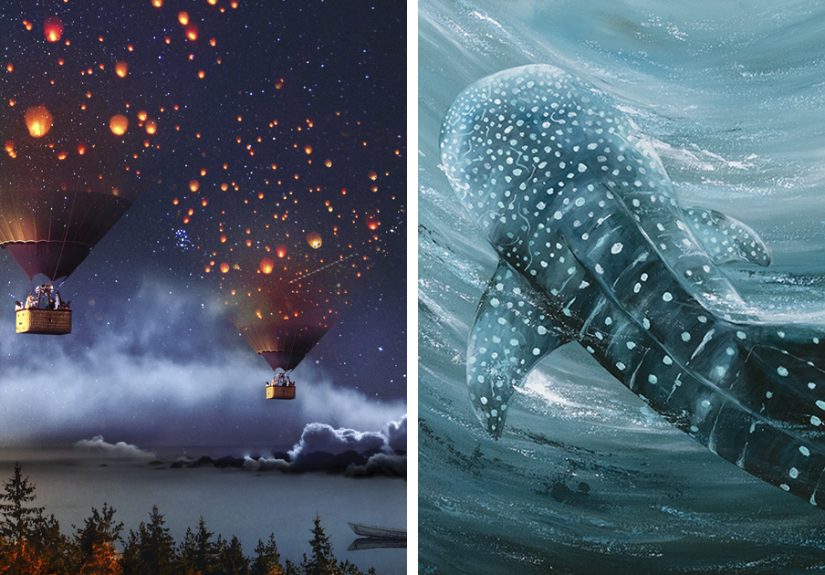
Below are the nine images from the project (with short descriptions you can reuse as captions or alt text). Each piece is tied to an issue and a nonprofit category
(cleanup, conservation, advocacy, education, or community resilience).

Supports: ocean cleanup + marine debris prevention.

Supports: climate solutions + heat resilience education.

Supports: land conservation + rainforest protection.

Supports: reef conservation + ocean climate research.

Supports: wildlife protection + habitat restoration.

Supports: clean air advocacy + community health.

Supports: freshwater protection + watershed programs.

Supports: community resilience + environmental justice initiatives.

Supports: shared fundraiser pool distributed across all partner nonprofits.
How You Can Replicate This (If You’re Feeling Inspired and Slightly Dangerous)
1) Start with one clear goal
“Raise awareness” is a vibe, not a plan. Decide whether your campaign is primarily about fundraising, education, audience building, or community engagement.
You can do multiple thingsbut pick the main thing so your messaging doesn’t wobble.
2) Choose nonprofits with strong public accountability
Look for clear mission statements, recent reports, and transparent communication. If you can’t easily explain what they do, your audience won’t feel confident donating.
3) Make the entry point friendly
Include an affordable option (like prints or small works), and a non-purchase option (sharing, volunteering, or a direct donation link).
Not everyone has “auction” money. Many people have “I care but rent is due” money.
4) Be honest about costs
Printing, shipping, platform feesreal life exists. The ethical move is to say what costs are deducted (if any) and what the nonprofit receives.
Clarity builds trust. Confusion builds comment sections.
5) Use art to tell a story, not just decorate a cause
The most effective pieces weren’t the ones screaming facts. They were the ones that made people pause, feel, and then ask,
“Okaywhat can I do?”
Wrapping It Up (A Hopeful Reality Check)
This project didn’t “solve” climate change. It didn’t reverse plastic pollution overnight. It didn’t personally replant every tree that’s ever been cut down.
(If it did, I’d be writing this from my new job title: Wizard of Earth.)
But it did something real: it moved money to nonprofits doing measurable work, and it helped people feel connected instead of helpless.
Art can be a bridgebetween information and emotion, between caring and acting, between “This is too big” and “Here’s one step.”
And if you’re reading this thinking, “I want to do something like that,” please do. The planet needs policy, science, and innovationyes.
It also needs culture. It needs stories. It needs people who can make caring contagious.
500-word experience add-on
Bonus: 8 Artists, 1 Cause What It Actually Felt Like (Real Experience, No Rose-Colored Paint)
Let me tell you the secret nobody puts on the glossy fundraiser flyer: collaborating with eight artists is like herding eight extremely talented, extremely passionate
catsexcept the cats can debate color theory for forty-five minutes and still be right.
The first challenge wasn’t inspiration. It was alignment. Everyone cared about the planet, but “care” comes in different shapes. One artist was furious about plastic
pollution and wanted a piece that felt confrontationalbold, uncomfortable, impossible to scroll past. Another wanted to create something tender and human-scale, because
fear-based messaging can shut people down. Neither approach was wrong. The hard part was building a collection that could hold both truths: urgency and hope.
The second challenge was language. Artists speak emotion. Nonprofits often speak outcomes. I had to become the translator in the middle: turning “This piece is about
grief and disappearance” into “This supports habitat restoration and biodiversity protection” without flattening the art into a brochure. What helped was asking
each artist for one sentence: what they wanted someone to feel when they saw the work. Then we paired that feeling with a concrete actiondonate, bid, buy a print,
or share the campaign. Feelings became fuel.
The third challenge was logistics, which is the unglamorous backbone of every “beautiful” project. Printing deadlines, proof approvals, shipping materials,
file formats, color calibrationsuddenly I was learning that “black” has about thirty different interpretations and none of them agree with your monitor.
We kept it manageable by building a simple checklist: final artwork, final caption, final nonprofit match, final pricing, and a clear note about where funds go.
I learned quickly that transparency isn’t a paragraph you add at the endit’s a structure you build from day one.
The most surprising part was what people responded to. Yes, some folks loved the big dramatic pieces. But many connected hardest with the quiet ones:
a small river held in hands, a child carrying a jar of “air,” a reef fading at the edges. Those images didn’t shout. They invited empathy. And empathy,
it turns out, is a pretty decent fundraising engine when paired with a trustworthy nonprofit and an easy way to give.
Personally, the project changed how I think about “impact.” I used to imagine impact as one massive hero moment. This felt differentmore like stacking
small, honest efforts until they become a platform. Art made the issues visible. The nonprofits made the action credible. The audience made it matter by showing up.
If there’s a takeaway, it’s this: you don’t need a perfect plan to start. You need a clear intention, responsible partners, and the willingness to do the unsexy work
that turns creativity into real support.