Table of Contents >> Show >> Hide
- Why Tofu Makes a Brilliant Ricotta Swap
- Vegan Tofu Ricotta Recipe (Classic, Versatile, and Ridiculously Easy)
- Texture Choices: Make It Your Kind of “Ricotta”
- Flavor Variations That Don’t Taste Like Sad Diet Food
- How to Use Vegan Tofu Ricotta (Beyond Lasagna)
- Storage, Food Safety, and Make-Ahead Tips
- FAQ: Quick Fixes for Common “Ricotta” Drama
- Conclusion: Your New Favorite Vegan “Cheese” Move
- Experience Notes: What Making Tofu “Ricotta” Is Like (and Why It’s Weirdly Fun)
- SEO Tags
You know that cozy, cheesy, “someone’s Italian grandma is smiling at me” feeling that ricotta brings to lasagna, stuffed shells, and baked ziti?
Now imagine that vibewithout the dairy, without the mystery ingredients, and without needing to take out a second mortgage to buy a tiny tub of vegan cheese.
Enter: vegan tofu “ricotta”, the plant-based kitchen hack that’s equal parts practical and delicious.
Tofu ricotta isn’t trying to be a one-to-one clone of dairy ricotta in a lab-coat way. It’s aiming for what matters:
a soft, slightly tangy, savory, spoonable filling that melts into pasta layers and makes everyone ask,
“Wait… this is tofu?”
Why Tofu Makes a Brilliant Ricotta Swap
Ricotta is mild, creamy, and texturedkind of like tiny curds that play nicely with herbs, garlic, and tomato sauce.
Tofu (especially firm or extra-firm) has that same mild personality and a texture you can steer:
pulse it for curds, blend it for creaminess, or do a little of both if you like living on the edge.
The flavor magic comes from a few “cheese illusion” ingredients:
- Lemon juice for that ricotta-like tang
- Nutritional yeast for a savory, cheesy depth
- Miso (optional but powerful) for aged, umami “Parmesan-ish” vibes
- Garlic + Italian herbs for classic comfort-food energy
Vegan Tofu Ricotta Recipe (Classic, Versatile, and Ridiculously Easy)
Quick Recipe Snapshot
- Time: 10 minutes
- Yield: about 2 cups (enough for 1 standard lasagna layer or a batch of stuffed shells)
- Equipment: food processor (best), blender (works with caution), or a bowl + fork (rustic mode)
Ingredients
- 1 block (14 oz) extra-firm tofu, drained
- 2–3 tbsp nutritional yeast
- 1–2 tbsp lemon juice (start with 1 tbsp, adjust to taste)
- 1–2 tsp white miso (optional; reduce added salt if using)
- 1–2 cloves garlic, minced (or 1 tsp garlic powder)
- 1 tsp dried oregano
- 1 tsp dried basil (or 1–2 tbsp fresh basil, chopped)
- 1/2 tsp salt, then adjust (less if using miso)
- 1/4 tsp black pepper
- Optional for richness: 1–2 tbsp olive oil OR 2–3 tbsp unsweetened soy milk
- Optional heat: pinch of red pepper flakes
- Optional extra creaminess: 1–2 tbsp tahini (sesame)
Step-by-Step Instructions
-
Drain (and optionally press) the tofu.
For thicker ricotta: wrap tofu in a clean towel and press under a skillet for 10 minutes.
If you’re using it in lasagna, pressing helps prevent a watery casserole situation. -
Crumble the tofu into your food processor.
Break it up with your hands so the blades don’t have to do all the emotional labor. -
Add your flavor builders.
Toss in nutritional yeast, lemon juice, garlic, herbs, salt, pepper, and miso (if using).
Add olive oil or soy milk if you want a richer, creamier finish. -
Pulse to your dream texture.
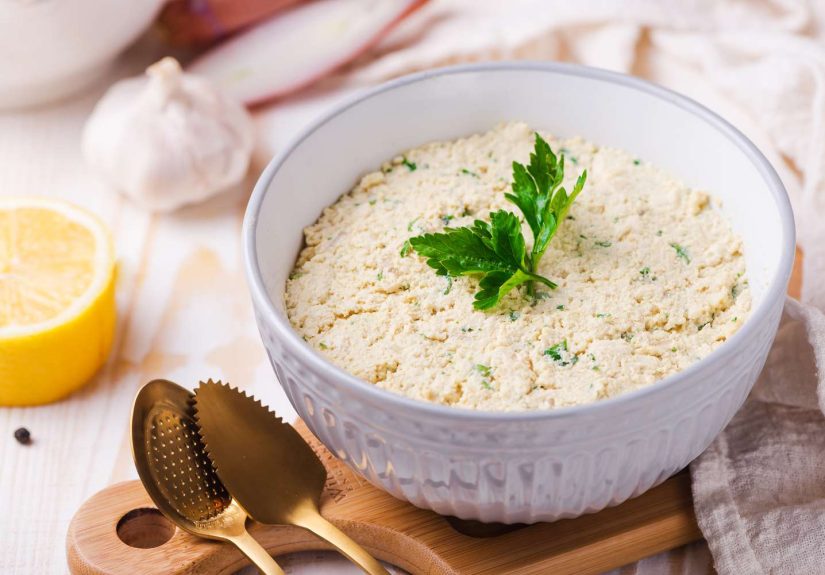
Pulse 8–12 times for a curdy ricotta look. Process 20–40 seconds for a smoother, spreadable texture.
Stop and scrape the sides once so everything actually gets invited to the party. -
Taste and adjust.
Want more tang? Add lemon. Want more “cheesy”? Add nutritional yeast or a tiny bit more miso.
Need it looser for stuffing shells? Add 1 tbsp water or soy milk and pulse again. -
Let it rest (optional, but smart).
Give it 10–15 minutes in the fridge so the flavors settle in and stop yelling over each other.
Texture Choices: Make It Your Kind of “Ricotta”
1) Curdy + Spoonable (Best for Lasagna and Stuffed Shells)
Use extra-firm tofu, press it briefly, and pulse just enough to keep small curds.
This texture bakes beautifully and doesn’t disappear into mush.
2) Creamy + Spreadable (Great for Toast, Dip, and Pizza Dollops)
Process longer and add a little olive oil, tahini, or soy milk.
This version spreads like a dream and makes a surprisingly good “cheese board” dip with crackers and veggies.
3) Extra Creamy “Hybrid” (If You Want Fancy)
Some recipes combine firm tofu + silken tofu for a lighter, fluffier ricotta feel.
If you try this, keep the ratio mostly firm so it doesn’t turn into a tofu smoothie.
Flavor Variations That Don’t Taste Like Sad Diet Food
Herb Garden Ricotta
- Add 2–3 tbsp chopped fresh parsley + basil + chives
- Finish with lemon zest for brightness
“Parmesan” Boost (Without Parmesan)
- Add 1–2 tbsp white miso + 1 extra tbsp nutritional yeast
- Optional: a pinch of onion powder for extra savory depth
Spinach Ricotta (Lasagna’s Best Friend)
- Mix in 6 oz chopped fresh spinach (it softens quickly)
- Or add 10 oz frozen spinach, thawed and squeezed dry (important: squeeze like you mean it)
Sun-Dried Tomato Ricotta
- Pulse in 2–4 tbsp chopped sun-dried tomatoes
- Add a tiny splash of the tomato oil (if you use oil) for bold flavor
How to Use Vegan Tofu Ricotta (Beyond Lasagna)
This is where tofu ricotta really earns its keep. It’s not a one-recipe wonder.
It’s a multi-toollike a Swiss Army knife, but edible and less dangerous.
Easy Ideas
- Vegan lasagna: layer with marinara, noodles, sautéed veggies, and tofu ricotta
- Stuffed shells/manicotti: mix tofu ricotta with spinach and spoon into pasta
- Pizza: dollop on top before baking, or add after baking with fresh basil
- Toast: spread, then top with tomatoes + olive oil + flaky salt (instant “I have my life together” breakfast)
- Dip: stir in chopped herbs and serve with crackers, cucumbers, and bell peppers
- Ravioli filling: mix with sautéed mushrooms or roasted squash for a cozy upgrade
Storage, Food Safety, and Make-Ahead Tips
Refrigerator
Store tofu ricotta in an airtight container. It’s best within 3–5 days for freshness and food safety.
If you see a little liquid separation on top, that’s normalstir it back in.
Freezer
You can freeze tofu ricotta for up to 2–3 months. Thaw overnight in the fridge.
Texture can change slightly after freezing (tofu does that), so give it a quick pulse or stir before using.
Make-Ahead Lasagna Tip
If you’re assembling lasagna ahead of time, slightly thicker ricotta helps.
Press tofu and avoid over-thinning with liquids so your lasagna slices don’t slide around like they’re on a water park ride.
FAQ: Quick Fixes for Common “Ricotta” Drama
Why does mine taste bland?
Ricotta is mild, but it shouldn’t be boring. Add more salt (a pinch at a time), more lemon for brightness,
and a little nutritional yeast for savory depth. Garlic and herbs also pull a lot of weight here.
Why is it watery?
You probably didn’t drain/press enough, or you added too much liquid.
Press the tofu next time and use liquids sparinglyespecially if you’re baking it.
Can I make it without a food processor?
Yes. Crumble tofu in a bowl and mash with a fork or potato masher.
Mince garlic very finely (or use powder) so you don’t bite into a surprise garlic boulder.
Is tofu ricotta “healthy”?
In general, tofu is a nutrient-dense plant protein, and tofu ricotta can be a lighter, dairy-free option depending on what you add.
Keep it simple (tofu, lemon, herbs, yeast) if you want a more minimalist version, or add olive oil/tahini for richness.
Conclusion: Your New Favorite Vegan “Cheese” Move
A great vegan tofu ricotta isn’t about pretending tofu is dairy. It’s about using tofu’s strengths:
neutral flavor, flexible texture, and the ability to soak up seasonings like it’s auditioning for a starring role.
With a handful of pantry ingredients and about 10 minutes, you get a creamy, tangy, savory filling that belongs in
lasagna, stuffed shells, pizza night, and honestly… straight off a spoon when nobody’s watching.
Make it once, tweak it to your taste, and suddenly you’re the kind of person who says,
“Oh, I’ll just whip up some ricotta,” like it’s no big deal. (It is a big deal. You’re a legend now.)
Experience Notes: What Making Tofu “Ricotta” Is Like (and Why It’s Weirdly Fun)
The first time you make vegan tofu ricotta, you’ll probably have one of two reactions: either
“Wait, that’s it?” or “Hold on… why does this smell like lasagna night already?”
The process is almost comically fastdrain tofu, add flavor, pulseand then suddenly you have a bowl of something
that looks suspiciously like ricotta. That moment is oddly satisfying, like finding a shortcut in a video game.
Texture is where the “experience” really happens. If you pulse briefly, the tofu stays curdy and crumbly.
It looks rustic and very believable in pasta bakesespecially once it’s tucked under marinara.
If you process longer, it becomes smooth and fluffy, like a spread. Some people love that version for toast and dip,
while others prefer the curdier style because it feels closer to classic ricotta in baked dishes.
The fun part is realizing you’re in control: you’re not stuck with whatever texture comes in the container.
Flavor-wise, most people notice the transformation as soon as the lemon and salt hit the tofu.
Plain tofu tastes neutral, but once you add acid, herbs, and nutritional yeast, it starts reading as “cheesy”
rather than “bean block.” If you include miso, the mixture tends to taste deeper and more savoryalmost like it’s had
time to age (even though it absolutely has not). If you’re someone who misses that salty, tangy bite in Italian dishes,
miso is often the ingredient that makes you stop and go, “Okay, wowthis works.”
Another common experience: the ricotta gets better after a short rest. Right after blending, the flavors can feel separate
lemon in one corner, garlic in another, herbs yelling from the balcony. After 10–15 minutes in the fridge,
everything calms down and tastes more unified. This is especially helpful if you’re serving it as a dip or spreading it on toast.
For lasagna, it’s less critical because baking does the “flavor marriage” for you, but resting still helps.
People also tend to learn quickly what “too much liquid” looks like. Add soy milk or water slowly, one tablespoon at a time.
If it turns loose, it’s not ruinedjust redirect it. A looser tofu ricotta can be amazing as a creamy pasta sauce base
(thin it with pasta water and stir in spinach), or as a sandwich spread. For baking, though, thicker is usually better.
Pressing tofu for 10 minutes is one of those tiny steps that feels optional until you skip it and your lasagna comes out
a little… enthusiastic… with extra moisture.
Finally, tofu ricotta has a confidence-boosting effect that’s hard to explain.
Once you realize how easy it is, you start seeing opportunities everywhere: dollops on pizza, stuffed mushrooms,
swirled into roasted vegetable bowls, or paired with tomatoes and basil for a snack that looks way fancier than it is.
It’s the kind of recipe that makes plant-based cooking feel less like a restriction and more like a clever upgrade.
And if someone eats it and says, “I hate tofu,” you get to smile politely while knowing you’ve just witnessed a minor miracle.