Table of Contents >> Show >> Hide
- Why Cleaning Your Makeup Brushes Actually Matters
- How Often Should You Clean Your Makeup Brushes?
- What You Need to Clean Your Makeup Brushes
- Step-by-Step: How to Clean Makeup Brushes
- Special Tips for Different Types of Brushes
- What Not to Do When Cleaning Makeup Brushes
- When Is It Time to Replace Your Brushes?
- 500+ Words of Real-World Experience: Making Brush Cleaning Less of a Chore
If your skin keeps breaking out “for no reason,” there’s a good chance the culprit isn’t your foundation, your serum, or the universe being rude. It might be your makeup brushes. Those fluffy little tools can quietly collect oil, product, dead skin, and bacteria and then you swirl all of that right back onto your face. The good news? Learning how to clean your makeup brushes is easy, oddly satisfying, and one of the cheapest glow-up moves you can make.
In this guide, we’ll walk through exactly how to wash makeup brushes step by step, how often to clean them, what products to use (and avoid), and how to keep your tools soft, shapely, and long-lasting. We’ll also talk about what happens if you skip brush-cleaning day (spoiler: your pores are not amused), plus some real-life tips and experiences that make the process less of a chore and more of a mini self-care ritual.
Why Cleaning Your Makeup Brushes Actually Matters
1. Your skin will thank you
Every time a dirty brush touches your face, it can transfer bacteria, yeast, oil, and old product. Over time, that buildup can clog pores, trigger breakouts, worsen blackheads, and irritate sensitive or rosacea-prone skin. If you’re doing everything “right” with skincare but still dealing with random pimples, your brushes might be quietly undoing your hard work.
2. Your makeup will look way better
Clean bristles grip and distribute product evenly. Dirty ones create streaks, patchy blending, muddy eyeshadow, and a heavier, cakier finish. If your favorite foundation suddenly looks weird or your blush won’t blend, it’s not always the formula sometimes it’s just a grimy brush.
3. Your brushes last longer (and save you money)
Makeup, oil, and hardened product can weaken the glue that holds the bristles in place and dry them out. Regular cleaning keeps them soft and prevents shedding and fraying. Considering that a good brush set can cost as much as a fancy dinner, a few minutes at the sink is a very solid investment.
How Often Should You Clean Your Makeup Brushes?
There’s no single universal rule, but most dermatologists and makeup artists land in a similar range. A practical schedule looks like this:
- Foundation, concealer, and cream product brushes: about once a week. These brushes hold onto liquid formulas and can build up bacteria quickly.
- Powder brushes (blush, bronzer, setting powder): about every 2–4 weeks, depending on how often you use them and how oily your skin is.
- Eye brushes (shadow, liner, brow): every 1–2 weeks, or more often if you have sensitive or acne-prone skin, or if you’re dealing with eye irritation.
- Makeup sponges and beauty blenders: ideally after every use, and at least a few times a week, plus regular replacement every couple of months.
If that sounds intense, start small: pick one day a week as “brush spa day” Sunday night, for example and at least clean your face and foundation tools. Even that one habit can make a noticeable difference in how your makeup sits on your skin.
What You Need to Clean Your Makeup Brushes
You don’t need a professional kit or a sink that looks like a beauty lab. A few simple items are enough:
- A gentle cleanser: This can be a dedicated brush cleanser, a mild unscented soap, a gentle facial cleanser, or baby shampoo. The key is that it’s not too harsh or stripping, especially for natural hair brushes.
- Lukewarm water: Not hot high heat can damage glue and bristle fibers.
- A cleaning mat or textured surface (optional): These silicone mats make it easier to loosen stubborn foundation and long-wear formulas, but your palm works too.
- A clean towel: For blotting and reshaping brushes after rinsing.
- Flat surface for drying: Ideally with the brush heads slightly angled downward so water doesn’t run into the ferrule (the metal part that holds the bristles).
Nice-to-have extras include a quick-dry brush cleaning spray for in-between deep cleans and a gentle hair-type conditioner for very dry or natural hair brushes, used occasionally.
Step-by-Step: How to Clean Makeup Brushes
Step 1: Wet the bristles (not the whole brush)
Hold the brush with the bristles pointing downward under lukewarm running water. Avoid soaking the entire brush head and try not to let water run up into the ferrule. That’s where the glue lives, and repeated soaking can cause bristles to loosen and fall out over time.
Step 2: Add a small amount of cleanser
Apply a pea-size amount of gentle soap, baby shampoo, or brush cleanser to your palm, a small dish, or a cleaning mat. With dense foundation brushes you may need a bit more product, but in general, less is more you can always add a little extra if needed.
Step 3: Swirl and massage gently
Swirl the brush in the cleanser, using gentle circular motions. For stubborn buildup, lightly massage the bristles between your fingers, working the cleanser through from base to tip. Avoid aggressive scrubbing or twisting, which can fray the fibers and loosen the shape.
Step 4: Rinse until the water runs clear
Rinse the bristles under lukewarm running water, again pointing them downward. Gently press and squeeze the bristles with your fingers to release soap and product. If the water still looks cloudy or tinted, repeat the cleanse-and-rinse cycle until it runs clear.
Step 5: Gently squeeze out excess water
Once the brush is clean, gently squeeze out the extra water with your fingers, then blot on a clean towel. Don’t yank or twist think “press and pat,” not “wring out like a dishcloth.”
Step 6: Reshape and lay flat to dry
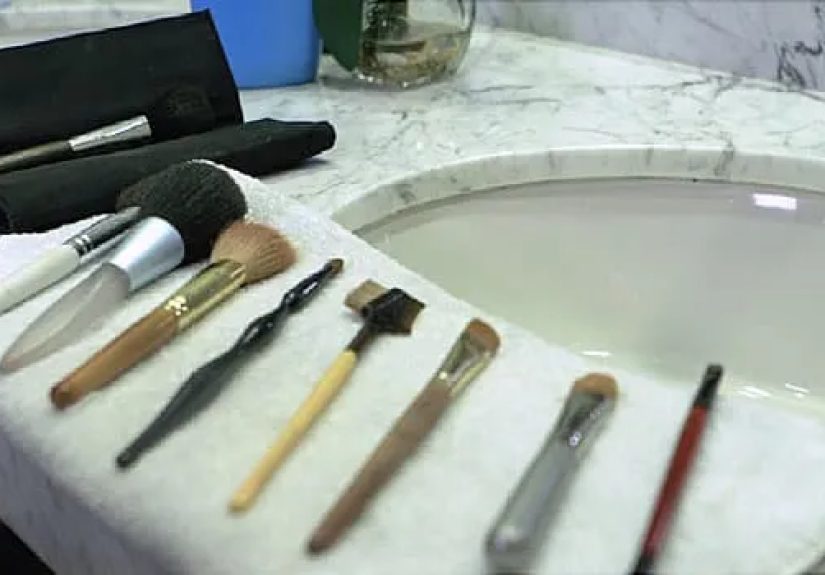
Use your fingers to nudge the bristles back into their original shape. Lay your brushes flat on a towel with the handles slightly elevated and the bristles angled downward. This keeps water from seeping into the ferrule and helps brushes dry faster and stay in shape.
Try not to stand brushes upright while they’re wet, and avoid using a hair dryer on them. It’s tempting, but heat can warp synthetic bristles and dry out natural ones.
Special Tips for Different Types of Brushes
1. Foundation and concealer brushes
These are usually the messiest. Long-wear foundation and concealer can cling to dense bristles, so you may need a double cleanse: first with an oil-based or conditioning cleanser to break down makeup, then with a gentle soap to remove residue. Clean them at least once a week, and more often if you have acne-prone or very oily skin.
2. Eye brushes
Eye brushes touch some of the most delicate skin on your face. Clean them more often if you’ve had any eye irritation, infection, or allergies. You can also use a quick-dry cleaning spray between colors to keep your smokey eye from turning into a grayish smudge festival.
3. Natural vs. synthetic bristles
Natural hair brushes (often used for blending and powder products) can feel softer but also more delicate. They generally prefer gentle cleansers and lukewarm water. Overly harsh soaps can make them brittle over time.
Synthetic brushes (often used for cream and liquid products) are more durable and can usually handle a bit more scrubbing, but they still benefit from gentle cleansers. Many vegan brush lines are fully synthetic and easy to maintain.
4. Makeup sponges
Sponges absorb more product and moisture than brushes, which makes them ideal for smooth blending and also very attractive to bacteria if you don’t keep up with cleaning. To wash:
- Soak the sponge in lukewarm water until it expands.
- Massage in a bit of gentle soap, then squeeze repeatedly to work out the foundation and concealer.
- Rinse, squeeze, and repeat until the water runs mostly clear.
- Gently squeeze out excess water and let it air-dry in an open, clean area (not sealed in a makeup bag).
If your sponge is torn, permanently stained, or has a weird smell even after washing, it’s time to replace it.
What Not to Do When Cleaning Makeup Brushes
- Don’t use very hot water. It can loosen the glue and damage fibers.
- Don’t soak brushes upright in a cup of water. Water running into the ferrule weakens the glue and causes shedding.
- Don’t use harsh household cleaners or strong alcohol daily. A little alcohol for quick sanitizing is fine, but harsh formulas can dry out bristles and irritate skin.
- Don’t dry brushes upright while they’re dripping wet. Again, water will travel down into the ferrule and shorten the brush’s life.
- Don’t wait months between cleanings. If you can’t remember the last time you washed your brushes… that’s your sign.
When Is It Time to Replace Your Brushes?
Even with good care, no brush lasts forever. Consider replacing a brush when:
- The bristles are frayed, splayed, or losing their shape.
- The brush sheds every time you use it, leaving tiny hairs on your face.
- It still looks stained or feels rough even after a thorough wash.
- It smells off (like old product or mildew) despite regular cleaning and proper drying.
Think of it like swapping out an old toothbrush. At some point, you’re no longer cleaning effectively you’re just moving stuff around.
500+ Words of Real-World Experience: Making Brush Cleaning Less of a Chore
On paper, “clean your makeup brushes once a week” sounds simple. In real life, you’re tired, you’ve barely taken off your bra, and the idea of standing at the sink for 10 extra minutes feels excessive. So let’s talk about what it actually looks like to keep up this habit without hating every second of it.
Turn it into a mini ritual, not a punishment
One of the easiest ways to stay consistent is to link brush cleaning with something you already do. Maybe you always binge a show on Sunday nights, or you listen to a podcast while you fold laundry. Bring your brushes, a little bowl of soapy water, and your towel to the coffee table, and wash them while you watch or listen. It stops feeling like “ugh, one more task” and becomes part of winding down.
Many people also find it oddly satisfying to watch the makeup swirl out of the bristles and see the water go from beige to clear. There’s a tiny, instant gratification moment like watching a time-lapse cleaning video, except you’re the one doing it.
Batch your cleaning by category
If your collection has exploded over the years (no judgment, brush hoarding is a real thing), you don’t have to clean every single brush every time. Try this rotation:
- Week 1: Face brushes foundation, concealer, powder, blush.
- Week 2: Eye brushes and brow tools.
- Week 3: Extra/detail brushes or special-occasion tools.
This way you never face a mountain of 25 dirty brushes at once. You’re still cleaning them regularly, just in manageable clusters.
Keep a “lazy-day” cleaning option nearby
Life happens. Some weeks you will absolutely not deep clean a single thing, and that’s okay. For those weeks, a quick-dry brush spray or a solid cleanser you can swirl a brush on and wipe off with a tissue is a lifesaver. It’s not as thorough as a full soap-and-water session, but it removes surface product and gives your skin a gentler experience until you can do a proper wash.
A practical combo many people love is: quick spray after daily use + deep clean once a week. Think of the spray as brushing your teeth, and the deep clean as your dentist visit.
Learn what “clean enough” looks like
Perfectionism is the enemy of consistency. You don’t have to scrub a brush until it’s as white as the day you bought it, especially if the bristles are naturally darker or permanently tinted by highly pigmented products. What matters is that:
- The water runs mostly clear.
- The brush feels soft, not sticky or crunchy.
- There’s no heavy product residue when you swipe it on a clean towel.
If those boxes are checked, you’re doing great. Don’t over-wash just to chase a perfectly pristine look you could end up drying out the bristles faster.
Pay attention to how your skin responds
One of the most motivating “rewards” of regular brush cleaning is seeing your skin improve. Many people notice fewer clogged pores around their cheeks and jawline, less irritation on their eyelids, and smoother foundation application. Your setting powder might suddenly blur more gracefully, and blush blends instead of grabbing in random spots.
If you have acne-prone or sensitive skin, try this: commit to cleaning your face brushes weekly for a month and see what happens. Keep the rest of your routine the same. Often, the combination of cleaner tools plus your usual skincare is enough to calm down a lot of mysterious minor breakouts.
Give yourself permission to declutter
Sometimes the hardest part of brush maintenance is that… there are just too many brushes. If you only ever use the same five, but you own thirty, your brain knows that “cleaning the brushes” means dealing with all thirty. That alone can make you procrastinate.
It’s absolutely okay to retire old, unused, or redundant brushes. Keep the ones you actually reach for your favorite foundation buffer, that one perfect crease brush, the blush brush that never fails you and let the rest go. Fewer tools mean quicker cleaning sessions and a much higher chance you’ll actually keep up with the habit.
Ultimately, it’s about treating your face kindly
At the end of the day, cleaning your makeup brushes isn’t about perfection or aesthetics. It’s about what touches your skin every single day. You wouldn’t rub last week’s gym towel on your face and call it skincare, right? Clean brushes are a simple, low-effort way to show your skin some respect and your future self (with smoother makeup and fewer breakouts) will be very glad you did.
So grab your brushes, turn on something you like to watch or listen to, and give those bristles a spa night. Your skin, your makeup, and honestly your nose (goodbye, old product smell) will all be happier for it.