Table of Contents >> Show >> Hide
- What Exactly Is a Rice Cake?
- Rice Cake Nutrition: The “Airy” Truth
- The Pros: When Rice Cakes Can Be a Smart Snack
- The Cons: Where Rice Cakes Can Trip You Up
- Rice Cakes and Weight Loss: Helpful Tool or Diet Theater?
- Rice Cakes and Blood Sugar: What If You Have Diabetes or Prediabetes?
- What About Arsenic in Rice Products?
- How to Choose a “Healthier” Rice Cake
- 10 Topping Combos That Turn a Rice Cake Into a Real Snack
- So… Are Rice Cakes Healthy?
- Real-World Experiences: What It’s Like to Live With Rice Cakes
Rice cakes have a special talent: they can be simultaneously crunchy, convenient, and somehow still feel like you’re chewing on a polite piece of air.
If you’ve ever stood in a snack aisle holding a sleeve of rice cakes like it’s a “health decision,” you’re not alone.
The real question isn’t whether rice cakes are “good” or “bad.” It’s whether they’re helping your goalsenergy, blood sugar, weight, cravings, allergies, or just getting through a 3 p.m. meeting without eating office candy.
Let’s break down what rice cakes actually offer (and what they don’t), plus how to turn them from “diet prop” into a snack that genuinely supports your body.
What Exactly Is a Rice Cake?
Most rice cakes are made by heating rice grains under pressure until they “pop,” then pressing those puffed grains into a round cake.
Translation: they’re a puffed grain snackkind of like popcorn’s flatter cousin who always shows up to parties in a neutral outfit.
The ingredients can be very simple (just rice, maybe salt), or they can get more complicated (seasonings, sugar, chocolate coatings, “mystery cheese dust,” and other fun science projects).
Whether a rice cake is “healthy” depends heavily on which version you’re buying and what you do with it.
Rice Cake Nutrition: The “Airy” Truth
What one plain rice cake typically provides
A plain rice cake is usually low in calories, mostly carbohydrate, and light on protein and fiber.
One plain rice cake is often around 35 calories with roughly 7 grams of carbs and about 1 gram of proteinwith little to no fiber.
That’s not automatically a problem. It just explains why rice cakes can feel “snacky” but not very “satisfying.”
What changes when flavors and coatings show up
Flavored rice cakes can be perfectly fine, but the nutrition profile can shift fast.
Once you add sweet coatings or bold seasoning blends, you’re more likely to see:
added sugars, more sodium, and occasionally extra fats (especially in chocolate or “dessert” styles).
In other words: the rice cake went from “plain toast energy” to “snack food with a gym membership.”
The Pros: When Rice Cakes Can Be a Smart Snack
They’re a low-calorie, crunchy base
If you like crunchy snacks and you want a lighter option than chips or crackers, rice cakes can fit that role.
The crunch can satisfy the “I need something crispy” urge without automatically turning into a 600-calorie situation.
They’re versatile (aka: easily upgraded)
Rice cakes are basically an edible plate. On their own, they’re minimal.
But topped well, they can become a balanced snack with protein, fiber, and healthy fatsingredients that help you stay full longer and keep energy steadier.
They’re often gluten-free and allergy-friendly
Rice is naturally gluten-free, and many rice cakes are made with simple ingredients.
That makes them a useful option for people avoiding glutenas long as the product is labeled appropriately and you check for cross-contact risks and any added grains.
The Cons: Where Rice Cakes Can Trip You Up
They can spike blood sugar when eaten alone
Rice cakes are made from processed, puffed ricemeaning the starch is easy to digest quickly.
Many plain rice cakes have a high glycemic index, and puffed rice cakes are often listed around GI 82, which is considered high.
High-GI foods tend to raise blood sugar fasterespecially when you eat them without protein, fat, or fiber.
They’re not very filling by default
Satiety (that satisfied, “I’m good for a while” feeling) usually comes from a combination of:
protein, fiber, and fatplus overall volume and texture.
Rice cakes have volume and crunch, but very little protein or fiber in most plain versions.
That’s why it’s common to finish a rice cake and immediately start thinking about a second snack… and then a third snack… and then suddenly you’re negotiating with a bag of pretzels.
Flavored versions can sneak in sodium and added sugars
Added sugar and sodium aren’t villains; they’re just easy to overdo, especially in packaged snacks.
Some flavored rice cakes taste like “savory joy” because of salt and seasoning.
Some sweet ones taste like “dessert cosplay” because of sugar or syrups.
The smart move is simple: check the Nutrition Facts label and ingredient list so you know what you’re actually eating.
Rice Cakes and Weight Loss: Helpful Tool or Diet Theater?
Rice cakes often show up in weight-loss conversations because they’re low in calories and feel like a “swap.”
But weight loss isn’t just about finding the lowest-calorie itemit’s about finding foods you can stick with, that keep hunger manageable and energy steady.
Here’s the honest take:
Rice cakes can support weight loss if they help you build a satisfying snack with reasonable calories.
They can also backfire if they leave you hungry, leading to “snack rebound” later.
A dietitian-friendly way to think about it:
Use rice cakes as a base, not the whole snack.
If your rice cake has a topping that includes protein and fiber, it’s more likely to keep you full and reduce grazing.
Rice Cakes and Blood Sugar: What If You Have Diabetes or Prediabetes?
If you’re managing diabetes, prediabetes, insulin resistance, or reactive hypoglycemia, rice cakes deserve a little extra strategy.
Since they’re mostly quick-digesting carbs, they can raise blood sugar more rapidly when eaten alone.
The fix isn’t “ban rice cakes forever.” It’s “stop eating lonely carbs.”
Make rice cakes blood-sugar friendlier
- Keep the portion sensible (for many people, 1 serving is a good starting point).
- Add protein: Greek yogurt on the side, cottage cheese, turkey, tuna, eggs, tofu, tempeh.
- Add fiber: berries, sliced apple, veggies, chia, ground flax, hummus, beans.
- Add healthy fat: avocado, nuts, seeds, nut butter, olive-oil based spreads.
If you track blood sugar (with a meter or CGM), rice cakes can be a useful “test food.”
Try them plain once, then try them paired with protein/fiber/fatand compare how your body responds.
What About Arsenic in Rice Products?
Rice can absorb inorganic arsenic from the environment more than many other grains.
That’s why arsenic in rice and rice products comes up in nutrition news from time to time.
It’s also why many health organizations suggest a common-sense approach: variety.
Here’s the balanced reality:
Most adults who eat rice foods occasionally don’t need to panic.
But if rice (and rice-based snacks) are a daily stapleespecially for young children or during pregnancyit’s reasonable to reduce reliance on rice as your only grain.
Rotate in other grains like oats, quinoa, barley (if tolerated), buckwheat, and corn-based options.
With rice cakes specifically, you can’t “cook out” arsenic the way you can with rice grain.
So your practical options are:
choose rice cakes as part of a mixed snack rotation, vary the grains you eat, and avoid making rice-based foods your only go-to carb every day.
How to Choose a “Healthier” Rice Cake
Shopping for rice cakes is like shopping for jeans: the label looks similar, but the fit can be wildly different.
Use these quick checks:
1) Start with the ingredient list
- If you want a simpler option, look for: whole grain brown rice (or rice) and maybe salt.
- If you’re gluten-free, avoid surprise grains like barley, and look for clear gluten-free labeling if you’re sensitive.
2) Check sodium (especially on flavored varieties)
- Plain and lightly salted options are often low sodium, but seasoning-heavy flavors can add up.
- If you’re watching blood pressure, sodium is one of the first things to scan.
3) Check added sugars on sweet flavors
- Sweet rice cakes can be totally finejust know whether you’re getting a light snack or basically a rice cake wearing a candy coat.
- Compare brands: the “same” flavor can vary a lot in added sugar per serving.
4) Look for “upgrade potential”
The best rice cake is one you can pair with nutritious toppings.
If you only like the ones covered in sugar glaze, that’s okaybut call it what it is: a treat-style snack.
If you like plain/whole-grain versions, you have more room to build balance.
10 Topping Combos That Turn a Rice Cake Into a Real Snack
These combos aim for the magic trio: protein + fiber + healthy fat (or at least two out of three).
Your taste buds deserve better than dry puffed rice.
- Peanut butter + banana + cinnamon (classic, fast, and actually filling).
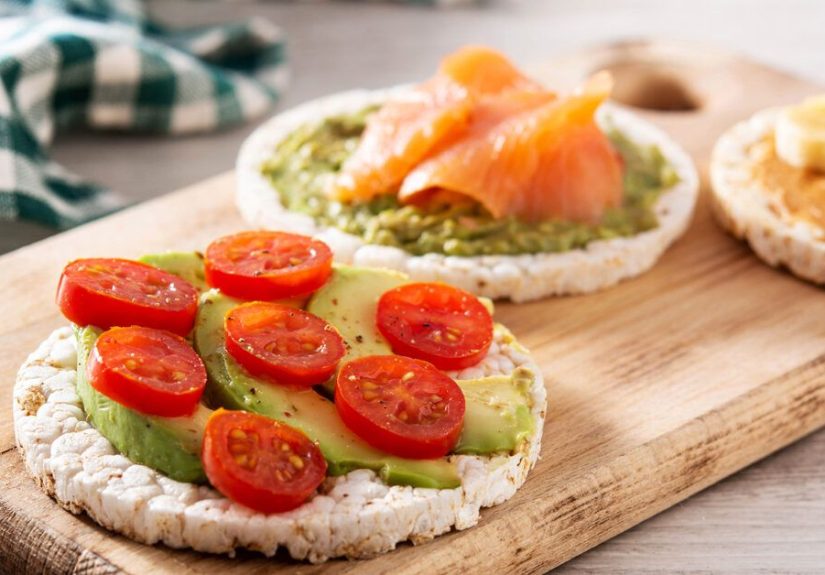
- Avocado + Everything seasoning + tomato slices (toast vibes, minus the toaster).
- Hummus + cucumber + a sprinkle of feta (fresh, salty, satisfying).
- Cottage cheese + berries (high protein, sweet-tart, no drama).
- Smoked salmon + cream cheese + capers (bagel energy on a budget).
- Tuna salad + pickles (protein-forward and lunchbox friendly).
- Egg salad + paprika (simple, comforting, surprisingly luxurious).
- Almond butter + chia + strawberries (fiber boost with dessert vibes).
- Turkey + mustard + spinach (savory, lean protein, no fuss).
- Greek yogurt dip on the side + mini rice cakes (crunch-and-dip strategy for better satiety).
So… Are Rice Cakes Healthy?
Rice cakes are not a superfood, and they’re not a villain.
They’re a tool.
Plain rice cakes are low-calorie and convenient, but they’re mostly quick carbs with little fiber or protein.
That means they can leave you hungry and can raise blood sugar quickly if you eat them alone.
If you like them, the healthiest way to use rice cakes is simple:
treat them like a base and build a snack on top.
Add protein, add fiber, add healthy fat.
If you’re watching sodium or added sugar, pay attention to flavored varieties.
And if rice-based foods are a daily staple for you or your family, rotate in other grains for variety.
Real-World Experiences: What It’s Like to Live With Rice Cakes
Here’s what tends to happen in real lifenot in a perfect nutrition spreadsheet where everyone has unlimited time, flawless meal prep, and a personal chef named “Consistency.”
Experience #1: The “I’ll just have one” moment.
You open a sleeve of rice cakes because you want something light. You eat one plain. It crunches. It disappears. Your brain files it under “that was… an appetizer.”
Five minutes later you’re back, negotiating with yourself: “One more is fine.” Another five minutes pass and suddenly the sleeve is giving you side-eye.
The lesson most people discover: rice cakes don’t “fail”they just need backup. Pairing one rice cake with a protein (like cottage cheese) and a fiber-rich side (berries, carrots, sliced peppers) is often the difference between “snack” and “snack spiral.”
Experience #2: The blood-sugar roller coaster.
Some people notice that a plain rice cake hits like a tiny sugar rush: quick energy, then a drop.
It’s not because rice cakes are “sugary,” but because puffed rice can digest fast.
A common workaround is to make rice cakes a topped snacknut butter, avocado, hummus, turkey, eggsanything that slows digestion.
The funny part? The same rice cake that felt “meh” alone suddenly feels like a real food when it has a topping that brings protein and fat to the party.
Experience #3: The “I need crunch at my desk” solution.
Chips are crunchy. Crackers are crunchy. Stress is crunchy. (Okay, that last one isn’t food, but it does show up at work.)
Mini rice cakes can be a practical crunch substituteespecially when you add a dip that brings nutrition.
People who do best with rice cakes at work often use a simple rule: rice cakes + dip = snack.
Rice cakes alone = “I’m just buying time until I find something else.”
Experience #4: The weight-loss phase.
During dieting, rice cakes can feel like a “safe food” because they’re low-calorie.
The challenge is that “safe” doesn’t always mean “satisfying.”
Many people find they do better when they treat rice cakes like they’d treat toast: top them with something that sticksprotein and fiberso hunger doesn’t roar back later.
A rice cake with peanut butter and banana can be more helpful for appetite control than three plain rice cakes that leave you prowling the kitchen.
Experience #5: The “gluten-free convenience” win.
For people avoiding gluten, rice cakes are often an easy grab-and-go option.
They travel well, store well, and don’t require cooking.
The real-life win is having a reliable base for quick snacksespecially when paired with toppings you trust.
The real-life caution is label reading: some varieties add other grains or flavors that may not fit every dietary need.
Bottom line from the real world: rice cakes tend to work best when they’re used intentionallyas a crunchy base you can build onnot as a solo snack that’s expected to do the job of a full meal.