Table of Contents >> Show >> Hide
- Meet “Mahogany”: What Are You Actually Planting?
- Can Mahogany Grow Where You Live in the U.S.?
- Choose the Right Site: Sun, Space, and “Future You” Gratitude
- What to Buy: Seedling vs. Sapling vs. “Instant Tree”
- How to Plant Mahogany Trees: Step-by-Step (The Method That Works)
- Step 1: Pick the best planting day
- Step 2: Find the root flare (your tree’s “belt line”)
- Step 3: Dig the hole wide, not deep
- Step 4: Set the tree at the correct height
- Step 5: Fix circling roots (especially in containers)
- Step 6: Backfill with native soil (mostly)
- Step 7: Water deeply and eliminate air pockets
- Step 8: Mulch like a pro (no mulch volcanoes)
- Step 9: Stake only if needed
- Watering Mahogany After Planting: A Realistic Schedule
- Fertilizer: Helpful, Not Mandatory
- Pruning and Training: Build a Strong Tree Early
- Mahogany-Specific Challenges: Pests, Problems, and What to Do
- Optional: How to Grow Mahogany From Seed
- Spacing: Shade Tree vs. Timber Mindset
- Responsible Planting Checklist
- Quick Troubleshooting: If Your Mahogany Looks Unhappy
- Conclusion: Plant It Right and Let Time Do the Magic
- Field Notes: of Real-World Experiences (What Growers Commonly Run Into)
Planting a mahogany tree is a little like adopting a very confident puppy: it starts small, looks adorable in a pot,
and thenif you give it the right hometurns into something big, strong, and slightly bossy about space.
Done right, mahogany can become a long-lived shade tree, a handsome street tree, or a serious hardwood specimen
(depending on the species and where you live).
This guide walks you through choosing the right mahogany, picking a site that won’t cause future “why is my sidewalk
doing that?” regret, and planting in a way that helps the roots establish quickly. You’ll also get mahogany-specific
tips on pests (yes, there’s a borer that loves mahogany as much as woodworkers do) and practical aftercare.
Meet “Mahogany”: What Are You Actually Planting?
“Mahogany” isn’t one single treeit’s a name people use for several different species, and that matters because
their cold tolerance, growth habits, and pest issues can differ.
-
West Indian mahogany (Swietenia mahagoni) Often used as a landscape and street tree in
South Florida and other frost-free places. Great canopy, coastal tolerance, and a “built for sunshine” vibe. -
Big-leaf/Honduran mahogany (Swietenia macrophylla) The famous timber species. It’s more
of a tropical/subtropical tree and is widely grown in warm regions, including some U.S.-affiliated tropical areas. -
African mahogany (commonly Khaya species) Not “true mahogany” botanically, but often
planted as a shade/tree-crop alternative in warm climates.
Before you buy, check the plant tag for the scientific name. If the label just says “mahogany” with no details, that’s
like buying “a dog” without knowing whether it’s a chihuahua or a Great Dane.
Can Mahogany Grow Where You Live in the U.S.?
Most mahoganies are happiest where winters are mild. In the continental U.S., that usually means truly warm pockets:
South Florida is the classic zone for West Indian mahogany, while big-leaf mahogany is better suited to tropical
conditions (or protected, specialty situations).
Use these quick climate checks
- Frost: Regular freezes are a dealbreaker for most mahogany species. One surprise cold snap can set a young tree back hard.
- Wind & storms: Mahogany can handle wind once established, but young trees need good staking decisions and strong structure (more on training below).
- Heat: Mahogany likes warmth. If your summers are long and hot, you’re speaking its love language.
If you’re outside a warm zone, you can still enjoy mahogany as a container specimen (large pot,
greenhouse, sunroom, or patio that can be protected during cold weather). Just know that a tree that wants to be
50–80 feet tall will eventually have opinions about living in a pot.
Choose the Right Site: Sun, Space, and “Future You” Gratitude
Mahogany grows best in full sun. It can tolerate some light shade, but if you want strong growth and a
symmetrical canopy, prioritize sun.
Give it room (seriously)
Many mahoganies become large trees with broad crowns. In landscapes, plan for the mature sizenot the cute sapling
size. A good rule is to plant well away from buildings, driveways, and tight sidewalk corners. If you live where
mahogany is commonly used as a street tree, you’ve probably seen what happens when it’s squeezed into a tiny space:
roots and hardscapes eventually negotiate… and the hardscape usually loses.
Drainage beats “fancy soil”
Mahogany prefers well-drained soil. It can tolerate a range of soil types, but it does not love
staying waterlogged. If your site holds water after rain, consider planting on a gentle mound or choosing a better-drained
location.
What to Buy: Seedling vs. Sapling vs. “Instant Tree”
For most home landscapes, a container-grown sapling (often 3–10 gallons) is the easiest win:
it’s large enough to establish confidently, but not so huge that transplant shock becomes a major event.
- Healthy canopy: Leaves should look vigorous (not scorched, not heavily spotted, not limp).
- Trunk structure: Look for one main leader (a single “top” trunk) rather than multiple competing tops.
- Roots: Avoid severely root-bound trees with thick circling roots pressing hard against the pot.
How to Plant Mahogany Trees: Step-by-Step (The Method That Works)
Step 1: Pick the best planting day
Plant when your tree can focus on roots, not survival drama. In warm climates, that often means planting when
temperatures are moderate and rainfall is more reliable. Avoid the hottest, driest stretch if you can, unless you’re
committed to a serious watering schedule.
Step 2: Find the root flare (your tree’s “belt line”)
The root flare is where the trunk widens at the base and transitions into major roots.
Many nursery trees are potted a bit too deep, so you may need to gently remove some soil at the top of the root ball
to locate the flare. Planting too deep is one of the most common reasons new trees struggle.
Step 3: Dig the hole wide, not deep
Dig a hole about 2–3 times as wide as the root ball, but no deeper than the root ball
height. The goal is to loosen surrounding soil so new roots can expand outward, while keeping the tree from settling
below grade.
Step 4: Set the tree at the correct height
Place the tree so the root flare sits slightly above the surrounding soil level. This helps prevent
trunk rot and encourages healthy root development. Rotate the tree to face its best side toward the most visible angle
(because you’re allowed to be a little vain about your future shade tree).
Step 5: Fix circling roots (especially in containers)
If roots are circling, gently loosen them. You can tease them outward with your fingers, and for severe circling,
make a few vertical slices along the outer root mass. This encourages roots to grow outward into the surrounding soil
instead of continuing the “round and round we go” habit.
Step 6: Backfill with native soil (mostly)
Backfill using the soil you dug out, breaking up large clods. You can mix in a small amount of finished compost if your
soil is extremely poor, but avoid creating a “perfect soil bubble” that roots refuse to leave. The goal is to help the
tree adapt to your sitenot pamper it into dependency.
Step 7: Water deeply and eliminate air pockets
Water slowly as you backfill to help soil settle around roots. Once planted, water thoroughly so the entire root zone
is moist.
Step 8: Mulch like a pro (no mulch volcanoes)
Apply a 2–4 inch layer of mulch in a wide ring around the tree (think: donut, not volcano). Keep mulch
pulled back several inches from the trunk so the bark stays dry. Mulch helps conserve moisture, moderates soil temperature,
and reduces grass competitionespecially important while your mahogany is establishing.
Step 9: Stake only if needed
If your site is windy or the tree has a top-heavy canopy, staking can help for the first growing season.
Use flexible ties, allow a little movement (movement strengthens trunks), and remove stakes as soon as the tree is stable.
Permanent staking is like keeping training wheels on a bike foreversafe, but not helpful.
Watering Mahogany After Planting: A Realistic Schedule
Even drought-tolerant trees need consistent moisture while establishing. A practical approach:
- Weeks 1–2: Water deeply every 2–3 days (adjust for rain and soil drainage).
- Weeks 3–12: Water deeply 1–2 times per week.
- Months 4–18: Water weekly during dry spells; less during rainy periods.
Your goal is deep watering that encourages deep rooting. Frequent light sprinkling trains roots to stay shallow, which
is the tree equivalent of skipping leg day.
Fertilizer: Helpful, Not Mandatory
In many landscapes, mahogany performs well without heavy fertilizing. If growth seems slow or leaves look pale,
consider a slow-release tree fertilizer applied according to the label. Avoid over-fertilizingespecially
with high nitrogenwhich can push overly soft growth and increase stress.
If you’re unsure, a soil test is the grown-up answer (and it can save you money on guesswork fertilizers).
Pruning and Training: Build a Strong Tree Early
Mahogany can become a large, long-lived tree, so structure matters. Early training helps prevent storm damage and messy
branching later.
- Keep a central leader: Encourage one main trunk by pruning competing leaders early.
- Remove weak attachments: Narrow “V” crotches can split as the tree grows.
- Prune lightly: Avoid removing too much canopy at once, especially in the first year.
Mahogany-Specific Challenges: Pests, Problems, and What to Do
The big one: Mahogany shoot borer
If you’re planting a Swietenia species, you should know about the mahogany shoot borer
(Hypsipyla grandella). This insect can bore into new shoots, causing dieback at the top and leading to multiple
stems (which is not ideal if you’re aiming for a straight, strong trunk).
What helps in home landscapes:
- Monitor new growth: If the top shoot is damaged, prune cleanly to a healthy bud/branch to retrain a leader.
- Keep the tree vigorous: Good watering during establishment and proper mulching reduce stress.
- Avoid “mahogany monoculture”: In larger plantings, mixing species can reduce pest pressure.
Other common issues
- Leaf drop and litter: Some mahoganies shed leaves seasonally and produce woody capsules that can be messy. Plan placement accordingly.
- Sidewalk heaving: Large trees and hardscapes don’t always get along. Give space from pavement and consider root management strategies where appropriate.
- Overwatering: Yellowing leaves plus soggy soil often point to drainage issues, not “needs more fertilizer.”
Optional: How to Grow Mahogany From Seed
Growing mahogany from seed is doableand kind of addictive (you’ll start looking at seed pods like they’re treasure chests).
Mahogany seeds are often winged and disperse when mature capsules open.
Simple seed-starting approach
- Use fresh seed: Fresh seeds generally germinate more reliably than old, dried-out ones.
- Sow in well-drained medium: A seed-starting mix that doesn’t stay soggy is ideal.
- Keep warm and evenly moist: Moist, not wetthink “wrung-out sponge.”
- Use deep containers: Young trees benefit from space for roots to develop without curling.
- Harden off before planting out: Gradually introduce outdoor sun and wind so seedlings don’t scorch or flop.
Seed-grown trees can be a great option if you want multiple trees or enjoy the process. For a single landscape tree,
buying a healthy sapling is usually faster and simpler.
Spacing: Shade Tree vs. Timber Mindset
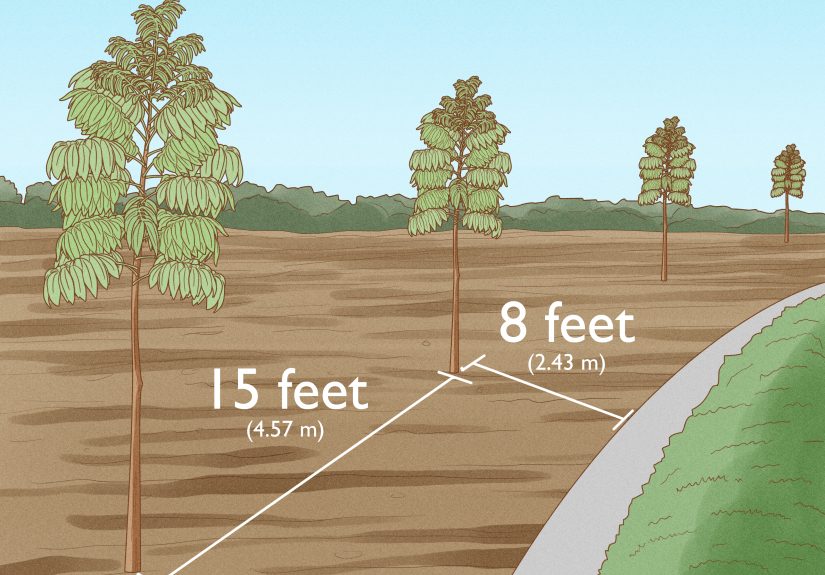
In a yard, mahogany should be treated like a large shade tree: plan for canopy spread and keep it away from power lines
and structures. In plantation-style settings, spacing is typically much tighter and depends on goals (timber form, thinning
plans, and local recommendations). If your goal is wood production, consult forestry guidance specific to your region and
speciestimber management is a whole sport of its own.
Responsible Planting Checklist
- Check local suitability: Confirm the species matches your USDA hardiness zone and local conditions.
- Call before you dig: In the U.S., contact 811 to locate underground utilities before digging.
- Think long-term: Mature size, root behavior, litter, and storm exposure all matter more than the tree’s size today.
Quick Troubleshooting: If Your Mahogany Looks Unhappy
- Wilting + dry soil: Increase deep watering frequency (especially in the first 3 months).
- Yellow leaves + wet soil: Improve drainage; reduce watering; avoid planting in low spots.
- Top dieback or multiple leaders: Inspect for shoot borer damage; prune to retrain a single leader.
- Slow growth: Check sun exposure, root flare depth, and soil compaction; consider a soil test.
Conclusion: Plant It Right and Let Time Do the Magic
The best way to plant mahogany trees is surprisingly simple: choose the right species for your climate, give it full sun
and real space, plant at the correct depth (root flare visible), water consistently while it establishes, and mulch properly
without burying the trunk. From there, mahogany tends to reward patience: deeper shade, stronger structure, and that
unmistakable “I’m a serious tree” presence.
If you want one takeaway, let it be this: depth is destiny. Plant too deep and you’ll spend years
troubleshooting. Plant at the right height, and your tree can focus on what it does bestgrowing into a legend.
Field Notes: of Real-World Experiences (What Growers Commonly Run Into)
People who plant mahogany in warm U.S. regions often describe the first year as a lesson in “slow confidence.” The tree
may not explode with growth right away, especially if it’s adjusting from a nursery container to native soil. A common
experience is that the canopy looks fine, but the tree seems to “do nothing” for weeks. Under the surface, though, roots
are expanding into the loosened soil around the planting holeexactly what you want. Many growers say the visible growth
really picks up after the root system settles in, especially once the rainy season (or a consistent irrigation routine)
helps the tree stay evenly moist.
Another frequent story: the root flare surprise. A lot of people plant their mahogany at the same depth
it sat in the potonly to realize later the root flare was buried under an inch or two of nursery mix. Gardeners who correct
this early (by gently removing excess soil from the top of the root ball before planting) often report stronger establishment
and fewer “mystery problems” like declining vigor or trunk bark staying too damp. The small effort of finding the flare can
feel fussy in the moment, but it’s one of those details that pays rent for decades.
In coastal neighborhoods, mahogany gets reviews like a dependable workhorse: it tolerates bright sun, can handle breezes,
and eventually throws a canopy that makes patios and driveways more livable. The trade-off people mention is litter.
Leaves can drop seasonally, and woody seed capsules can break apart and fall. Homeowners who love a perfectly spotless yard
sometimes place the tree farther from pools, entryways, and parking areas. Homeowners who love shade usually shrug and say,
“Worth it,” while sweeping like it’s a weekly podcast ritual.
For those planting Swietenia species, the mahogany shoot borer often shows up in conversations as
the “tiny villain with big ambition.” When it hits, people notice the top shoot looks damaged and the tree tries to sprout
multiple leaders. The common experience-based fix is simple but requires attention: prune cleanly and retrain one leader early,
rather than letting the tree grow into a multi-stemmed shape that’s weaker long term. Growers who keep an eye on the top during
active growth periods tend to feel more in control, even if the pest occasionally makes an appearance.
Finally, a lot of successful planters say their biggest “aha” moment was realizing mahogany doesn’t want to be babied with constant
shallow watering. Deep, infrequent wateringespecially after the first few weeksproduces sturdier growth. People who switch from
daily sprinkling to deep soak sessions often report the tree looks less stressed during hot spells, because the roots learn to
chase moisture downward. In other words: mahogany respects consistency, hates soggy feet, and rewards anyone who plants it like
they’re planning for the next 30 yearsnot the next 30 days.