Table of Contents >> Show >> Hide
- What a “Hey Pandas” thread really is (and why it works)
- Why people love sharing outfits online
- OOTD: from a hashtag to a whole economy (yes, really)
- How to post your outfit in a thread without overthinking it
- Outfit ideas people actually wear (aka: not just “linen pants on a yacht”)
- The surprisingly big impact of small outfit posts
- Keeping outfit threads kind (and mentally healthy)
- Conclusion: the outfit is the excusethe community is the point
- Experiences From Outfit Threads (Extra )
There are two kinds of days: the ones where you “throw something on,” and the ones where your outfit feels like a tiny personal victory.
The Bored Panda community has a habit of turning both into entertainmentespecially with those classic “Hey Pandas” prompts that ask a simple question
and then unleash a parade of delightfully human answers. “Show me ur outfit today” is basically catnip: low-stakes, visual, and instantly relatable.
Because whether you’re rocking a crisp blazer, a hoodie that’s seen unspeakable things, or a “business on top, pajama party on the bottom” situation,
your outfit is a mini-story. And on the internet, we love stories… especially the kind with pockets.
What a “Hey Pandas” thread really is (and why it works)
If you’ve ever scrolled a Bored Panda “Hey Pandas” post, you know the vibe: a prompt, a flood of submissions, and a comment section that can swing from
wholesome to hilariously unhinged in three swipes. The format feels like a community bulletin boardpart digital campfire, part show-and-tell, part
“prove you’re a real person by posting the world’s most normal thing.”
It’s casual on purpose
The magic is the simplicity. You don’t need a runway, a stylist, or a ring light big enough to guide ships through fog. You need… an outfit.
That’s it. The prompt does the heavy lifting by giving people permission to share something they already did anyway: get dressed (or attempt to).
It invites connection, not perfection
Outfit threads work best when they feel like a friend saying, “Cutewhere’d you get that?” not a panel of judges scoring your socks.
When the tone stays playful and supportive, people participate more, share more variety, and bring their real-life style into the mix:
work uniforms, cultural outfits, thrift finds, comfort fits, and the occasional glorious fashion experiment that absolutely should not have worked (but did).
Why people love sharing outfits online
Clothing is practicalsurebut it’s also psychological. We use outfits to communicate mood, identity, belonging, creativity, confidence, and sometimes
the fact that laundry day has declared war. Fashion researchers and museums have long discussed clothing as a powerful expression of the self, and online
communities simply made that expression faster and more visible.
Your closet is a mood board you can wear
Some days you dress for the weather. Other days you dress for the version of yourself who definitely has their life together and owns a functioning water bottle.
Either way, outfits become a kind of self-talk. Bright color can feel like a reset. A sharp silhouette can feel like armor. Soft knits can feel like
a wearable deep breath.
Posting is self-expression (but with an audience)
Many people use social platforms specifically to share pieces of themselves and to feel seen. Outfit posts are perfect for that because they’re personal,
but not too personal. You’re not posting your diary; you’re posting your boots. You can be authentic without handing out your entire life story.
That said, an audience changes things. When feedback is kind, it can be energizing. When it’s harshor when comparison creeps init can drain the fun
out of something that should’ve been light. The goal of an outfit thread should be: “Look at us, being humans,” not “Let’s compete for Most Photogenic Elbow.”
OOTD: from a hashtag to a whole economy (yes, really)
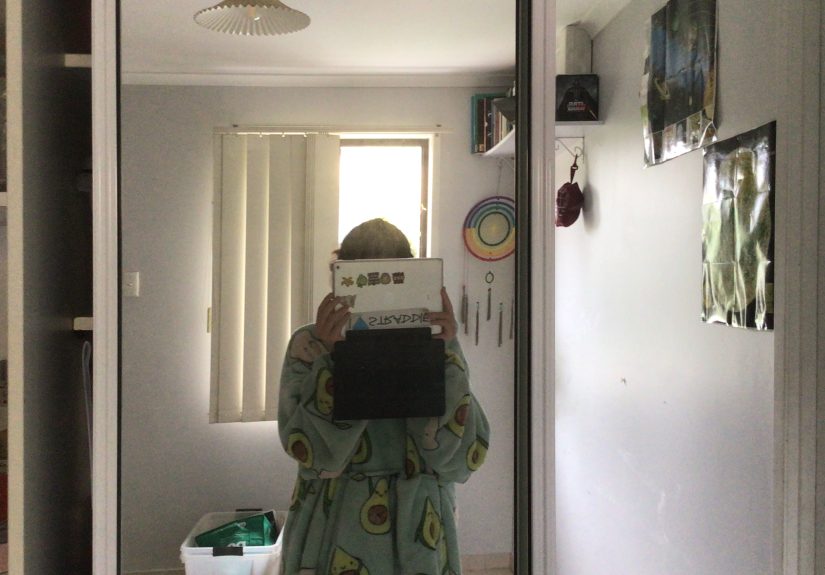
“Outfit of the day” content has been around long enough to feel like internet furniture. It’s always there. It’s also evolved from casual mirror selfies
into a major content format across platformspart inspiration, part review, part mini-storytelling, part marketing engine.
Why the format refuses to die
OOTD posts are quick to make and easy to consume. Viewers can instantly borrow ideas (“Oh, I can pair sneakers with that dress”) or learn about fit and
proportion (“That jacket length actually matters”). The best posts don’t just show clothesthey show how someone lives in them:
commuting, working, traveling, parenting, studying, or simply surviving the grocery store.
It’s also a shopping and influencer minefield (so be smart)
Because OOTD can drive buying decisions, brands often show up. That’s not automatically badpeople genuinely want recommendations.
But if a post includes affiliate links, sponsorships, or gifted items, transparency matters. In the U.S., the FTC expects clear disclosures when there’s a
“material connection” to a brand. If you’re sharing your outfit and also promoting products, a straightforward disclosure protects both you and your audience.
How to post your outfit in a thread without overthinking it
The best advice? Treat it like you’re showing a friend, not auditioning for a fashion documentary narrated by a judgmental mannequin.
Start simple, then add personality.
Five easy outfit “formulas” that look intentional
- The “Hero Piece”: Keep everything basic, let one item do the talking (statement jacket, bold shoes, fun bag, loud sweater).
- Monochrome-ish: Pick one color family (black, cream, navy, olive) and vary the textures so it looks rich, not “I got dressed in the dark.”
- High-low mix: Pair a dressy item with a casual one (blazer + jeans, silk skirt + graphic tee, loafers + sweat set).
- Three-layer trick: Base layer + mid layer + top layer (tee + overshirt + coat). It adds depth fastespecially in colder weather.
-
Uniform, upgraded: If you wear the same silhouette often, change one variable: swap sneakers for boots, add a scarf, change proportions, or
try a new color.
How to take a decent outfit photo with minimal chaos
You don’t need studio lighting. You need clarity. A few practical tweaks can make your outfit actually readable in a photo:
- Use natural light: Stand facing a window or outside in shade so details show without harsh shadows.
- Keep the camera level-ish: Chest-to-waist height often captures full outfits without weird distortion.
- Step away from the background: A little space helps your outline stand out (and makes the photo look less cramped).
- Choose a simple backdrop: A blank wall, a door, or a tidy corner keeps attention on the outfit, not the pile of “clean” laundry.
- Use a timer: It frees your hands and makes poses feel more natural than the classic “arm stretched into next week.”
Privacy and safety: share the outfit, not your whole life
Outfit threads are fun, but the internet has a memory and a zoom function. Before posting, scan your image like a detective:
visible addresses, school logos, name badges, license plates, identifiable documents, or reflections that reveal more than you meant to share.
If you’re posting kids’ outfits, be extra cautiousmany families choose to avoid posting minors publicly or keep faces out of frame.
And if you’re feeling vulnerable about posting at all, give yourself an easy option: crop from shoulders down, blur the background, or photograph the outfit
laid flat. “Participation” doesn’t have to mean “full identity reveal.”
Outfit ideas people actually wear (aka: not just “linen pants on a yacht”)
A great “Hey Pandas” outfit thread isn’t about everybody dressing the same. It’s about seeing the range of real lives.
Here are examples of outfits that show up again and againbecause they work:
1) The workday chameleon
Think: a structured top half (button-down, sweater, blazer) with comfort-forward bottoms (straight-leg jeans, ponte pants, clean joggers).
This is the unofficial uniform of hybrid work and “I have a meeting but I also have feelings.”
2) The thrifted treasure hunt win
Secondhand style often looks more personal because it isn’t built from a single store’s mannequin logic. A vintage denim jacket, a perfectly broken-in
leather belt, or a quirky printed shirt becomes the anchorthen everything else follows its lead. Bonus: it’s easier on your budget and can reduce demand
for brand-new production.
3) The “I’m cold but make it fashion” build
Base layers, warm socks, boots, oversized coat, scarf, beanie. The trick is balancing proportions: if the coat is huge, keep the silhouette a bit cleaner underneath.
If the sweater is chunky, slimmer pants help. If everything is bulky, you’ll feel like a stylish duvet (which is sometimes the goal, honestly).
4) The statement-accessory save
When your outfit is basic, accessories can carry it: a hat, layered jewelry, a colorful bag, a bright sneaker, or even a lipstick that says
“I did not wake up like this, I prepared.”
The surprisingly big impact of small outfit posts
An outfit thread looks like fluffuntil you zoom out. Clothing is one of the most common ways people present themselves in public,
and posting outfits can influence how we shop, how we compare ourselves, and how we think about consumption.
Style inspiration can become healthier consumption (if you let it)
Here’s the good version: you see someone restyle the same jeans five ways, and it helps you shop your closet. You see someone repeat outfits proudly,
and it normalizes re-wearing. You discover thrift and resale, and your wardrobe starts to feel more curated than crowded.
The U.S. has a serious textile waste problemmillions of tons of textiles end up landfilled, while only a portion is recycled.
Fast fashion’s low cost can come with low durability, which makes donation and reuse harder. That’s why the “repeat outfit” mindset is quietly radical:
it’s style that doesn’t require constant buying.
Secondhand isn’t just a trendit’s a shift
Resale and secondhand shopping have grown rapidly in the U.S., with online resale expanding as platforms and logistics improve.
Translation: more people are treating secondhand as a normal way to build a wardrobe, not a backup plan. For an outfit thread, this is goldbecause it creates
more originality. Two people can “wear black pants,” but thrifted black pants are never the same black pants.
Keeping outfit threads kind (and mentally healthy)
Any time appearance enters the chat, comparison tries to sneak in like an uninvited raccoon at a picnic. The fix is culture:
what the community praises, repeats, and rewards.
Compliment the choice, not the body
“That color is amazing on you” is different from “You have the perfect body for that.” One celebrates style; the other can accidentally reinforce
body scrutiny. Try compliments that focus on creativity: silhouette, color pairing, texture, layering, vibe, humor, confidence.
Build boundaries like you build outfits: intentionally
If outfit content starts making you feel worse, take that seriously. Research and public health guidance have pointed out that heavy social media use can
amplify self-comparison and body dissatisfaction for some people. It’s okay to mute, unfollow, or take breaks. You can love fashion and still protect your peace.
The healthiest “Hey Pandas” threads feel like a neighborhood block party: you show up as you are, somebody tells you they like your shoes, and no one asks you
to prove your worth with a discount code.
Conclusion: the outfit is the excusethe community is the point
“Hey Pandas, show me ur outfit today” works because it’s ordinary in the best way. It invites people to share a slice of daily life,
to find inspiration without intimidation, and to remember that style isn’t reserved for celebrities or algorithms. It’s for anyone who got dressed
even if “got dressed” means “put on a hoodie and made it everyone else’s problem.”
So post the outfit. Post the thrift find. Post the work uniform. Post the cozy fit. Post the chaotic layering that somehow looks intentional.
And if you’re feeling brave, post the outfit you used to think you “couldn’t pull off.” You might be surprised how many Pandas show up to hype you up.
Experiences From Outfit Threads (Extra )
Outfit threads have a funny way of turning strangers into a temporary little friend group. People often describe the same emotional arc:
first, hesitation (“Is this outfit even interesting?”), then the practical scramble (“Where can I take a photo that doesn’t reveal my entire kitchen?”),
and finally the surprisingly warm aftershock of being perceived in a kind way. A lot of first-time posters start with a safe choicejeans and a favorite top,
maybe sneakers, maybe a jacketand the comments tend to nudge them into confidence. Someone notices the color combo. Someone asks where the shoes are from.
Someone says, “That’s a whole vibe.” Suddenly, the outfit stops being “just clothes” and becomes a tiny creative project that landed.
Another common experience is the joy of representation. In a single thread you’ll see officewear next to a trade uniform next to a student fit next to someone
in cultural dress next to someone wearing an adaptation for mobility or sensory comfort. People who rarely see their real life reflected in glossy fashion content
often say outfit threads feel more honestbecause they include everything: weather compromises, work requirements, body variety, budget variety, and personal style
that doesn’t fit into a neat trend box. It’s not unusual for someone to comment that they’re saving the thread not to copy exact outfits, but to borrow
the mindset: “I can wear what I like and still look put-together.”
Thrifting stories show up constantly, too. Someone posts a jacket they found for a few dollars, and others jump in with their own “treasure hunt” wins.
That turns into a mini-skill-share: how to check seams, how to spot quality fabrics, how to tailor a piece so it fits like it was meant for you.
The thread becomes less about consumption and more about crafthow you build a wardrobe over time, how you repeat outfits in fresh ways,
and how you make style personal instead of expensive.
And then there’s the humor. Outfit threads invite the best kind of internet comedy: the self-aware confession (“Yes, these are my emotional support boots”),
the practical honesty (“I dressed for the cold, not for beauty”), and the occasional plot twist (“The outfit looks normal until you see the socks”).
People often report that the laughter makes them more willing to participate againbecause the standard isn’t perfection. The standard is being real.
On the best days, an outfit thread feels like everyone collectively agreeing: life is weird, getting dressed is sometimes hard, but we can still have fun with it.