Table of Contents >> Show >> Hide
- What This Remodelista Win Actually Means
- The Winning Space at a Glance: Calm Nautical, Maximum Function
- Why the Design Works: The 5 Moves You Can Steal (Politely)
- Safety + Longevity: The Unsexy Stuff That Makes the Design Truly Professional
- How to Apply the Wettling Playbook in Your Own Home
- Who Are Wettling Architects, and Why Do They “Get” Family Spaces?
- The Takeaway: “Considered” Doesn’t Mean “Cold”
- Experiences That Come With Building a “Best-in-Class” Children’s Space (The Real-Life Version)
Designing a children’s room sounds easy until you remember two facts: kids own approximately 4,000 tiny objects at any given moment, and they sleep like
acrobats. A truly great children’s space has to do double dutyplay and rest, storage and style, today and
“wait, when did they become teenagers?”
That’s why Remodelista’s recognition of Wettling Architects as the Best Professional Children’s Space Winner still lands like a mic drop:
it’s a room that looks calm, works hard, and doesn’t feel like it was decorated by a cereal box mascot. It’s a children’s room you can live withwithout
needing a nap afterward.
What This Remodelista Win Actually Means
Remodelista’s Considered Design Awards (2013) spotlight rooms that are thoughtful, edited, and smartly executedspaces with intention, not
just “Pinterest energy.” In the professional children’s space category, the winning project by Wettling Architects stood out because it
treats a kids’ room the way a good architect treats any space: as a problem worth solving beautifully.
Translation: this isn’t about stuffing a room with cute stuff. It’s about layout, built-ins, lighting, materials, and the small decisions that make a room
feel both fun and finished.
The Winning Space at a Glance: Calm Nautical, Maximum Function
The project Remodelista featured is a children’s bedroom in a Shelter Island beach house designed for a family with two young sons. The overall home is
rooted in coastal contextviews, landscape, and a low-key exteriorwhile the kids’ room leans into the setting without turning into a theme park.
A starting palette that doesn’t fight the toys
The room begins with wide-planked, white-painted wood floorsa bright base that makes the space feel airy and gives all the inevitable
kid-chaos a clean backdrop. It’s a strategic choice: a quiet foundation lets the room evolve as kids’ tastes (and LEGO collections) change.
Built-in bunks that work like a mini apartment
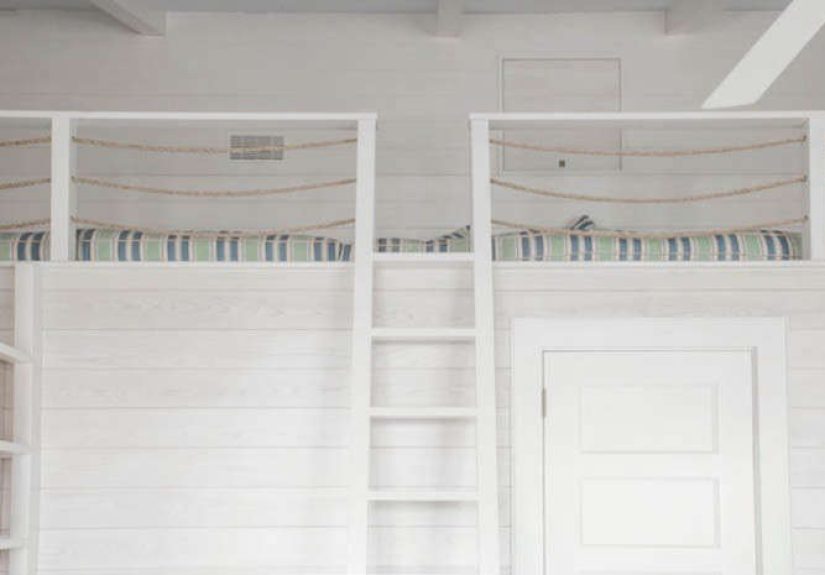
The standout feature is the built-in bunk bed setup, paired with bookshelves running up the sidea move that saves
floor space and turns vertical real estate into storage. It’s the kind of design that feels obvious only after someone smart does it first.
Storage that hides in plain sight
Under-bed storage stays subtle, using recessed pulls (a detail that matters when kids are zooming around barefoot). This is “considered design” in action:
you don’t just add drawersyou add drawers that won’t snag, bruise, or visually clutter the room.
Nautical cues, done like an adult lives here too
The room nods to the beachfront setting with restrained nautical details: rope at the top of an additional crawl space, a shuttered porthole window, and
horizontal slatted paneling made from cypress with a light white wash. It reads as coastalfresh, textured, and location-appropriatewithout screaming
“AHOY, MATEY.”
Lighting that understands bedtime is not a single event
The lighting plan is layered and purposeful: wall-mounted cage lights bring character and practical glow, while low-profile downlights provide overhead
illumination without visual fuss. Remodelista also notes reading lamps that behave like hardworking accentsbecause the top bunk is no place for a wobbly
lamp perched on a tiny shelf like it’s auditioning to fall.
Why the Design Works: The 5 Moves You Can Steal (Politely)
1) Start with a “quiet” palette, then let life add the color
A minimal palette isn’t boring in a kids’ roomit’s strategic. Toys are bright. Books are bright. Artwork is bright. Kids themselves are bright. A calm
baseline keeps the room from feeling visually loud and makes it easier to swap accessories as kids grow.
If you want the room to feel curated (not chaotic), pick one or two “anchor neutrals” (white, soft sand, pale gray) and one accent family (navy, sea-glass
green, warm wood). Then let bedding, art, and the occasional neon plastic dinosaur handle the rest.
2) Use built-ins where the room needs discipline
Built-ins are the grown-up trick for keeping a children’s room functional. When the bed, shelving, and storage are integrated, the room stops relying on
“extra furniture” to behave. That means fewer pieces to bump into, fewer wobbly shelves, and more floor space for playing.
In this winning space, the bunk bed becomes a system: sleep above, storage beside, storage below. If you’re designing for siblings, sleepovers, or a small
footprint, this is the blueprint.
3) Build “accessible” storage, not just “available” storage
Kids won’t use storage they can’t reach. The best children’s spaces treat storage like part of the room’s daily choreography:
- Low drawers for clothing and toys (kids can put things away themselves).
- Open shelves for books and favorite items (fast access, encourages reading).
- Hidden storage for the stuff you love them dearly but never want to see again.
The Wettling approach is especially smart because it keeps storage close to the bunksso the room doesn’t need a bulky dresser competing for wall space.
4) Make lighting a three-part plan: overhead, task, and night navigation
One overhead light isn’t a plan. It’s a coin toss. A children’s room needs:
- General light (clean, even illumination for cleaning, dressing, building fort empires).
- Task light (reading, drawing, homeworkespecially around beds and desks).
- Soft guidance (night-light or low glow for late-night bathroom missions).
The Remodelista-winning room nails the “task light near the bunks” conceptbecause kids read, talk, whisper secrets, and negotiate bedtime terms like tiny
attorneys.
5) Let the theme whisper, not shout
Nautical can be timeless when it’s done through materials and shapes (rope, shutters, slats, porthole geometry) rather than cartoon décor. That’s the
difference between “coastal kids’ room” and “pirate-themed birthday party that never ended.”
If you want a lasting theme, think texture and form first: wood paneling, natural fibers, simple stripes, and durable
finishes. Then add a few playful elements that can rotate out when your kid decides they are now a “space person” or a “horse person” or (mysteriously) a
“minimalist.”
Safety + Longevity: The Unsexy Stuff That Makes the Design Truly Professional
A children’s space isn’t just an aesthetic projectit’s a safety and maintenance project that happens to be cute. If you’re borrowing ideas from a
professional winner, borrow the professional mindset too.
Bunk bed safety: design it right, then enforce it kindly
Built-in bunks are fantastic, but only when the details are handled responsibly. That means guardrails, safe ladder access, and clear rules. Many safety
experts recommend the top bunk for kids six and older, and emphasize guardrails on both sides plus safe spacing to reduce fall and
entrapment risks. Add a night light near the ladder so sleepy feet can find their way down without drama.
Air quality matters more than your “perfect white”
Kids spend a lot of time in their bedroomssleeping, playing, and doing crafts that somehow involve glitter (a substance that appears to be forever).
Choose low-emission paints and finishes when possible, ventilate well during and after painting, and avoid storing strong-smelling chemicals in or near the
space.
Fire safety and simple readiness
Bedrooms are sleeping spaces, which makes smoke alarm placement and maintenance essential. Make sure alarms are installed where recommended (including
sleeping areas), tested regularly, and replaced on schedule. It’s not glamorous, but it’s real-life good design: safety you don’t have to think about
daily.
How to Apply the Wettling Playbook in Your Own Home
You don’t need a beach house on Shelter Island to borrow the logic of this award-winning children’s space. Here’s how to translate it into real-world
situations.
If you’re working with a small room
- Go vertical: loft beds, bunks, or a raised bed with drawers below.
- Build storage into the bed wall: shelves beside the ladder, cubbies at the head, drawers below.
- Keep the palette light: it visually expands the room and keeps it from feeling cramped.
If you’re renting (or you can’t do built-ins)
- Fake the built-in look: use a sturdy bunk + a tall bookshelf aligned next to it to create one “system.”
- Use under-bed bins with clean fronts: you’ll get the same storage benefit with less commitment.
- Swap theme décor for theme textiles: stripes, solids, and a couple of nautical textures go a long way.
If you want it to last beyond the “little kid” years
This is where the Wettling approach really shines. A calm foundation plus smart storage means you can update the room with:
- New bedding (instant vibe change).
- Updated art (posters today, framed prints tomorrow).
- Better task lighting (desk lamp upgrades are a rite of passage).
The room grows up without needing demolitionjust edits.
Who Are Wettling Architects, and Why Do They “Get” Family Spaces?
Wettling Architects is a New York-based residential architecture firm (SoHo), founded by architect Jack Wettling. The firm’s stated design philosophy
emphasizes responding to the surrounding environment and integrating function with a sense of clarity and honestyan approach that shows up vividly in the
winning children’s room.
That philosophy matters in family projects because kids’ spaces are emotionally loaded: parents want beauty, kids want fun, and everybody wants fewer
morning arguments about missing socks. The best designers don’t choose between “nice” and “practical.” They choreograph both.
The Takeaway: “Considered” Doesn’t Mean “Cold”
The reason Remodelista’s Best Professional Children’s Space Winner still resonates is simple: it’s warm, livable, and smart. It respects
the setting (coastal), it respects the users (kids), and it respects the adults who have to maintain it (parents who would like to sit down occasionally).
If you’re redesigning a children’s space, treat this project as your permission slip to do lessbut better. Start with calm. Build in function. Use
lighting intentionally. Let texture do the storytelling. And remember: the goal isn’t a perfect photo. The goal is a room that works on a random Tuesday
when someone has lost a library book and the dog is sleeping in the bottom bunk.
Experiences That Come With Building a “Best-in-Class” Children’s Space (The Real-Life Version)
Here’s the part that design articles don’t always say out loud: when you create a truly functional children’s roomespecially one inspired by a
professional winner like Wettling Architectsyou don’t just change a room. You change daily life. And the “experience” of that change is half the value.
Not because it becomes magically perfect (kids are wonderfully unpredictable), but because the room starts supporting you instead of constantly
asking for attention.
In week one, the calm hits first. A quieter palette and fewer visual distractions can make the room feel larger and more peaceful
immediately. Parents often describe this as the “exhale effect”you walk in and your shoulders drop. You also notice something funny: toys look less chaotic
when the architecture is calm. The clutter didn’t vanish, but it stopped being the loudest thing in the room.
Then you experience the power of “storage that’s where the action is.” When shelving is built beside the bed and drawers live under it,
cleanup becomes less of a scavenger hunt. Kids are more likely to put books away when the shelf is near the ladder. They’re more likely to toss pajamas
into a drawer when the drawer is right there. It’s not that kids suddenly become neat; it’s that the room stops demanding Olympic-level effort for basic
routines.
Bunks change the social life of the room. Even in homes with plenty of space, bunks create a sense of “clubhouse” that kids love. The top
bunk becomes a lookout, a reading nook, a secret-keeping station. The bottom bunk becomes a den. Parents often report that bedtime becomes slightly easier
because the room feels specialkids are more willing to be in it. (No promises, of course. Children are skilled negotiators and may still request a snack,
a story, a second story, and legal representation.)
Lighting becomes a daily win you didn’t know you needed. When there’s a proper reading light near the bed, kids can wind down with books
instead of turning the whole room into stadium brightness. And a small night light near the ladder? That’s one of those “boring” details that pays back
constantlyfewer stumbles, fewer wake-ups, fewer dramatic midnight reenactments of a pirate shipwreck.
Materials teach you what “family-friendly” really means. In a coastal home, you quickly learn that finishes have to handle sand, wet
towels, and the occasional “I found this shell and put it in my pocket and forgot.” A room like the Wettling winner uses durable, wipeable surfaces and
integrated details that don’t snag clothing or bruise knees. Over time, you stop thinking about protecting the room and start trusting it.
The biggest experience is flexibility. When the architecture is strongbuilt-ins, smart layout, thoughtful lightingyou can swap the room’s
personality without rebuilding it. One family might keep the coastal mood with stripes and rope baskets. Another might pivot to a more modern look with
graphic bedding and a few bold posters. The room doesn’t collapse under a new phase; it absorbs it.
And that’s the real lesson from a best-in-class children’s space: it’s not about making a room that never changes. It’s about making a room that can
change without becoming a messvisually, functionally, or emotionally. When a children’s room is designed with intention, it becomes a place kids
can grow inside, and a place adults don’t dread maintaining. That’s not just good design. That’s sanity with a fresh coat of paint.