Table of Contents >> Show >> Hide
- Who Is Behind “Haley Drew This”?
- What Makes These 30 Wholesome Comics Stand Out?
- Key Themes in Haley’s Wholesome Mental Health Comics
- Why Wholesome Mental Health Comics Hit So Hard
- How Haley’s Work Fits Into a Larger Movement
- How to Use These Comics in Your Own Life
- Final Thoughts: Why These 30 Wholesome Comics Matter
- Experiences and Reflections Inspired by “Haley Drew This”
In a world where most of our news feeds are a steady drip of doom, there’s something disarmingly powerful about a bright pink heart with stick legs talking about anxiety. That’s the magic of “Haley Drew This”the art project and alter ego of Seattle-based illustrator and writer Haley Weaver. Her comics, featured in the viral Bored Panda post “30 Wholesome Comics About Mental Health And Everyday Life,” blend raw honesty with gentle humor, turning complicated emotions into simple, relatable scenes you can’t help but share with a friend.
These 30 wholesome comics aren’t just cute pictures. They’re bite-sized mental health check-ins: reminders that anxiety is normal, boundaries are healthy, and even on the hardest days, you’re allowed to laugh. Let’s dive into what makes these comics so special, why they resonate with hundreds of thousands of people, and how this kind of art is changing the way we talk about mental health and everyday life.
Who Is Behind “Haley Drew This”?
Haley Weaver is an author and illustrator based in Seattle, Washington, known for her work centered on mental health, relationships, selfhood, and vulnerability. On her official site, she describes her work as an exploration of wellness and feelingsoften using simple shapes, hearts, clouds, and stick-figure bodies to carry surprisingly complex ideas. Her style is clean, colorful, and approachable, like a cozy conversation in comic form.
Beyond Instagram fame, Haley has written an illustrated memoir about anxiety and self-acceptance, Give Me Space But Don’t Go Far, which uses essays and comics to show anxiety not as a villain to defeat but as a roommate you have to learn to live with. That same philosophy shows up in her comics on Bored Panda: anxiety is acknowledged, named, and gently teased, not ignored or shamed.
What Makes These 30 Wholesome Comics Stand Out?
Plenty of artists draw about mental health. So why did this set of 30 comics explode on social media and get shared across platforms like Pinterest, Facebook, and Instagram?
1. Heavy Topics, Light Touch
The comics tackle anxiety, seasonal depression, grief, loneliness, self-doubt, and the weird roller coaster of everyday life. Yet the tone stays kind and playful. You’ll see phrases like “Sometimes I try to sleep it off” matched with a simple white figure in bed on a soft green circle, or a sun saying “See ya later” as the days get shorter. The visuals are soothing, even when the subject is tough.
This light touch is more than an aesthetic choiceit’s a coping tool. When mental health information comes wrapped in warmth and humor, it feels less like a lecture and more like a friend saying, “Hey, me too.”
2. Simple Drawings, Deep Feelings
Haley’s characters are often hearts with legs, cloud-like blobs, or minimal figures outlined against a single color wash. That simplicity is intentional. By keeping faces and bodies generalized, the comics become easy stand-ins for anyone. Readers don’t have to look like the character to see themselves in the panel; they just recognize the emotion.
It’s a clever visual strategy for talking about mental health. Instead of being distracted by details (“That doesn’t look like me”), we zoom straight into the feeling (“Oh wow, that is exactly what my anxiety sounds like at 3 a.m.”).
3. Mental Health as Everyday Life, Not a Special Episode
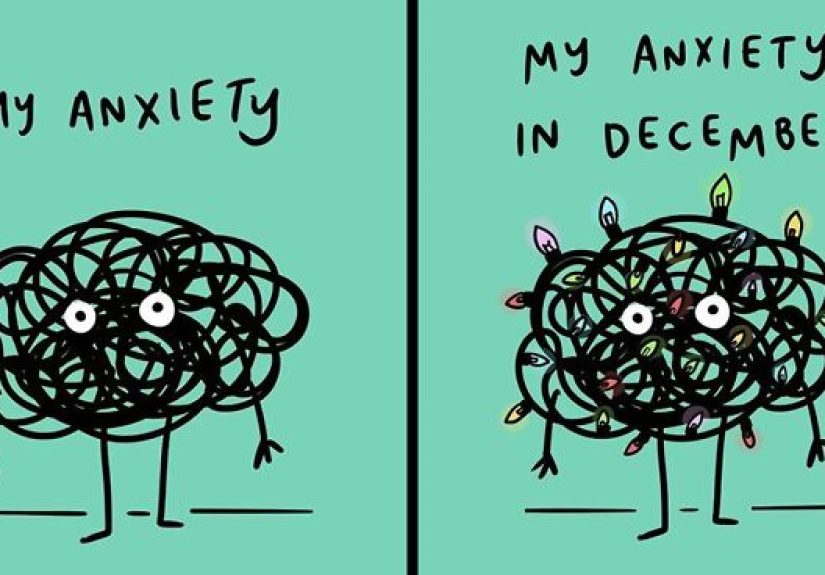
One of the most refreshing things about these comics is how seamlessly they mix mental health themes with daily routines: holiday decorations, texting a friend, wearing masks, scrolling social media, cozy nights in. Anxiety doesn’t appear as a dramatic plot twist; it’s there in the background of normal lifelike it is for so many people.
You’ll see scenes about cleaning your space, getting enough water, taking deep breaths, or deciding whether to stay in bed or finally get up. The comics acknowledge that mental health isn’t just about big diagnoses or crisis moments. It’s also about the tiny choices we make during a regular Tuesday.
Key Themes in Haley’s Wholesome Mental Health Comics
Anxiety as a Roommate, Not a Monster
In her broader body of work, Haley often personifies anxiety as a charactersometimes a nervous little cloud, sometimes a jittery scribble. That idea shows up in these 30 comics as well. Anxiety might be hovering over the main character, chiming in with intrusive thoughts, or quietly lurking in the background.
The point isn’t to erase anxiety, but to understand it. When you depict it as a separate character, you create just enough distance to say, “This feeling is realbut it isn’t all of me.” For many readers, this is a gentle introduction to concepts used in therapy, like naming your anxiety or observing your thoughts rather than being swallowed by them.
Tiny Wins and Quiet Joy
Many of the comics celebrate small, ordinary joys: waking up fully rested on a day with nothing to do, a spontaneous call from a long-distance friend, or the comfort of a favorite book. In some panels, the character literally lists “feelings I would bottle,” like moments of peaceful contentment or soft connection with others.
For people living with depression, anxiety, or chronic stress, these tiny wins matter. The comics don’t pretend that gratitude cancels out painbut they show that good moments can coexist with hard ones. That’s a more realistic (and more compassionate) version of positivity.
Boundaries, Relationships, and Self-Compassion
A recurring thread in Haley’s comics is learning to say no, set boundaries, and offer yourself the kindness you’d gladly extend to others. Comics might show a heart refusing to overcommit, or a character reminding themselves that rest is not laziness, it’s a need.
These themes resonate especially strongly in the age of burnout and constant notifications. A simple panel that says “How to feel better: clean your space, eat something nourishing, listen to great music, drink water, breathe, sleep a bit, show yourself compassion” can land harder than a long advice article because it’s visual, sharable, and easy to revisit.
Seasonal and Situational Struggles
Several of the comics in the Bored Panda collection highlight how context affects mental healthlike winter’s shorter days or the social pressure of holidays. One panel jokes that “winter has always been a little tough for me,” with a solitary figure under a tiny cloud. Another shows how masks and social distancing became a new layer of emotional navigation, turning public health behavior into an expression of care and decency.
By anchoring emotions in specific seasons and situations, the comics validate what many people feel but don’t always name: “No, you’re not imagining it. This time of year really is harder.” That acknowledgment alone can feel like a hug.
Why Wholesome Mental Health Comics Hit So Hard
They Normalize the Conversation
Comics about mental health act as low-pressure conversation starters. It can be intimidating to tell someone “I’m struggling with anxiety,” but sending a comic that jokes about anxiety’s dramatic inner monologue feels safer. The message is the same, but the format is softer.
Haley’s comics in particular are perfect for this. They’re nonjudgmental, they don’t diagnose, and they never mock the person experiencing the emotion. Instead, they invite readers to recognize themselves and say, “Oh, I’m not the only one.”
They Work Like Visual Coping Tools
A good comic can double as a mini grounding exercise. When you’re anxious, complicated advice can feel overwhelming, but a simple drawing that says “Breathe. Drink a glass of water. Clean one corner of the room. Be kind to yourself.” is easy to follow.
Some readers save their favorite Haley comics to their phones, hang them on the wall, or print them as reminders. The imagerysoft colors, round shapes, and gentle typographycalms the eye, while the words offer guidance in language that sounds like a friend instead of a textbook.
They Build Community (Without Forcing Oversharing)
On platforms like Bored Panda and social media, the comment sections under these comics are full of people saying things like “This is exactly how I feel,” “I needed this today,” or “I sent this to my partner so they could understand.” That kind of shared recognition is powerful, especially for people who often feel alone in their struggles.
Importantly, the comics give people a way to relate and connect without having to write long confessions. Reacting, sharing, or tagging a friend is enough. The comic does the talking.
How Haley’s Work Fits Into a Larger Movement
“Haley Drew This” is part of a broader wave of artists using comics to talk about everyday mental health. Across the internet, creators draw about anxiety, ADHD, burnout, depression, and healing in ways that are honest, funny, and affirming. Haley’s work stands out for its tenderness and its emphasis on self-compassion, but it’s also in conversation with an entire community of mental health artists.
Counselors, educators, and even mental health organizations increasingly recommend comics and graphic storytelling as tools for explaining complex emotional experiences. Visual narratives make it easier to understand things like mood cycles, intrusive thoughts, or the impact of stigma. Haley’s 30 wholesome comics sit right at that intersection of art, education, and emotional support.
How to Use These Comics in Your Own Life
1. As Gentle Check-Ins
Scroll through the set and notice which comics make you pause. Are there panels about rest, worrying, or self-worth that hit a little too close to home? That’s data. You don’t have to “fix” anything right awayjust let the comic help you name what you’re feeling today.
2. As Conversation Starters
If you want to talk to a friend or partner about your mental health but don’t know where to start, send a comic that reflects your experience. You can add a simple note like, “This is kind of how my brain has been lately.” It opens the door without requiring a full speech.
3. As Visual Reminders of Coping Skills
Hang your favorite panels somewhere you’ll see them: above your desk, on the fridge, in your journal. When you’re overwhelmed, the image is there to gently nudge you: hydrate, move your body, reach out, rest, breathe, or simply remember that feelings are temporary.
4. As Permission Slips for Self-Compassion
Many of Haley’s comics act as tiny permission slips. Permission to take things slowly. Permission to be proud of small steps. Permission to find joy while still working through hard stuff. Keeping those messages in view can gradually shift the way you talk to yourself.
Final Thoughts: Why These 30 Wholesome Comics Matter
“30 Wholesome Comics About Mental Health And Everyday Life” isn’t just a viral postit’s a snapshot of what happens when vulnerability, humor, and good design come together. Haley Weaver turns abstract ideas like anxiety, resilience, and self-acceptance into small, colorful comics that feel like they were drawn just for you.
In a culture that often swings between toxic positivity and total despair, her work offers a third option: honest optimism. You can admit that things are hard and still celebrate growth. You can take mental health seriously and still laugh at the absurdity of your own brain. And you can be a work in progress and still be worthy of kindnessespecially from yourself.
Whether you’re saving the comics for later, sharing them with someone you love, or just letting them brighten a rough day, these panels are proof that art doesn’t have to be complicated to make a real difference. Sometimes all it takes is a heart with stick legs saying, “Hey, you’re not alone.”
Experiences and Reflections Inspired by “Haley Drew This”
For many readers, encountering Haley’s comics is less like discovering a new artist and more like bumping into a friend who somehow lives inside your head. People talk about finding a single panel on their feeda heart character under a rain cloud, or a scribbly little figure labeled “anxiety”and feeling an instant wave of recognition. It’s that “Oh, it’s not just me” moment that can loosen the tight knot in your chest.
Imagine someone who has been struggling quietly with anxious thoughts for years. They may not have the words to explain what’s going on, especially if they grew up in a family or culture where mental health wasn’t openly discussed. Then they stumble on a comic where anxiety is a chatty cloud hovering just overhead, whispering exaggerated worries. Suddenly, their experience has a picture. It becomes something you can point at and say, “This. This is what it feels like.” That alone can be deeply validating.
Others connect to the comics through grief and loss. Some panels in the broader “Haley Drew This” universe nod to missing someone, holding on to memories, or navigating the empty space a loved one leaves behind. Readers share comments like, “My mom passed away recently and this comic made me cry in the best way,” or “I didn’t know how to talk about my sadness until I saw it drawn like this.” The art doesn’t try to fix grief; it just acknowledges it, which can be more healing than any neat, tidy answer.
The comics also resonate with people who live with seasonal depression or burnout. When the days get shorter and tasks pile up, it can feel like you’re the only one dragging yourself through molasses. Seeing a panel that plainly says, “Winter has always been a little tough for me,” with a tiny figure under a gray cloud, gives that heaviness a gentle, nonjudgmental frame. Readers have described saving that image to their phone and revisiting it each year when the first dark, chilly evening arrivesas if it’s a little reminder that this tough stretch has happened before and will eventually pass again.
For some, the comics become a language for relationships. Partners send each other panels about needing alone time, about feeling overwhelmed by social plans, or about the comfort of small rituals like sharing a snack or watching a show together. Instead of saying, “You’re not listening to me” or “I’m exhausted and don’t know how to tell you why,” they can send a comic that spells out the emotional landscape in a single, friendly frame. It helps both people stay on the same team, even when stress is high.
Mental health professionals also report using comics like Haley’s in their work. A therapist might invite a client to bring in a favorite panel and talk about why it hits home. Someone who struggles to talk about feelings face-to-face might find it easier to describe what’s happening in the comic: “I feel like this character,” “My brain is like that tangled scribble,” or “My anxiety says things like this speech bubble.” From there, real conversations can unfold without the pressure of starting from scratch.
On a more everyday level, many people simply treat these comics as tiny moments of relief in their feeds. You might be doomscrolling through news, arguments, and stressful headlines when a pastel-colored square pops up reminding you to drink water, rest, or celebrate how far you’ve already come. It’s a micro-pausefive seconds where your brain gets to laugh, nod, or breathe out some tension. Over time, those small pauses can add up to a gentler relationship with your own mind.
Perhaps the most powerful thing about “Haley Drew This” is that it doesn’t pretend to have everything figured out. The characters are often uncertain, conflicted, or mid-process. Feelings aren’t wrapped in neat bows by the final panel; they’re just acknowledged and held with care. That honesty lets readers show up exactly as they aremessy, in-between, still learningand still feel entirely welcome.
In the end, that’s what makes these 30 wholesome comics about mental health and everyday life so enduring. They remind us that being human is a weird, wobbly project, and no one is doing it perfectly. But with a little humor, a lot of compassion, and maybe a pink heart with wobbly legs cheering us on, it becomes a journey we don’t have to take alone.