Table of Contents >> Show >> Hide
- Quick recap of the viral story (without stealing anybody’s words)
- Why this “deal” worked: bullying is about power, not just mean behavior
- Disability, visibility, and why bullies pick the “easy target”
- Homework-for-protection: complicated, messy, and painfully realistic
- Years later: gratitude, repayment, and the psychology of “I owe you”
- When someone offers to buy you a house: a smart, calm checklist
- What schools (and parents) should take from this story
- So… should she accept the house?
- Experiences people relate to (500+ words of real-life echoes)
- Conclusion: the real “wholesome” part is the power shift
If high school had a currency exchange, this story would be posted right next to the cafeteria line:
homework in, protection out. And thenbecause life loves a plot twistit turns into
“surprise, I’m rich now, please accept a house.”
The headline-making moment (shared widely via Bored Panda) isn’t just a feel-good story. It’s a messy,
human case study in bullying, power, disability stigma, academic survival tactics, and what happens when
someone tries to repay a debt they’ve been carrying for years.
Quick recap of the viral story (without stealing anybody’s words)
The story traces back to a Reddit post later covered by Bored Panda: a woman describes being a frequent
target of bullying in schoolpartly because she stood out academically and partly because she lived with
cerebral palsy and used crutches.
Then a popular guythink “sports + social influence” energystarts defending her. At first it feels confusing,
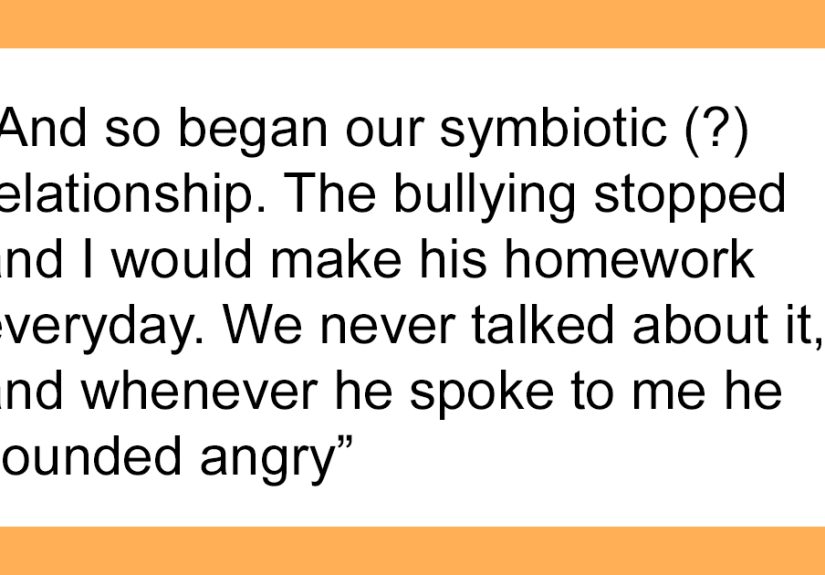
until the arrangement becomes obvious: he quietly expects her to do his homework. She does. Not because she’s
thrilled to become an unpaid academic assistant, but because the bullying stops.
They graduate. They don’t stay in touch. Years later, he messages her: he’s now a successful businessman
living abroad and offers to buy her a house (and a car). She declines, saying she’s doing okay. Soon after,
she learns that three years of expensive physical therapy have been paid formatching the roughly three years
she spent doing his daily homework.
She’s stunned, conflicted, and trying to figure out what this “repayment” even means. And that’s where the
story gets interestingbecause the emotional math doesn’t balance as neatly as the homework did.
Why this “deal” worked: bullying is about power, not just mean behavior
What counts as bullying?
In U.S. federal guidance, bullying is typically described as unwanted, aggressive behavior among school-aged
youth that involves a real or perceived power imbalance and is repeated (or likely to be repeated). That power
imbalance can be physical strength, popularity, money, social status, or even the ability to embarrass someone
publicly.
That definition matters here because the story isn’t “a jock was nice.” It’s “a high-status student changed the
power equation.” The same hallways, the same classmatesdifferent outcomebecause one person with social leverage
signaled, “This target is off-limits.”
Why a “popular protector” can change everything
Bullying often thrives in the presence of an audience. Not because every bystander approves, but because silence
can look like permission. When a well-known student actively defends a target, bullies lose the social reward
and pick a different outlet (or at least a different victim).
In other words: the defender isn’t just protecting one person. They’re changing what the group thinks it can
get away with.
What bystanders can do (that doesn’t require superhero capes)
U.S. anti-bullying guidance emphasizes that bystanders can help in simple, practical waysespecially when they
act in groups or use safe, non-escalating moves. Examples include:
- Disrupt the moment: change the subject, redirect attention, or use a quick “not cool” to break the momentum.
- Support the target: walk with them, sit with them, check in privately, help them get to a safe space.
- Report what happened: tell a trusted adult, teacher, or counselorespecially if there’s a pattern.
- Team up: multiple voices matter. One person can be ignored; a small group is harder to dismiss.
Disability, visibility, and why bullies pick the “easy target”
The story also highlights something uncomfortable: students with disabilities and special health needs can be at
higher risk of bullying. When a disability is visiblemobility aids, speech differences, coordination changes
it can become an easy hook for cruelty, exclusion, or “jokes” that aren’t jokes.
U.S. data shows higher bullying rates among teens with developmental disabilities compared with teens without
disabilities. And when bullying is based on disability, it can cross into disability harassmentsomething schools
have legal obligations to address under disability rights laws and protections.
That adds a second layer to the story: the protection wasn’t just social comfort. For someone navigating school
with a disability, “the bullying stopped” can mean “I can finally get through the day without bracing for impact.”
Homework-for-protection: complicated, messy, and painfully realistic
Let’s say the quiet part out loud: doing someone else’s homework isn’t tutoring. It’s academic dishonesty. Most
schools would (rightly) say this isn’t okay.
But this isn’t a classroom policy memoit’s a survival story. When someone is being targeted daily, they don’t
always have the luxury of negotiating ethical perfection. They’re looking for the fastest path to safety.
And that’s the heartbreak: the girl didn’t “choose” cheating because it was fun; she traded it for peace. The boy
didn’t “defend her” purely from moral clarity; he wanted better grades. Two teens stumbled into a transactional
arrangement that still contained a real human outcome: one person was safer, the other performed better, and both
learned something they didn’t know they were learning at the time.
What a healthier version of this would look like
Research and education practice support structured peer learningwhere students help students without turning it
into exploitation. Peer tutoring and students-as-teachers models can improve understanding and engagement, and
the benefits can be mutual when the setup is legitimate and supported.
A healthier alternative would have been: official tutoring, teacher check-ins, anti-bullying reporting, disability
accommodations, and adult intervention that made “protection” unnecessary in the first place.
Years later: gratitude, repayment, and the psychology of “I owe you”
Gratitude isn’t just mannerssometimes it’s a motivator
Psychological research suggests gratitude can push people toward prosocial behavior (helping others), even when
helping costs them time or money. That matters here because the man’s gesture doesn’t look like a “normal thank you.”
It looks like a life milestone he can finally afford to correct.
There’s also evidence that prosocial behavior is associated with well-being and health outcomesmeaning giving can
feel good to the giver, not only the recipient. Sometimes “I want to help you” is also “I want to stop carrying this
feeling that I never repaid you.”
Why the gift feels too big (and why that doesn’t automatically make it bad)
When someone offers a massive gifthouse-level massiveit can trigger all kinds of alarms:
- Fairness panic: “I didn’t do enough to deserve this.”
- Independence panic: “If I accept, does it mean I can’t stand on my own?”
- Strings-attached panic: “Will this become control, guilt, or obligation later?”
- Safety panic: “Is this real, or is it a scam?”
The twist in this storythe paid therapyadds a new dimension: it’s a gift that improves quality of life without
locking someone into a mortgage, property paperwork, or a life decision made under emotional pressure.
When someone offers to buy you a house: a smart, calm checklist
Whether you’re the person receiving help or the person offering it, big gestures require grown-up guardrails.
Here are practical steps that apply to situations like this:
1) Verify it’s real (and safe)
- Confirm identity through multiple channels (video calls, mutual contacts, official documents).
- Never share sensitive personal or banking details just because the story feels wholesome.
- Slow down. Scams often rely on urgency and emotion.
2) Put it in writingwith professional help
- If property is involved, talk to a qualified attorney in your jurisdiction.
- Clarify ownership, responsibilities, maintenance costs, and what happens if either party changes their mind.
- Confirm how taxes, fees, and ongoing expenses would work (rules vary widely by country and situation).
3) Set boundaries that protect your autonomy
- You can accept help without accepting control.
- You can negotiate the form of help (therapy, accessibility upgrades, education, savings, adaptive equipment).
- You can say, “I’ll accept X, but not Y,” and still be grateful.
4) Make accessibility part of the plan
If disability or mobility needs are part of the story, “a house” isn’t automatically helpful. A helpful home is one
that fits: entry access, bathroom layout, kitchen flow, safety, transportation, and long-term independence.
What schools (and parents) should take from this story
The most haunting part is that the “solution” came from a secret deal between two teenagers. Schools can do better.
A few takeaways:
- Take reports seriously: bullying often escalates when adults minimize it.
- Protect students with disabilities: bullying based on disability is not “kids being kids.” It can be a civil rights issue.
- Build peer support: structured peer tutoring and peer support programs can create belonging and reduce isolation.
- Teach bystander skills: students are more likely to act when they know safe ways to intervene.
- Address cyberbullying: online harassment is common, and teens report experiencing it at notable rates.
So… should she accept the house?
There’s no universal “correct” answeronly a set of values and risks to weigh.
On one side: accepting could improve stability, independence, and long-term safetyespecially for someone managing
disability-related costs. On the other side: it could create pressure, unwanted expectations, legal/tax complexity,
or an emotional tie that feels heavier than the gift itself.
The most reasonable middle ground often looks like this: accept help that directly supports well-being (like therapy),
set written boundaries, and choose a form of support that improves life without creating a new power imbalance.
Experiences people relate to (500+ words of real-life echoes)
One reason this story went viral is that it’s not just about a house. It’s about the way small school moments
can echo for decadessometimes louder than the graduation ceremony.
Many adults can name a “protector moment” from childhood: the day someone sat next to them at lunch, the time a friend
walked them past a group that liked to harass people, the classmate who said “leave them alone” with enough confidence
that nobody argued. Those interventions can feel tiny to the person doing them and enormous to the person receiving them.
In bullying dynamics, that’s the point: the smallest shift in social power can change the temperature of an entire day.
People also recognize the uncomfortable truth that survival sometimes looks transactional. Not everyone had the option
of “tell an adult and it stops.” Some students traded homework help, snacks, rides, or social labor for a quiet day.
That doesn’t make it fair. It makes it familiar. When safety is scarce, teenagers sometimes invent their own security systems
out of whatever currency the environment values. In this case, the currency happened to be math worksheets.
Then there’s the “years later” partbecause life loves to resurrect the past when you’re finally busy. A lot of people have
their own version of delayed gratitude. Maybe it’s the former class clown who messages a teacher to apologize. Maybe it’s a
friend who vanished after graduation and returns with a job, a family, and the realization that they never properly thanked
the person who got them through a rough season. Sometimes it’s even simpler: an old acquaintance remembers one kind sentence,
and you barely remember saying it.
The story’s big twistan offer to buy a housefeels extreme, but the emotional logic is recognizable. When people become financially
secure, they sometimes try to “fix” an old imbalance with money because money is what they finally have. It can be pure gratitude.
It can also be guilt. It can be both at the same time, like a two-layer cake where the frosting is kindness and the sponge is
“I need to make this right.” (Delicious, but complicated.)
People with disabilities and chronic conditions often relate to the therapy detail even more than the house. Big purchases look flashy on
the internet, but the day-to-day reality is that health support, mobility care, and accessible living can be expensive and exhausting to manage.
Help that reduces pain, increases independence, or makes the body feel better is a different kind of gift: less Instagram, more life-changing.
Finally, many readers recognize the emotional whiplash of receiving something huge when you’ve built your identity around coping alone.
Accepting help can feel like admitting you needed it (even if you did), or like you’re being measured against a debt ledger you didn’t agree to.
The healthiest storiesonline and offlinetend to end the same way: with clarity. Clear boundaries. Clear paperwork. Clear intentions. And a clear
reminder that accepting support doesn’t erase your strength. It just means you’re allowed to be supported, too.
Conclusion: the real “wholesome” part is the power shift
It’s tempting to focus on the headlinehouse! millionaire! plot twist!but the heart of the story is simpler:
someone who once used social power to stop harm later used financial power to reduce pain.
The uncomfortable pieces matter: the homework wasn’t fair, the relationship was transactional, and bullying should never have been allowed
to continue long enough for a “deal” to feel necessary. But the hopeful piece matters, too: defenders can change outcomes, gratitude can drive
real repair, and help can be shaped into something that supports autonomy instead of replacing it.
If this story makes you want to do something today, you don’t need a million dollars or a deed to a house. You need a moment of courage:
walk with someone, speak up safely, report what you see, or offer legitimate help that doesn’t cost someone their dignity. That’s how the
long arc of a person’s life gets nudged in a better directionone ordinary day at a time.