Table of Contents >> Show >> Hide
- What is osteochondritis dissecans (OCD)?
- Why OCD happens: Causes and risk factors
- Symptoms: How OCD feels in real life
- Where OCD shows up most
- Diagnosis: How clinicians confirm OCD
- Treatment: What actually works (and why)
- Rehab and return to sport: The part nobody can “shortcut”
- Possible complications and long-term outlook
- When to see a clinician
- Experience section: What living with OCD can feel like (and what helps)
- Conclusion
If your knee (or elbow, or ankle) has been making a mysterious “click, catch, and complain” routineespecially after sportsthere’s a chance you’ve bumped into a condition with a very dramatic name:
osteochondritis dissecans (usually shortened to OCD). Don’t worry: this kind of OCD won’t reorganize your sock drawer. It’s a joint problem where a small area of bone just under the cartilage gets injured and can loosen over time.
The good news? Many peopleespecially kids and teensrecover well with the right plan. The key is getting it recognized early, treating it appropriately for the lesion’s stability and the person’s age, and not trying to “walk it off” for six months while your joint quietly files a complaint.
What is osteochondritis dissecans (OCD)?
Osteochondritis dissecans is a condition in which a small segment of subchondral bone (the bone beneath the joint cartilage) becomes damagedoften linked to reduced blood supply and/or repetitive stress.
Because cartilage depends on the bone underneath for support, the overlying cartilage can also weaken. In some cases, the bone-and-cartilage piece (often called a fragment or lesion) may partially or fully loosen.
OCD most commonly affects the knee, but it can also show up in the elbow (especially in throwers and gymnasts) and the ankle (often involving the talus). It’s seen most often in active children, teens, and young adultsbasically, the people most likely to respond to pain with, “It’s fine, I’ll just tape it.”
Why OCD happens: Causes and risk factors
No single cause explains every case. Most experts describe OCD as multifactorialmeaning several factors can team up like villains in a superhero movie. The most common suspects include:
Repetitive microtrauma (tiny hits that add up)
Repetitive impact, twisting, jumping, landing, or throwing can create small, repeated stresses on a joint surface. Over time, those micro-injuries may contribute to damage of the bone beneath cartilage. This is why OCD is frequently discussed in the context of youth sports and high training loads.
Blood supply and bone health factors
OCD lesions are often described as developing where blood supply to a small area of bone may be compromised. Some clinical sources also note associations with factors that influence bone healthsuch as vitamin D statusthough this doesn’t mean “take a supplement and you’re cured.” It means bone health is part of the bigger picture.
Genetics (in some cases)
Most OCD is not “inherited in a simple way,” but certain rare familial forms exist, and some people may have a genetic predisposition that increases vulnerabilityespecially when combined with high activity.
Age and growth plates: juvenile vs. adult OCD
- Juvenile OCD: occurs in kids/teens with open growth plates. These lesions often have a better healing potential with non-surgical care when caught early and stable.
- Adult OCD: occurs after growth plates close. These cases are more likely to need surgical management, particularly if the fragment is unstable.
Sports and movement patterns
Certain patterns show up a lot: knee OCD in running/jumping sports; elbow OCD in overhead athletes (baseball pitchers, gymnasts); ankle lesions in sports involving cutting and jumping. This doesn’t mean sports are “bad.” It means joints like sensible training plans and time to recover.
Symptoms: How OCD feels in real life
Symptoms often develop gradually. A common theme is pain that’s worse with activity and better with restuntil it isn’t. Signs and symptoms can include:
- Joint pain (often during or after activity)
- Swelling or tenderness around the joint
- Stiffness or reduced range of motion
- Catching, clicking, popping, or locking (more common if a fragment is loose)
- “Giving way” or a feeling of instability
A helpful mental note: mechanical symptoms (locking/catching) can be a clue that the lesion is unstable or that a loose fragment is interfering with joint movement. That’s generally a “please get this checked” momentnot a “new personal record” moment.
Where OCD shows up most
Knee OCD
The knee is the most common location. People may report pain with stairs, running, squatting, or jumping. Swelling after activity is common. Knee OCD can sometimes be subtle early onespecially if someone is powering through practices.
Elbow OCD (often in throwers)
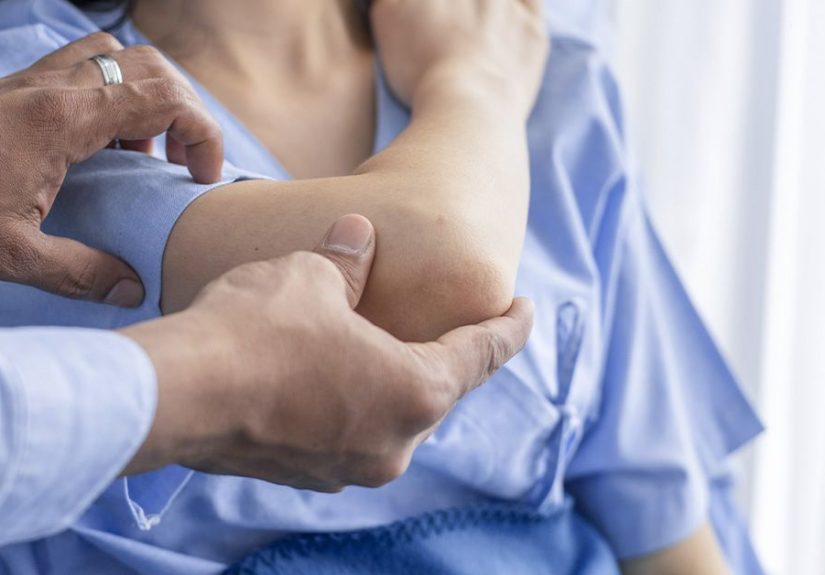
Elbow OCD is frequently discussed in young athletes with repetitive overhead motion, such as baseball/softball throwers and gymnasts. Symptoms may include lateral (outer) elbow pain, stiffness, loss of extension, and performance changes (like reduced throwing velocity or endurance).
Ankle OCD (talus)
The ankle can be involved as well. Pain may feel deep in the joint and worsen with running, jumping, or uneven surfaces. People sometimes describe persistent symptoms after an ankle sprain that “should’ve been better by now.”
Diagnosis: How clinicians confirm OCD
Diagnosis usually combines a clinical evaluation with imaging. Expect a clinician to ask about activity level, pain timing, swelling, and any catching/locking.
Physical exam
A clinician typically checks for tenderness, swelling, joint alignment, stability, and range of motion. They may look for pain with certain movements or loading positions.
X-ray
X-rays are often a first step. They can show changes in bone contour or a lesion, but they don’t always capture the full storyespecially early on.
MRI
MRI is frequently used to assess the lesion in more detail, including cartilage involvement and whether the fragment appears stable or at risk of detaching. This information matters because stable lesions are often treated differently than unstable ones.
CT (sometimes)
CT may be used in select cases for more detailed bony anatomy, especially when surgical planning is being considered. Your care team chooses imaging based on the joint, symptoms, and what decisions need to be made.
Treatment: What actually works (and why)
Treatment depends on several factors, including:
age (growth plates open or closed),
lesion stability (stable vs. unstable),
size and location,
symptoms, and
response to non-surgical care.
Non-surgical treatment (often first for stable juvenile lesions)
For many children and teens with stable lesions, non-surgical management can be effective. A plan may include:
- Activity modification: reducing impact, jumping, cutting, throwing, or other painful loading
- Rest period: giving the joint time to calm down and heal
- Bracing or immobilization: sometimes used, depending on location and severity
- Weight-bearing changes: crutches or partial weight bearing in some knee/ankle cases
- Physical therapy: restoring motion, strength (especially hip/core for knees), and mechanics
- Pain control: sometimes NSAIDs are used, but they are not the “healing engine,” just symptom help
A realistic expectation: healing can take months. Many pediatric programs counsel families that recovery is not instant, and return-to-sport decisions should be based on symptoms, function, and sometimes repeat imaging.
Surgical treatment (when stability or healing demands it)
Surgery may be recommended if the lesion is unstable, if there are mechanical symptoms suggesting a loose fragment, or if non-surgical care hasn’t helped after a reasonable trial period.
Procedures vary by joint and lesion characteristics, but common categories include:
1) Drilling to stimulate healing
Drilling (either through the lesion or from behind it) aims to promote blood flow and healing in the affected bone. It’s often considered when a lesion is stable but not healing as expectedespecially in younger patients.
2) Fixation (saving and securing the fragment)
If the fragment is loose but still viable, surgeons may secure it using pins or screws. The goal is to preserve the person’s own cartilage surface when possible, because your cartilage is (generally) better than any substitute your joint can order later.
3) Debridement and loose body removal
If a fragment is not salvageable or a loose body is causing locking/catching, removing unstable tissue may be part of the procedure. This is often combined with techniques to encourage a healthier joint surface.
4) Cartilage restoration options
For larger defects or cases where the cartilage surface needs reconstruction, cartilage restoration procedures may be considered. Depending on the situation, options can include:
- Microfracture: creating small channels in bone to stimulate a repair response (often best for smaller defects)
- Osteochondral autograft transfer (OATS) / mosaicplasty: transplanting small plugs of cartilage and bone from a less-loaded area
- Osteochondral allograft: using donor tissue for larger lesions in selected cases
- Autologous chondrocyte implantation: a staged approach in some settings
Your clinician will recommend an option based on lesion size, location, stability, your age, your sport demands, and what the joint surface looks like. The goal is the same across techniques: reduce pain, restore function, and protect the joint long-term.
Rehab and return to sport: The part nobody can “shortcut”
Whether treatment is non-surgical or surgical, rehab is where outcomes are won or lost. A good rehab plan typically focuses on:
- Restoring motion without irritating the lesion
- Building strength in supporting muscles (hips/quads for knee; shoulder/scapula for elbow; calf/foot control for ankle)
- Improving mechanics (landing form, throwing mechanics, cutting strategies)
- Gradual progression back to sport-specific skills
Return-to-play timing varies widely. Some people recover in months; others need longer. What matters is symptom-free function, strength symmetry, and clinician clearancebecause “my pain is only a 3/10 if I ignore it” is not a medical metric.
Possible complications and long-term outlook
Many patients do well, especially when lesions are detected early and treated appropriately. However, untreated or unstable OCD can increase the risk of:
- Persistent pain and reduced activity tolerance
- Loose bodies causing locking/catching
- Early joint wear and degenerative changes (osteoarthritis risk)
Outlook is often better for stable juvenile lesions than for adult lesions. That’s one reason early evaluation mattersespecially when a young athlete has persistent joint pain and swelling.
When to see a clinician
Consider getting evaluated if you (or your child) has:
- Joint pain lasting more than a couple of weeks, especially with sports
- Swelling after activity that keeps returning
- Locking, catching, or a sensation that the joint “gets stuck”
- Decreased range of motion or trouble fully straightening/bending the joint
- Performance changes (limping, altered throwing mechanics, reduced endurance)
This article is general educationnot personal medical advice. If symptoms are ongoing, a clinician can determine whether OCD (or another issue) is the culprit and tailor a plan to your situation.
Experience section: What living with OCD can feel like (and what helps)
The textbook description of osteochondritis dissecans is neat and clinicalbone, cartilage, lesion stability, imaging findings. Real life is messier. Many people’s stories start the same way: a nagging joint ache that seems “too small” to take seriously. The knee might hurt only after practice, or the elbow might feel stiff after throwing. At first, it’s easy to blame your shoes, your form, your workload, or the fact that you “slept weird.” Then the pain lingers, swelling shows up more often, and suddenly you’re negotiating with your joint like it’s a moody roommate: “If I promise not to sprint, can we at least do stairs today?”
Parents of young athletes often describe a different kind of frustration: the pain isn’t always dramatic, but it’s persistent. Kids can be tough (or stubborn), so they may minimize symptomsespecially if they don’t want to miss games. Sometimes the first major clue is a change in movement: a limp that appears late in tournaments, an athlete who stops fully extending the elbow, or a teen who avoids deep squats without realizing it. That’s one reason clinicians ask about subtle performance changes, not just pain level.
When diagnosis finally happens, many people feel two things at once: relief (because the symptoms have a name) and anxiety (because “osteochondritis dissecans” sounds like a spell from a fantasy novel). What tends to calm that anxiety is learning the logic of treatment. Stable lesionsespecially in kids who are still growingoften respond well to rest and a structured rehab plan. That can feel emotionally unfair (“I’m healthy enough to practice, but I’m not allowed?”), but it helps to reframe rest as active treatment. You’re not doing nothing; you’re protecting the lesion so it can heal instead of progressing.
The hardest part for many athletes is the timeline. OCD doesn’t usually reward impatience. Rehab often involves gradually rebuilding strength and mechanics, which can feel slow compared to the instant feedback of sports. A common experience is realizing how much the “support system” matters: physical therapists who explain the why behind each exercise, coaches who adjust training rather than applying pressure, and families who keep the focus on long-term joint health instead of next weekend’s bracket.
People who do best in recovery often adopt a few practical habits. They track symptoms honestly (especially swelling and mechanical catching), they follow the progression plan instead of skipping steps, and they treat rehab like trainingnot punishment. They also learn to spot “red flag” signals: locking/catching that’s new, pain that escalates quickly, or swelling that keeps returning even with reduced activity. Those signs don’t mean disaster, but they do mean it’s time to update the plan with a clinician.
For those who need surgery, the experience can be surprisingly hopeful once the initial fear passes. Many patients describe a turning point when they realize surgery isn’t the end of athleticsit’s a strategy to protect the joint surface and get back to the things they love with less pain. The rehab still takes commitment, but it’s purposeful. Small wins matter: the first day the knee doesn’t swell after therapy, the first time the elbow extends fully, the first light jog without that deep ache.
If there’s a “takeaway” from many OCD recovery stories, it’s this: outcomes improve when people stop trying to out-tough the problem. Early evaluation, smart rest, and progressive rehab aren’t signs of weaknessthey’re the shortest route back to normal life. Your joint doesn’t want drama. It wants consistency, patience, andoccasionallya polite apology for that one time you played through pain for three straight tournaments.
Conclusion
Osteochondritis dissecans is a treatable joint condition that commonly affects active kids and teens, and sometimes young adults. It involves injury to the bone beneath cartilage and can range from stable lesions that heal with rest and rehab to unstable lesions that may need surgical repair or cartilage restoration.
If joint pain, swelling, or mechanical symptoms won’t quit, early evaluation and a tailored treatment plan can help protect the joint and get you back to activity safely.