Table of Contents >> Show >> Hide
- What Makes Soap Look Like a Gemstone?
- Supplies and Ingredients
- Step-by-Step: Glitter Gem Stone Soap (Melt-and-Pour Method)
- 1) Prep Like a Pro (So You Don’t Panic Later)
- 2) Cube and Melt the Base Gently
- 3) Add Color (Start Small, Build Up)
- 4) Scent It (Without Overdoing It)
- 5) Make the “Gem Veins” (Optional, but So Worth It)
- 6) Pour in Layers for Depth
- 7) Add Glitter Like You Mean It (But Don’t Overdo It)
- 8) Bonus: The “Geode Center” Trick
- 9) Cool, Unmold, and “Polish”
- Color Ideas That Look Like Real Stones
- Troubleshooting (Because Soap Has Opinions)
- Packaging and Gifting Ideas
- If You Sell or Share These: A Quick, Non-Scary Labeling Reality Check
- Conclusion
If you’ve ever looked at a cut gemstone and thought, “I want that, but in my bathroom”welcome.
DIY glitter gem stone soap is the craft-world equivalent of wearing sweatpants with diamond earrings:
it’s practical, it’s extra, and it makes everyday life feel slightly more magical.
The best part? You can get a shockingly realistic “crystal” look without touching lye or doing anything
that sounds like it belongs in a chemistry final. This project uses a melt-and-pour soap base, which means
your job is basically to melt, color, sparkle, pour, and act like you totally meant for that swirl to happen.
What Makes Soap Look Like a Gemstone?
Real gemstones have three things that make your brain go, ooh: transparency, depth, and sharp-looking facets.
Gem-style soap copies that vibe with a few simple tricks:
- Clear base for “glass” clarity: A transparent melt-and-pour base makes color and shimmer look suspended inside.
- Layering for depth: Thin pours in slightly different shades create dimensional, stone-like variation.
- Mica “veins” and shimmer: Mica adds that mineral glow; a tiny bit of cosmetic-grade glitter adds sparkle without turning your sink into a disco.
- Faceted molds (or hand-cut shards): Silicone gem molds do most of the heavy lifting for the crystal shape.
Supplies and Ingredients
Soap Base (Pick One)
- Clear glycerin melt-and-pour base: Best for gemstone transparency and sparkle “floating” inside.
- “No-sweat” melt-and-pour base (optional): Helpful in humid climates to reduce glycerin dew (the infamous “soap sweating”).
- White base (optional): Great for “opal,” “moonstone,” or marbled crystal effects.
Color + Sparkle
- Soap-safe colorants: Mica powders and/or melt-and-pour approved liquid colorants.
- Cosmetic-grade glitter: Use glitter specifically labeled skin-safe (craft glitter is not your friend here).
- Rubbing alcohol (in a fine mist spray bottle): For popping surface bubbles and helping layers bond.
Tools
- Silicone gem molds (or any silicone cavity mold)
- Microwave-safe measuring cup or heat-safe pitcher
- Knife + cutting board (for cubing the base)
- Stirring tool (silicone spatula is ideal)
- Optional: infrared thermometer (nice for consistency, not required)
- Optional: pipettes or droppers (for controlled color placement)
Fragrance (Optional but Highly Recommended)
- Skin-safe fragrance oil or essential oil, used at the manufacturer’s recommended rate
Step-by-Step: Glitter Gem Stone Soap (Melt-and-Pour Method)
1) Prep Like a Pro (So You Don’t Panic Later)
- Set out your molds on a flat tray or cutting board (this makes moving them easier).
- Have your alcohol spritzer ready.
- Pre-measure mica and glitter into tiny cups if you want a smoother workflow.
Safety note: Melted soap gets hot. If you’re a teen or making this with younger helpers,
have an adult handle the heating and pouring.
2) Cube and Melt the Base Gently
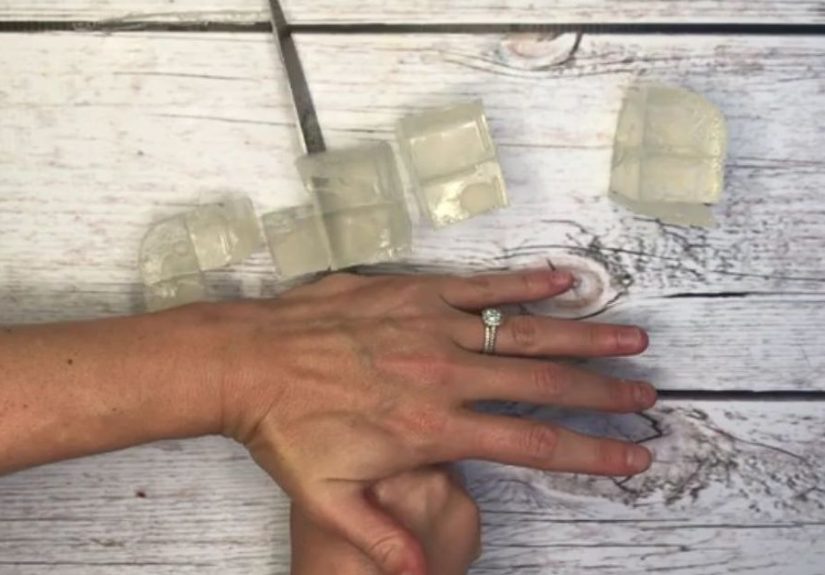
Cut your soap base into small, even cubes so it melts faster and more evenly. Melt in short bursts,
stirring between rounds. The goal is meltednot boiling, not angry, not “why does it smell toasted?”
Tip: Overheating can make melt-and-pour soap feel rubbery and can also increase bubbles. If you have a thermometer,
keep the melted base in a moderate range and avoid letting it get excessively hot.
3) Add Color (Start Small, Build Up)
For gemstone realism, avoid one flat shade. Instead, aim for a main color plus one “shadow” color.
Example: for amethyst, do a medium purple base plus a tiny touch of black or deep plum in a second cup.
- Clear, jewel tones: Choose translucent-compatible colorants.
- Cloudy stones (opal/moonstone): Use a white base or add a tiny amount of titanium dioxide (if your colorant is approved for MP).
4) Scent It (Without Overdoing It)
Add fragrance once the base is fully melted and you’ve removed it from direct heat. Stir gently.
“Gently” is the key wordstirring like you’re whisking pancake batter invites bubbles to the party.
5) Make the “Gem Veins” (Optional, but So Worth It)
Gemstones often have veins or flashes. Here are two easy ways to fake that geological drama:
-
Mica paint method: Mix a small amount of mica with a little rubbing alcohol to create a thin “paint.”
Use a small brush to swipe it inside the mold, or drizzle it between layers for veining. -
Dust-and-spritz method: Sprinkle a tiny pinch of mica on a poured layer, spritz lightly with alcohol,
then pour the next layer to trap a subtle shimmer line.
6) Pour in Layers for Depth
Pour a thin layer of your main color into each mold cavity. Spritz with rubbing alcohol to pop surface bubbles.
Let it set until it’s firm enough to support another layer (it should look set on top, not sloshy).
Then pour a second layereither a slightly different shade or the same shade with a little extra mica/glitter.
Spritz again. Repeat until the mold is filled.
7) Add Glitter Like You Mean It (But Don’t Overdo It)
For the best gemstone look, use glitter strategically:
- Top sparkle: A whisper of glitter on the final pour looks like a “crystal face.”
- Internal twinkle: Mix a small pinch into one mid-layer so sparkle appears suspended.
- Geode core effect: See the next step (it’s the show-off move).
8) Bonus: The “Geode Center” Trick
Want soaps that look like they belong in a fancy mineral shop? Make a geode-style center:
- Pour a base layer and let it partially set.
- Sprinkle a small cluster of cosmetic glitter + mica in the center area.
- Optionally add a few tiny soap “shards” (cut from a previous batch or a contrasting color).
- Pour the final layer to seal it in, then spritz bubbles away.
9) Cool, Unmold, and “Polish”
Let soaps cool completely (room temperature is best). Once fully firm, gently peel the silicone mold away.
If you want a shinier, “polished crystal” look, lightly buff the surface with a soft cloth.
Color Ideas That Look Like Real Stones
Amethyst
- Base: translucent purple
- Depth: a tiny hint of deep plum or charcoal
- Finish: gold or silver mica vein + micro-glitter
Emerald
- Base: clear green
- Depth: a small swirl of dark teal/forest tone
- Finish: subtle green mica dust between layers
Rose Quartz
- Base: sheer blush pink
- Depth: pale white wisps for a “milky” quartz look
- Finish: pearl mica on top for a soft glow
Opal / Moonstone
- Base: white or “goat milk” melt-and-pour base
- Depth: tiny streaks of pastel mica (pink/blue/lavender)
- Finish: iridescent mica brushed lightly inside the mold
Troubleshooting (Because Soap Has Opinions)
Problem: Tiny bubbles on top
Solution: Spritz the surface lightly with rubbing alcohol right after pouring. Also stir gently rather than vigorously.
Problem: Layers separate or peel apart
Solution: Spritz the set layer with alcohol before pouring the next layer. Also don’t let the first layer cool for too long;
you want it firm but still willing to bond.
Problem: Soap looks cloudy (and you wanted jewel-clear)
Solution: Use a clear base, avoid overheating, and keep additives minimal. Some colorants and heavy mica loads can reduce clarity.
Problem: Glitter sinks to the bottom
Solution: Let the soap cool slightly before adding glitter (still pourable, but thicker). Or reserve glitter for top layers
and vein lines rather than mixing a lot into the whole batch.
Problem: “Sweating” (glycerin dew) shows up later
Solution: Melt-and-pour soap can attract moisture in humid air. Once fully cooled, wrap bars tightly in plastic wrap or shrink wrap,
and store them in a dry place. If you live in a humid climate, consider a “no-sweat” base or run a dehumidifier in your crafting area.
Packaging and Gifting Ideas
- Crystal specimen vibe: Wrap in clear film and add a label that looks like a museum tag (“Amethyst Soap, 2026”).
- Party favors: Make mini gems, bundle 2–3 in a small box, and add a scent name like “Citrus Quartz.”
- Self-care set: Pair with a washcloth and a simple “how to use” card: lather, rinse, admire sparkle.
If You Sell or Share These: A Quick, Non-Scary Labeling Reality Check
If you’re gifting to friends, you can keep it simple: list ingredients and scent (especially for allergy awareness).
If you’re selling, be careful with claims. Saying “cleans” is generally fine for soap, but once you claim things like
“moisturizing,” “deodorizing,” or “kills germs,” you may be stepping into cosmetic or drug territory.
When in doubt, stick to straightforward descriptions and accurate ingredient labeling.
Conclusion
DIY glitter gem stone soap is one of those rare crafts that looks wildly impressive but is actually beginner-friendly.
With a clear base, thoughtful layering, and a light hand with mica and glitter, you can create soaps that look like
tiny crystal treasuresand make your sink area feel like it has a skincare budget and a personality.
Bonus: of Real-World “Gem Soap” Experience (So You Can Skip the Rookie Mistakes)
The first time most people make gem soaps, they assume the sparkle comes from adding “a lot” of glitter. That’s a trap.
Too much glitter doesn’t look like a gemstoneit looks like a craft store aisle exploded in your bathtub. The best batches
usually come from treating glitter like seasoning: a pinch here, a whisper there, and suddenly the soap catches light the way
a crystal does. A great trick is to put most of your shimmer in one layer (or as a mica vein) and keep the rest of the bar
relatively clean. Your eye reads that contrast as depth.
Another thing you learn fast: temperature is basically the director of this entire movie. When the soap is too hot, you get
more bubbles, your layers can remelt each other, and your carefully planned “facets” turn into a vague watercolor situation.
When the soap is too cool, it thickens up and pours unevenly, like it’s decided it has somewhere else to be. The sweet spot is
when it pours smoothly but isn’t scorching. If you’re doing multiple colors, it helps to work in smaller batches rather than
melting a huge amount and racing the clock like you’re on a game show.
Then there’s the moment everyone meets glycerin dew. You make perfect soaps, set them out proudly, and come back later to find
they look slightly… moist. Not ruinedjust shiny in a way that feels uninvited. The good news is it’s normal for melt-and-pour,
especially in humidity. Wrapping the bars after they’re fully cool makes a big difference. Also, if you’re giving them as gifts,
wrapping makes them look polished and intentional, like you run a tiny luxury brand instead of “melted stuff in my kitchen.”
Finally, the most underrated upgrade is designing your soap like a stone, not like a crayon. Real gems aren’t one solid color.
They have shadows, lighter pockets, and occasional “inclusions.” Even one small swirl of a deeper shadepoured from a little higher
up for dramacan make the whole bar feel more realistic. If you want your soaps to look like they belong in a crystal shop display,
keep your palette tight (two or three related tones), add shimmer in deliberate lines, and let the shape do the flexing.
When you unmold a batch that actually looks like a tiny amethyst cluster, you will absolutely hold it up to the light like it’s a
movie prop. That’s normal. That’s the point. Enjoy it.