Table of Contents >> Show >> Hide
- What “welfare” means in the U.S.
- Why welfare programs exist
- Types of welfare programs and public assistance in the U.S.
- 1) Cash assistance: Temporary Assistance for Needy Families (TANF)
- 2) Food assistance: SNAP
- 3) Nutrition support for women and young children: WIC
- 4) Health coverage: Medicaid and CHIP
- 5) Disability and aging support: Supplemental Security Income (SSI)
- 6) Housing assistance: Housing Choice Vouchers (Section 8)
- 7) Energy assistance: LIHEAP
- 8) Work supports through the tax system: EITC
- 9) Child care and early learning: CCDF and Head Start
- 10) A note about unemployment insurance
- How eligibility usually works
- How people typically apply (without the headache… okay, with fewer headaches)
- What welfare programs do welland where they fall short
- Common myths about welfare programs (and the reality check)
- FAQ: Quick answers about welfare programs
- Real-world experiences related to welfare programs (what people often notice)
- Conclusion: A simple way to remember it
- SEO Tags
“Welfare” is one of those words that can mean very different things depending on who’s saying itand how loudly they’re saying it
at Thanksgiving dinner. In everyday American conversation, people often use welfare as a catch-all for government
help. In policy language, it usually points to means-tested programs: benefits designed to help people meet basic
needs when their income and resources fall below certain limits.
A good, practical definition is this: a welfare program is a government program that provides financial assistance
or serviceslike food support, health coverage, housing help, or cash assistanceto individuals and families who qualify based on
need. Think of it as part of the U.S. social safety net: not a trampoline to launch you into luxury, but a net that
helps prevent a bad fall from becoming a catastrophe.
What “welfare” means in the U.S.
Welfare vs. the broader safety net
In casual speech, “welfare” can mean almost any public benefit. In government and research settings, it’s often used more narrowly
for public assistance programs that are income-based (also called means-tested benefits).
These programs focus on necessities: food, shelter, health care, and basic income support.
The broader safety net also includes social insurance programs. These aren’t typically called “welfare” in the strict
sense because eligibility is tied to work history or specific circumstances, not just income. Examples include
unemployment insurance and Social Security. People still lump them into “welfare” sometimes, mostly
because language is messy and humans are consistent only in their inconsistency.
Why the word gets confusing
Part of the confusion is historical: “welfare” became strongly associated with cash assistance over timeespecially the kind that helps
families with children. Another reason is that many programs interact. A family might qualify for food assistance, health coverage,
and child care help at the same time, even if they never receive direct cash. So “welfare” can describe a single programor an entire
bundle of supports.
Why welfare programs exist
To protect basic stability
The main goal is simple: help people meet essential needs when income drops, expenses spike, or circumstances make earning difficult.
That could be a layoff, a disability, a medical crisis, a new baby, a natural disaster, or a period when wages just don’t stretch to
the end of the month (a situation many Americans know all too well).
To support children and public health
Many U.S. welfare-related programs prioritize children, pregnant people, older adults, and people with disabilities. That’s partly
because those groups are more vulnerable to long-term harm from short-term hardship. When kids have stable meals and health coverage,
communities often see better school outcomes and fewer avoidable health problems. This isn’t “handouts,” it’s “let’s not let life
derail permanently because of one rough season.”
To stabilize the economy during downturns
When the economy weakens, safety-net programs can act like shock absorbers. Benefits such as food assistance or unemployment benefits
help people keep paying for basics. That spending supports local businessesgrocery stores, landlords, utilitiesso the pain doesn’t
spread quite as fast. If you’ve ever watched a shopping cart wobble and thought, “Please don’t tip,” you already understand the vibe.
Types of welfare programs and public assistance in the U.S.
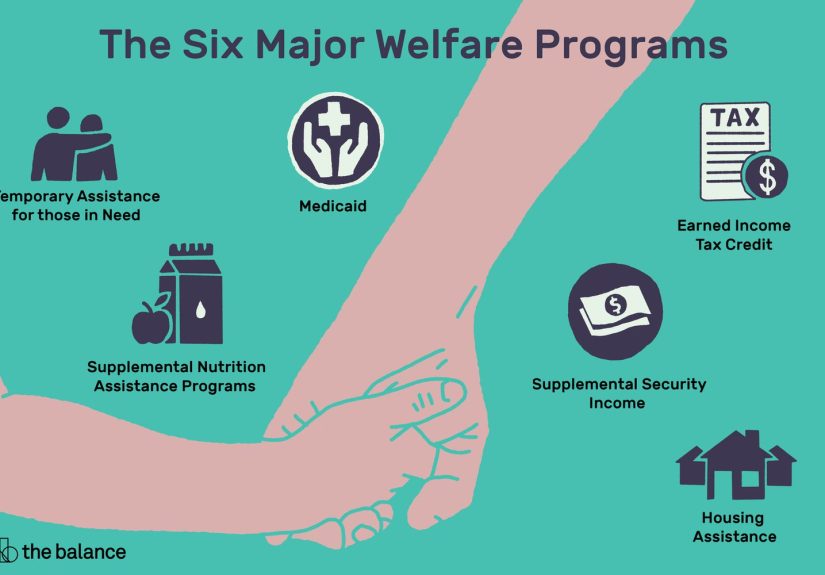
The U.S. doesn’t have one single “welfare” program. Instead, it has a collection of programs run by federal agencies, states, and local
partners. Below are some of the most common categories.
1) Cash assistance: Temporary Assistance for Needy Families (TANF)
TANF is the program most commonly labeled “welfare” in everyday talk. It provides time-limited cash assistance and
related support services for certain low-income families with children. TANF is funded by federal dollars but is largely designed and
administered by states, which means the rules, benefit amounts, and program names can vary depending on where you live.
TANF is often paired with job preparation, work supports, and other services. It’s intended to provide short-term help while families
work toward greater stabilitythough “short-term” can feel very long when your rent is due every month like clockwork.
2) Food assistance: SNAP
SNAP (Supplemental Nutrition Assistance Program) helps eligible households supplement their grocery budget. Benefits are
typically delivered on an electronic benefit transfer (EBT) card that works like a debit card for approved food purchases. SNAP is
federal, but people apply through their state, and some details are handled locally.
SNAP eligibility generally involves income limits and other requirements, and the application process usually asks for proof of
household size, income, and residency. The exact rules can be technicalbut the purpose is straightforward: reduce food insecurity and
help people access nutritious meals.
3) Nutrition support for women and young children: WIC
WIC (Special Supplemental Nutrition Program for Women, Infants, and Children) supports pregnant people, postpartum and
breastfeeding individuals, infants, and children up to age five who meet income guidelines and are determined to be at nutritional risk.
WIC typically provides specific foods, nutrition education, and breastfeeding support. Unlike a “buy whatever you want” program, WIC is
curatedmore “smart grocery list” than “free-for-all.”
4) Health coverage: Medicaid and CHIP
Medicaid is a major health coverage program for eligible low-income Americans, including children, pregnant people,
adults, older adults, and people with disabilities. It is a joint federal-state program, which means the federal government sets broad
rules and helps pay, while states run their own programs within those guidelines.
Many families also rely on CHIP (Children’s Health Insurance Program), which covers kids in families who earn too much
to qualify for Medicaid but still need affordable coverage. These programs can be a lifeline because medical costs don’t politely wait
until your finances “feel ready.”
5) Disability and aging support: Supplemental Security Income (SSI)
SSI provides monthly payments to eligible adults and children with disabilities or blindness, and to adults age 65 or
older, who have limited income and resources. SSI is different from Social Security retirement or SSDI (disability insurance) because
SSI is not based on work history; it’s based on financial need and eligibility criteria.
6) Housing assistance: Housing Choice Vouchers (Section 8)
Housing help is another major part of “welfare” as people commonly use the term. The Housing Choice Voucher Program
(often called Section 8) helps eligible households afford housing in the private market by subsidizing part of the rent.
Vouchers are administered locally through public housing agencies, and many areas have waitlists due to limited funding.
7) Energy assistance: LIHEAP
LIHEAP (Low Income Home Energy Assistance Program) helps eligible households manage home energy costs, including heating
and cooling bills, energy crises, and certain weatherization or minor energy-related home repairs. Eligibility and application are
handled through state or local agencies, because energy emergencies do not care about your calendar.
8) Work supports through the tax system: EITC
Not all need-based support shows up as a monthly benefit card. The Earned Income Tax Credit (EITC) is a refundable tax
credit for eligible low- to moderate-income workers. “Refundable” is the magic word: it can reduce what you owe and may increase your
refund. The EITC is one reason some families see a bigger refund after filing taxesthough it’s less “surprise treasure” and more
“you qualified for a work-based benefit Congress created on purpose.”
9) Child care and early learning: CCDF and Head Start
Child care costs can hit like a second rent paymentsometimes a third. The Child Care and Development Fund (CCDF)
supports child care assistance for eligible families, generally those working or participating in education/training.
Head Start and Early Head Start provide early learning, health, and family support services for
children from families with low income, with a focus on school readiness. These programs are often discussed alongside welfare
programs because they address foundational needs that shape long-term opportunity.
10) A note about unemployment insurance
Unemployment insurance (UI) is usually classified as social insurance rather than welfare because it’s tied to work and
wages. Still, many people group it with the safety net because it provides temporary cash benefits when someone loses a job through no
fault of their own. If welfare is “need-based help,” UI is “you paid into the system while working, and now the system helps you while
you find your next job.”
How eligibility usually works
Means-tested basics
For many welfare programs, eligibility is based on some combination of:
- Household income (wages, benefits, some other income sources)
- Household size (how many people you support)
- Resources/assets (savings, certain propertyrules vary)
- Category (pregnancy, disability status, age, caring for children)
- Residency (usually you apply in the state where you live)
Why rules vary by program and state
Some programs are structured as federal-state partnerships (like Medicaid), while others are federally funded but administered with
significant state flexibility (like TANF and LIHEAP). Housing vouchers are federally authorized but locally managed, and availability
depends heavily on local funding and waitlists. Translation: two families with similar incomes can have very different experiences
depending on where they live.
Work requirements and time limits
Some programs include work requirements, job-search expectations, or time limits for certain groups. For example, TANF is designed as
time-limited cash assistance, and SNAP has work-related rules for some adults depending on age and household circumstances. The details
can be complicated, but the big idea is that programs try (with varying success) to balance immediate support with long-term
self-sufficiency goals.
How people typically apply (without the headache… okay, with fewer headaches)
Most people apply for welfare-related benefits through state or local agenciesoften online, by phone, by mail, or in person. The
process commonly includes:
- Submitting an application with household information
- Providing documents (proof of identity, address, income, expenses, and household size)
- Completing an interview for certain programs
- Receiving an eligibility decision and benefit details
If this sounds paperwork-heavy, that’s because it is. But it’s also why community organizations, caseworkers, and benefits navigators
can be so helpfulespecially when someone is juggling work, kids, transportation, and the emotional weight of “I just need help right now.”
What welfare programs do welland where they fall short
Strengths
- They reduce hardship by helping people pay for food, health care, and housing.
- They protect kids during critical development years.
- They can prevent crises (like untreated illness or utility shutoffs) from spiraling into bigger emergencies.
- They support work through benefits like EITC and child care assistance that make employment more feasible.
Limitations
- Access can be uneven due to state variation, local capacity, and waitlists (especially for housing help).
- Benefits may not match real costs in high-rent or high-inflation areas.
- Administrative friction (paperwork, renewals, interviews) can cause eligible people to lose benefits temporarily.
- Stigma still discourages some people from applying, even when they qualify.
Common myths about welfare programs (and the reality check)
Myth: “Welfare is just free cash.”
Reality: Many benefits are in-kind supportsfood benefits, health coverage, rent subsidies, nutrition packages, energy
assistance, early childhood services, and tax credits. Cash assistance exists, but it’s only one piece of the puzzle.
Myth: “If you get help, you must not be working.”
Reality: Plenty of people receiving assistance are workingoften in low-wage or unstable jobs. Programs like SNAP and EITC are common
among households with earned income, especially when wages don’t keep up with basics.
Myth: “People stay on welfare forever.”
Reality: Some programs are specifically designed to be temporary (like TANF cash assistance). Others support people whose situations
are long-term, such as SSI for qualifying disabilities or Medicaid for chronic health needs. Duration often depends on the reason a
person qualifiesnot a lack of motivation.
FAQ: Quick answers about welfare programs
Is “welfare” the same as TANF?
Sometimes people use the word that way, but “welfare” can also refer to a broader range of public assistance programs.
Are welfare programs federal or state?
Many are both. Federal law and funding play a major role, while states and local agencies often handle applications and day-to-day
operations.
Do welfare programs only help people in poverty?
Most are designed for low-income households, but eligibility can extend above the poverty line depending on program rules, household
size, medical needs, and local cost factors.
Real-world experiences related to welfare programs (what people often notice)
The facts and definitions matter, but so does the human sidewhat it actually feels like to interact with the safety net. Here are a
few realistic, experience-based snapshots (illustrative examples) of what people commonly report when dealing with welfare and public
assistance programs in the U.S.
Experience #1: “I didn’t think I’d qualify… until I did.”
A lot of people assume public assistance is “for someone else”until a job gets cut, hours drop, or a medical bill eats the grocery
budget. One common experience is surprise: families who have always worked may still qualify for SNAP or Medicaid when costs rise or
paychecks fall short. The moment they realize eligibility isn’t a moral judgment but a math problem can be genuinely relieving.
It’s also when the learning curve beginsbecause programs use very specific definitions of household, income, and allowable expenses.
Experience #2: Paperwork is the “hidden cost”
People often describe the application process as a second job: gathering pay stubs, confirming addresses, uploading documents, calling
during work hours, and tracking deadlines. Even when systems are online, there can be glitches, long hold times, or confusing requests
for verification. The upside is that once benefits are active, they can stabilize essentials fastespecially food or health coverage.
The downside is that renewals and re-certifications can feel like running the same race every few months, but with different shoes.
Experience #3: Benefits help… but don’t erase stress
When a family receives SNAP, the grocery cart becomes a little less scary. When Medicaid coverage starts, a doctor visit becomes
possible again. When LIHEAP helps with a heating bill, the thermostat stops feeling like a villain. But people also mention that help
doesn’t always match real-world costsespecially rent. Housing assistance can be life-changing, yet many communities have long waits.
So families may still juggle tradeoffs: rent vs. car repair, utilities vs. child care, groceries vs. prescriptions. Benefits reduce the
pressure, but they don’t magically eliminate the hard choices.
Experience #4: The stigma is realand exhausting
Some people feel embarrassed using an EBT card or worried about being judged for applying for help. Others feel frustrated by the
assumption that needing assistance equals irresponsibility. In reality, many households using benefits are dealing with circumstances
that would challenge anyone: disability, caregiving, unstable schedules, low wages, or high local costs. One of the most common
“experience shifts” is moving from shame to pragmatism: “I’m doing what I need to do to keep my family steady.” That mindset change can
be as valuable as the benefit itself.
Experience #5: A bridge back to stability
For some, TANF cash assistance is the difference between keeping housing and falling behind. For others, EITC provides a seasonal boost
that helps pay down debt or catch up on bills. For parents, child care assistance and Head Start can make working or job training
realistic. People often describe the best outcome as “breathing room”a short-term bridge that buys time to find better work, recover
from a health crisis, or stabilize child care. When the bridge works, families don’t “win the lottery.” They regain their footing.
Conclusion: A simple way to remember it
A welfare program is a need-based public support that helps people cover essentials when resources are limitedwhether
that’s food, medical care, housing, utilities, child care, or cash for basic living expenses. The U.S. system is a patchwork: some
programs are entitlements, some are capped, some vary by state, and almost all involve documentation. But the purpose is consistent:
reduce hardship, protect health and opportunity, and help households weather tough stretches without permanent damage.