Table of Contents >> Show >> Hide
- What “Bohemian” Means in Design (and What It Doesn’t)
- The Boho “Rulebook” (Yes, That’s a Joke)
- The Key Elements of Bohemian Interior Design
- 1) Color: Earthy Bases + Soulful Pops
- 2) Pattern: Global-Inspired, Mixed with Intention
- 3) Texture: The “Touch Everything” Aesthetic
- 4) Natural Materials: Rattan, Jute, Wood, and Friends
- 5) Furniture: Eclectic, Comfortable, and Not Too “Set-y”
- 6) Plants and Greenery: The Boho “Accessory” That’s Actually Alive
- 7) Art, Objects, and “Story Decor”
- 8) Lighting: Warm, Layered, and Mood-Friendly
- 9) Layout: Cozy Zones, Mixed Heights, and Real-Life Comfort
- Choose Your Flavor: Popular Boho Sub-Styles
- How to Create a Boho Room Step-by-Step (Without Losing Your Mind)
- Room-by-Room Examples You Can Actually Picture
- Boho on a Budget: The Thrift Store Is Your Co-Designer
- Common Boho Mistakes (AKA How Not to Summon the Throw Pillow Overlords)
- Keeping Boho Thoughtful: Culture, Craft, and Respect
- Final Thoughts: Boho Is a Feeling, Not a Shopping List
- Real-World Boho: Experiences That Make the Style “Click” (About )
If minimalism is a quiet whisper of “calm,” bohemian interior design is a joyful playlist that starts with a sitar solo,
detours through a flea market, and somehow ends with you owning three rugs that all “spark joy” (and one that sparks lint).
Boho style isn’t about following rulesit’s about building a home that looks lived-in, loved, and collected over time.
The best bohemian spaces feel warm, personal, a little global, and very human: layered textiles, natural materials, plants,
meaningful objects, and just enough pattern to make your eyes say, “Ooh,” not “Help.”
But here’s the secret: good boho isn’t random. It’s curated chaoscomfortable, expressive, and intentional. Let’s break down
the key elements of bohemian interior design, how modern boho has evolved, and how to pull the look together without turning
your living room into a costume party for throw pillows.
What “Bohemian” Means in Design (and What It Doesn’t)
“Bohemian” originally described unconventional, artistic lifestylespeople who valued creativity, travel, and individuality
more than matching furniture sets. In interiors, that spirit shows up as eclectic design: mixed eras, mixed textures, and
objects with stories. Boho decor doesn’t mean “buy everything with tassels.” It means your space reflects youyour habits,
your curiosities, your comfort level, and your willingness to mix a vintage trunk with a modern sofa because… why not?
Classic Boho vs. Modern Boho
Classic bohemian interiors often lean maximalist: saturated colors, abundant pattern, layered rugs, and walls full of art.
Modern boho (sometimes called “boho chic” or “minimal boho”) keeps the relaxed vibe but may use a lighter palette, cleaner lines,
and more breathing roomthink airy neutrals with punches of texture, greenery, and global textiles.
The Boho “Rulebook” (Yes, That’s a Joke)
Bohemian interior design works best when you treat it like cooking: you can improvise, but you still need balance.
Too much spice and you can’t taste anything; too little and it’s just beige sadness. Here are the guiding principles
that keep boho decor looking intentional:
- Layering over matching: rugs, textiles, lighting, and decor build depth.
- Collected over coordinated: a few meaningful “finds” beat a cart full of identical “boho” items.
- Comfort is non-negotiable: boho rooms invite you to sit, lounge, read, nap, and stay awhile.
- Natural materials ground the look: wood, rattan, linen, jute, leather, clay, stone.
- Personal expression matters most: art, books, objects, and color choices should feel like you.
The Key Elements of Bohemian Interior Design
1) Color: Earthy Bases + Soulful Pops
Boho color palettes often start with warm, grounded tonescreamy whites, sand, camel, terracotta, olive, and chocolate brown
then add richer accents like jewel tones (emerald, sapphire, ruby) or sunbaked brights (mustard, coral, turquoise).
If you prefer modern boho style, keep the foundation neutral and use color in smaller doses: pillows, art, ceramics, or a statement rug.
A practical approach: choose one base neutral, two supporting colors, and one accent.
Example: warm white + terracotta + olive + a small hit of cobalt (maybe in pottery or framed art). The palette feels cohesive
even when patterns and textures get playful.
2) Pattern: Global-Inspired, Mixed with Intention
Pattern is a hallmark of boho decoroften inspired by textiles and motifs from many regions: kilim-style rugs, ikat-like prints,
block prints, stripes, geometrics, florals, and folk-style embroideries. The trick is to mix patterns like a stylist:
vary the scale (one large, one medium, one small) and repeat a few colors across pieces so the room feels layered, not chaotic.
Example combo for a boho living room: a bold patterned rug anchors the space, a couple of geometric pillows echo one color from the rug,
and a softer stripe throw keeps everything from feeling too “theme-y.” Boho loves varietyjust give it a shared color thread.
3) Texture: The “Touch Everything” Aesthetic
If bohemian interior design had a motto, it would be: bring texture or bring snacks. Texture creates that cozy, collected look:
chunky knits, linen, velvet, leather, fringe, macramé, embroidery, woven baskets, aged wood, ceramic glazes, and nubby rugs.
When you layer textures, even a simple neutral palette feels rich and dimensional.
Think of texture as your “visual soundtrack.” A smooth sofa looks better with a woven pillow. A sleek room warms up fast with a jute rug.
And if you add fringe anywhere, your home automatically becomes 12% more fun. (That’s not science. It’s vibes.)
4) Natural Materials: Rattan, Jute, Wood, and Friends
Boho style leans heavily on natural, organic materialsespecially those that feel handmade or imperfect in a good way.
Rattan, wicker, cane, raw wood, jute, sisal, clay, stone, linen, and leather show up again and again because they add warmth
and keep the look grounded.
Easy wins: a woven pendant light, a rattan chair, a jute rug, a wooden coffee table with visible grain, or a set of baskets for storage.
You don’t need to replace everythingone or two natural-material pieces can shift the whole mood.
5) Furniture: Eclectic, Comfortable, and Not Too “Set-y”
Boho furniture is about comfort and character. You’ll often see low-slung seating, deep cushions, vintage or thrifted pieces,
and a mix of styles and eras. A boho room usually avoids the “matched showroom set” lookso instead of buying the whole living room package,
try mixing a modern sofa with a vintage side table, or pairing mismatched chairs at a dining table.
A simple formula:
one anchor piece (sofa or bed),
one vintage statement (cabinet, trunk, chair),
and one natural accent (rattan, wood, woven).
The mix is what makes it boho.
6) Plants and Greenery: The Boho “Accessory” That’s Actually Alive
Plants are practically part of the bohemian interior design family portrait. Greenery adds softness, color, and that relaxed,
nature-connected feel (often called biophilic design). Big leafy plants (like indoor trees), trailing vines, and hanging planters
look especially at home in boho spaces.
Make it easy on yourself: match plants to your light. Bright window? Try a fiddle-leaf fig or rubber plant. Medium light? Pothos
is famously forgiving. Low light? Snake plant and ZZ plant are the “I forgot again” champions. Bonus boho points for a woven basket planter.
7) Art, Objects, and “Story Decor”
Boho decor shines when it feels personal. Think: travel souvenirs, thrifted artwork, family photos, handmade ceramics,
stacks of books, and objects that tell your story. Gallery walls work well in boho spaces because they embrace variety
different frame styles, different art sizes, different mediums, all living together like a stylish group chat.
The key is editing. Display what you love, but leave a little breathing room so your favorite pieces can actually be seen.
If everything is a focal point, nothing is.
8) Lighting: Warm, Layered, and Mood-Friendly
Overhead lighting alone is a boho crime (not legally, but spiritually). Bohemian interior design favors warm, layered lighting:
table lamps, floor lamps, sconces, lanterns, candles, and woven shades that cast a soft glow. The goal is cozy and inviting,
not “hospital waiting room.”
Try the three-layer approach: ambient (overall glow), task (reading lamp), and accent
(candles or a small lamp on a shelf). If you can add a dimmer, you’ve basically unlocked “movie night” mode for your whole house.
9) Layout: Cozy Zones, Mixed Heights, and Real-Life Comfort
Boho rooms often feel casual and flexibleseating that invites conversation, side tables where you actually need them,
and layers that make the space feel welcoming. Mixing heights helps: a low coffee table, a taller plant, a mid-height bookcase,
and wall art that pulls your eye around the room.
Modern boho benefits from a little restraint: keep pathways clear, let one area breathe, and avoid crowding every surface.
“Lived-in” is the goal“I can’t find the couch” is not.
Choose Your Flavor: Popular Boho Sub-Styles
Bohemian style is a big umbrella, and you get to pick the weather underneath it. A few common directions:
- Modern boho: neutrals + texture + a few bold accents.
- Desert boho: terracotta, sand tones, woven textures, sun-faded rugs.
- Scandi-boho: clean lines and light woods softened with textiles and plants.
- Dark boho: moody paint colors, jewel tones, vintage metals, dramatic layers.
- Coastal boho: airy palette, rattan, linen, relaxed patterns, lots of light.
How to Create a Boho Room Step-by-Step (Without Losing Your Mind)
Step 1: Pick an Anchor
Start with the biggest visual decision: a rug, a sofa, a bed frame, or a standout piece of art. Boho spaces often start from the floor up,
because rugs are such strong mood-setters. A patterned rug instantly says “boho decor lives here.”
Step 2: Build a Warm Foundation
Choose a base palette you can live with long-term (warm white, tan, soft gray, earthy green). This keeps the room flexible
so you can swap accessories as your taste evolvesvery boho, very practical.
Step 3: Layer Textiles Like You Mean It
Add throw pillows in mixed patterns, a textured blanket, curtains with movement, and maybe a second smaller rug layered on top.
Keep at least one repeating color so everything feels connected.
Step 4: Add Natural Materials
Bring in rattan, wicker, jute, wood, and ceramics through furniture and accessories. Even one woven pendant or a cane chair
can push the room toward bohemian interior design instantly.
Step 5: Finish with Story + Greenery
Add plants, art, books, and meaningful objects. This is the part that makes the space yours. Boho looks best when it’s not rushed,
so let it grow over time like a good playlist.
Room-by-Room Examples You Can Actually Picture
Boho Living Room Example
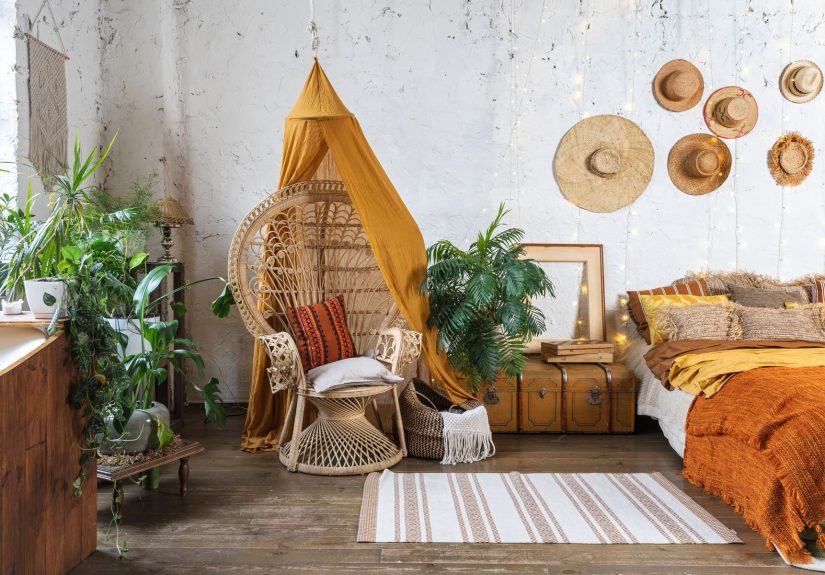
Picture a warm white wall, a comfortable neutral sofa, and a vintage-inspired patterned rug (the anchor). Add two pillows that pull colors from the rug,
one solid pillow in a textured fabric, and a chunky knit throw. Bring in a rattan chair or woven side table, a floor lamp with a soft shade,
a leafy plant in a basket, and a gallery wall of mixed frames. The result: eclectic home design that feels relaxed, not staged.
Boho Bedroom Example
Start with layered bedding: crisp sheets, a quilt, and a textured throw. Add pillows in a couple of patterns, a vintage nightstand,
and a woven pendant light. A tapestry or textile wall hanging above the bed adds softness (and saves you from hanging a giant heavy frame).
Finish with a plant and a small tray for the “I’m a person with my life together” illusion.
Boho Kitchen/Dining Example
Boho kitchens often mix open shelving, warm materials, and personality pieces. Try woven counter stools, a vintage runner rug,
open shelves with ceramics, and a pendant light with texture. For dining, mismatched chairs can work beautifully if the table anchors the look.
Add a simple centerpiece: a bowl of fruit, a vase of fresh flowers, or a cluster of candles.
Boho Bathroom Example
Small spaces are great for boho touches: patterned wallpaper (or peel-and-stick for renters), a vintage mirror, warm lighting,
a woven basket for towels, and a plant that likes humidity. Add a textured bathmat and a candle, and suddenly your bathroom feels
like a boutique hotel that charges $14 for sparkling water (but yours is free).
Boho on a Budget: The Thrift Store Is Your Co-Designer
Bohemian interior design is surprisingly budget-friendly because it celebrates secondhand, vintage, handmade, and collected pieces.
Look for solid-wood side tables, unique frames, baskets, ceramic vases, and interesting lamps. One great thrifted item
can do more for your space than ten brand-new “boho” trinkets that all look like they came from the same aisle.
- Upgrade with textiles: pillows and throws are fast, high-impact changes.
- DIY options: simple macramé, painted frames, refreshed furniture hardware.
- Shop small when you can: handmade ceramics and textiles add real character.
Common Boho Mistakes (AKA How Not to Summon the Throw Pillow Overlords)
Going “Theme Park Boho”
If every item screams BOHO! in the same voice, the room can feel like a set. Mix boho elements with everyday pieces.
Let one or two items be bold; keep the rest supportive.
Clutter Without Curation
Boho can be layered, but it still needs editing. Leave negative space. Give your favorite objects room to shine.
A good test: if you can’t dust a surface without moving eight items, it may be time to curate.
Overdoing One Texture
Rattan is greatuntil it’s the only thing in the room. Mix textures: rattan + linen + wood + ceramics + a little metal.
Variety is what makes boho feel rich.
Forgetting Comfort
Boho style is supposed to feel relaxed. If your space looks cool but no one wants to sit down, it’s not bohoit’s a museum
with better pillows.
Keeping Boho Thoughtful: Culture, Craft, and Respect
Because boho often draws inspiration from global patterns and handmade traditions, it’s worth being intentional about how you source pieces.
When possible, buy directly from artisans, makers, and small businesses. Look for fair-trade options and genuine craftsmanship.
The goal is appreciation and supportnot turning meaningful cultural motifs into disposable decor.
Final Thoughts: Boho Is a Feeling, Not a Shopping List
Bohemian interior design works when it feels personal, warm, and a little adventurous. Start with comfort, build with natural materials,
layer textiles and pattern, add plants and meaningful objects, and edit just enough so your room feels curatednot chaotic.
Whether you go full maximalist or prefer modern boho style with neutrals and texture, the key elements stay the same:
layering, individuality, and a home that invites you to actually live in it.
Real-World Boho: Experiences That Make the Style “Click” (About )
People often say boho decor feels different the moment they start living with itnot just looking at it on a screen. One common experience:
the room gets quieter emotionally even if it gets louder visually. A layered rug setup softens footsteps. A throw at arm’s reach
makes the couch feel more forgiving. Warm lighting makes evenings feel calmer, even on days that were anything but.
Another frequent “aha” moment happens when someone tries mixing patterns for the first time. At first, it feels riskylike introducing three
strangers at a party and hoping they become best friends. But when the colors relate (say, terracotta shows up in the rug and the pillows),
the room starts to feel collected, not chaotic. Many homeowners describe it as finally giving themselves permission to stop chasing “perfect”
and start chasing “cozy.”
Thrifting tends to become part of the experience, too. Instead of buying everything in one weekend, boho lovers often collect gradually:
a vintage lamp with a slightly crooked shade, a wooden stool with character marks, a framed print that’s weird in the best way.
The space evolves like a scrapbookone small find at a time. And because the pieces have stories, the room feels more like a home and less like
a catalog page.
Plants also change the day-to-day vibe. People often notice they pay more attention to light, morning routines, and little moments when they add greenery.
Watering becomes a quick “reset” ritual. A hanging pothos or a tall indoor tree makes the room feel aliveliterallyand the texture of leaves
balances out all the fabric texture boho loves.
Hosting is another big one. Boho spaces are naturally social because they’re built around comfort: extra pillows, soft lighting, flexible seating,
a rug that makes you want to sit on the floor “just for a minute” (that turns into an hour). Guests tend to relax faster in rooms that look
lived-in. When everything isn’t precious, everyone breathes easier.
Finally, people who try bohemian interior design often report a surprising side effect: they get better at editing over time. Boho isn’t about
owning moreit’s about owning better (for you). After a while, many start swapping generic decor for meaningful pieces: a handmade bowl,
a thrifted painting that makes them smile, a textile that reminds them of a place they love. The style becomes less about “boho things”
and more about a home that feels like their personality in room formmessy, creative, comforting, and absolutely not interested in matching
the neighbor’s sofa.