Table of Contents >> Show >> Hide
- Meet Dickie: The Unluckiest Man You Can’t Stop Rooting For
- Why Turning Tragedy Into a Punchline Works
- The Silent Punchline: How Wordless Comics Hit So Hard
- What Makes These 40 Comics “Brutally Funny”?
- Why We Keep Sharing Dark Comics Online
- Walking the Line: When Dark Humor Goes Too Far
- How to Enjoy “40 Brutally Funny Comics” Without Being a Jerk
- From Silent Panels to Lasting Impact
- Real-Life Takeaways from Brutally Funny Comics
- of Lived (and Slightly Twisted) Experience
- Conclusion
Some comics make you chuckle. Others make you choke on your coffee and say, “I’m absolutely going to hell for laughing at this.”
The silent adventures of DickieBelgian cartoonist Pieter De Poortere’s eternally unlucky everymansit firmly in the second category.
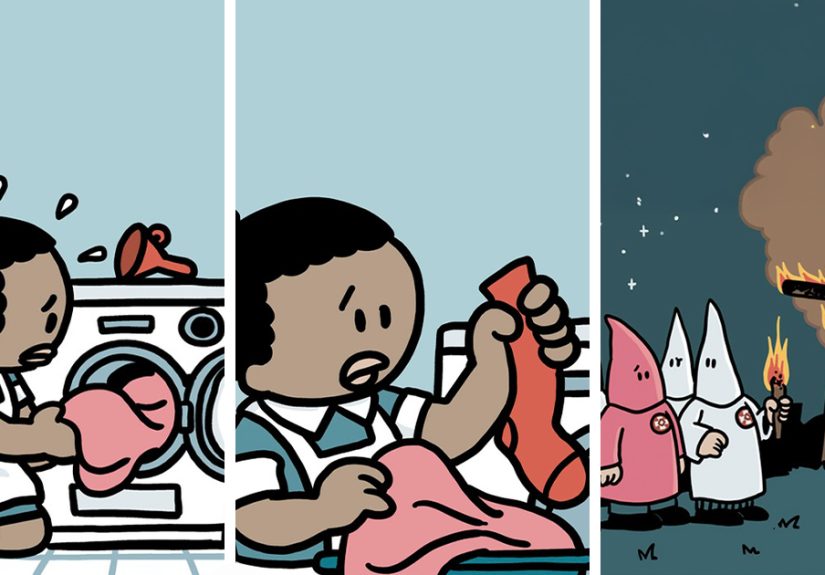
In “40 Brutally Funny Comics That Turn Tragedy Into A Punchline”, Bored Panda showcases how a wordless, round-headed guy with a mustache manages to turn disasters, mishaps, and bad luck into punchlines that hit harder than a slapstick pie to the face.
These dark humor comics are short, visual gut punches: a setup, a twist, and a finale that’s often absurd, occasionally harsh, and surprisingly relatable.
They live in that uncomfortable space where laughter and a small internal scream happen at the same time. And that’s exactly why people keep coming back to them.
Meet Dickie: The Unluckiest Man You Can’t Stop Rooting For
Dickie (“Boerke” in the original Flemish) is not a superhero, a genius, or even particularly competent.
He’s a tiny, mustached everyman who means well, tries his best, and is relentlessly betrayed by fate, technology, and his own questionable choices.
One moment he’s a sailor, the next he’s an astronaut, a cowboy, a businessman, or a medieval peasant. The universe stays the same, though:
whatever can go wrong absolutely will go wrong.
De Poortere’s style is deceptively cute: clean lines, limited color palettes, rounded shapes, and almost toy-like characters.
That softness makes the contrast with the brutal punchlines even sharper. A cheerful setup might end with social humiliation, cosmic irony, or a very bad day at work.
The result is a kind of visual tragicomedy that feels like a Looney Tunes short rewritten by someone who’s lived through multiple recessions.
Why Turning Tragedy Into a Punchline Works
The Psychology Behind Dark Humor
Dark humor has been studied for years, and researchers keep finding the same thing:
for many people, joking about difficult or taboo topics is not cruelty, but a coping mechanism.
Studies on humor and trauma suggest that laughing at painful situations can help people regulate emotions, create distance from distress, and build resilience.
In other words, when we laugh at life falling apart in a comic panel, we’re quietly saying, “Okay, maybe I can handle my own mess, too.”
Some work in psychology even suggests that people who enjoy dark humor may show higher cognitive abilities and are better at managing negative emotions, as long as the humor isn’t used to attack others.
That doesn’t mean every edgy joke is healthy, but it does help explain why so many readers gravitate to comics where tragedy and comedy collide.
Humor as a Pressure Valve
A lot of us encounter dark humor first in extreme environments: hospitals, emergency services, the military, or emotionally intense jobs.
Research on U.S. veterans, clinicians, and caregivers shows that joking about grim situations can help professionals keep functioning in stressful roles, as long as it’s done respectfully.
That same instinct appears in online comicsonly now, the audience is global.
When Dickie gets crushed by bureaucracy, by the stock market, or by random bad luck, it echoes our own day-to-day frustrations.
We’re not laughing because tragedy is good; we’re laughing because the comic admits what we already feel: sometimes life is unfair, random, and a little ridiculous.
The Silent Punchline: How Wordless Comics Hit So Hard
One of the most striking things about these Bored Panda-featured comics is that they’re completely wordless.
No speech bubbles, no captions, no sound effectsjust visuals. That makes them instantly accessible across languages and cultures,
and it forces every punchline to be crystal-clear without explanation.
The formula looks simple on the surface:
- Panel 1–3: Setup – Dickie enters a situation full of hope, confusion, or mild overconfidence.
- Middle panels: Escalation – things get weird, complicated, or morally gray.
- Final panel: Twist – tragedy hits, or the situation flips in a way that’s dark but undeniably funny.
Because there are no words, your brain fills in the emotional script: the awkward silence, the inner scream, the “oh no” before the “oh wow.”
This active participation actually makes the punchline feel sharper. You’re not just reading a joke; you’re solving it.
What Makes These 40 Comics “Brutally Funny”?
Dark humor webcomics often push boundaries around topics like misfortune, death, failure, or social injusticebut the best ones
punch up at systems and circumstances, not down at vulnerable people.
Many popular series featured on platforms like Bored Panda, Channelate, and other dark humor collections mix absurdity with social commentary, not cruelty.
In Dickie’s case, the brutality usually lands on him:
- He does his best and still ends up as the victim of bureaucracy, capitalism, technology, or fate.
- He misreads a situation with naive optimismand pays the price in the last panel.
- He suffers cartoonish physical or social consequences that exaggerate familiar real-world frustrations.
That constant misfortune makes him feel less like a target and more like a stand-in for all of us.
Dickie becomes a walking reminder that life doesn’t come with a user manualand if it did, we’d probably ignore it.
Satire in a Cute Package
De Poortere’s comics often use visual satire to comment on politics, business, celebrity culture, or environmental issues.
Instead of a long essay, you get a nine-panel sequence where Dickie accidentally exposes greed, hypocrisy, or pure stupidity.
The soft, rounded style tricks your brain into expecting something gentlethen the last panel hits like a moral anvil.
That contrast between form (sweet, simple art) and content (bleak or sharp punchlines) is a hallmark of many modern dark humor comics.
It’s the same pattern you’ll see in other popular webcomic series that feature adorable characters walking straight into deeply uncomfortable situations,
only to twist the scenario into an uncomfortable laugh.
Why We Keep Sharing Dark Comics Online
Scroll through social media and you’ll find dark humor panels everywhere: on meme pages, Tumblr screenshots, Reddit threads, or curated collections.
Part of the appeal is simply convenienceshort comics are easy to swipe through and send to a friend with a “this is so us” message.
But there’s more going on:
- They’re fast emotional hits. In just a few panels, you go from curiosity to shock to laughter.
- They feel honest. Dark humor often acknowledges things we’re not comfortable saying out loud.
- They build community. Sharing a comic that nails your exact mood creates a small “you get it too” moment with others.
The Bored Panda feature on Dickie taps into that same energy. It packages forty silent stories that you can read in minutes,
but think about for much longer. A single strip can feel like a punchline and a tiny essay about the human condition.
Walking the Line: When Dark Humor Goes Too Far
Of course, dark humor isn’t universally loved. It can easily cross lines, especially when it targets specific groups, mocks real-world tragedies,
or reinforces harmful stereotypes. Research on dark humor and personality traits suggests that some people use edgy jokes as a shield or a weapon,
not as a coping tool.
That’s why context matters:
- Who is the butt of the joke: the powerful or the vulnerable?
- Is the comic mocking painor mocking the absurd systems that create it?
- Does the humor punch down, or does it highlight how ridiculous cruelty and apathy are?
The best dark comicsincluding many of Dickie’s misadventurestend to make the world’s indifference look absurd, not suffering itself.
We laugh, but we also recognize the criticism hiding behind the punchline.
How to Enjoy “40 Brutally Funny Comics” Without Being a Jerk
If you love dark humor, you don’t have to apologize for having a slightly twisted sense of humor, but it helps to be intentional about how you engage with it.
Here are a few ways to appreciate these comics thoughtfully:
- Notice what you’re laughing at. Are you laughing at human vulnerabilityor at the systems, accidents, and absurdities that trap us?
-
Respect other people’s boundaries. Not everyone is in a place where tragedy-flavored jokes feel okay.
What’s cathartic for you might feel raw or hurtful to someone else. -
Use dark humor as a bridge, not a weapon. If a comic helps you open up about a tough topic, that’s powerful.
If it shuts someone down, it’s not doing you any favors.
Enjoying comics like Dickie’s doesn’t mean you don’t take real-world pain seriously.
In many cases, it means you recognize how heavy life can beand you’re grateful for any moment that lets you laugh at the chaos instead of being crushed by it.
From Silent Panels to Lasting Impact
What makes “40 Brutally Funny Comics That Turn Tragedy Into A Punchline” so compelling is how much it accomplishes without a single spoken word.
Dickie never says a thing, yet we understand him perfectly: the hopes, the mistakes, the disasters, and the resigned “of course that happened” energy in the final frame.
These comics remind us that:
- We’re all improvising our way through absurd situations.
- Bad luck is universaland sometimes very, very funny in hindsight.
- Laughter can be a survival skill, not a sign that we don’t care.
In a world where the news cycle alone can feel like a full-time horror show, a small, mustached cartoon guy taking the hit on our behalf offers weird comfort.
Dark humor isn’t everyone’s cup of tea, but for those who connect with it, it’s like a pressure valve: let some steam out, or the whole system shakes.
Real-Life Takeaways from Brutally Funny Comics
You don’t need to be a professional cartoonist to borrow some wisdom from Dickie’s misadventures. Here are a few practical lessons hidden under the dark humor:
-
Failure is inevitable. Dickie never stops trying, even though the universe keeps body-checking him.
In real life, accepting that things will go wrong sometimes can actually make us braver. -
Perspective is everything. A disaster can feel unbearable in the momentbut later, it might become your favorite story to tell.
Dark comics compress that whole emotional arc into a few panels. - Laughter doesn’t erase painbut it makes it shareable. When we laugh together at things going wrong, we stop feeling like we’re the only ones messing up.
That blend of tragedy and humor is the beating heart of Dickie’s worldand the reason so many people find comfort in these comics, even when the punchlines are merciless.
of Lived (and Slightly Twisted) Experience
You don’t really understand how powerful dark humor can be until life hands you a moment that is absolutely not funny—and your brain still tries to crack a joke.
Think about the time your car broke down on the one day you had a make-or-break interview.
You’re sitting on the side of the road, dress shoes in a puddle, phone at 3% battery, wondering if the universe is doing stand-up at your expense.
Later, you retell that story and everyone laughs. Not because the situation was good, but because the timing, the absurdity, and the sheer overkill of bad luck feel like something pulled straight out of a comic strip.
That’s exactly how a lot of Dickie’s stories land: they feel unrealistic until you remember your own life has had similar “you’ve got to be kidding me” moments.
Many people who gravitate toward comics like these have a history of using humor to survive awkward or painful experiences.
Maybe you grew up in a family where joking about tough times was normal, or you worked a job where gallows humor was the only way to get through the day.
When you encounter a comic where a character gets metaphorically flattened by circumstances, it feels honest:
finally, someone admits that things can be both awful and hilarious at the same time.
There’s also a strange kind of relief in seeing a fictional character take a hit you remember taking in real life.
Financial disaster? Social embarrassment? A romantic situation that tried to be a fairytale and ended as a cautionary tale?
Comics like the ones featured in “40 Brutally Funny Comics That Turn Tragedy Into A Punchline” become mirrors and safety valves at once.
For a lot of readers, these comics become part of their emotional toolkit:
- You send a strip to a friend who just lost a job, not to minimize their stress, but to say, “I know this feels brutal, but you’re not alone in the chaos.”
- You re-read a favorite dark panel after a long, draining day because it gives you permission to laugh instead of collapsing into pure frustration.
- You recognize bits of yourself in the character who never seems to catch a breakand that recognition feels strangely comforting.
Of course, there’s a responsibility that comes with loving this kind of humor.
Many people are navigating grief, trauma, or mental health challenges that aren’t ready to be framed as punchlines, and that’s okay.
Dark humor works best when it’s self-aware and compassionatewhen it acknowledges the heaviness instead of mocking the people who carry it.
At its best, a brutally funny comic doesn’t say, “Pain doesn’t matter.” It says, “Pain is real, life is messy, and somehow we’re still here,
so we might as well laugh while we figure it out.” That’s the quiet promise behind Dickie’s endless misadventures:
no matter how many times he gets knocked down, the next strip starts with him standing again. No dialogue, no speechesjust a tiny, stubborn silhouette walking into another wildly unfair situation.
And maybe that’s why readers keep swiping, scrolling, and sharing.
In Dickie’s world, tragedy becomes a punchlinebut the real takeaway is that the story goes on.
For anyone living through their own long, weird, occasionally brutal chapter, that’s not just funny. It’s hopeful.
Conclusion
“40 Brutally Funny Comics That Turn Tragedy Into A Punchline | Bored Panda” is more than a collection of edgy gags.
It’s a crash course in how dark humor, wordless storytelling, and one incredibly unlucky character can capture the chaos of modern life in a handful of panels.
Whether you read these comics for catharsis, for shock, or simply for the joy of a perfectly timed twist, they prove one thing:
sometimes the only way to deal with tragedy is to redraw it, reframe it, and let yourself laugh.