Table of Contents >> Show >> Hide
- Quick Take: What Stands Out
- Brand Snapshot: Who Is Lazarus Naturals?
- Product Lineup: What Lazarus Naturals Sells (In Plain English)
- Quality & Transparency: Testing, COAs, and What “Third-Party Tested” Should Mean
- Does CBD “Work”? What Evidence Can (and Can’t) Honestly Say
- Safety: Side Effects, Drug Interactions, and the “Grapefruit Warning” Energy
- Legality: The Federal Rule, State Reality, and Why This Keeps Changing
- Pros and Cons of Lazarus Naturals (Based on Available Public Information)
- How to “Review” a CBD Brand Like a Pro (Without Becoming One)
- Final Verdict: Is Lazarus Naturals “Worth It”?
- Experiences With Lazarus Naturals CBD (Real-World Style, No Fairy Dust)
- Experience #1: The “My Shoulders Are Basically a Stress Storage Unit” Adult
- Experience #2: The “Sleep Schedule Is a Dumpster Fire” Adult
- Experience #3: The “I Get Drug Tested and I Can’t Risk It” Situation
- Experience #4: The “I Want to See Proof, Not Promises” Shopper
- Experience #5: The “Less Is More” Lesson
CBD is everywherein oils, gummies, lotions, and that one “wellness” aisle that somehow got longer than the cereal section. So when a brand like Lazarus Naturals keeps popping up in conversations about affordability and transparency, it’s fair to ask: is it legit… or just really good at labeling?
This review breaks down what Lazarus Naturals is known for, how it approaches testing and manufacturing, what the product lineup looks like, and what to keep in mind about safety and legality. It’s written for everyday readers who want real-world claritynot marketing confetti.
Quick Take: What Stands Out
- Transparency-first vibe: The company emphasizes third-party testing and makes Certificates of Analysis (COAs) available.
- Ethanol extraction: Lazarus Naturals describes using ethanol to extract cannabinoids from hemp.
- Full-spectrum focus: Many offerings are full-spectrum (meaning they may contain trace THC within legal limits).
- Affordability mission: The brand publicly highlights an assistance program intended to improve access for eligible groups.
- Big asterisk: CBD isn’t risk-free, can interact with medications, and laws can vary by state.
Brand Snapshot: Who Is Lazarus Naturals?
Lazarus Naturals is a U.S.-based hemp CBD company that positions itself around two main ideas: make CBD more accessible and prove what’s in the bottle. The brand also talks openly about legal compliance (notably the federally referenced THC threshold) and consumer realities like potential drug testing issueseven when the product itself is compliant.
One of Lazarus Naturals’ most recognizable differentiators is its assistance program. The company states it offers substantial discounts for certain groups (for example, veterans and some households meeting criteria). Whether you personally care about that or not, it’s part of their identity: they’re building a “CBD for more people” narrative, not a luxury wellness vibe.
Friendly reminder: If you’re under 18, you should not use CBD unless a qualified clinician specifically recommends it for a medical reason and supervises it. This article is general information, not a green light.
Product Lineup: What Lazarus Naturals Sells (In Plain English)
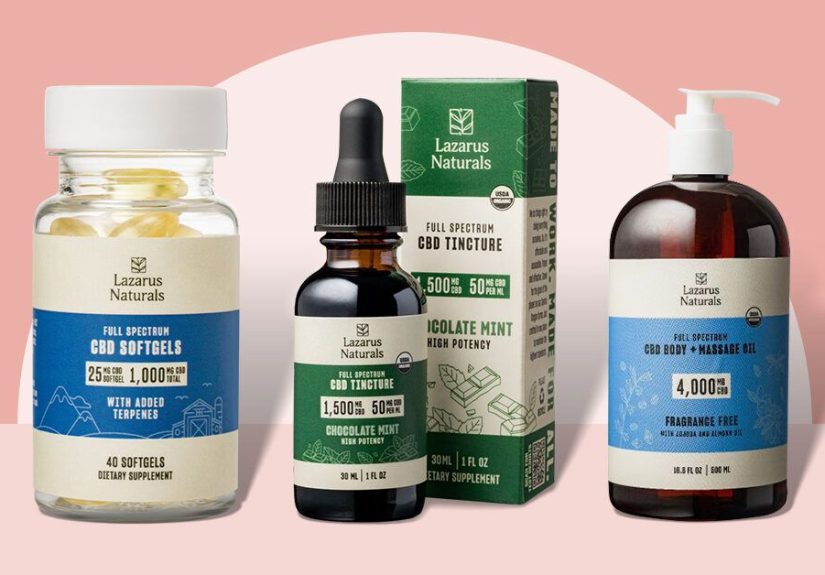
Lazarus Naturals offers the standard “CBD brand buffet,” but it’s organized around a few core categories. Here’s what you’ll typically see:
CBD Tinctures (Oils)
Tinctures are the flagship category for many CBD brands because they’re easy to dose in theory (dropper math), and they can come in multiple cannabinoid profiles. Lazarus Naturals is widely associated with full-spectrum CBD tinctures, which include a range of hemp compounds rather than just isolated cannabidiol.
Capsules / Softgels
Capsules appeal to people who want consistency and convenienceno flavor, no droppers, no “did I spill that on my shirt or is that just my personality now?” Lazarus Naturals has been reviewed by mainstream health outlets for capsule products in its lineup.
Topicals (Balms, Gels, Lotions)
Topicals are popular for people who want localized usethink sore shoulders, post-workout stiffness, or skin that’s feeling dramatic. Lazarus Naturals markets topical items like balm sticks that combine hemp extract with additional functional ingredients.
Gummies / Sleep-leaning Formulas
Many CBD companies sell gummies, including “sleep” products that may combine multiple cannabinoids. These are especially important to approach carefully, because “sleepy branding” can make people assume “risk-free,” and that’s not how biology works.
Full-spectrum vs. broad-spectrum vs. isolate: In general, full-spectrum may contain trace THC (within legal limits), broad-spectrum aims to remove THC while keeping other cannabinoids, and isolate is primarily CBD alone. Your choice matters most if you’re sensitive to THC, subject to drug testing, or simply want to minimize variables.
Quality & Transparency: Testing, COAs, and What “Third-Party Tested” Should Mean
CBD shoppers hear “third-party tested” so often it starts to sound like “gluten-free air.” The phrase only matters if you can actually see what was tested, by whom, and whether the results match the product you’re holding.
Lazarus Naturals and third-party testing
Lazarus Naturals publicly describes a testing approach and encourages consumers to review COAs. Mainstream reviewers have also highlighted testing for contaminants such as pesticides, heavy metals, and potency, with results available to consumers.
What to look for on a COA (for Lazarus Naturals or any brand)
- Batch/lot match: The COA should correspond to your product’s batch number.
- Potency: CBD amount should reasonably match the label claim.
- THC reporting: Especially important for full-spectrum products.
- Contaminants: Ideally includes heavy metals, pesticides, microbial contaminants, and residual solvents (particularly relevant when extraction is involved).
- Lab credibility: Look for ISO-accreditation or strong lab reputation, and clear methods.
Extraction method: ethanol
Lazarus Naturals states it uses ethanol extraction. Ethanol is a common method in the industry and can be effective, but the quality outcome depends on refinement steps and testingbecause extraction is less “one magic step” and more “a whole process with multiple chances to mess it up.”
Manufacturing practices and compliance language
Some health outlets have reported Lazarus Naturals references manufacturing practices aligned with FDA Current Good Manufacturing Practices (cGMP) concepts. For consumers, the practical takeaway is this: process matters, but you still want documentationCOAs, clear labeling, and consistency over time.
Does CBD “Work”? What Evidence Can (and Can’t) Honestly Say
Let’s keep this grounded. CBD is not an FDA-approved dietary supplement, and the FDA has explicitly stated that existing regulatory pathways for CBD in foods and supplements are not appropriate, urging a new framework through Congress.
At the same time, a prescription form of cannabidiol exists: Epidiolex is an FDA-approved medication for specific seizure disorders. That matters because it confirms cannabidiol can have real physiological effectsbut it also underscores why dosing, interactions, and medical oversight are important.
Common reasons people explore CBD
People typically look at CBD for areas like stress, sleep, soreness, or overall “calm.” Research in these areas is still evolving, and product quality and labeling accuracy vary across the market. That’s why brand transparency (like accessible COAs) can be a meaningful differentiator.
Bottom line: CBD may be helpful for some adults in some contexts, but it’s not a guaranteed fixand anyone claiming it “cures” anything is basically waving a red flag with glitter on it.
Safety: Side Effects, Drug Interactions, and the “Grapefruit Warning” Energy
CBD is often sold as “gentle,” but the science says: treat it like an active compound, not a scented candle.
Potential side effects
The prescription cannabidiol label for Epidiolex lists common side effects including sleepiness, decreased appetite, diarrhea, and elevated liver enzymes, among others. Over-the-counter CBD products aren’t identical to a prescription, but these effects help illustrate that cannabidiol can influence the body in noticeable ways.
Drug interactions
CBD can interact with medications by affecting liver enzymes involved in drug metabolism (commonly discussed in relation to CYP pathways). Some medical sources describe interaction concerns similar to grapefruit warningsmeaning CBD may change how your body processes certain drugs.
If you take any prescription meds (especially blood thinners, seizure medications, heart rhythm medications, transplant meds, or anything with a narrow therapeutic range), talk to a clinician before using CBD. This is not a “better safe than sorry” moment; it’s a “don’t gamble with your bloodstream” moment.
Drug testing considerations (yes, even if it’s legal)
Full-spectrum products may contain trace THC within legal limits. Even when a product complies with the federal threshold, some companiesincluding Lazarus Naturals in its educational materialsnote that a positive drug test is still possible. If drug testing is part of your life, that’s a major decision point.
Legality: The Federal Rule, State Reality, and Why This Keeps Changing
Under the 2018 Farm Bill’s federal definition, hemp refers to cannabis with a delta-9 THC concentration of not more than 0.3% by dry weight. That definition helped create today’s hemp CBD marketplace.
But here’s where it gets tricky: state laws vary, and federal policymaking continues to evolveespecially around intoxicating hemp-derived cannabinoids. This doesn’t mean your CBD balm is about to become a criminal mastermind, but it does mean the regulatory landscape is not static.
Practical takeaway: legality depends on your location and the specific product. Always treat CBD like something you verifynot something you assume.
Pros and Cons of Lazarus Naturals (Based on Available Public Information)
Pros
- Strong transparency culture: Emphasis on COAs and third-party testing information.
- Clear stance on THC reality: Acknowledges compliance limits and drug-testing considerations.
- Broad product variety: Oils, capsules, topicals, gummies, and more.
- Access mission: Publicly communicates an assistance program aimed at affordability.
Cons / watch-outs
- Full-spectrum can be a dealbreaker: Not ideal for people avoiding THC entirely.
- CBD still has medical considerations: Interactions and side effects are real.
- Market-wide issue: Even good brands exist in a category the FDA says needs a new regulatory pathway for supplements/foods.
How to “Review” a CBD Brand Like a Pro (Without Becoming One)
If you want to evaluate Lazarus Naturalsor any CBD companyuse this quick checklist:
1) Verify the COA
Match batch numbers, check potency, and look for contaminant testing panels.
2) Decide your THC comfort level
If you’re drug-tested or THC-sensitive, full-spectrum may not be for youeven if the product is legally compliant.
3) Consider your medication list
If you’re taking meds, don’t DIY this. Ask a clinician or pharmacist.
4) Keep expectations realistic
CBD isn’t a cure-all. If a label sounds like it was written by a wizard, it’s probably marketing.
Final Verdict: Is Lazarus Naturals “Worth It”?
Lazarus Naturals earns attention because it leans hard into testing transparency, offers a wide product lineup, and publicly emphasizes affordability through an assistance program. Those are meaningful positives in a category where consumers often struggle to verify what they’re buying.
Still, the most important takeaway isn’t “yes” or “no.” It’s this: CBD is an active substance. It can cause side effects, it can interact with medications, and full-spectrum products can create THC-related concerns. If you’re an adult exploring CBD, Lazarus Naturals appearsbased on public reporting and the company’s own materialsto be more transparent than many brands. But the “best” CBD is always the one that fits your health context, risk tolerance, and legal reality.
Experiences With Lazarus Naturals CBD (Real-World Style, No Fairy Dust)
To make this review more practical, here are experience-style examples based on common consumer patterns people report when exploring CBD. These are not medical advice, not promises, and not a replacement for a clinicianjust realistic scenarios that show how product type and personal context can change the outcome.
Experience #1: The “My Shoulders Are Basically a Stress Storage Unit” Adult
An office worker in their 30s tries a topical balm after long days hunched over a laptop. They like the idea of targeting one area without ingesting anything. The first few uses feel soothingpartly because the balm’s texture encourages massage (which, to be fair, is already a win). They notice a mild “comfort effect” and keep it in their gym bag.
But here’s what made the experience successful: they treated it as a comfort routine, not a cure. They checked the ingredient list to avoid skin irritants, patch-tested on a small area first, and kept expectations in the “supportive” range. They also avoided using it on broken skin and didn’t assume “natural” meant “impossible to react to.”
Experience #2: The “Sleep Schedule Is a Dumpster Fire” Adult
Another personmid-40s, lots of evening screen time, inconsistent bedtimetries a nighttime product because they want to unwind. They quickly learn the annoying truth: CBD won’t out-muscle bad sleep hygiene. The nights they scroll until 1 a.m. feel… the same. The nights they dim lights, cut caffeine earlier, and keep a consistent routine? Those improve more. CBD becomes a minor supporting character, not the lead actor.
This person also talks to a pharmacist because they take a prescription medication and don’t want interactions. That’s the underappreciated hero move. The result is less anxiety about “what if this clashes with my meds,” and a more responsible approach overall.
Experience #3: The “I Get Drug Tested and I Can’t Risk It” Situation
Someone with workplace drug testing starts researching CBD and realizes a key point: full-spectrum products may contain trace THC, and even legally compliant products can sometimes lead to positive tests depending on use patterns and individual metabolism. After reading educational materials and third-party discussions, they decide not to use full-spectrum at all.
That decision isn’t anti-CBD; it’s risk management. Their experience is basically: “I like the idea, but I like my paycheck more.” And honestly, that’s a perfectly reasonable conclusionone that a transparent brand should help you reach instead of hiding behind vague labels.
Experience #4: The “I Want to See Proof, Not Promises” Shopper
One of the most common “good” experiences people report with reputable CBD brands is simply confidence: being able to find COAs, compare what the label says to what the lab report shows, and feel like they’re not gambling. For these consumers, Lazarus Naturals’ emphasis on third-party testing and documentation becomes the main valuenot flashy flavors or influencer hype.
They don’t obsess over every number like a chemistry professor, but they do check basics: potency, THC reporting, and contaminant panels. The outcome is a calmer buying decision process, fewer surprises, and a higher chance the product matches expectations.
Experience #5: The “Less Is More” Lesson
Some adults discover they’re sensitive to anything that affects alertness. Even mild drowsiness can be a dealbreaker if they drive, operate machinery, or need sharp focus. Their “experience” isn’t dramatic; it’s just a reminder that CBD can cause sleepiness for some people. They adjust by avoiding CBD at times when they must be fully alertor they stop altogether.
This is a useful reality check: a product doesn’t have to be “bad” to be “not for you.” The goal is not to force-fit CBD into your life. The goal is to make a careful choice and listen to your body (and your doctor, if needed).
Big takeaway from these experiences: the most positive outcomes tend to come from adults who (1) verify testing, (2) respect medication interactions, (3) keep expectations realistic, and (4) treat CBD as optional supportnot a miracle solution.